Patellofemoral Pain Exercises: A Phased Plan That Works
Patellofemoral Pain Exercises: A Phased Plan That Works
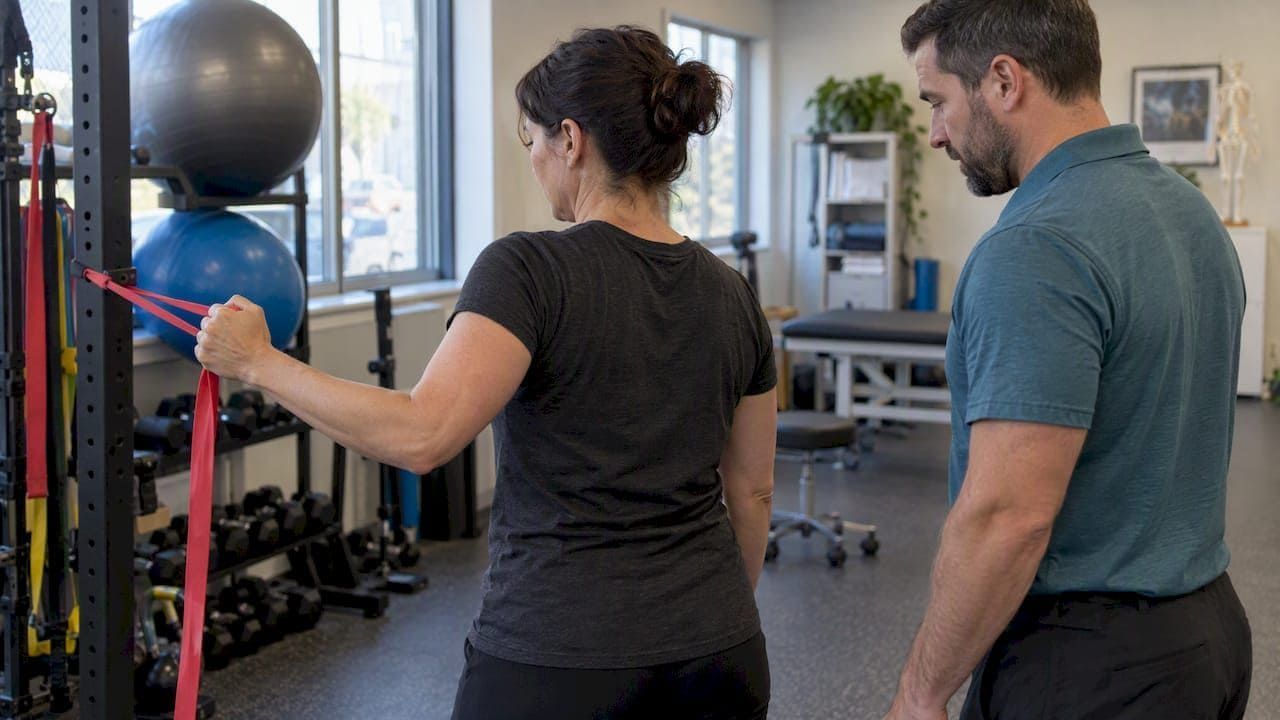
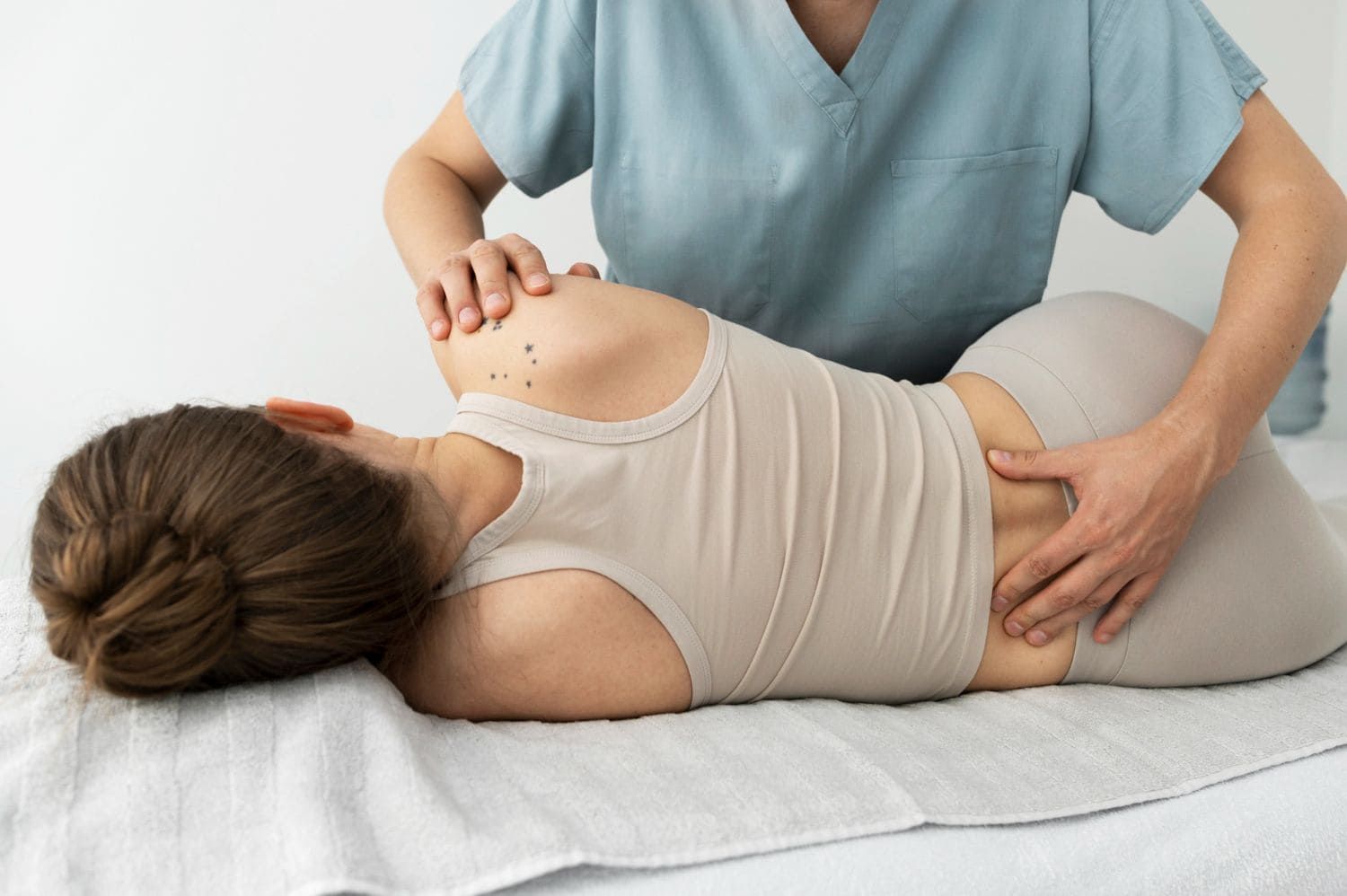
The best exercises for patellofemoral pain strengthen the hips and the thigh together, are done in knee angles your joint tolerates, and are built up slowly while you manage how much running, squatting and stair climbing you do. A combined program beats knee-only training, and no single move fixes it alone. Below is a phased plan you can start with, the depth rules that keep the kneecap calm, how patellar tendon pain (jumper's knee) differs, and the signs that mean you should get examined first.
TL;DR
- Patellofemoral pain (often called runner's knee) responds best to hip and knee strengthening combined, not quadriceps work alone.
- Start with glute and hip work for about three weeks, then add squats, step-downs and lunges as pain allows.
- Keep weight-bearing knee bends shallow at first (0 to 45 degrees) and open-chain leg extensions in the 45 to 90 degree range.
- Pain right below the kneecap that spikes with jumping is often the patellar tendon, not the joint behind the kneecap, and it needs a different emphasis.
- Locking, giving way, swelling, night pain or a recent impact are reasons to be examined before you exercise.
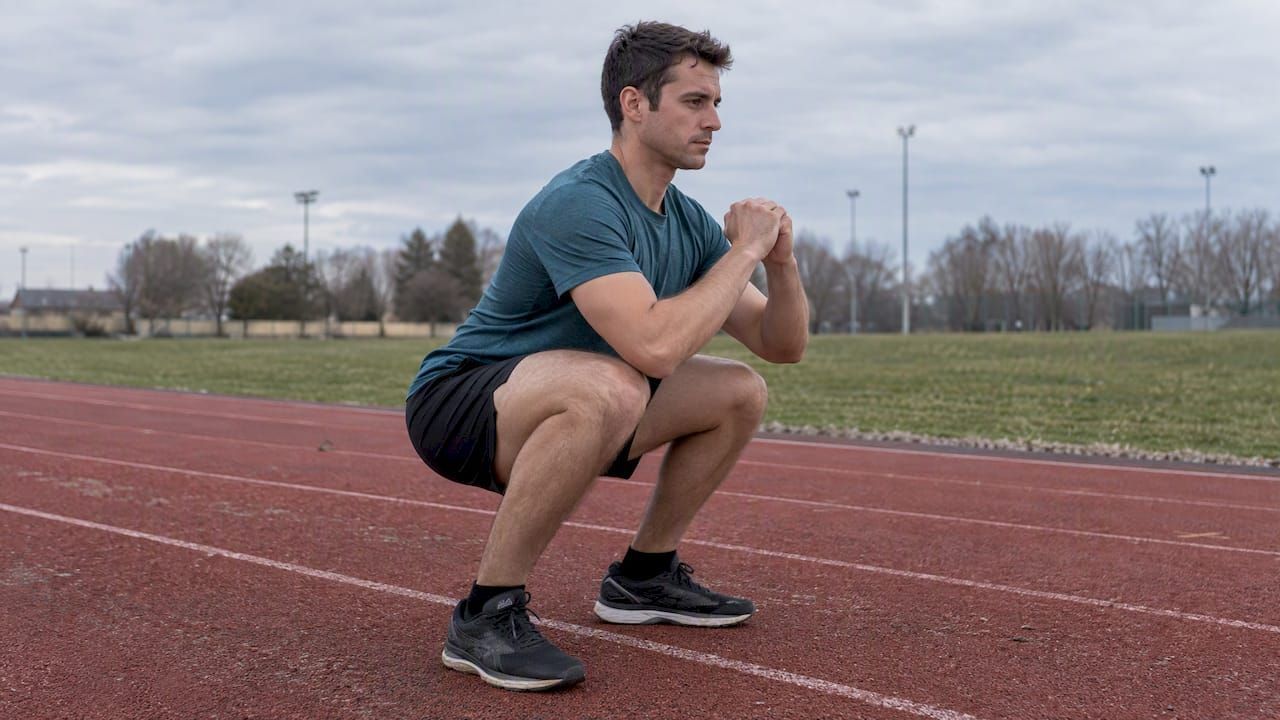
Table of Contents
- What patellofemoral pain actually is
- Why hips and knees together
- Know your safe knee angles
- A three-phase patellofemoral pain exercise plan
- Stretching and the supporting cast
- Load management matters as much as the exercises
- Is it the kneecap or the tendon? Jumper's knee exercises
- When to stop and get examined
- Our perspective on knee pain rehab
- Getting help in West Central Florida
- FAQ
- Sources
What patellofemoral pain actually is
The patellofemoral joint is where the kneecap (patella) meets the thigh bone (femur). Patellofemoral pain syndrome (PFPS) means pain behind or around the kneecap that flares with loaded knee bending: squatting, stairs, running and long periods of sitting. A 2025 review of the athlete with PFPS notes that the squat is the best functional test, and that it provokes symptoms in roughly 80% of people with the condition.
You will often hear that the kneecap "tracks badly." Maltracking, meaning abnormal movement of the patella in its groove on the femur, is a popular theory. But clinicians caution that measurements like the Q-angle have weak clinical usefulness, and that diagnosis should rest on your history and a functional exam. The same 2025 review frames PFPS as a multifactorial problem. The goal of exercise is not to nudge the kneecap into place. It is to improve control, load tolerance and capacity across the hip, knee and core.
That is why a list of knee exercises copied from the internet so often disappoints. Let's build something more deliberate.
Why hips and knees together
For years, rehab for this condition centered on the quadriceps, especially the inner quad (the VMO). The evidence has moved on. A JOSPT summary for patients states that the best treatment is a combined program of hip and knee strengthening, and that it reduced pain and helped people return to activity better than strengthening the knee muscles alone.
What about VMO activation exercises? The VMO is one part of the quadriceps, and you cannot meaningfully train it in isolation. Squats, step-downs and terminal knee extensions load it as part of the whole muscle group. Treat VMO drills as a warm-up for the quad, not the main event.
The 2025 NATA position statement goes further for people with persistent pain. It describes a hip-first approach: starting with about three weeks of isolated gluteal strengthening before adding quadriceps-focused work, which research links with faster pain relief and larger strength gains than quadriceps work alone.
Know your safe knee angles
Kneecap compression changes with how deep the knee bends and whether your foot is planted. The same NATA statement gives practical ranges to limit joint stress:
| Exercise type | Examples | Knee range to favor |
|---|---|---|
| Weight-bearing | Squats, lunges, step-downs | 0 to 45 degrees of flexion |
| Non-weight-bearing | Seated or machine leg extensions | 45 to 90 degrees of flexion |
In plain terms: early on, keep squats and lunges quite shallow, and if you use a leg extension machine, skip the last stretch of straightening against load. Going outside those zones can raise compression and provoke pain. As your tolerance grows, a clinician can progress your depth deliberately instead of guessing.
A three-phase patellofemoral pain exercise plan
The research does not hand out one fixed routine, and the NATA authors stress that rehab should be personalized: the best exercise is the one you can do consistently without pushing pain past an acceptable level. Use this as a framework, not a prescription.
Pain guide: mild discomfort that settles within about a day is generally workable. Sharp pain, pain that lingers into the next day, or swelling means you did too much. Back off one step.
Phase 1: hip and glute foundation (about weeks 1 to 3)
Train these three to four days a week, 2 to 3 sets of 10 to 15 reps, slowly.
- Side-lying leg raise. Lie on your side, bottom knee bent, top leg straight. Lift the top leg slightly behind you, toes level or pointing slightly down. Stop if your lower back arches.
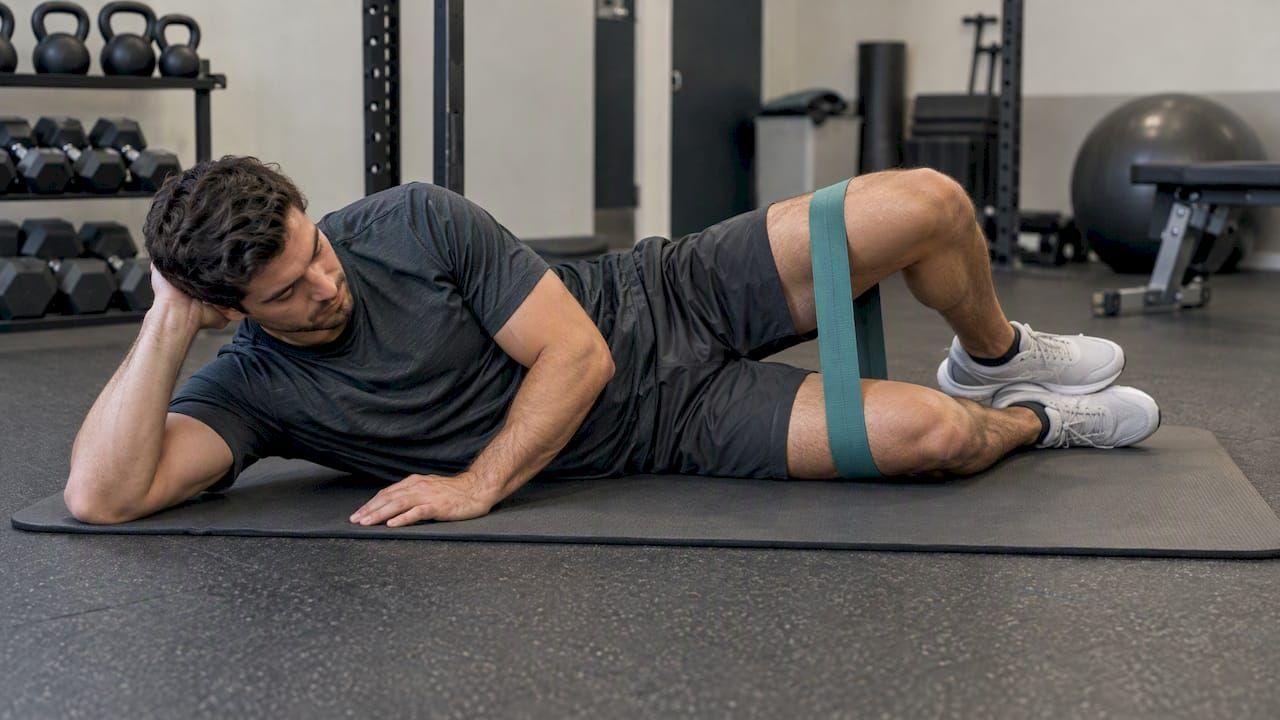
- Clamshell with a band. Knees bent, feet together, band above the knees. Open the top knee without rolling your pelvis back.
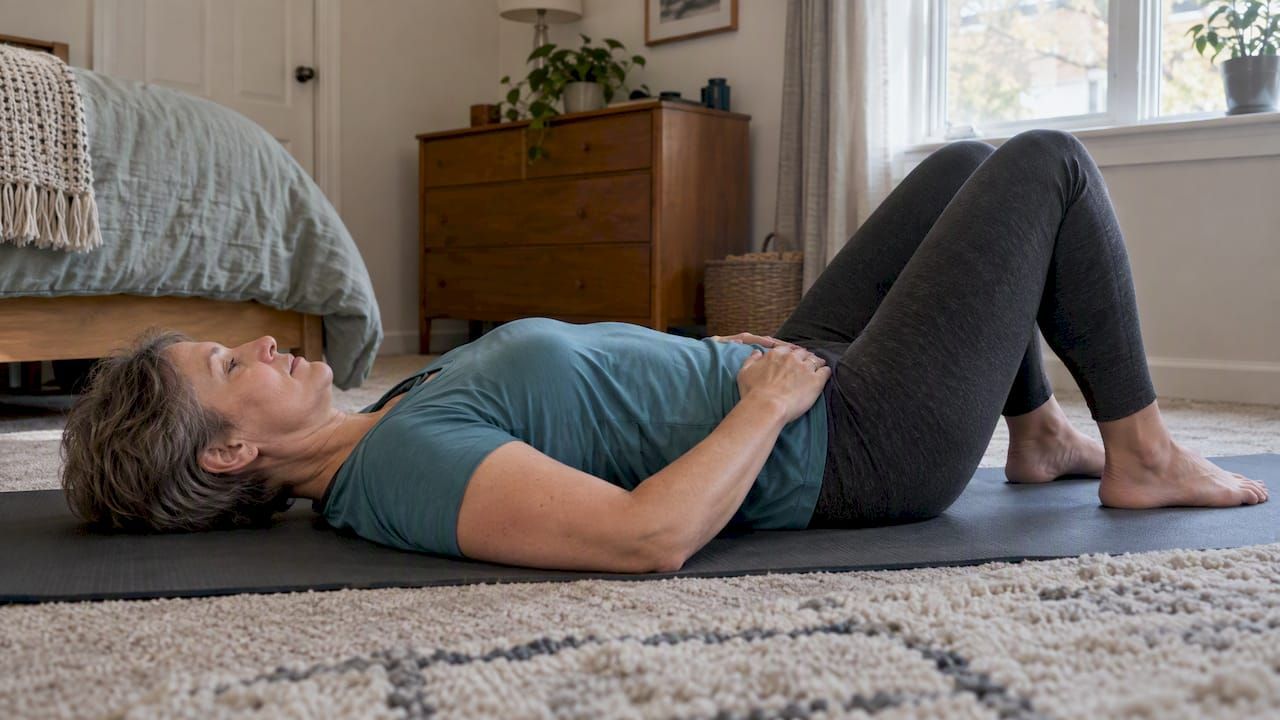
- Glute bridge. Feet flat, drive through your heels and lift your hips until your body forms a line from shoulders to knees. Pause one second at the top.
- Banded side step. Band above the knees, small athletic stance, step sideways keeping tension. Knees track over the second toe.
- Single-leg balance. Stand on the sore leg for 30 seconds, soft knee, hips level. Progress to reaching the opposite foot forward.
The point of this phase is control and endurance in the muscles that steer the thigh. It also gives your irritated joint a break from heavy loading while you still make progress.
Phase 2: add the quads in shallow ranges (about weeks 3 to 6)
Keep the hip work, and add:
- Mini squat to a chair. Sit back to a high chair or box and stand, staying within a shallow bend. Heels down, knees over toes without caving inward.
- Straight leg raise. Lying down, tighten the thigh, keep the knee straight, lift to the height of the other knee. A gentle way to wake up the quad when bending hurts.
- Terminal knee extension. Band behind the knee, slight bend, straighten fully against the band.
- Low step-up. A 4 to 6 inch step. Lead with the sore leg, lower slowly.
- Wall sit (isometric). Back on the wall, shallow angle, hold 20 to 30 seconds. Isometric holds are often tolerated when repetitions hurt.
If you want leg extensions, work in the 45 to 90 degree range from the table above, with light weight.
Phase 3: build capacity for your real life (about weeks 6 and beyond)
Now strengthening meets what you actually do:
- Forward step-down. Stand on a step, lower the opposite heel slowly toward the floor, tap, and rise. Watch for the knee diving inward.
- Split squat and reverse lunge. Keep depth within what stays comfortable, then progress it.
- Single-leg Romanian deadlift. Hinges at the hip, loads glutes and hamstrings together.
- Lateral band walks and single-leg bridges with more resistance.
- Return-to-run intervals. Alternate walking and easy jogging, increasing jog time only when the knee stays calm the next day.
A useful test is the one clinicians use: a single-leg squat and an eccentric step-down. If you can do 10 clean reps with level hips and no pain flare, you are close to a full return.
Stretching and the supporting cast
Stretching alone will not resolve this condition, but tight muscles can add to the load. Gentle hamstring, calf, quad and hip flexor stretches fit after your strengthening session, held 30 seconds, never forced into sharp pain. The Mayo Clinic also recommends a light five-minute warm-up before running or other exercise.
Exercise is the foundation, and other tools work alongside it. Per the JOSPT guidance, prefabricated foot orthoses, manual therapy and patellar taping are best treated as adjuncts to exercise and education, tailored to the individual rather than used on their own. If taping appeals to you, our article on kinesio tape for short-term knee pain relief covers what to expect.
Load management matters as much as the exercises
A best-practice guide that combined a systematic review with patient and expert input found that education on adjusting activity load is equally important as exercise. Pushing through the pain does not speed healing and can backfire. Adjusting frequency, intensity and volume of training is a primary part of treatment.
Practically, that looks like this:
- Cut weekly running volume by a third to a half, or swap some runs for cycling or swimming, until stairs and squats stop hurting.
- Avoid deep squats, long downhill running and heavy leg press at the bottom range during the irritable phase.
- Break up long sitting with a stand-up every 30 to 45 minutes. Desk posture can matter more than people expect, as we explain in what work habits could be doing to your knees.
- Return to full training by adding one variable at a time: distance, then pace, then hills.
Weekend athletes should also read our Tampa pick-up sports knee pain warning signs, because sudden bursts of cutting and jumping after a week at a desk are a classic trigger.
If you are over 50 or have been told you have low bone density, loading is still helpful, but the type and intensity matter. Resources on high-impact exercise and bone density explain how some people build bone with supervised impact work. Check with your clinician before adding any impact while your knee is painful.
Is it the kneecap or the tendon? Jumper's knee exercises
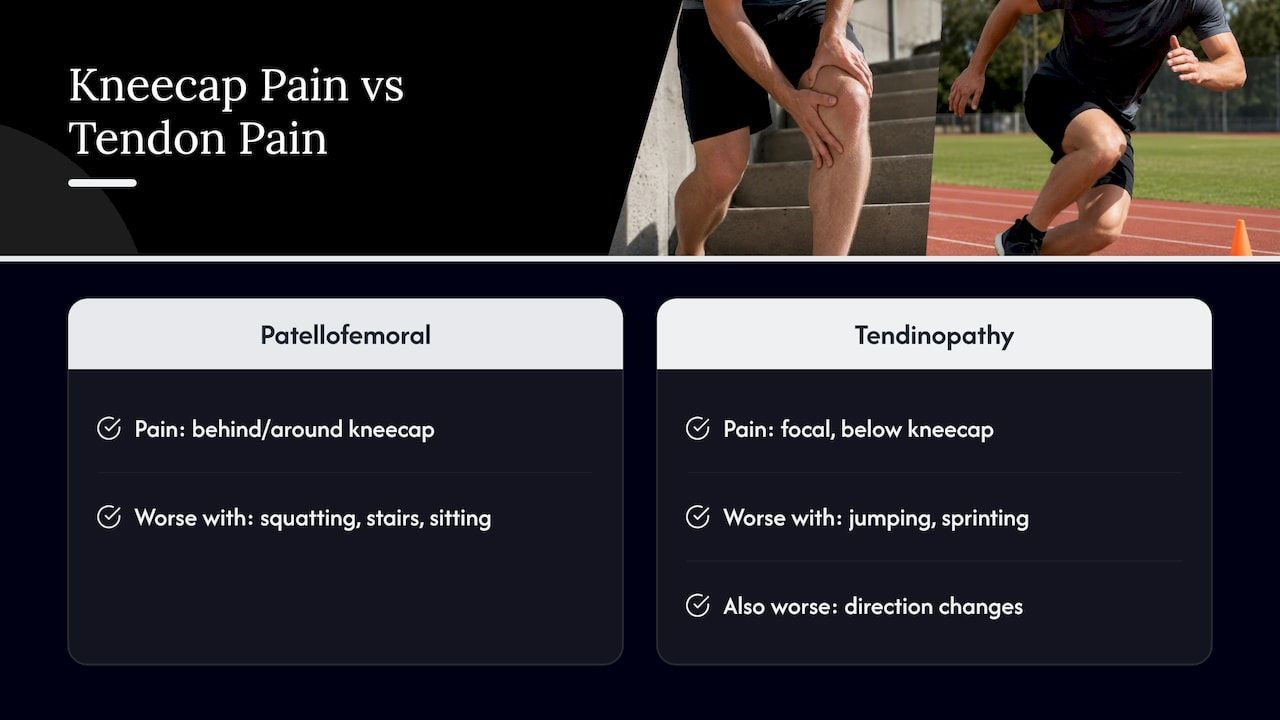
Many readers searching for patellar tendonitis exercises or jumper's knee exercises land on kneecap advice, and the two problems overlap but are not the same. Patellar tendinopathy usually hurts at a specific point just below the kneecap, often worse with jumping, sprinting and explosive changes of direction. Patellofemoral pain is more diffuse, behind or around the kneecap, and worse with squatting, stairs and sitting.
One reason to sort this out first: PFPS is a diagnosis of exclusion. A 2026 clinical perspective urges patients to describe symptoms precisely (aching versus locking, night pain) so that the plan targets the right structure instead of a generic list.
For the tendon, rehab typically emphasizes loading the tendon itself. A 2025 systematic review in PubMed Central evaluated isometric and eccentric exercises, alongside dry needling, for pain and function in patellar tendinopathy. In practice, that often starts with isometric holds such as a spanish squat or leg extension hold for pain relief, then progresses to slow eccentric work. Eccentric squats on a decline board, which some people search for, are one common option. Whether you should use a decline, how deep, and how many sets depends on how irritable the tendon is, so this is best set by someone who has examined the knee.
A quick rule: if your pain is right under the kneecap and spikes with jumping, treat it as tendon-related until a clinician says otherwise. If it is behind the kneecap and spikes with stairs and sitting, the plan above fits better.
When to stop and get examined
Self-guided exercise is reasonable for gradual, activity-related front-of-knee pain. See a physician, chiropractor or physical therapist promptly if you notice any of the following:
- The knee locks, catches or gives way
- Visible swelling, warmth or redness
- Pain at night or at rest
- Pain after a fall, collision or car accident
- No improvement after four to six weeks of consistent, appropriate exercise
These point to other structures, such as ligaments, meniscus, plica or the tendon, that need a different approach. A cause diagnosed properly on day one saves weeks of frustration.
Our perspective on knee pain rehab
We see the same pattern often: someone arrives with a printed list of eight knee exercises, has been doing them for a month, and is sore and discouraged. The list is rarely the problem. The mismatch is. The exercises may suit someone else's hips, someone else's running volume, or a different diagnosis altogether.
Our approach starts with finding out why this knee hurts in this person: how you move, how you load it, how strong your hips are, and whether your spine, pelvis or foot is feeding the problem. That is the root-cause thinking behind our personalized plans, which we describe in why personalized treatment plans deliver better pain relief. Our doctors include chiropractors with sports team backgrounds, so we are used to athletes who want to keep training while they heal, and to people whose biggest athletic event is the staircase at home.
We also believe in the boring parts: consistent reps, patient progression and honest load management. A good program should feel like a plan you can follow, not a punishment. If your knee is quiet enough to do more, we progress it. If it flares, we adjust the dose instead of blaming you.
Getting help in West Central Florida
If you would rather not guess, we can examine your knee, work out whether it is the joint or the tendon, and build a rehab plan around your sport and schedule. Our physical rehab program covers progressive strengthening and movement retraining, and our sports injury treatment is built for runners and athletes who want to get back to training. Hands-on care can also help reduce muscle tension that gets in the way, as outlined in our guide to manual therapy for muscle pain. We see patients at clinics in Tampa, Brandon, Sarasota, Lakeland and Pinellas Park, and you can schedule online through our main site.
For more on timelines, our companion article on beating runner's knee with evidence-based exercises goes deeper on the running side, and our overview of physical therapy exercises for pain relief shows how rehab fits a broader recovery.
FAQ
How long do patellofemoral pain exercises take to work?
Most people need several weeks of consistent work before the knee settles, and many need longer to return to full running or sport. The research favors exercise therapy for reducing pain over the short, medium and long term. Progress is usually uneven, so judge it by how stairs and squats feel over weeks, not by a single day.
Should I do VMO exercises specifically?
Not as a stand-alone fix. The VMO is part of the quadriceps and works along with the rest of the muscle in squats, step-ups and terminal knee extensions. Current guidance favors combined hip and knee strengthening over isolated quad training.
Can I keep running with runner's knee?
Often yes, in a reduced form. Lower your weekly distance, avoid long downhill runs, and use pain that settles within a day as your limit. If pain changes your stride, builds during the run, or lingers into the next day, take more rest days and have the knee assessed.
Are squats bad for patellofemoral pain?
Squats are not bad, but depth and load matter. Weight-bearing exercises at 0 to 45 degrees of knee bend are recommended to limit joint stress, and you can progress depth as pain allows.
Do I need a diagnosis before starting?
If your pain is gradual, front-of-knee and activity-related, starting a gentle program is reasonable. If you have locking, swelling, night pain or an injury, get examined first, because those signs suggest something other than patellofemoral pain.
Sources
- Patellofemoral Pain: Treating Painful Kneecaps, JOSPT
- NATA Position Statement: Management of Individuals With Patellofemoral Pain
- Current Evidence of Evaluation and Management of the Athlete with Patellofemoral Pain Syndrome
- Etiology of Anterior Knee Pain in the Adult
- Best practice guide for patellofemoral pain
- Clinical perspective on patellofemoral pain, 2026
- Patellofemoral pain in athletes: clinical perspectives, PMC
- Systematic review on dry needling, isometric and eccentric exercises in patellar tendinopathy, PMC
- Patellofemoral pain syndrome, Mayo Clinic
Recommended