Beat Runner's Knee in 4–6 Weeks With Evidence Based Exercises
Hip and glute strengthening, quadriceps stabilization, and targeted stretching form the core of any effective plan for patellofemoral pain. Start with clamshells, wall squats, and straight-leg raises two to three times per week, building gradually toward higher-volume sets as your knee tolerates it. Stop immediately if you feel sharp pain, and expect noticeable improvement within several weeks of consistent work. If pain persists past that window, it's time to see a clinician.
TL;DR:
- Consistent strength training with high repetitions, focusing on hip and quad muscles, is essential for recovery and preventing recurrence of runner's knee.
- Avoid sharp pain during exercises; regress the movement by reducing reps or switching to isometric holds to prevent setbacks.
- Building a weekly routine involves two to three sessions per week, gradually increasing volume and resistance as tolerated, with attention to proper form.
- Signs indicating the need for medical evaluation include persistent swelling, instability, joint locking, and pain that worsens after four to six weeks of treatment.
- Maintaining hip and quad strength year-round and modifying running techniques and surfaces can help prevent future episodes of runner's knee.

Table of Contents
- Before You Start These Runner Knee Pain Exercises
- Step-by-Step Exercises for Knee Pain Relief
- How to Build a Weekly Knee Rehab Routine
- When Should You See a Doctor for Knee Pain?
- How Do You Prevent Runner's Knee From Coming Back?
- Why Exercise Selection Matters More Than Motivation
- Getting Hands-On Help for Persistent Knee Pain
- Sources
- FAQ
Before You Start These Runner Knee Pain Exercises
Skipping the warm-up is the fastest way to turn a rehab session into a setback. Spend 5 to 10 minutes on easy walking or light stationary cycling before touching a single exercise. This raises blood flow around the kneecap without loading it the way running does.
You also need to know the difference between productive discomfort and a warning sign. Mild muscle fatigue or a dull ache during the last few reps is normal. Sharp, stabbing, or worsening pain around the kneecap is not, and pushing through it can set your recovery back rather than speed it up.
You don't need much gear: a resistance band, a low step or sturdy stair, and a mat cover most of what's below. If any move causes real pain, regress it. Swap a moving rep for an isometric hold, or simply cut the reps in half.
- Warm up 5 to 10 minutes before every session, even on rest-day rehab work
- Distinguish muscle soreness from joint pain: soreness fades, joint pain lingers or sharpens
- Skip step-ups or squats if your knee catches, locks, or gives way
- Have a band, a step, and a mat on hand before you begin
Pro Tip: If a move hurts during the first few reps, it's not "working through it," it's a signal to regress. Drop to fewer reps or an isometric hold at the same joint angle and rebuild from there.
Step-by-Step Exercises for Knee Pain Relief
Runner's knee, known clinically as patellofemoral pain syndrome, affects as many as 40% of runners and usually shows up after a spike in mileage or intensity. The pain sits behind or around the kneecap, and it responds best to a program that strengthens the muscles controlling how the kneecap tracks, rather than to rest alone.
- Clamshells. Lie on your side, knees bent to about 45 degrees, feet stacked. Keeping your feet together, lift the top knee like opening a shell, without rolling your hip back. Do multiple sets of repetitions per side, increasing volume as tolerated. Add a resistance band above the knees once bodyweight feels easy.
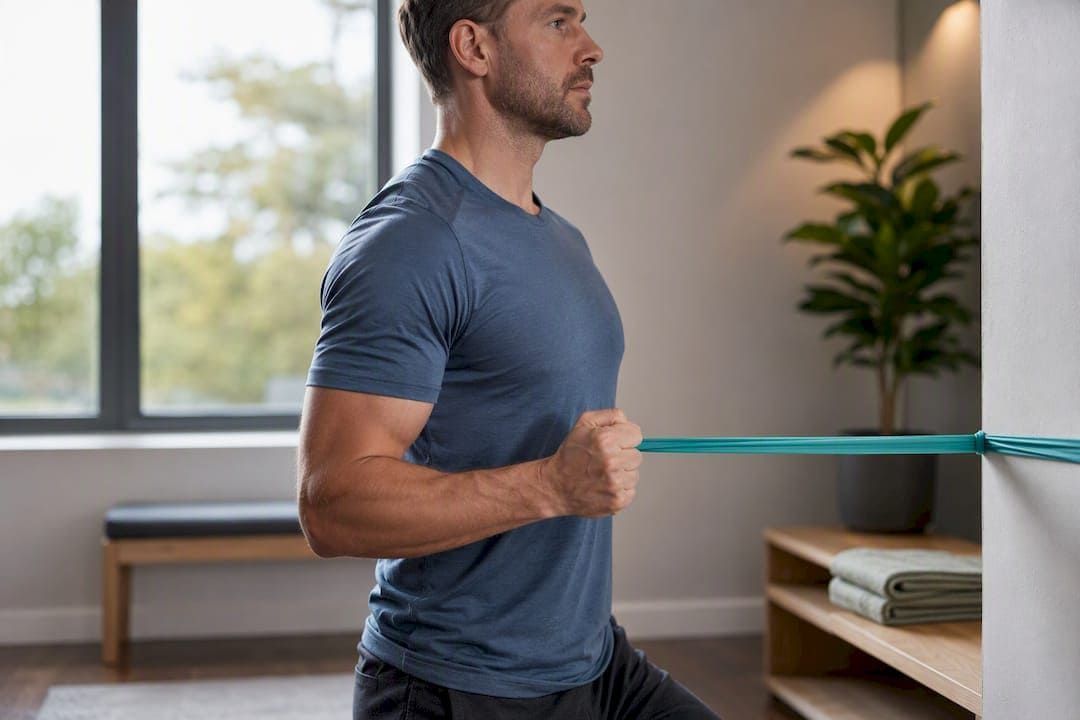
- Side-lying hip abduction and monster walks. These target the same glute medius muscle from a different angle, which matters because that muscle controls how much your knee drifts inward on a single-leg landing. Loop a band around your ankles or above your knees and step sideways in a mini-squat stance for 10 to 15 steps each direction.
- Straight-leg raises. Lie on your back, one knee bent and one leg straight. Tighten your quad, then lift the straight leg to hip height without letting the knee bend. This builds quad strength without putting compressive load through a painful kneecap, a useful entry point when knee flexion itself is aggravating.
- Wall sits and wall squats. Slide down a wall until your knees bend to a comfortable angle, hold for several seconds, and build duration as tolerance improves.
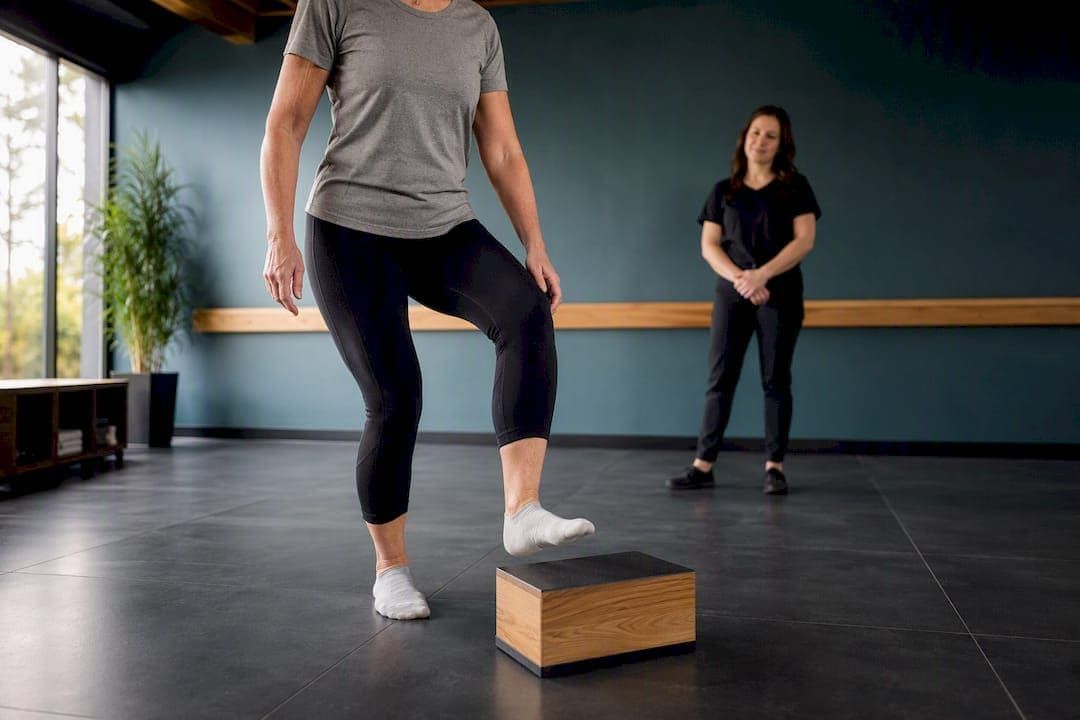
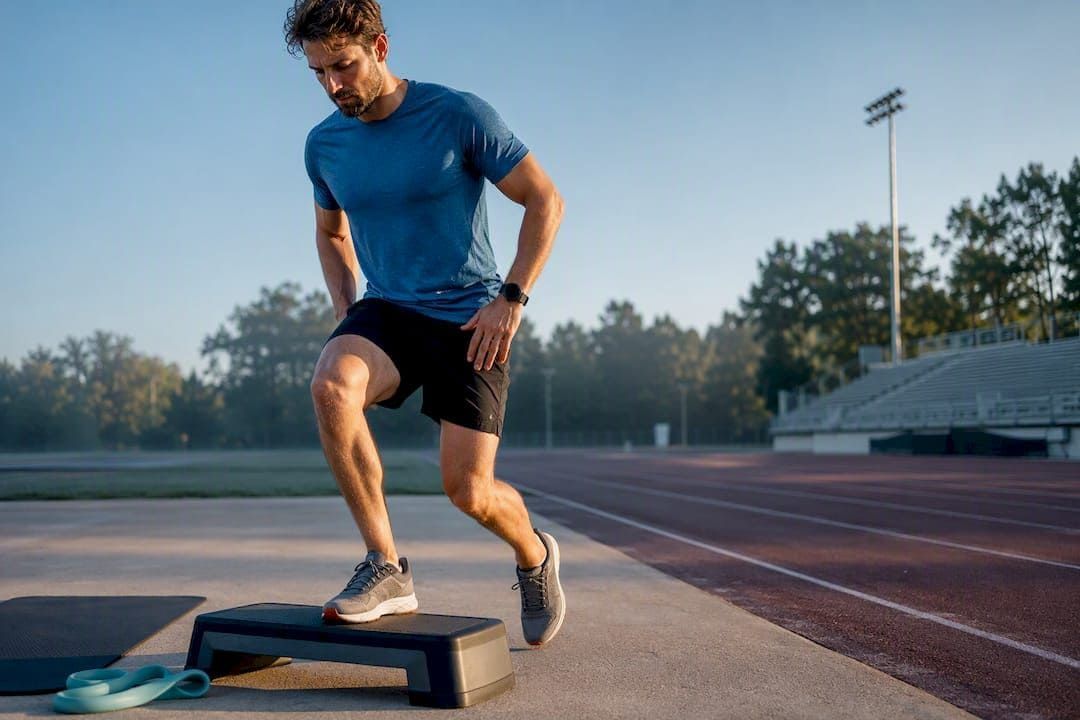
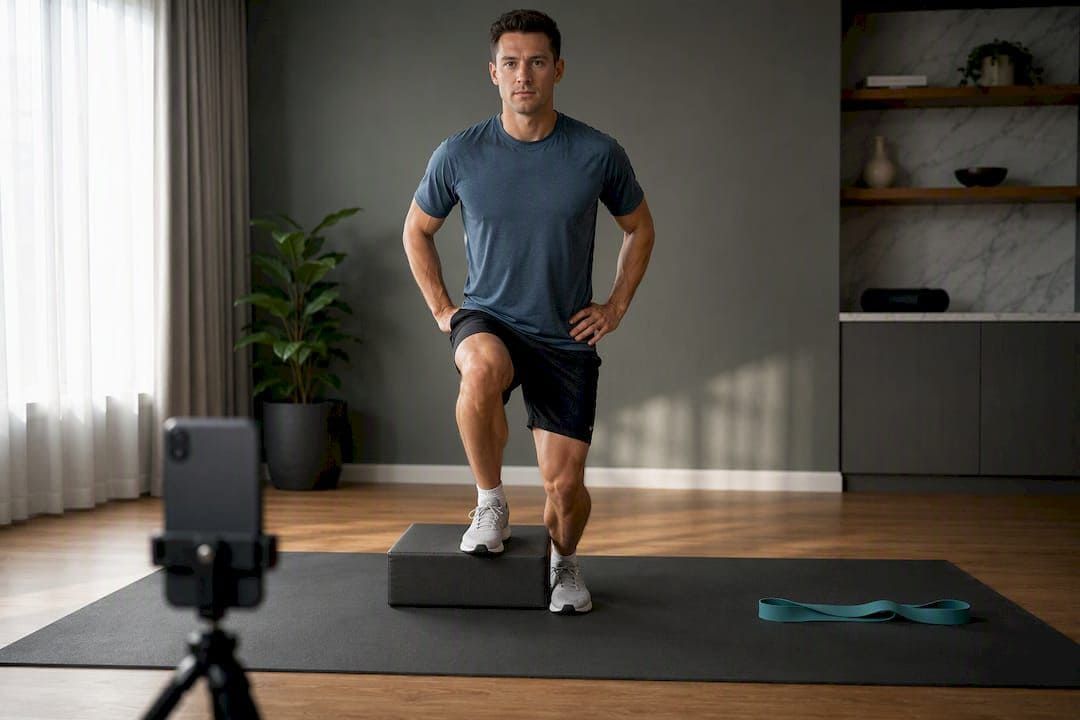
- Step-ups and eccentric step-downs. Step up onto a low box, then control the descent slowly on the way down instead of dropping. This single-leg loading pattern mirrors what happens at every stride of a run, and gradual loading rather than avoidance is what actually rebuilds functional stability around the joint.
- Hamstring, quad, hip flexor, and calf stretches. Hold each stretch 30 to 60 seconds, repeating 2 to 3 times per muscle group, and do this after your strength work or after an easy run rather than cold.
Clinical guidance for patellofemoral pain points toward high-volume training as tolerated, progressing toward three sets of 30 or more repetitions, three times per week, for exercises like clamshells and straight-leg raises. That's a higher rep range than most general strength programs use, and it's specific to how this condition responds to rehab.
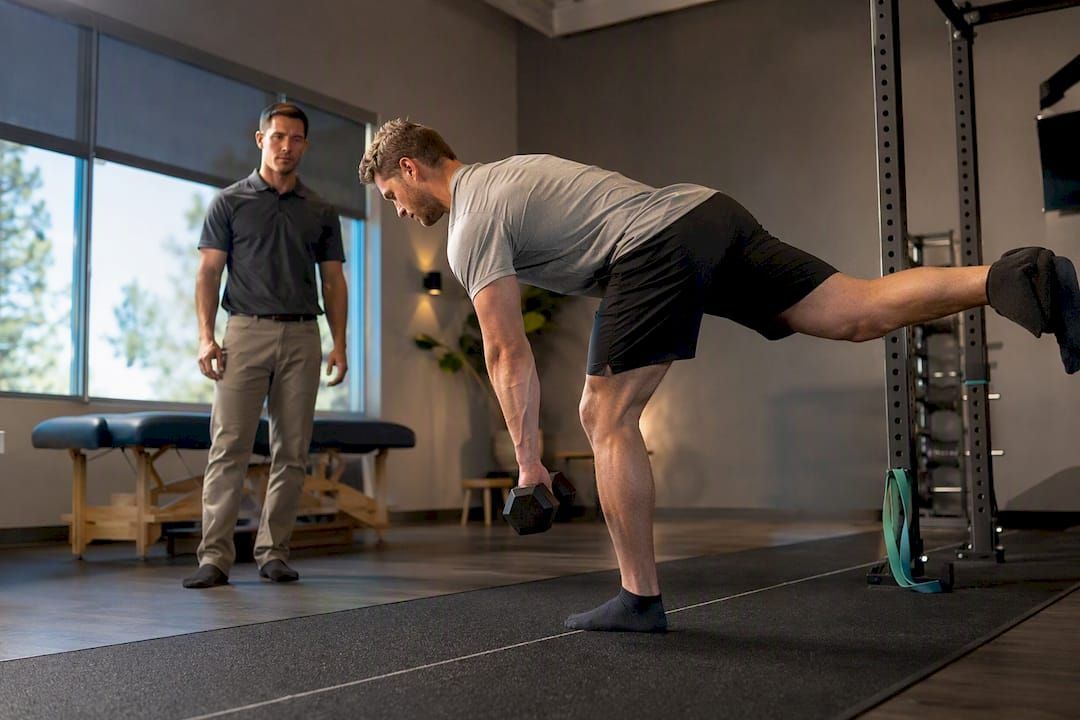
The most common technique errors are knee valgus (the knee caving inward during a squat or step-down) and a hip hike (one hip lifting to compensate for weak glutes). A mirror or a training partner watching from the front catches both instantly. Clinicians often cue a neutral pelvis and a flat thigh line rather than just counting reps, because form breakdown under fatigue is exactly when these compensations creep in.
Pro Tip: Film your step-downs on your phone from the front. If your kneecap drifts inward as you lower, that's the valgus pattern clinicians look for, and it's usually a glute weakness issue, not a knee issue.
A structured mix of strengthening and stretching, introduced gradually, consistently outperforms passive rest for this condition. Our physical therapy exercise guidance covers how to layer these movements into a broader recovery plan.
How to Build a Weekly Knee Rehab Routine
A beginner plan and a return-to-run plan need different volumes, but both follow the same logic: strength first, symptoms dictate pace.
- Beginner plan (weeks 1 to 4). Two sessions per week, 2 sets of 10 to 15 reps per exercise. Focus entirely on form. Over time, aim to gradually increase exercise volume on exercises like clamshells and straight-leg raises, monitoring pain levels carefully.
- Return-to-run plan (intermediate). Once you're back to running, shift strength work to 3 sessions per week, ideally on non-running days or after easy runs, never before a hard session. Add one or two cross-training days (cycling, swimming, elliptical) to keep aerobic fitness up while reducing impact load on the knee.
- Progression rule. If the last few reps of a set feel manageable with no sharp pain the next day, add reps, sets, or band resistance. If pain flares, drop back one step and hold there for a few more sessions before pushing again.
Our therapeutic exercise programming guide walks through how to track this kind of symptom-guided progression week over week.
When Should You See a Doctor for Knee Pain?
Most cases of runner's knee respond to consistent home exercise within four to six weeks. Some signs mean you shouldn't wait that long.
- Significant swelling around the kneecap that doesn't settle within a day or two
- A feeling of instability, or your knee "giving way" during normal walking
- Locking or catching sensations when you bend or straighten the knee
- Inability to bear full weight on the leg
- Pain that's still worsening after four to six weeks of consistent, correctly performed exercise
A clinician evaluating runner's knee will typically look at movement quality during a squat or step-down, test for specific strength deficits at the hip and quad, and assess your running gait. Imaging is not usually the first step. It gets used when the exam suggests something else is going on. Before your visit, bring a short symptom log, a note of your recent training volume, and your current running shoes. Our page on when to see a chiropractor for leg pain breaks down these red flags in more detail.

How Do You Prevent Runner's Knee From Coming Back?
Recovery doesn't mean you're done with the exercises. Drop clamshells, wall sits, and step-downs to once or twice a week for maintenance, and the strength gains that got you pain-free tend to stick.
- Keep hip and quad strength work in your routine year-round, even at low volume
- Increase your running step rate slightly rather than overstriding on downhills
- Avoid long, steep downhill running early in your return, since it loads the kneecap hardest
- Swap one weekly run for low-impact cross-training if symptoms flare with volume
- Base training load decisions on how your knee actually feels, not a fixed weekly mileage percentage
Worth knowing: short-term patellar taping can ease pain for some runners, but braces and knee sleeves don't have strong evidence behind them, and custom orthotics haven't shown a clear edge over off-the-shelf inserts for most people.
Pro Tip: If a specific run route or workout consistently triggers your symptoms, that's more useful information than any brace. Change the route or the surface before you reach for gear.
Why Exercise Selection Matters More Than Motivation
Most runners don't fail at rehab because they lack discipline. They fail because they pick the wrong exercises, or they do the right ones at a volume too low to matter. Clinical guidelines pushing toward three sets of 30-plus reps sound excessive next to a typical gym routine, but that volume reflects what actually changes how the kneecap tracks under load, not what feels like a reasonable workout.
The other underrated piece is sequencing. Runners often jump straight to step-downs and squats because those feel more "sport-specific," while skipping isolated glute work that builds the control those bigger movements need. In clinic, we see the opposite order work better: build hip control in isolation first, then layer it into functional single-leg patterns. Exercise is genuinely first-line care here, but when pain doesn't shift after weeks of consistent work, that's not a sign to try harder alone. It's a sign something in the movement pattern needs hands-on evaluation.
Getting Hands-On Help for Persistent Knee Pain
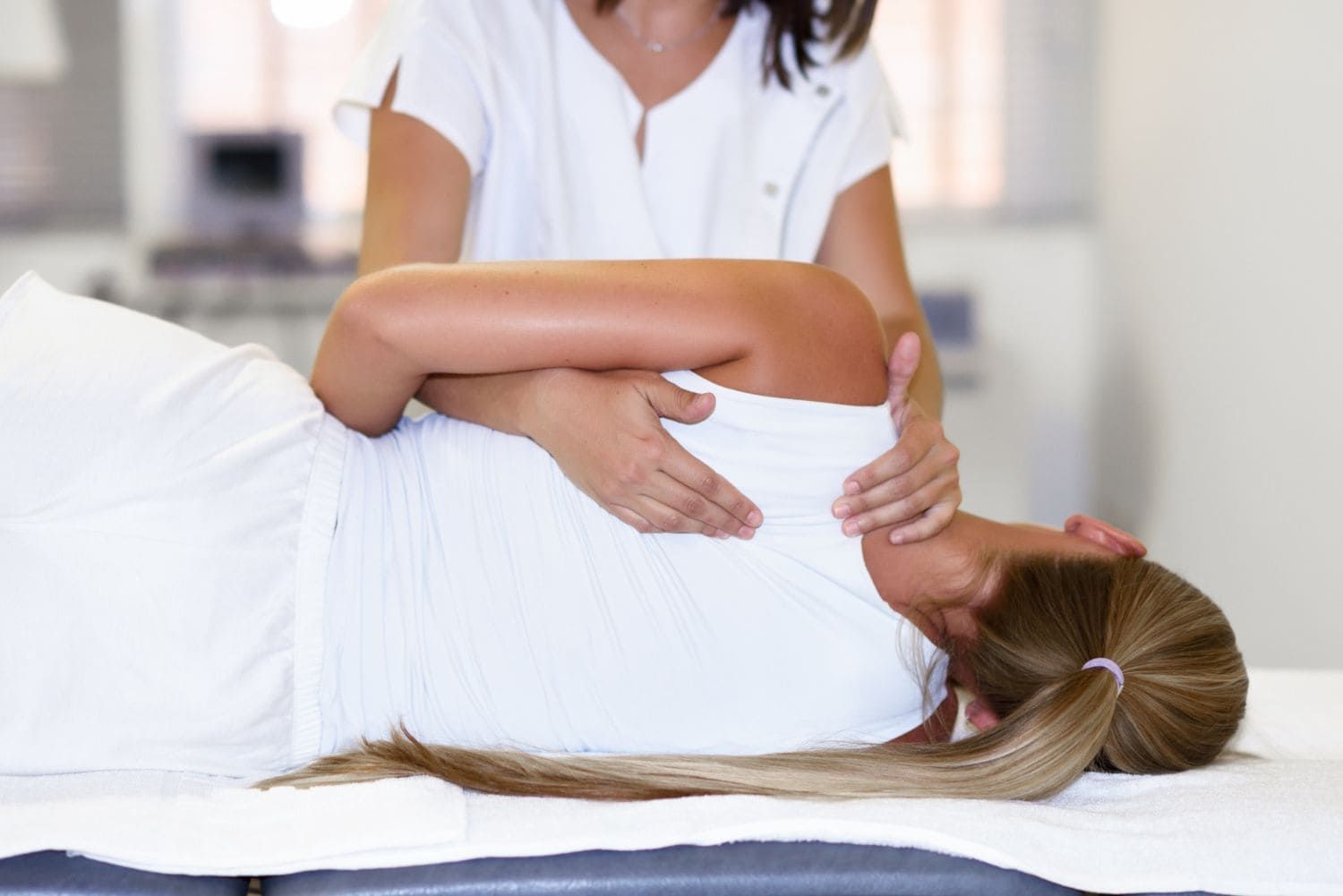
If your knee pain hasn't budged after weeks of consistent home exercise, it may be time to consider professional sports injury and physical rehab services. Runners get a movement assessment that home exercises can't replicate: gait analysis, targeted strength testing, and hands-on treatment aimed at whatever's actually driving the kneecap tracking issue.
A first visit typically involves a review of your training history, a functional movement screen, and a discussion of which exercises you've already tried and how your knee responded. That's especially useful for runners stuck in a loop of doing "the right exercises" without a plan that adjusts based on results. If you've hit that wall, explore sports injury treatment at one of Essentialchirocare's West Central Florida locations and get a plan built around your actual movement pattern, not a generic list.
Sources
Guideline recommendations on exercise volume and progression come from the AAFP's clinical review, with exercise program structure detailed in NCBI's clinical bookshelf and stretching protocols from HSS.
This article is general information, not a substitute for advice from a qualified doctor. Consult a qualified healthcare professional about your own circumstances before acting on anything here.
FAQ
What is the fastest way to fix runner's knee?
Consistent hip and quad strengthening combined with proper stretching, done 2 to 3 times per week, brings the fastest improvement for most people, typically within four to six weeks. There's no shortcut that replaces that consistency.
How do I manage knee pain as a runner without stopping completely?
Reduce mileage and avoid hills rather than stopping entirely, add strength work on non-running days, and swap one run per week for low-impact cross-training like cycling or swimming. Total rest often leads to the same pain returning once you resume running.
Will runner's knee pain go away on its own?
It can improve with reduced training load alone, but it comes back quickly without addressing the underlying hip and quad weakness that usually causes it. A structured exercise program clears it faster and more durably than rest by itself.
How do you strengthen the knee for runner's knee?
Focus on the muscles around the knee rather than the joint itself: clamshells and monster walks for the glutes, straight-leg raises and wall sits for the quads, and step-downs for functional single-leg control. If progress stalls past a month, a clinical assessment can identify what your home program is missing.