6–8 Minute Glute Activation Routine for Runs and Heavy Lifts
6–8 Minute Glute Activation Routine for Runs and Heavy Lifts
A 6 to 8 minute activation sequence, built from an isometric hold, a resisted pattern, and a dynamic move, reliably wakes up the glutes before most workouts or runs. Hip thrusts and step-up variations post some of the highest recorded gluteus maximus activation of common exercises, so they anchor the routine. Keep reading for the exact steps, cues, and a 60-second test to confirm it worked.
TL;DR:
- Keep activation sets to one or two per move with short rests; stop when the squeeze turns into fatigue, before your main workout.
- Warm-up activation may improve movement control, but research finds performance gains inconsistent, and these drills cannot replace progressive resistance training at least twice weekly.
- Afterward, test a bridge on one leg: feel the glute and keep hips level; if hamstrings or back dominate, repeat the first two moves.
- Runners can use 3 to 5 minutes of bridges, lateral walks, and paused lunges, then add dynamic drills and easy strides before running.
- If you still cannot feel your glutes after weeks of consistent cueing, or pain persists, seek an assessment rather than adding more activation drills.
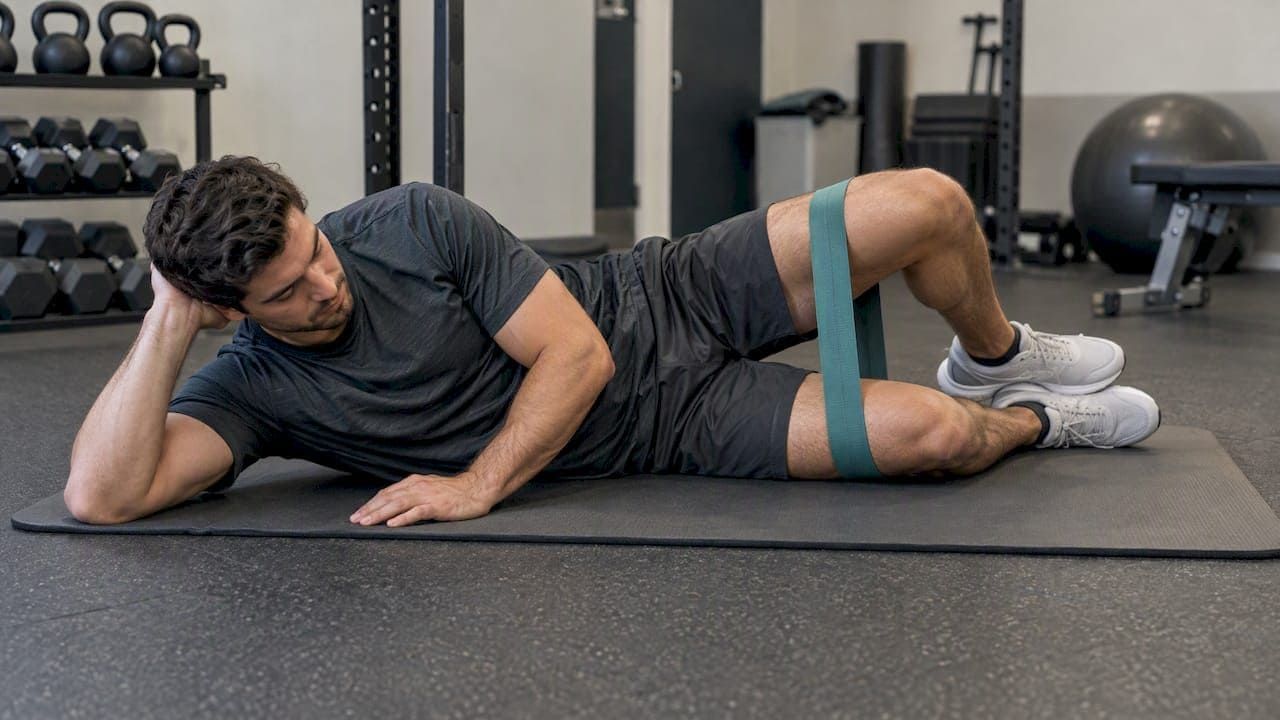
Table of Contents
- What Glute Activation Actually Means
- Why a Glute Activation Warm-Up Helps Your Workouts and Running
- A 6 to 8 Minute Glute Activation Routine You Can Do Right Now
- Curated Glute Activation Moves by Target and Progression
- Choosing Band Tension and Progressing Without Pre-Fatiguing
- A Short Pre-Run Activation Protocol
- Quick Tests to Confirm Your Glutes Are Firing
- What the Research Shows and What Our Clinicians Recommend
- Consistency Beats Clever Cues
- How chiropractic and physical therapy services support movement when activation issues persist
- FAQ
- Sources
What Glute Activation Actually Means
Glute activation is not about switching on a muscle that was previously off. It is neural priming: a short burst of targeted movement that improves the connection between your brain and your glutes so they fire on cue during a squat, a lunge, or a running stride. Some people have a strong mind-muscle connection with their glutes already. Others, often from sitting for long stretches or relying on their quads and lower back to do the work, need a few minutes of deliberate cueing before the glutes pull their weight.
Three muscles make up the glute group, and each plays a distinct role:
- Gluteus maximus : the largest of the three, drives hip extension in squats, deadlifts, sprinting, and climbing stairs.
- Gluteus medius : sits on the side of the hip, controls pelvic stability and prevents the knee from caving inward during single-leg movements.
- Gluteus minimus : works alongside the medius for hip abduction and rotational control, especially during walking and running.
Activation is different from strength training. A strength session builds the muscle's capacity over weeks through progressive resistance. Activation is the few minutes before that session where you remind your nervous system which muscles should be doing the work, so the heavier lifts or the run that follows recruit the right tissue instead of defaulting to compensatory patterns.
Why a Glute Activation Warm-Up Helps Your Workouts and Running
When your glutes fire properly, your squats track better, your deadlift locks out with less low back strain, and your running stride gets more push from the hip instead of the calf and lower back absorbing the load. Lifters who struggle to feel their glutes during a hip thrust often find that two minutes of a banded clamshell beforehand changes the sensation entirely: the same exercise suddenly feels like it is hitting the right spot.
A gluteal warm-up can potentiate the nervous system , meaning less neural drive is needed to produce the same or greater force output during the activity that follows, though performance benefits are inconsistent across studies. Some athletes see a measurable jump in explosive output after activation work. Others see no change in peak force but report better movement quality and a stronger sense of control.
That split result matters for how you use this tool. Activation is not a shortcut to more strength or speed. It is a readiness check, a way to prepare the tissue and the connection before you load it heavier.
A few practical benefits show up consistently across lifters and runners:
- Better load transfer in squats, deadlifts, and lunges, since the hips extend fully instead of the lower back compensating.
- Improved pelvic control during single-leg movements like step-ups and running strides, reducing knee cave and hip drop.
- Sharper body awareness going into a heavy set, which often translates to cleaner technique under fatigue.
The takeaway: use activation to prepare the glutes for the work ahead, not as a substitute for the progressive resistance training that actually builds strength over time.
A 6 to 8 Minute Glute Activation Routine You Can Do Right Now
This sequence follows a specific order on purpose: an isometric hold first to establish the mind-muscle connection without fatigue, then a resisted pattern to reinforce it under light load, then a compound movement that integrates the pattern into something closer to your main lift or run. Each step builds on the one before it.
- Glute bridge hold (isometric prime): Lie on your back, knees bent, feet flat. Squeeze your glutes and lift your hips until your body forms a straight line from shoulders to knees. Hold for 20 seconds, lower, repeat for 2 sets with 15 seconds of rest between.
- Banded clamshell (resisted pattern): Loop a light resistance band above your knees, lie on your side with hips and knees bent. Keep your feet together and open your top knee like a clamshell, squeezing the glute at the top. Do 10 to 12 reps per side, 2 sets, minimal rest.
- Banded lateral walk (resisted pattern): Band above the knees or around the ankles, feet hip-width apart, knees slightly bent. Step sideways in a controlled, athletic stance for 10 steps each direction, 1 set.
- Single-leg hip thrust or step-up (compound integration): Shoulders on a bench, one foot planted, drive through the heel to extend the hip fully. Alternatively, step up onto a box, driving through the lead heel rather than pushing off the trailing leg. Do 8 reps per side, 1 set.
- Walking lunge with a pause (dynamic integration): Step into a lunge, pause for one second at the bottom, squeeze the glute of the front leg to stand. Do 8 to 10 steps per leg, 1 set.
Pro Tip: Drive through your heel, not your toes, on every move in this sequence. It shifts the load toward the glute and away from the quad almost instantly.
The whole sequence takes 6 to 8 minutes including rest. Keep the volume low. Two sets per move at most, short rests, controlled tempo. The goal is to prime the glutes, not tire them out before your main workout.
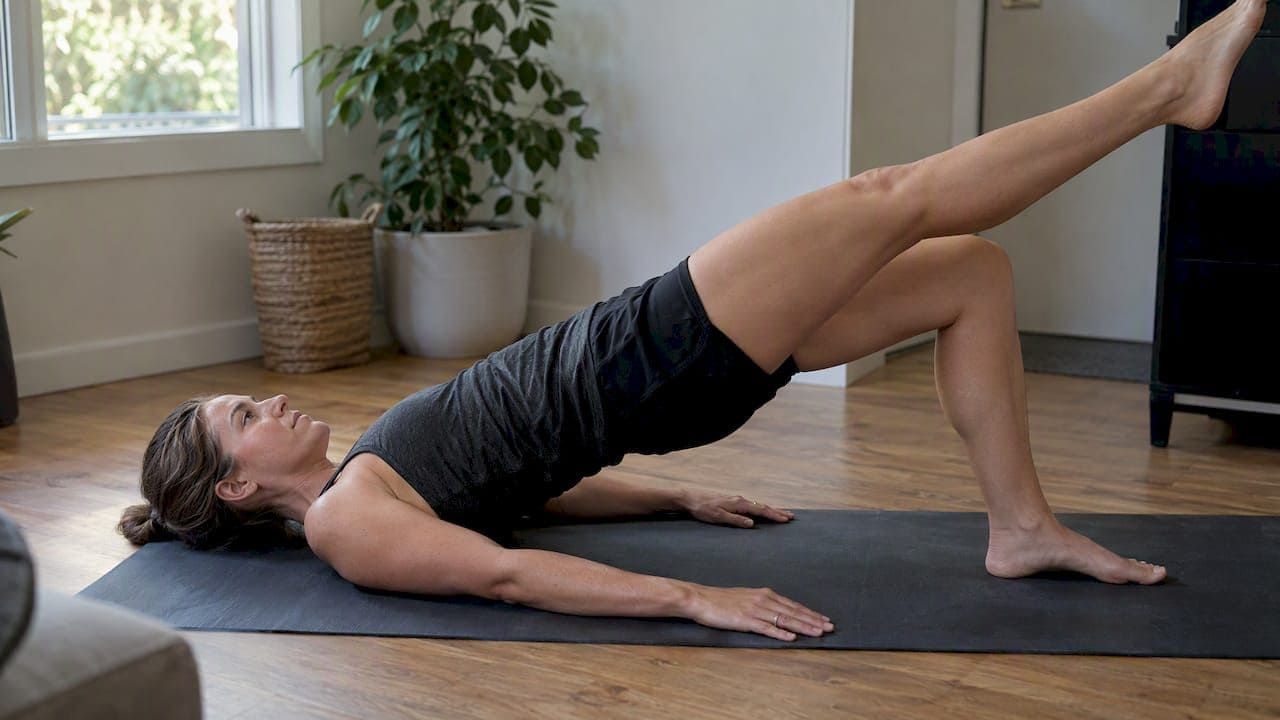
Before you load anything heavier, run this 60-second check: lie on your back, lift one knee to 90 degrees, and press that foot into the floor to raise your hips. If you feel a clear squeeze in the glute of the working leg and your hips stay level without the lower back arching excessively, the activation worked. If you feel it mostly in your hamstring or lower back, repeat step one and two before moving on.
Curated Glute Activation Moves by Target and Progression
Different exercises bias different parts of the glute group. Building a small rotation of moves for each target gives you options when equipment or time is limited.
Gluteus maximus movements
Step-up variations, hip thrusts, deadlifts, and split squats consistently rank among the exercises producing the highest gluteus maximus activation, exceeding 60% of maximum voluntary contraction in systematic review data.
- Glute bridge : Bodyweight version of the hip thrust, done on the floor. Squeeze at the top for a full second before lowering.
- Barbell hip thrust : Shoulders on a bench, barbell across the hips, drive up until hips are fully extended. Add a pad under the bar for comfort.
- Step-up : Box or bench at knee height, drive through the lead heel, avoid pushing off the back foot.
- Romanian deadlift : Hinge at the hips with a slight knee bend, lower the weight along your shins, feel the stretch and squeeze through the glutes and hamstrings.
- Split squat : Rear foot elevated or flat, lower straight down, drive up through the front heel.
Regress any of these by dropping the load or range of motion (a glute bridge instead of a hip thrust, a bodyweight split squat instead of a loaded one). Progress by adding a barbell, a resistance band, or by moving to a single-leg version.
Gluteus medius and minimus movements
For the smaller stabilizing muscles, hip hitch and pelvic drop variations, side-lying abduction with internal rotation, and resisted side-stepping produce high muscle activity and work well for targeting hip stability specifically.
- Clamshell : Side-lying, knees bent, band above the knees, open the top knee while keeping feet together.
- Side-lying hip abduction : Lie on your side, top leg straight, lift it toward the ceiling while keeping the hip stacked, not rolled back.
- Hip hitch : Stand on a step with one foot hanging off the edge, drop that hip down and then lift it back up using the standing-side glute.
- Resisted side-step : Band around the ankles or above the knees, step sideways in a half-squat stance, keeping tension on the band throughout.
- Banded lateral walk : Same setup as the side-step, but continuous steps in one direction for 10 to 15 steps before switching.
Choose side-lying abduction and the clamshell when you want low-impact, floor-based options. Choose hip hitches and side-steps when you want a standing move that carries over more directly to walking and running mechanics.
Single-leg focus and loading options
Single-leg work forces each hip to stabilize independently, which is often where activation issues actually show up. A single-leg glute bridge, a single-leg Romanian deadlift, or a single-leg step-up all expose weaknesses that a two-leg version can hide.
Equipment choices worth knowing:
- Mini bands : Cheap, portable, and the easiest way to add resistance to clamshells, walks, and bridges.
- Loop bands with more tension : Useful once bodyweight clamshells and walks feel too easy.
- A bench or step : Needed for hip thrusts, step-ups, and elevated split squats.
- A light barbell or hex bar : Reserved for lifters already comfortable with bodyweight hip thrusts and looking to add load gradually.
Progress a move by adding band tension, elevating your feet, or moving from bilateral to single-leg. Regress by removing the band, reducing range of motion, or returning to a two-leg version until form is solid.
Choosing Band Tension and Progressing Without Pre-Fatiguing
Band placement changes which muscles do the work. A band positioned above the knee biases the gluteus medius and minimus more directly, which is useful for clamshells and lateral walks. A band around the ankles increases the lever arm and demands more from the whole hip complex, which works well for side-steps and monster walks once the above-knee version feels too easy.
Tension should scale with your training age, not your ego:
- Beginners : Start with a light band, enough to feel resistance without breaking form, especially on side-lying and clamshell movements.
- Intermediate : Move to a medium band once you can complete all sets with a clean squeeze and no hip rocking.
- Advanced : Heavy bands or ankle placement, reserved for lifters who already have a reliable mind-muscle connection and want more carryover to loaded lifts.
For the compound movements, bench elevation turns a step-up into a harder, more specific version of a lunge or split squat. A light barbell or hex bar adds load to hip thrusts and deadlifts once bodyweight versions feel too easy, but save barbell work for your main training session rather than the activation warm-up itself.
Pro Tip: If you can't tell whether a band is too heavy, try the move for 5 reps. If your hips rock side to side or your lower back takes over, drop down a tension level.
The progression ladder for most lifters looks like this: bodyweight bridge and clamshell, then banded versions of the same, then single-leg bodyweight, then single-leg with a band, then loaded compound movements in the main workout. Keep activation sets to 1 or 2 per move with short rest. The moment you start to feel fatigue rather than a clean squeeze, you have crossed from priming into pre-fatiguing, which works against the heavier lifting or running that follows.
A Short Pre-Run Activation Protocol
Runners need less volume and more single-leg, dynamic work since running is inherently a single-leg activity. A 3 to 5 minute version of the full routine covers the essentials without cutting into your run.
- Glute bridge , 10 reps, to wake up the hip extensors.
- Banded lateral walk , 10 steps each direction, to prime hip stability.
- Single-leg glute bridge , 6 reps per side, to mimic the single-leg loading of a stride.
- Walking lunge with a pause , 6 steps per leg, to bridge into dynamic movement.
Timing matters more for runners than for lifters, since the warm-up needs to transition directly into the run. Do this sequence as close to your run start as practical. The exact ideal rest window between activation and performance is not firmly established, with some warm-up research suggesting raised muscle temperature matters as much as the specific activation drills themselves, so err on the side of finishing your activation work within a few minutes of heading out.
Follow the activation moves with a short round of dynamic drills, leg swings, high knees, butt kicks, then 2 to 3 minutes of easy striding before settling into your pace. This sequence takes the nervous system from isolated activation to the full running pattern in a logical progression, rather than jumping straight from a clamshell on the floor to a hard effort.
Quick Tests to Confirm Your Glutes Are Firing
Before you load a heavier set or head out for a run, a couple of fast checks tell you whether the activation work actually did its job.
- Single-leg glute bridge test : Lie on your back, one knee bent and foot flat, the other leg extended straight. Lift your hips by driving through the planted heel until your body forms a straight line. A pass feels like a clear squeeze in the glute of the working leg, with your hips staying level and no pinching sensation in your lower back.
- Standing hip hinge check : Push your hips back as if closing a car door with them, keeping your spine neutral. If you feel the stretch and tension in your glutes and hamstrings rather than your lower back, the pattern is working.
- Single-leg balance with a slight knee bend : Stand on one leg for 10 seconds. A stable hip with no wobble or inward knee collapse suggests the medius is doing its job.
If any of these feel off, a few targeted cues usually fix it fast: drive through your heel rather than your toes, keep your ribs stacked over your pelvis rather than flaring them upward, and hinge at the hips rather than rounding through the lower back. These three adjustments resolve most activation issues without needing a deeper diagnostic session.
What the Research Shows and What Our Clinicians Recommend
The clearest finding across EMG research is that specific exercises reliably outperform others for targeting each glute muscle. Step-up variations, hip thrusts, and deadlifts produce the highest gluteus maximus activation among common strength exercises, while hip hitch, pelvic drop, and side-lying abduction with internal rotation produce the highest gluteus medius activation in therapeutic exercise research. That split is why the routine in this guide pairs a medius-focused move like the clamshell with a maximus-focused move like the hip thrust rather than relying on one or the other.
The 2026 ACSM resistance training update makes a point worth remembering : for most healthy adults, the biggest long-term strength gains come from simply starting and sticking with regular resistance training, at least twice a week, rather than from advanced techniques layered on top of inconsistent training. Activation work supports that foundation. It does not replace it.
From a clinical standpoint, glute activation issues often show up alongside lower back pain, hip pain, or recovery from an injury, since a weak or poorly firing glute forces the lower back and hamstrings to pick up slack they were not built to carry long term. Our therapeutic exercise approach folds activation work into a broader rehab plan rather than treating it as an isolated fix, which matters when pain is driving the dysfunction rather than simple disuse.
A few practical notes worth carrying into your own routine:
- Persistent inability to feel your glutes after weeks of consistent cueing is often a sign to get an assessment for sacroiliac joint dysfunction or a related mechanical issue rather than a sign to keep adding more activation drills.
- Hamstring dominance during hip extension moves can point to an underlying imbalance worth addressing through a structured hamstring rehab pathway.
- For athletes returning from injury, our team at NOW Orthopedics covers phased rehab progressions that pair well with activation principles once cleared for loaded movement.
Consistency Beats Clever Cues
Activation drills get a lot of attention because they are quick, satisfying, and easy to feel working in the moment. That immediacy is exactly why people lean on them too hard. A clamshell before your squat will not fix a glute that has been undertrained for years, and no amount of banded walks substitutes for the slow accumulation of strength that comes from lifting heavier, more often, over months.
The mind-muscle connection these drills build is real and useful, especially for people who genuinely cannot feel their glutes working. But the goal should always be to graduate from needing the cue to simply having the strength. Track your reps, your load, and how a move feels over several weeks rather than judging a single session. Small, boring progressions beat chasing a better warm-up every time your results stall.
If you have done the work consistently and something still feels off, that is a signal worth listening to rather than working around.
How chiropractic and physical therapy services support movement when activation issues persist
When glute activation problems do not resolve with consistent cueing and progressive training, the cause is often mechanical rather than a matter of effort. There are services built specifically for that gap between a home warm-up routine and a full recovery plan.
- Physical Rehab : supervised, progressive exercise plans that address movement patterns feeding into poor glute recruitment, not just the symptom.
- Sports Injury Treatment : assessment and treatment for athletes whose activation struggles trace back to a past or current injury.
- Chiropractic Adjustments : addressing joint restrictions in the hip, pelvis, or lower back that can limit how well the glutes fire in the first place.
- Manual Muscle Therapy : hands-on work to release tension in compensating muscles so the glutes can take over the load they are meant to carry.
If weeks of activation work have not translated into better movement or less pain, our team can take a closer look and build a plan around your specific pattern. Visit our physical rehab page to learn more or schedule an evaluation at one of our West Central Florida clinic locations.
FAQ
What is the best exercise to activate glutes?
Hip thrusts and step-up variations consistently show some of the highest gluteus maximus activation among common exercises, making them strong choices for a maximus-focused warm-up. For the gluteus medius specifically, side-lying hip abduction and hip hitch variations tend to produce the highest activation.
What prevents glute activation?
The most common culprits are prolonged sitting, weak mind-muscle connection from underuse, and compensatory patterns where the lower back or hamstrings take over hip extension instead of the glutes. Hip or pelvic joint restrictions can also block proper glute recruitment, which is why persistent issues sometimes need a clinical assessment rather than more warm-up drills.
How often should I do a glute activation routine?
Most people benefit from doing activation work before each workout or run rather than as a separate daily session, since its purpose is to prime the muscle right before you load it. Two short sets per move with minimal rest is enough. More frequent or higher-volume activation work does not add benefit and can pre-fatigue the muscle before your main training.
Can glute activation help with lower back pain?
A glute that fires properly reduces the load the lower back has to absorb during hip extension movements like squats, deadlifts, and walking, which can ease strain that stems from that specific compensation pattern. It is not a substitute for a full assessment if pain persists, since lower back pain can have multiple contributing causes.
Do I need equipment for glute activation exercises?
No, bodyweight moves like glute bridges, clamshells, and step-ups are effective on their own, especially for beginners. A light resistance band adds useful tension for clamshells and lateral walks once bodyweight versions start to feel too easy.
Sources
Recommended