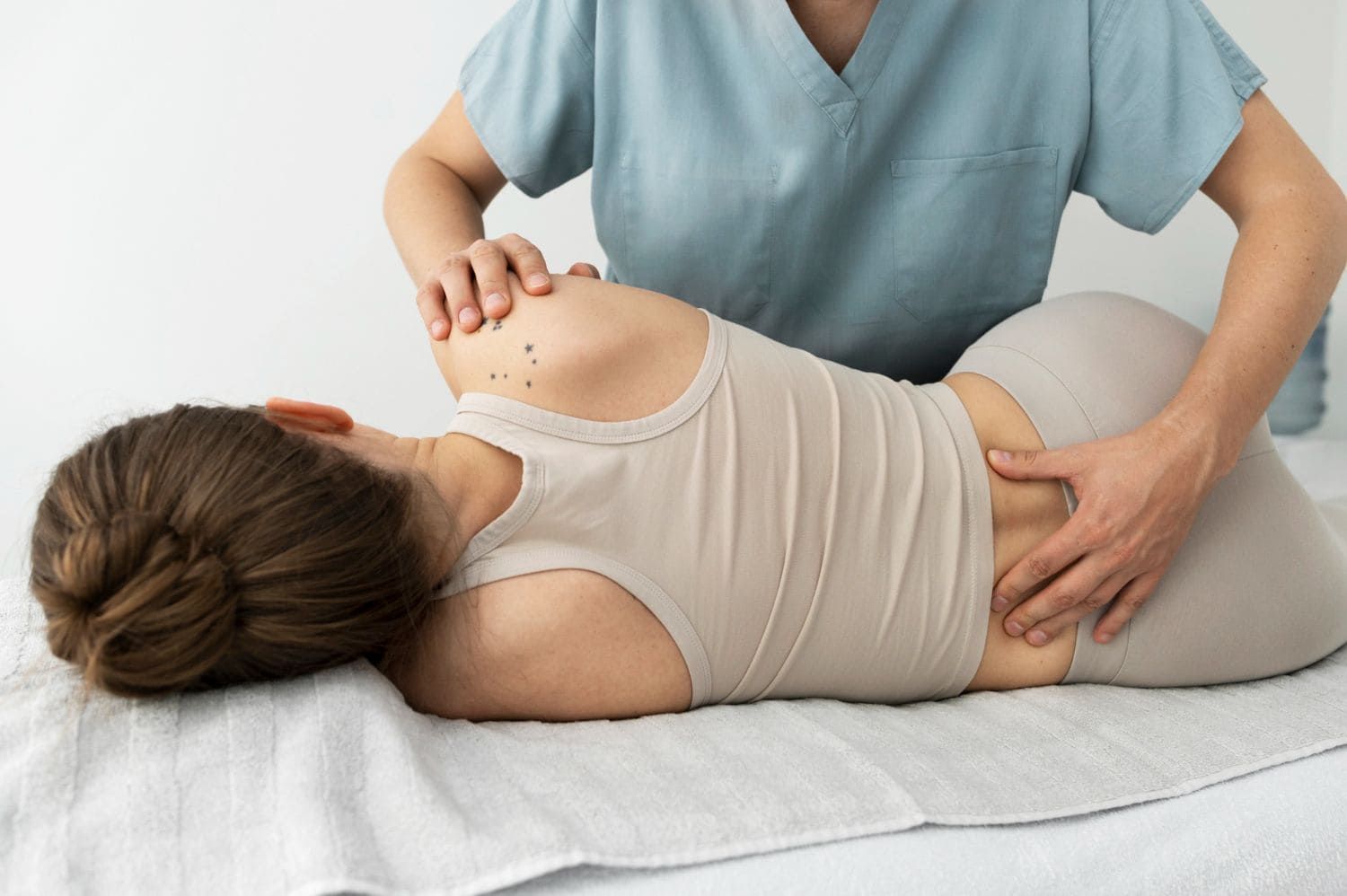
Rotator Cuff Rehab: Why Exercise Anchors Chiropractic Care
Yes, chiropractic care, combined with a structured exercise program, can help many people recover from rotator cuff pain without surgery. The AAOS 2025 guideline names structured exercise as foundational, and most patients improve without an operation. Surgery stays an option for select, persistent, or severe cases. This type of conservative care is typically offered in local clinics, and if symptoms or weakness persist after a supervised program, imaging and a surgical consult are reasonable next steps.
TL;DR:
- Manual therapy may improve pain and function when paired with exercise, but evidence for manipulation or passive treatment alone is sparse and mixed.
- Progress from gentle motion in the first 2 weeks to band resistance by weeks 2 to 6, then task specific loading after week 6.
- Train two to three times weekly, using two to three sets of eight to twelve repetitions; raise resistance only when full motion feels pain free.
- Seek prompt assessment for sudden weakness, inability to raise the arm, fever, or spreading redness; weakness persisting after six to twelve supervised weeks warrants imaging.

Table of Contents
- How We Diagnose a Rotator Cuff Injury
- What the Rotator Cuff Does and When It Gets Hurt
- What Research and Clinical Guidelines Say About Non-Surgical Care
- Chiropractic Treatments We Use for Rotator Cuff Pain
- Your Rehab Roadmap and Home Exercise Program
- What Timeline and Outcomes to Expect From Conservative Care
- When to Escalate Beyond Conservative Care
- What to Expect From a Chiropractic Clinic
- A Straight Opinion on Conservative-First Shoulder Care
- How to Start Rotator Cuff Care With Essential ChiroCare
- FAQ
- Sources
How We Diagnose a Rotator Cuff Injury
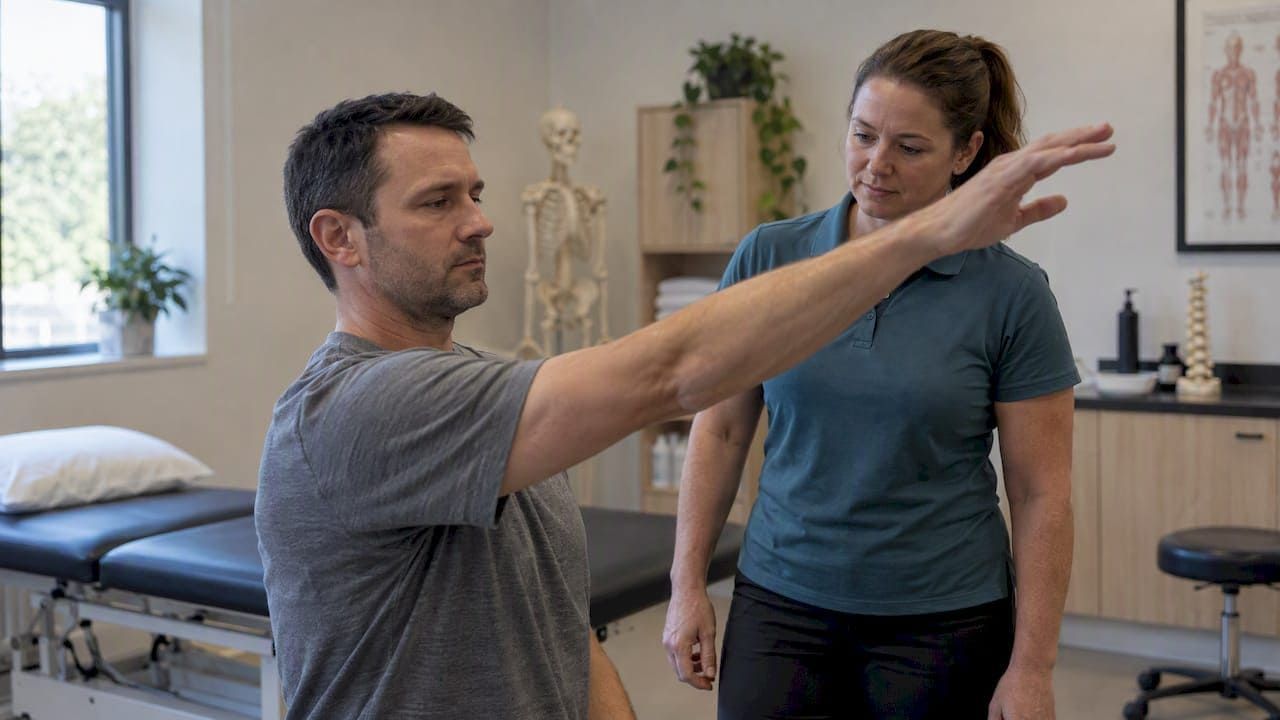
A thorough history comes first: whether the pain started suddenly or crept in over months, whether it worsens with specific activities, whether it wakes you up at night, any prior shoulder surgery, and any numbness or tingling that might point to a nerve issue rather than a tendon problem.
From there, we move to hands-on testing:
- A painful arc test to see where in the motion range pain spikes.
- The empty can test and external rotation lag sign to check specific rotator cuff muscles.
- Impingement tests paired with a full active and passive range-of-motion assessment.
When findings suggest a significant tear, ongoing weakness, or no response to early conservative care, we order or refer out for imaging such as ultrasound or MRI, and coordinate with orthopedic or physiatry colleagues when the case calls for it.
What the Rotator Cuff Does and When It Gets Hurt
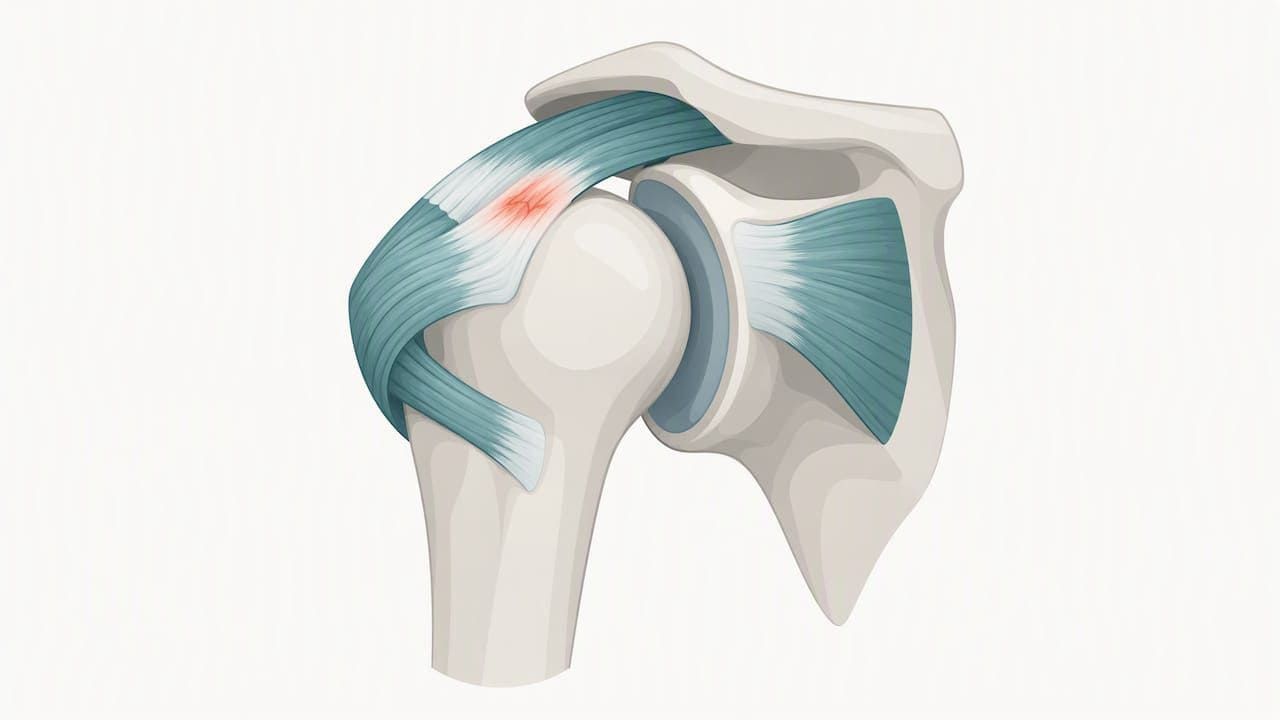
The rotator cuff is four muscles and tendons (supraspinatus, infraspinatus, teres minor, and subscapularis) that stabilize the shoulder joint and guide arm rotation and lift. Repetitive overhead work, tendinopathy, acute tears, impingement, and age-related wear are the usual causes of trouble.
Typical symptoms include:
- Pain during overhead reaching or lifting.
- Night pain that disrupts sleep.
- Weakness or a hard time lifting the arm away from the body.
- Catching, clicking, or a sense of instability in the joint.
Two signs deserve prompt evaluation rather than a wait-and-see approach: sudden, profound weakness in raising the arm, and any new systemic symptom like fever alongside shoulder pain.
What Research and Clinical Guidelines Say About Non-Surgical Care
A synthesis of Cochrane systematic reviews found that strengthening exercises, whether alone or combined with manual therapy, carry the greatest medium and long-term benefit compared with surgical procedures for many rotator cuff conditions. A 2024 meta-analysis backs this up: manual therapy added to exercise improved pain and function more than exercise alone.
Most rotator cuff patients respond to conservative treatment without needing surgery , according to the AAOS 2025 Clinical Practice Guideline, which treats structured exercise as the backbone of care. Manual therapy alone has thinner evidence behind it, but the data consistently favors pairing it with exercise rather than using it as a standalone fix. Surgery remains the right call when pain or function stays impaired after an adequate conservative trial, or for certain tear patterns that do not respond to rehab.
Chiropractic Treatments We Use for Rotator Cuff Pain
Treatment at this stage blends several hands-on approaches, each chosen for a specific goal rather than applied as a blanket protocol.
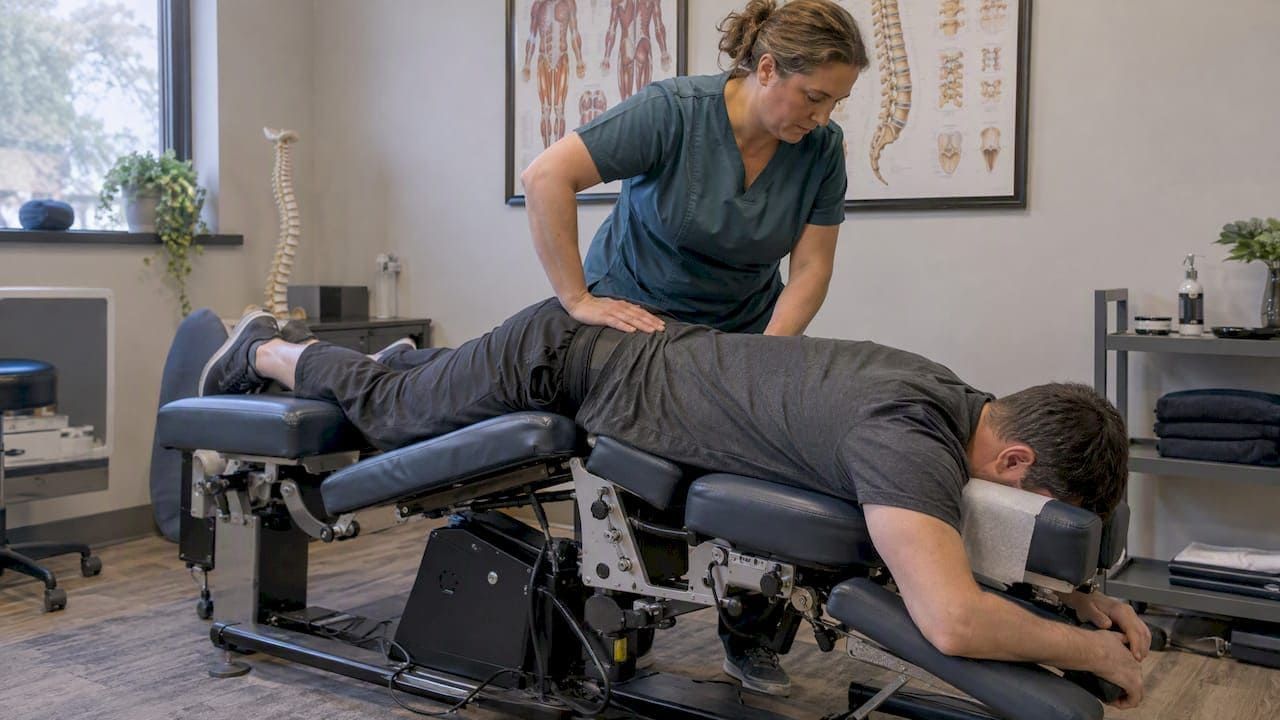
- Joint adjustments and mobilizations , aimed at the thoracic spine, cervical spine, or glenohumeral joint, to restore motion that the shoulder depends on for normal mechanics.
- Soft-tissue techniques such as ischemic compression, cross-friction massage, and instrument-assisted soft-tissue mobilization, used when tight or scarred tissue is limiting motion or irritating a tendon.
- Adjunct modalities like therapeutic ultrasound, electrical stimulation, cryotherapy, and dry needling where available, which play a supporting role in pain and inflammation control rather than driving the recovery on their own.
A systematic review of thrust manipulation paired with a single conservative intervention found the evidence sparse and results mixed when manipulation stood alone, reinforcing why we never rely on passive techniques by themselves. Our manual therapy approach treats these tools as a bridge to the real work: progressive strengthening.
Pro Tip: Ask your provider how each passive technique in your plan connects to a specific strengthening goal, not just symptom relief.
Your Rehab Roadmap and Home Exercise Program
Recovery follows a phased progression, and skipping ahead usually backfires.
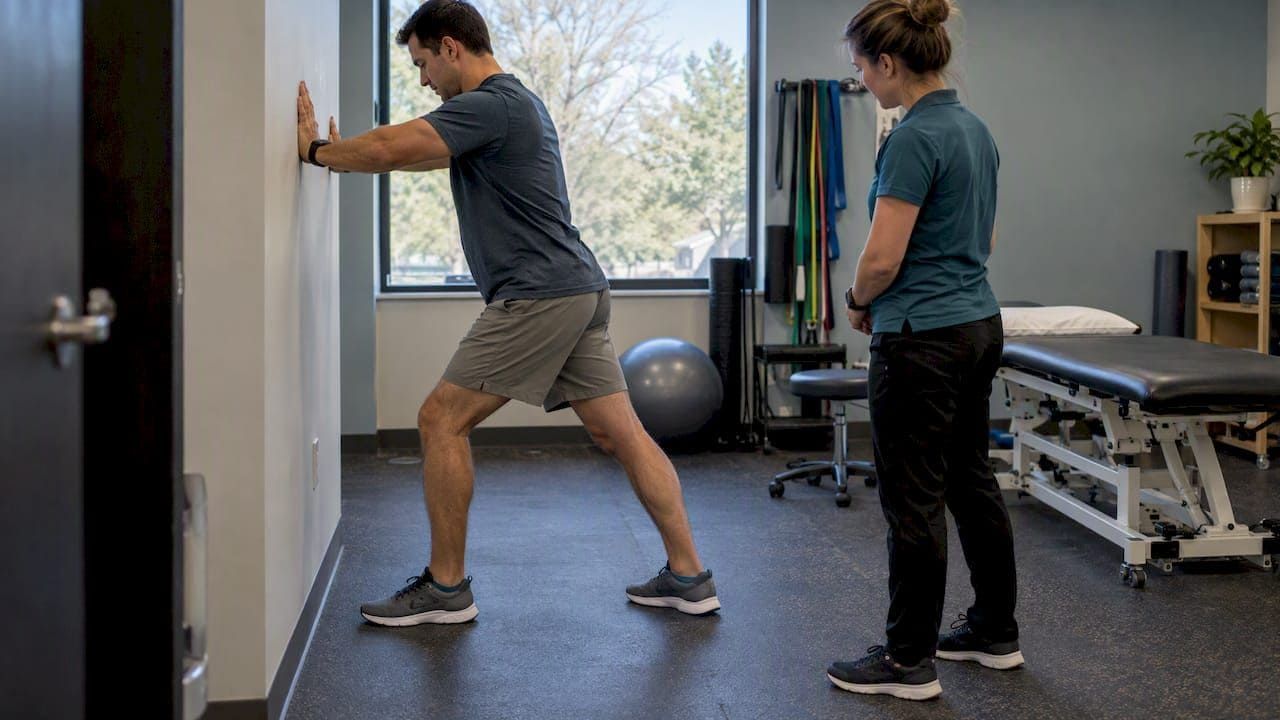
- Weeks 0 to 2: Focus on pain control and gentle range of motion. Pendulum swings and passive internal and external rotation keep the joint moving without loading the healing tendon.
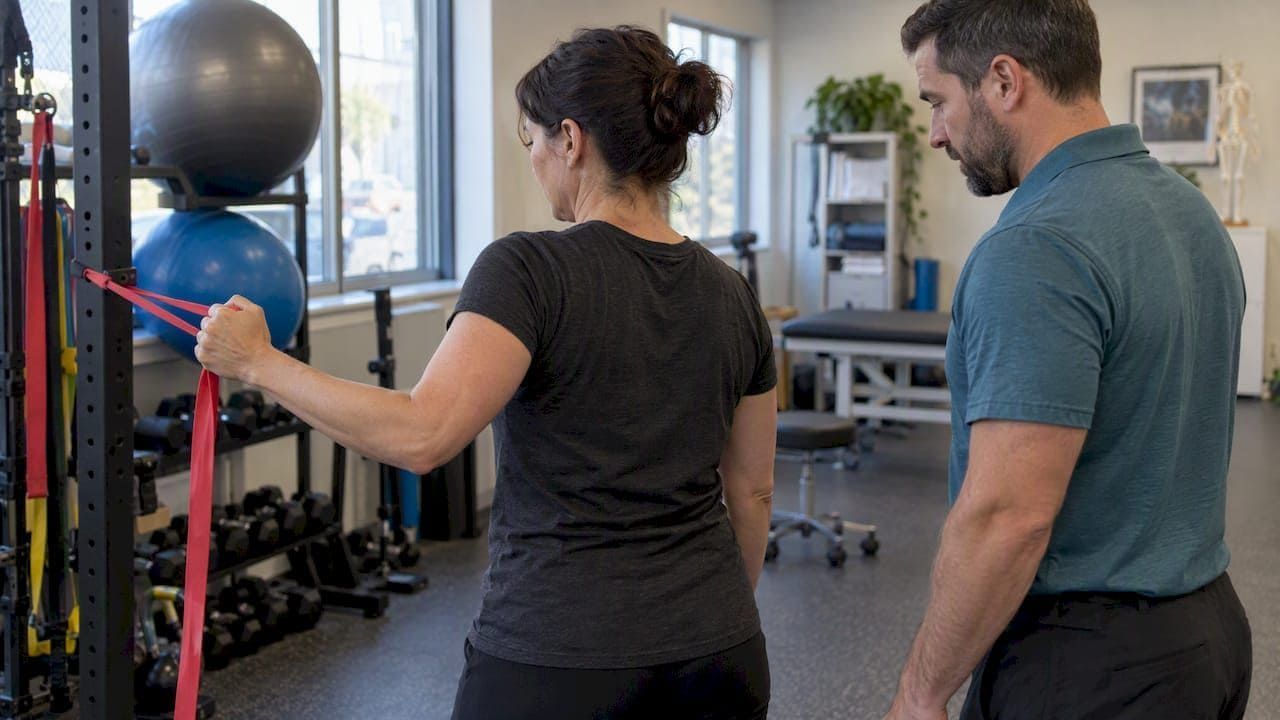
- Weeks 2 to 6: Begin isometric activation, then progress to resisted external rotation with a light band and scapular stabilization work like band rows and shoulder blade retraction.
- Weeks 6 to 12 and beyond: Add progressive loading, eccentric exercises, and sport- or work-specific strengthening, building toward clear return-to-activity criteria rather than a calendar date.
Plan on two to three strength sessions per week, usually two to three sets of eight to twelve repetitions once you move past isometric holds. Progress the resistance only when the current level feels easy and pain-free through full motion; drop back a level if an exercise produces sharp pain rather than the expected muscle fatigue. Our home exercise guidance walks through this progression in more detail.
Pro Tip: Sharp, localized pain during an exercise means stop and reassess, dull muscle fatigue means you are on track.

What Timeline and Outcomes to Expect From Conservative Care
Most people notice some relief within days to a few weeks once passive care and early exercises start calming irritated tissue. Meaningful functional gains, like lifting overhead without pain or sleeping through the night, generally build across six to twelve weeks of consistent rehab.
A large majority of patients with a rotator cuff tear improve with nonsurgical treatment , according to AAOS OrthoInfo, which tracks closely with the outcomes we see in active rehab patients. Recovery pace varies: a larger tear or a physically demanding job or sport can mean a longer rehab arc or an earlier conversation about surgery. When progress stalls after an adequately supervised program, imaging and a surgical consult become the sensible next move rather than continuing to push the same plan indefinitely.
When to Escalate Beyond Conservative Care
Certain signs mean conservative care should pause for a closer look rather than continue on schedule.
- Sudden, profound weakness or inability to raise the arm.
- Progressive numbness or tingling down the arm.
- Fever or other systemic symptoms, especially after a recent injury or wound.
- Signs of infection such as spreading redness or warmth around the joint.
When weakness or function fails to improve after six to twelve weeks of supervised care, or when the exam suggests a large tear, we order or refer for ultrasound or MRI. Bring a clear symptom timeline, any prior imaging, and your rehab notes to a specialist visit so the next clinician can pick up exactly where your conservative program left off.
What to Expect From a Chiropractic Clinic
Rotator cuff plans are built around the individual, not a template, including chiropractic adjustments, manual therapy, progressive rehab, and coordinated referrals when more than conservative care is needed. Clinics in multiple locations often offer this care. Some teams include doctors with sports team backgrounds, which influences their approach to shoulder injuries in active patients.
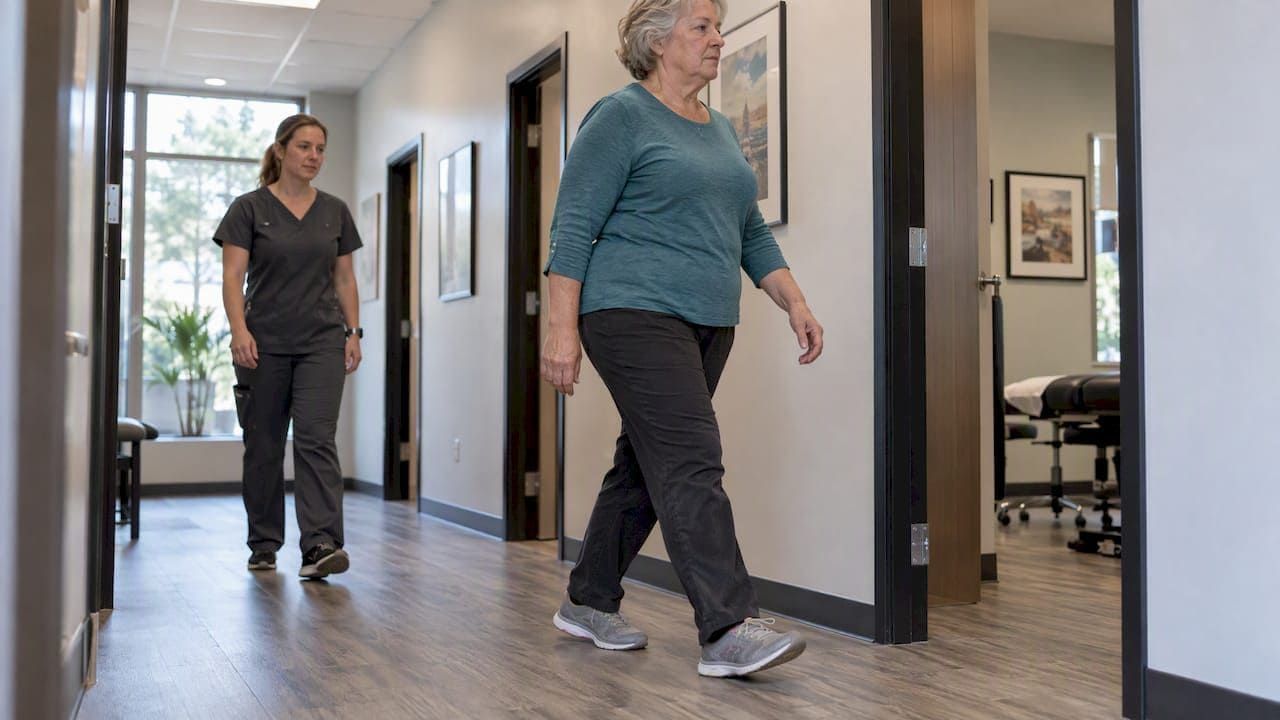
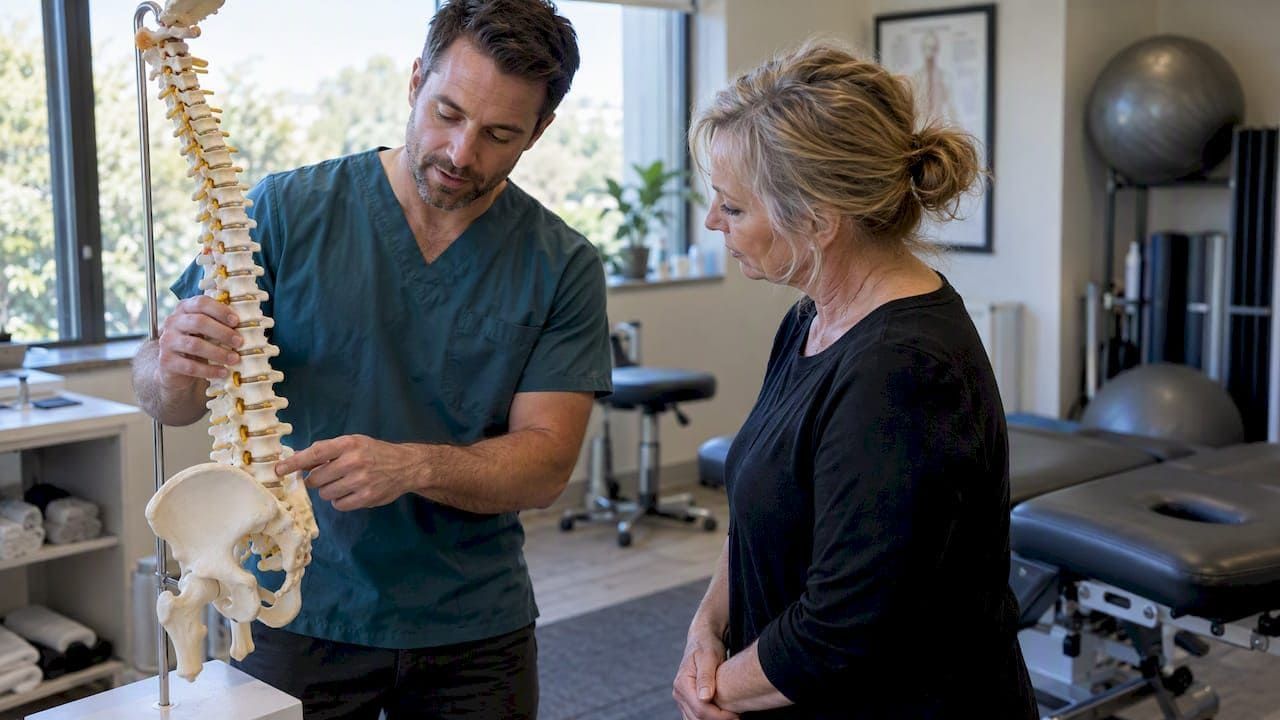
A first visit typically includes a full history and physical assessment, hands-on treatment to address pain and restricted motion, and the start of a home exercise plan tailored to your findings. We schedule follow-ups to track progress and adjust the plan as your shoulder responds, the same approach we use with sports injury rehabilitation.
A Straight Opinion on Conservative-First Shoulder Care
Shoulder pain gets treated too often with passive modalities alone: heat, ultrasound, a few adjustments, and not much else. The evidence does not support that as a standalone plan. Start with conservative, evidence-backed care built around progressive exercise, and escalate when the signs call for it, not on a fixed timeline.
Ask your provider for a realistic timeline, measurable goals, and a clear plan for coordinating with a surgeon if imaging or surgery becomes necessary. None of that matters without consistent follow-through: adherence to the home program is often what separates a full recovery from a stalled one.
How to Start Rotator Cuff Care With Essential ChiroCare
We built our approach around getting you moving again without jumping straight to surgery, using individualized plans instead of a one-size protocol. If rotator cuff pain is slowing you down, our chiropractic care and physical rehab services are designed to work together from day one.
Relevant starting points for a shoulder issue:
- Chiropractic Care and Adjustments for hands-on diagnosis and treatment.
- Sports Injury Treatment if your pain is activity-related.
- Physical Rehab for a structured strengthening program.
Scheduling is available online, and it helps to bring your symptom history, any prior imaging, and your specific goals to the first visit. Ask us about how we coordinate with surgical teams if your case needs that path, so you have a full picture before committing to any one route. Book your visit to get a plan started.
This article is general information, not a substitute for advice from a qualified doctor. Consult a qualified healthcare professional about your own circumstances before acting on anything here.
FAQ
What is the fastest way to heal a rotator cuff?
There is no shortcut that beats consistency: early pain control followed by a progressive, supervised exercise program is what the evidence supports for the quickest realistic recovery. Most people notice initial relief within weeks and build functional strength over six to twelve weeks, according to AAOS guidance.
Should I see a chiropractor or a massage therapist for a pinched nerve?
A pinched nerve in the shoulder or neck area often needs a diagnostic exam to confirm the source before treatment starts, which a chiropractic evaluation is built to provide. Massage can ease muscle tension as part of a plan, but it does not include the orthopedic testing or referral coordination needed to rule out nerve compression at its root cause.
What shouldn't you do with a rotator cuff tear?
Avoid pushing through sharp pain during overhead lifting or reaching, since that often aggravates the injured tendon further. Skipping a structured rehab program in favor of rest alone, or ignoring persistent weakness, also tends to slow recovery rather than speed it up.
What are two warning signs of a rotator cuff tear?
Sudden, significant weakness that makes it hard to lift or rotate the arm is one key warning sign. A new systemic symptom like fever, or signs of infection near the shoulder after an injury, is the other, and both call for prompt evaluation rather than home treatment alone.
Sources
- Management of Rotator Cuff Injuries — AAOS Clinical Practice Guideline (2025)
- Synthesis of Cochrane systematic reviews on conservative and surgical therapeutic interventions for rotator cuff disease
- Efficacy of manual therapy on shoulder pain and function in patients with rotator cuff injury: A systematic review and meta‑analysis (2024)