Patients: 3+ Positive Tests Predict Chiropractic Success for Sacroiliac Joint
Patients: 3+ Positive Tests Predict Chiropractic Success for Sacroiliac Joint
Chiropractic care can meaningfully relieve pain from sacroiliac joint dysfunction, but only when the diagnosis is confirmed and the treatment goes beyond a single adjustment. The joint responses well to a combination of manual therapy and targeted stabilization exercise in patients who test positive on multiple clinical exams. Expect a short series of visits, not one fix, and know that some patients who don't respond within a few sessions need imaging, injections, or referral to a specialist.
TL;DR:
- Diagnosis of SI joint dysfunction requires three or more positive provocation tests and a thorough clinical exam, not just imaging.
- Manual therapy may improve function and reduce disability, but pain reduction alone often does not show significant benefits without accompanying exercise.
- Most patients respond within four to six weeks of consistent manual therapy and stabilization exercises, with non-responders needing further evaluation or imaging.
- Careful screening for contraindications and proper reassessment are essential, as improper diagnosis or prolonged ineffective treatment offers limited benefit.
- Building a treatment plan should involve initial assessment, a short course of manual therapy combined with home exercises, and escalation to injections or other interventions if needed.
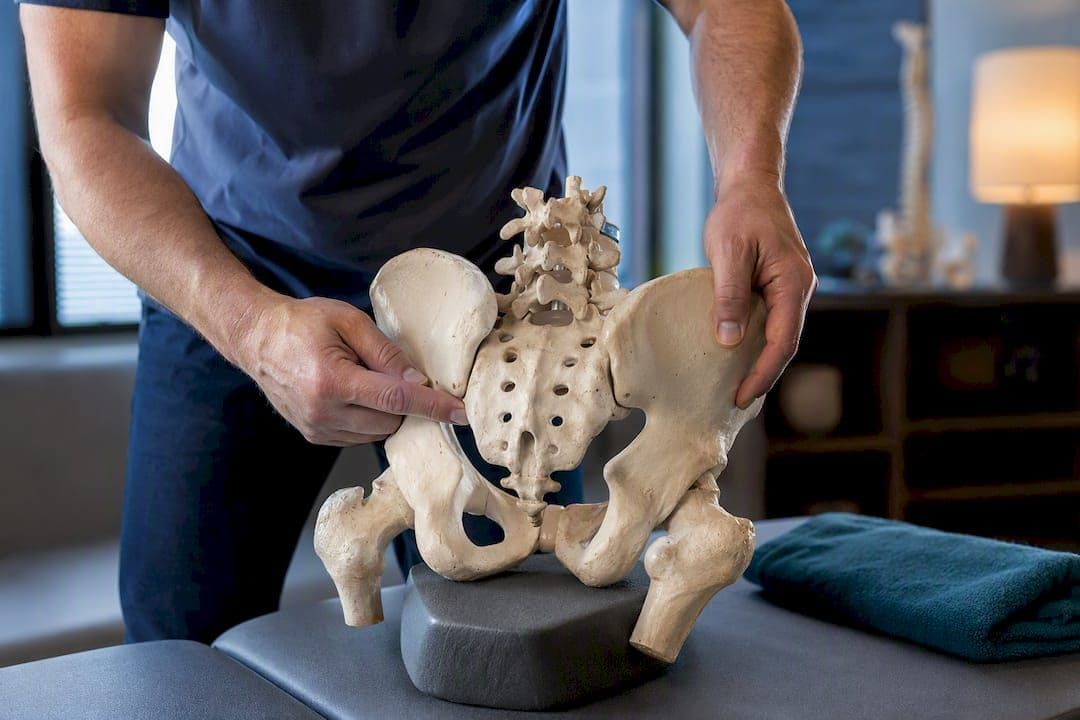
Table of Contents
- Sacroiliac Joint Anatomy and What Causes SI Dysfunction
- What Does Sacroiliac Joint Dysfunction Feel Like?
- How Do Chiropractors Diagnose SI Joint Problems?
- Chiropractic Treatment Options for the SI Joint
- What Does the Research Actually Show?
- Building a Real Treatment Plan: Visits, Exercise, and When to Escalate
- Is SI Joint Adjustment Safe, and What Should You Expect?
- Our Take on SI Joint Care
- How to Get an SI Joint Evaluation at Essentialchirocare
- Sources
- FAQ
Sacroiliac Joint Anatomy and What Causes SI Dysfunction
The sacroiliac joints sit on either side of the sacrum, the triangular bone at the base of your spine, connecting it to the two ilia that form the back of your pelvis. Unlike the hip or shoulder, these are low-motion joints. They shift only a few degrees and a few millimeters during normal movement, held tight by some of the thickest ligaments in the body, including the sacroiliac, sacrotuberous, and sacrospinous ligaments.
That limited range is exactly why the joint causes so much trouble when something goes wrong. Small amounts of ligament laxity, joint irritation, or asymmetric loading translate into disproportionate pain because these structures are packed with nerve endings and expected to stay nearly still. When one side moves even slightly more than the other, the surrounding tissue reacts.
Sacroiliac joint pain causes fall into a handful of recognizable categories:
- Trauma : a fall onto one hip, a car accident, or a hard landing during sports can jam or shear the joint.
- Repetitive strain : running, prolonged standing on hard surfaces, or asymmetric loading from a job that favors one leg.
- Pregnancy and childbirth : hormonal changes loosen pelvic ligaments, and the added weight and altered gait shift stress onto the joint.
- Leg-length discrepancy : even a small difference changes how force travels through the pelvis with every step.
- Adjacent lumbar spine problems : a stiff or previously fused lumbar segment often pushes extra motion demand down into the SI joint.
- Degenerative changes : osteoarthritis of the joint surface becomes more common with age and after prior pregnancies or lumbar fusion surgery.
Most patients Essentialchirocare sees with this pattern have more than one factor stacked together, a mild leg-length difference plus a physically demanding job, for instance, rather than a single clean cause. That combination matters for treatment planning, because addressing only one contributor rarely resolves the whole picture.
What Does Sacroiliac Joint Dysfunction Feel Like?
Sacroiliac joint dysfunction typically produces a dull, aching pain on one side of the low back or buttock, often just below the beltline and lateral to the spine itself. Patients frequently point to a specific spot with one finger, sometimes called "the SI joint sign," rather than sweeping their hand across a broad area.
The pain tends to worsen with specific movements: standing on one leg to put on pants or shoes, climbing stairs, rolling over in bed, or the transition from sitting to standing after being seated for a while. Some people feel a referred ache down the back of the thigh, but this differs from true sciatica. There's no numbness, tingling, or weakness following a specific nerve path, and it rarely travels past the knee.
How SI joint symptoms differ from lumbar spine or hip pain:
- Lumbar disc or nerve root pain usually comes with a burning or shooting quality that follows a defined path down the leg, often past the knee, sometimes with numbness or weakness in specific muscle groups.
- Hip joint pain tends to concentrate in the groin or the front of the thigh, and it flares with hip flexion motions like getting into a car.
- SI joint pain concentrates just off the midline in the back, worsens with single-leg loading, and rarely produces true neurologic symptoms.
Seek immediate medical evaluation, not a chiropractic appointment, if you notice:
- Progressive leg weakness or difficulty walking that gets worse over days
- Loss of bowel or bladder control
- Fever, unexplained weight loss, or night sweats alongside back pain
- Pain following major trauma, such as a fall from height or a high-speed collision
The Mayo Clinic's overview of sacroiliitis outlines this same symptom pattern and reinforces that most cases respond to conservative, activity-based care rather than emergency intervention.
How Do Chiropractors Diagnose SI Joint Problems?
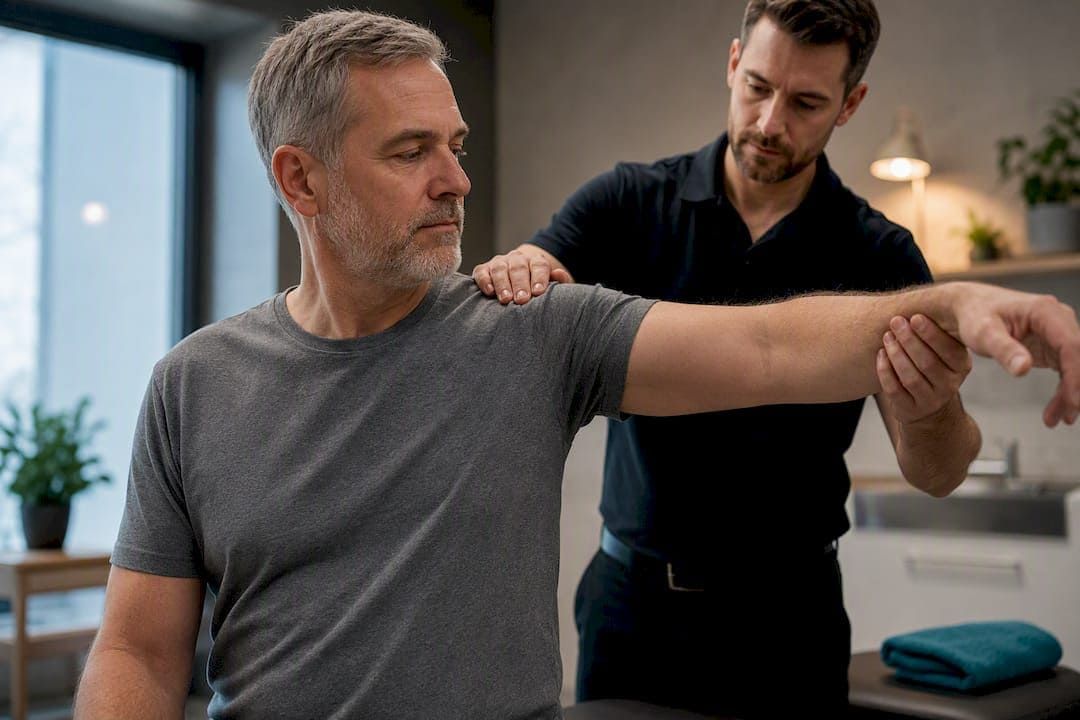
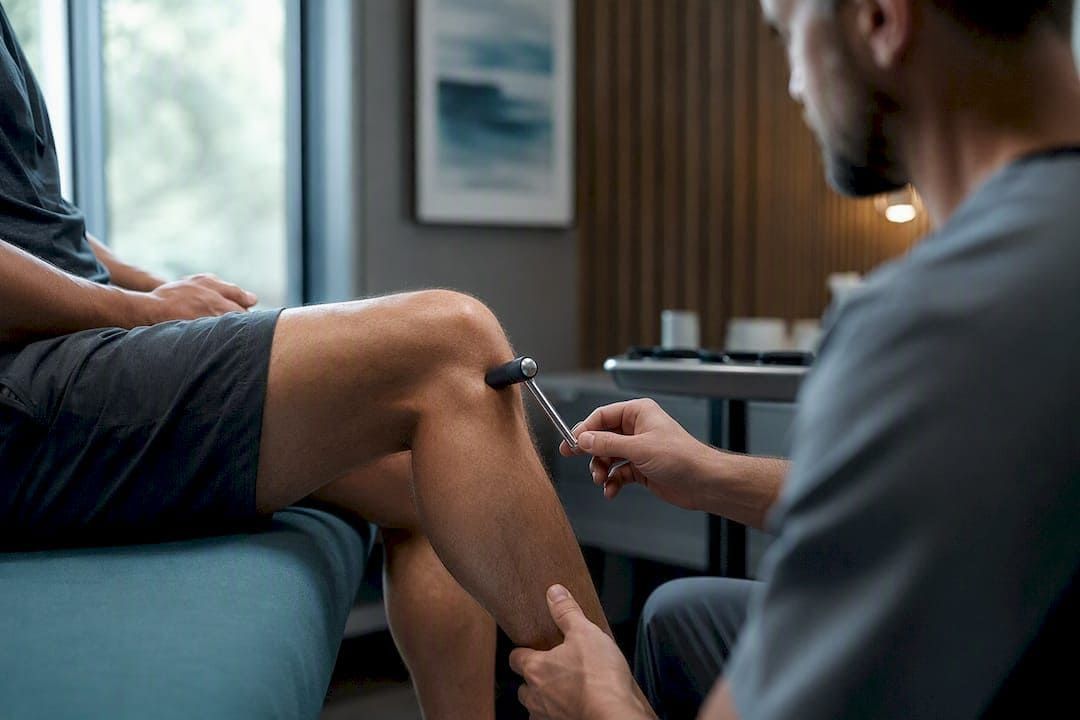
A reliable diagnosis starts with a history and a hands-on exam, not a scan. Chiropractors assess your gait, check for leg-length differences, palpate the joint and surrounding ligaments for tenderness, and test lumbar and hip range of motion to rule out those areas as the primary source.
The real diagnostic work happens through a cluster of provocation tests, physical maneuvers designed to stress the SI joint and reproduce your specific pain. No single test is reliable on its own, which is why clinicians rely on a cluster approach.
- FABER (Patrick's) test : the hip is flexed, abducted, and externally rotated while the opposite hip is stabilized, stressing the joint through a lever motion.
- Thigh thrust : gentle posterior pressure through a flexed hip with the pelvis stabilized, directly loading the joint surface.
- Compression test : side-lying pressure through the pelvis compresses the joint from the outside in.
- Distraction test : pressure applied outward through the pelvis in the opposite direction, pulling the joint surfaces apart.
- Gaenslen's test : one hip is extended off the table while the other is flexed toward the chest, creating a rotational shear force across the joint.
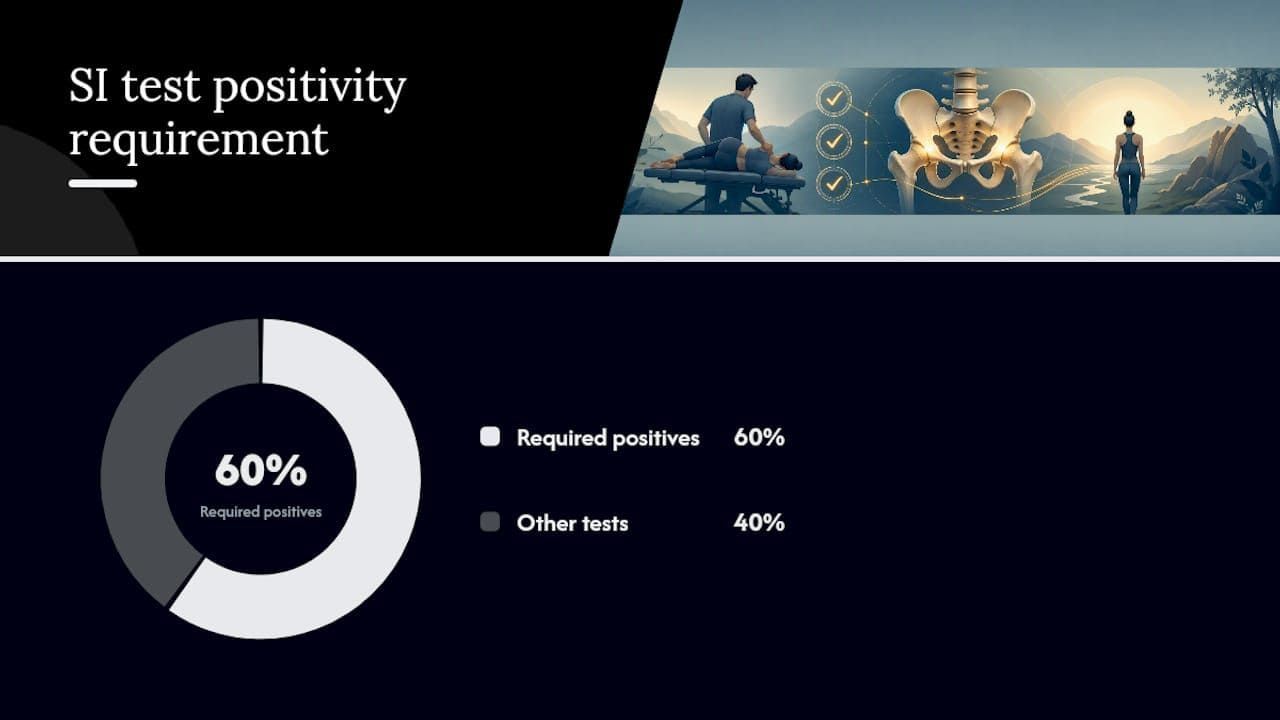
Clinical practice generally requires at least three positive results across this battery before attributing pain to the sacroiliac joint rather than the lumbar spine or hip. That threshold matters because SI-mediated pain overlaps so heavily with other sources, and treating the wrong structure wastes time.
Imaging plays a smaller role than most patients expect. X-rays, CT, and MRI can show degenerative changes, sacroiliitis, or structural asymmetry, but those findings show up in plenty of pain-free people too, and a normal scan doesn't rule out dysfunction. Imaging becomes useful mainly to screen for fracture, infection, tumor, or inflammatory arthritis, not to confirm mechanical SI dysfunction itself.
When the clinical picture stays ambiguous, an image-guided diagnostic injection, a small amount of anesthetic placed directly into the joint under fluoroscopic or ultrasound guidance, can confirm the source. If your pain drops significantly within minutes, the joint is very likely the culprit. This same injection can double as short-term therapeutic relief while other treatment gets underway.
Pro Tip: Write down exactly which movements trigger your pain before your first visit. Details like "worse putting on my left shoe while standing" or "sharp when I get up from the couch after 30 minutes" give your chiropractor better clues than "my back hurts."
Chiropractic Treatment Options for the SI Joint
Chiropractic care for the sacroiliac joint centers on restoring normal joint mechanics and calming irritated ligament and muscle tissue, then locking in that improvement with strength work. The specific technique used depends heavily on the patient sitting on the table.
High-velocity, low-amplitude adjustments
The HVLA thrust is the technique most people picture when they think of a chiropractic adjustment. The clinician positions the joint at its end range and delivers a quick, small-amplitude force through the pelvis. Patients often hear or feel a cavitation, the same gas-bubble release inside the joint fluid that produces the popping sound when you crack your knuckles.
That sound isn't the point of the treatment. The mechanical goal is a brief, controlled gap in the joint that reduces pressure on stretched ligaments and resets muscle guarding around the joint. Many patients report immediate relief in the minutes after treatment, though the degree varies, and research on how long that relief lasts on its own is mixed, which is exactly why HVLA rarely stands alone as a treatment plan.
Low-velocity mobilization and instrument-assisted methods
Not everyone tolerates a thrust technique well, including pregnant patients, people with more fragile joint structures, or those who simply find HVLA uncomfortable. Low-velocity mobilization moves the joint through a slower, sustained range without the quick thrust, achieving a similar mechanical goal with a gentler approach.
Instrument-assisted adjusting tools deliver a controlled, repeatable force through a handheld device rather than a manual thrust. Spine-Health notes that both approaches address the same underlying joint restriction, and the choice comes down to patient tolerance and clinical judgment rather than one method being universally superior.
Soft-tissue work and adjuncts
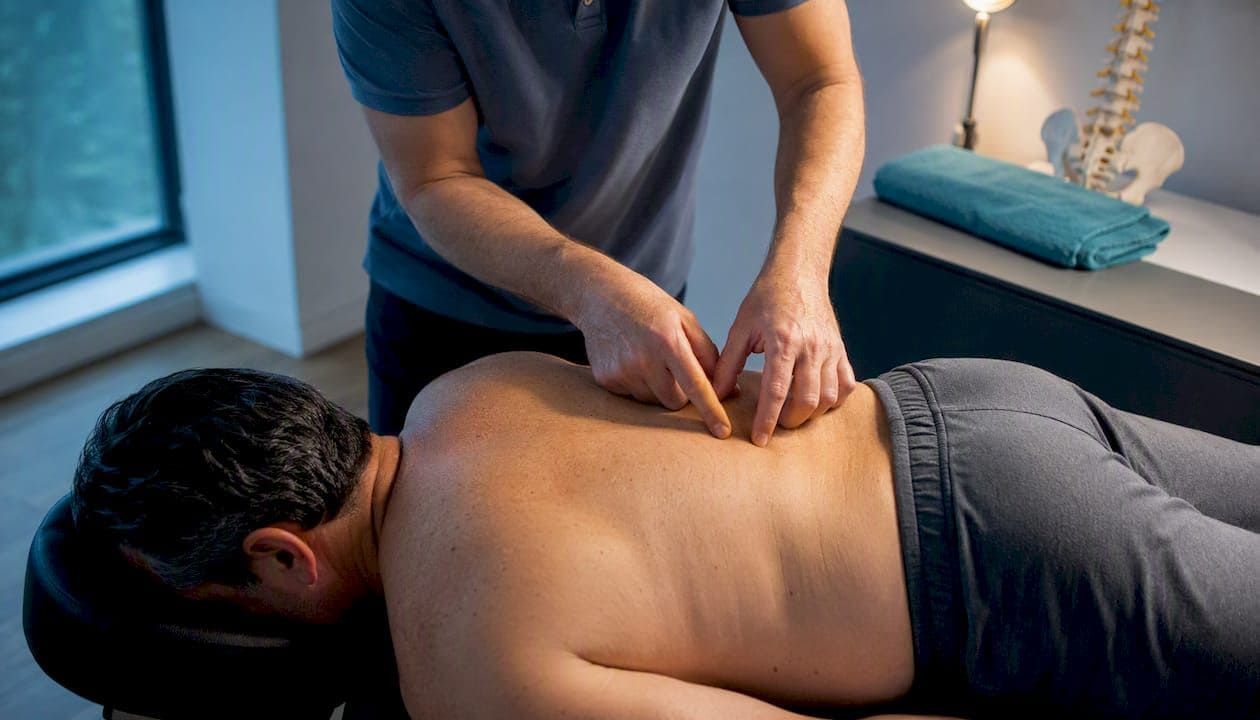
The ligaments and muscles surrounding a dysfunctional SI joint, particularly the piriformis, gluteus medius, and lumbar erector muscles, tend to tighten up in response to joint irritation. Soft-tissue techniques like myofascial release or instrument-assisted soft-tissue mobilization address that guarding directly, often making the joint more receptive to adjustment.
A few adjuncts show up regularly in SI care:
- Kinesio taping provides light proprioceptive feedback and mild support without restricting movement, useful for patients who want a reminder to maintain good posture during the day.
- Pelvic support belts compress the joint externally, which can meaningfully reduce pain during pregnancy or in patients with ligament laxity, and they're generally safe for short-term daytime use.
- Heat or ice , applied at home between visits, manages the soreness that sometimes follows manual work.
Why exercise has to run alongside adjustments
An adjustment changes joint position and reduces irritation for a window of time. It doesn't build the muscular support that keeps the joint from drifting back into the same pattern. That's the job of gluteal strengthening, particularly the gluteus medius and maximus, along with deep core stabilization work targeting the transverse abdominis and multifidus.
Clinicians typically introduce these exercises within the first one or two visits rather than waiting for pain to fully resolve, timing them to reinforce whatever gains the adjustment produced. Skipping this step is the single most common reason relief doesn't stick.
Technique intensity gets adjusted for the person on the table. Pregnant patients and post-surgical patients generally get gentler mobilization and soft-tissue work over forceful thrusts. Older adults with osteoporosis or significant degenerative changes need modified force and positioning. Athletes with acute, uncomplicated dysfunction often tolerate and respond quickly to standard HVLA. A manual spinal adjustment is never one-size-fits-all, and a good clinician adjusts approach before adjusting the joint.
Pro Tip: If a thrust technique makes you anxious or you've had a bad experience with one before, say so at your first visit. Mobilization and instrument-assisted techniques achieve similar joint effects for many patients without the quick thrust.
What Does the Research Actually Show?
The evidence for manual therapy on the SI joint is genuinely mixed, and any honest article has to say so plainly rather than oversell it.
A 2024 systematic review and meta-analysis pooling 11 randomized controlled trials and 421 adults, mean age 37.7, found manual therapy did not produce a statistically significant reduction in pain compared to exercise or sham treatment (p = 0.0686). It did find a significant, moderate effect on reducing disability (p = 0.0418). Read together, that means manual therapy may not beat a good exercise program on pain scores alone, but it does appear to help people function better day to day, which for most patients is the outcome that actually matters.
The disability finding is the one worth remembering : across 11 trials and 421 patients, manual therapy showed a moderate, statistically significant improvement in disability scores, even though pain reduction alone didn't clear the bar for significance.
Other data paints a more encouraging, if narrower, picture:
- A randomized study using an objective palpation meter measured a mean 2.25 degree change in innominate bone angle on the dysfunctional side after a targeted adjustment, with 100 participants split between treatment and sham groups (p ≤ 0.001). That's a real, measurable mechanical change, not just a subjective report of feeling better.
- A single-center cohort of 100 consecutive patients receiving a standardized SI manipulation protocol saw median pain scores fall from 8 to 1 after the first session and to 0 after subsequent visits, with disability scores improving significantly through three months. That's a strong result, but it comes from carefully selected, triaged patients at one clinic, not a broad randomized trial, so it shows what's achievable in the right candidates rather than a guaranteed outcome for everyone.
- A controlled study on oxidative stress markers found baseline biochemical differences between 33 SI dysfunction patients and 30 healthy controls, but four weeks of weekly manipulation didn't change those markers. That's a useful reminder that manual therapy's benefits are mechanical and functional, not some broader systemic biochemical reset.
The honest interpretation: manipulation works best as one piece of a multi-modal plan rather than a standalone cure. The StatPearls clinical overview reflects this directly, recommending exercise-oriented spinal stabilization as the initial step, with manipulation, pelvic belts, and injections layered in as needed.
Building a Real Treatment Plan: Visits, Exercise, and When to Escalate
A well-run SI joint treatment plan follows a fairly predictable sequence, and knowing that sequence in advance helps you gauge whether your own care is on track.
- Baseline assessment : history, provocation tests, and often a starting pain or disability score using a tool like the Oswestry Disability Index.
- Active treatment phase : one to four manual therapy sessions per week over two to four weeks, paired immediately with a home exercise program rather than delayed until pain subsides.
- Reassessment at four to six weeks : repeat the provocation tests and disability scoring. Meaningful improvement supports continuing the same plan with reduced visit frequency; no change signals a need to reconsider the diagnosis or escalate care.
- Adjunct support as needed : pelvic belts for pregnancy-related laxity or hypermobility, used during the day and removed at night, with periodic breaks so surrounding muscles keep doing their own work.
- Symptom control : over-the-counter NSAIDs or acetaminophen for short-term flare management, used the same cautious way regardless of what's driving the pain, alongside manual care rather than instead of it.
- Escalation pathway for non-responders : a diagnostic injection to confirm the joint is truly the source, therapeutic injection for longer relief, radiofrequency denervation for select patients with confirmed and recurring pain, and, rarely, minimally invasive fusion for carefully chosen refractory cases.
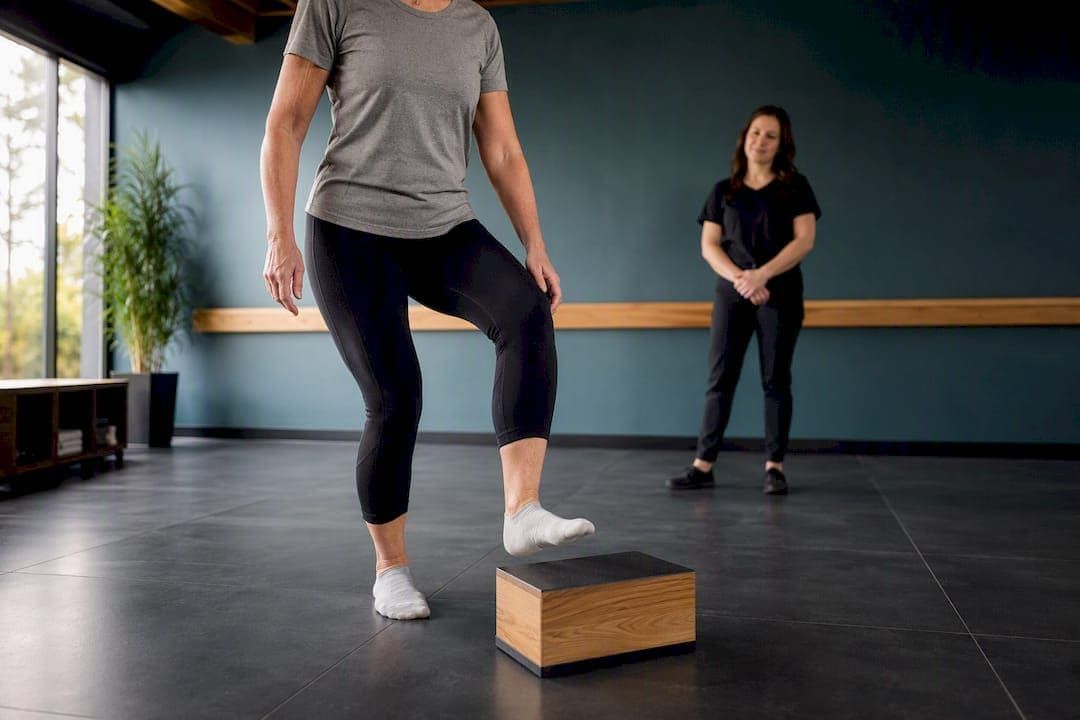
Home exercise is not a footnote in this sequence, it's half the plan. Early work focuses on gentle range-of-motion and pelvic tilts, progressing over several weeks into gluteal bridges, side-lying hip abduction, and core stabilization drills like dead bugs or bird dogs. Kaiser Permanente's exercise guidance reinforces starting slowly and progressing only as tolerated, ideally with a professional checking your form along the way. Essentialchirocare's guide to home exercises that boost chiropractic results walks through a similar progression in more detail, and the broader list of ways to support chiropractic care between visits covers the daily habits, sitting posture, sleep position, activity pacing, that determine whether gains from a session actually hold.
Is SI Joint Adjustment Safe, and What Should You Expect?
Chiropractic care for the SI joint carries a favorable safety profile for appropriately screened patients. The most common side effect is mild, transient soreness in the treated area for a day or two, similar to how a muscle feels after a new workout. Serious complications are rare when a clinician screens properly beforehand.
Certain conditions rule out manipulation entirely or call for a modified approach:
- Unstable pelvic or spinal fracture
- Active infection in or near the joint
- Certain vascular disorders or bleeding disorders
- Recent surgery in the region without medical clearance
- Suspected tumor or unexplained rapid symptom progression
A proper intake exam, including a review of your medical history and any recent trauma, screens for these before any hands-on treatment begins.
Most patients notice at least some change within their first one to four visits. That doesn't mean full resolution that fast, but a clear early signal, reduced pain intensity, easier transitions from sitting to standing, tells you the treatment is on the right track. Meaningful functional improvement for most responders shows up between four and 12 weeks, particularly when manual therapy runs alongside a consistent exercise program rather than in isolation, consistent with the disability improvements found in the 2024 meta-analysis.
Chiropractors track progress with a few concrete measures: pain scales, Oswestry Disability Index scores, and simply retesting the provocation cluster to see whether previously positive tests turn negative. If those measures plateau by six weeks despite consistent care, that's the signal to pursue imaging, a diagnostic injection, or referral rather than continuing the same plan indefinitely.
Our Take on SI Joint Care
Here's what the research doesn't spell out plainly enough: the biggest predictor of whether chiropractic care helps your SI joint isn't the technique used, it's whether the diagnosis was right in the first place. A patient with genuine SI-mediated pain who gets three or more positive provocation tests and a well-built exercise program tends to do well. A patient who gets adjusted repeatedly for pain that's actually coming from the lumbar spine or hip just accumulates visits without improvement, and that outcome gets blamed on chiropractic care when the real problem was an incomplete workup.
At Essentialchirocare, that's the whole reason the approach starts with assessment rather than a generic adjustment protocol. Individualized plans that combine targeted manual therapy with a stabilization program, and scheduled reassessment points to confirm the plan is actually working, catch the non-responders early instead of letting them drift through months of ineffective care. Clinicians bring backgrounds working with sports teams, which matters here because athletes present some of the clearest, most mechanically straightforward SI cases, and that pattern recognition transfers directly to the more ambiguous cases that walk in off the street.
If there's one thing worth internalizing from all this, it's that four to six weeks is a fair trial, not a formality. If you're not seeing measurable change by then, on pain, on function, on those provocation tests, that's real information, not a reason to just keep showing up. Push for a reassessment, a second opinion, or an imaging referral instead. Good chiropractic care for the SI joint is exactly as evidence-based as its practitioner is willing to be honest about what isn't working.
How to Get an SI Joint Evaluation at Essentialchirocare
An SI joint that doesn't respond to rest or stretching on its own usually needs a proper hands-on assessment, not more guessing. Your first visit at Essentialchirocare's chiropractic care service includes a detailed history, the provocation test cluster described above, gait and leg-length checks, and a baseline pain and disability score to measure progress against at your follow-up.
From there, most patients move into a short series of visits combining manual therapy with a home stabilization program, reassessed around the four to six week mark to confirm things are moving in the right direction. If your case involves more complex rehabilitation needs, physical rehab services run alongside manual care to rebuild the strength that keeps the joint stable long term. If you're dealing with progressive weakness, loss of bladder or bowel control, or pain following major trauma, skip the scheduling page and get to urgent medical care first. For everything else, booking a first visit is the fastest way to find out whether your pain is actually coming from the SI joint and what it will take to calm it down.
This article is general information, not a substitute for advice from a qualified doctor. Consult a qualified healthcare professional about your own circumstances before acting on anything here.
Sources
FAQ
Can a Chiropractor Fix Sacroiliac Joint Dysfunction?
A chiropractor can significantly reduce SI joint dysfunction pain and improve function for many patients, particularly when the diagnosis is confirmed with multiple positive provocation tests and treatment includes a stabilization exercise program, not adjustment alone.
What Should You Avoid With Sacroiliac Joint Dysfunction?
Avoid prolonged single-leg standing, deep asymmetric stretches, high-impact activities like running on hard surfaces during flare-ups, and sitting in one position for long stretches without breaks, all of which load the joint unevenly.
How Do You Realign a Sacroiliac Joint?
Chiropractors realign the SI joint using HVLA thrusts or low-velocity mobilization to restore normal joint mechanics, typically paired with gluteal and core strengthening exercises to help the correction hold over time.
What Does a Misaligned SI Joint Feel Like?
A misaligned or dysfunctional SI joint typically feels like a localized, dull ache on one side of the low back or buttock, worsened by climbing stairs, standing on one leg, or transitioning from sitting to standing, without the numbness or shooting pain typical of a pinched nerve.
Recommended