Sacramento Chiropractic Flexion Distraction: Trial Support, No Thrusts
Sacramento Chiropractic Flexion Distraction: Trial Support, No Thrusts
Flexion distraction chiropractic has randomized trial support as a treatment for chronic low back pain, with particularly strong results for patients who have radiculopathy. It uses a specialized segmented table rather than manual thrusting, and it works best as part of a personalized plan built around your specific diagnosis. Candidacy still depends on a proper screening exam, since guideline consensus on technique selection continues to evolve.
TL;DR:
- A randomized trial of 235 patients found 27.22% pain improvement for moderate to severe chronic cases, compared with 14.36% with trunk exercise.
- People with radiculopathy, especially when leg symptoms centralize toward the spine, appear more likely to benefit than people with mild or recent onset pain.
- Fever, cancer history, recent major trauma, suspected fracture, worsening weakness, or loss of bladder control require urgent medical evaluation before manual treatment.
- If pain, function, or leg symptoms show no measurable improvement after four to six weeks, ask the clinician to reassess the diagnosis and treatment plan.
- Choose a clinician trained in the Cox protocol or a comparable method, and ask how progress will be measured and paired with rehabilitation exercises.
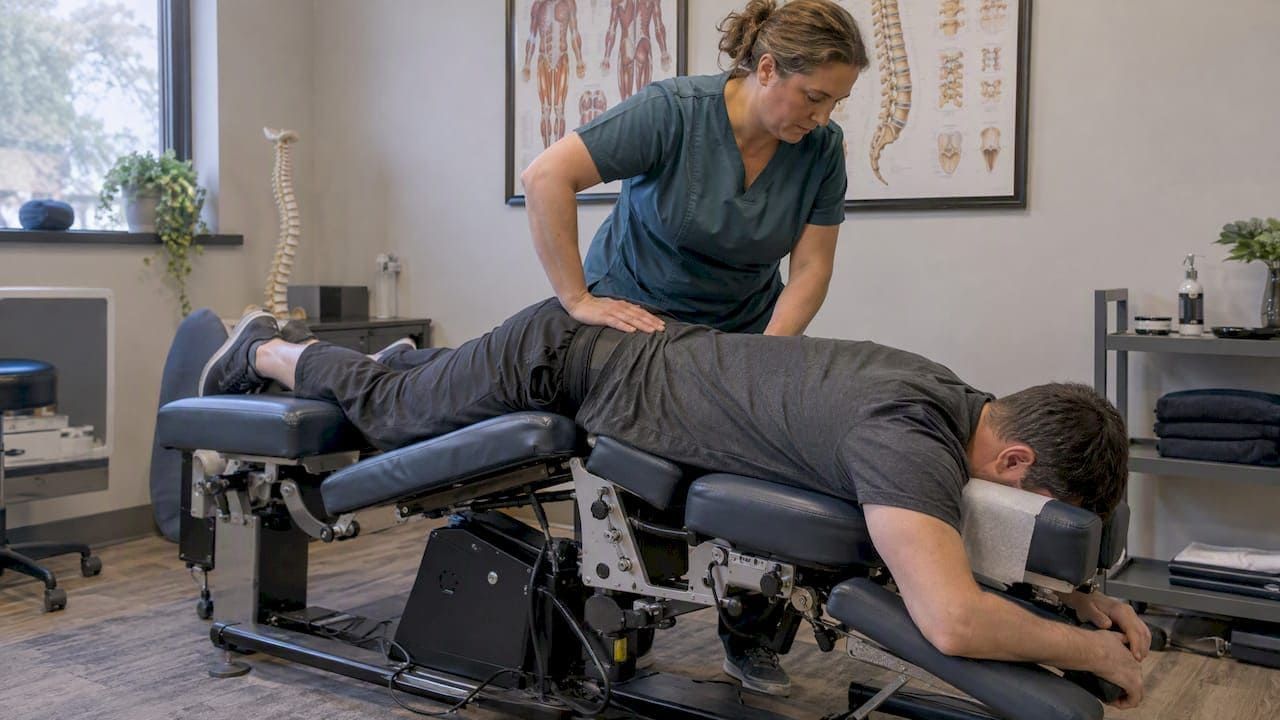
Table of Contents
- What Flexion Distraction Actually Is
- What Happens During a Flexion Distraction Session
- What the Research Actually Shows
- Who Tends to Benefit and Who Should Avoid It
- Flexion Distraction vs. Motorized Spinal Decompression
- How We Apply Flexion Distraction in Personalized Care
- Keeping the Benefits After Treatment Ends
- Paying for Flexion Distraction Treatment
- Who Is a Good Candidate Beyond the Red Flags
- How to Know If It's Working
- What the Evidence Actually Tells Us to Prioritize
- Scheduling a Flexion Distraction Evaluation With Us
- FAQ
- Sources
What Flexion Distraction Actually Is
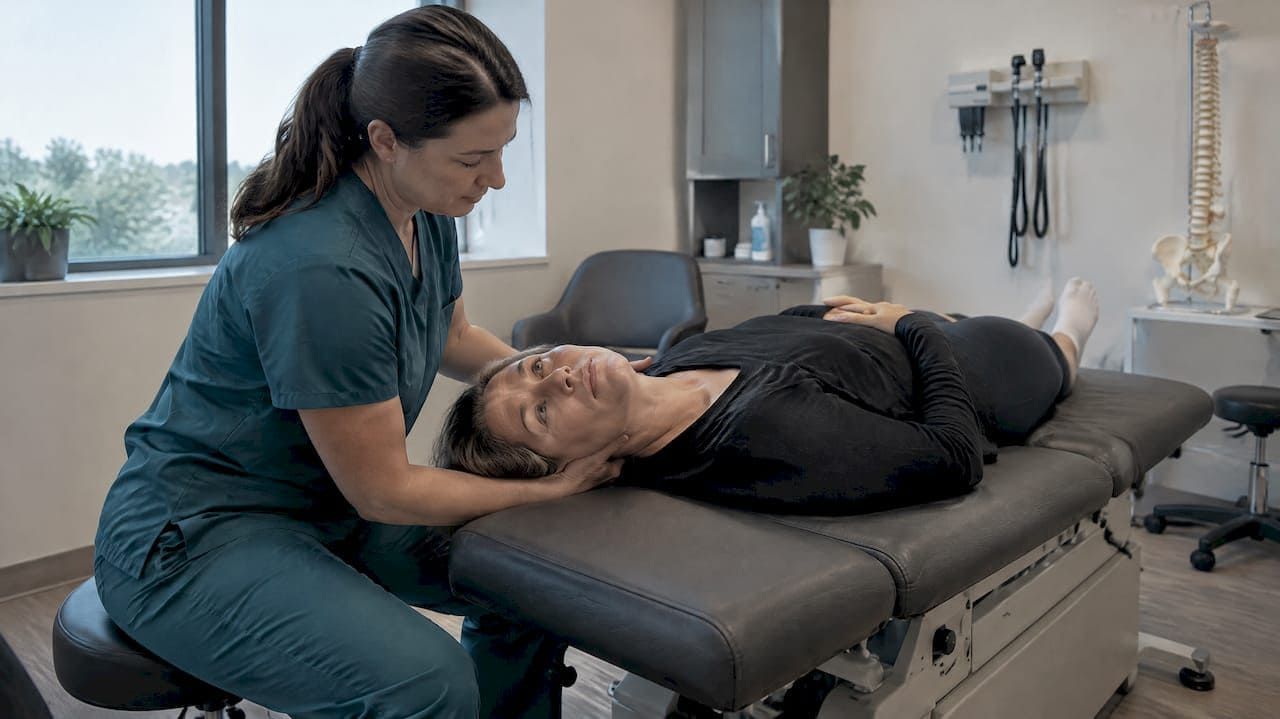
Flexion distraction is a gentle, practitioner-controlled stretching and mobilization technique performed on a specialized table that separates into sections. You lie face down while the caudal (lower) section of the table slowly moves downward and flexes, creating a controlled pull through the lumbar spine as the clinician applies hand contact at specific vertebral levels. This is the foundation of the Cox technique, named for the protocol most widely taught and studied in chiropractic education.
The goal is mechanical, not forceful. By combining distraction with flexion, the technique aims to:
- Open the space between vertebral joints, reducing pressure on nerve roots.
- Lower pressure inside the disc itself, which may ease pressure on a bulging or herniated disc.
- Mobilize multiple spinal segments at once rather than delivering a single high-velocity thrust.
Unlike a traditional adjustment, there's no sudden cavitation or "pop." The motion is slow and rhythmic, and the clinician's hand placement, the rhythm of the table's movement, and the amount of force applied all influence how effective a session is. Research using real-time force feedback during flexion-distraction found that experienced clinicians consistently apply different force patterns than newer practitioners, and that brief feedback training measurably improved how accurately novices delivered the technique. That detail matters: the table creates the mechanical opportunity, but the clinician's skill determines how well that opportunity is used.
What Happens During a Flexion Distraction Session
Before any table work begins, a thorough evaluation rules out red flags and confirms that your symptoms fit a pattern likely to respond to mobilization rather than requiring imaging or referral first; for more information on who should avoid compression therapy, see Compression Boots Contraindications: Who Should Not Use Them.
A typical session follows a consistent sequence:
- You lie prone on the segmented table, usually with a strap or support stabilizing your upper body.
- The clinician palpates and contacts the specific vertebral level connected to your symptoms.
- The caudal section of the table lowers and flexes in slow, rhythmic cycles, often around half a cycle per second, while the clinician guides the motion with hand pressure.
- Cycles repeat for several minutes, with the clinician adjusting angle and depth based on your response.
- You're reassessed immediately afterward for changes in pain, range of motion, or leg symptoms.
Pro Tip: Tell your clinician immediately if a position increases leg pain or numbness rather than easing it. That feedback helps them adjust the angle of distraction in real time.
Most people start with multiple visits per week for the first few weeks, tapering as symptoms improve. Many notice some relief within the first one to two weeks, though chronic cases often need a longer course. Expect sensations of stretching and mild traction during the session, with occasional mild soreness afterward, similar to how a muscle feels after a deep stretch.
What the Research Actually Shows
The strongest evidence for flexion distraction comes from a randomized clinical trial comparing flexion-distraction with an active trunk exercise program in 235 patients with chronic low back pain. The flexion-distraction group reported significantly greater perceived pain relief than the exercise group. The subgroup results are where things get specific:
- Among chronic patients with moderate-to-severe continuous pain, those receiving flexion-distraction showed a 27.22% improvement on standard pain scales, compared to 14.36% in the exercise group.
- Patients with radiculopathy (nerve root involvement, often from a herniated disc) showed pronounced benefit from flexion-distraction specifically, more than patients without nerve involvement.
The subgroup data matters more than the headline result: flexion-distraction appears to outperform general exercise most clearly in people with longstanding, more severe pain and in those with nerve root symptoms, rather than across every back pain patient equally.
Interpreting comparative studies like this requires understanding study design. A systematic review and meta-analysis of mobilization versus manipulation trials found that pragmatic trials, where clinicians choose the technique based on clinical judgment, tend to show no real difference between mobilization and manipulation. Prescriptive trials, where every patient gets the same fixed technique regardless of fit, more often favor manipulation. This distinction explains why different studies on similar techniques can reach seemingly contradictory conclusions: the design itself shapes the outcome.
On safety, the picture is reassuring. A review of the safety profile of spinal manipulative therapy estimated serious adverse events at roughly 1 to 13 per 10,000 patients, underscoring both that major complications are uncommon and that proper screening before treatment remains essential.
Who Tends to Benefit and Who Should Avoid It
Flexion distraction is most studied and most commonly applied for a specific set of conditions, not as a general-purpose back pain fix.
- Chronic low back pain, particularly cases lasting beyond the typical acute window.
- Lumbar disc herniation accompanied by radiculopathy, where nerve root irritation causes leg pain, numbness, or tingling.
- Reduced lumbar mobility where gentle, repeated motion helps restore segmental movement.
Based on the subgroup data above, patients with moderate-to-severe chronic symptoms and those with confirmed radiculopathy tend to see the clearest benefit, more so than patients with mild or recent-onset pain.
Certain presentations call for urgent medical evaluation rather than flexion distraction, including fever or signs of infection, a history of cancer, recent significant trauma or suspected fracture, and progressive neurological deficit such as worsening weakness or loss of bladder control. Screening guidance on spinal cord compression outlines why these red flags require imaging or specialist referral before any manual therapy proceeds. A clinic offering manual therapy should always screen for these before putting you on the table.
Flexion Distraction vs. Motorized Spinal Decompression
These two approaches get confused constantly, partly because both involve a table and both claim to relieve pressure on the spine. The mechanisms are different.
- Flexion distraction is active and practitioner-guided: a clinician manually controls hand contact, table rhythm, and force in real time, adjusting to your response during the session.
- Motorized spinal decompression is passive: a machine applies programmed axial traction along a preset protocol, with less moment-to-moment clinician adjustment.
- The evidence base differs too. A review of non-surgical spinal decompression marketing claims found that available studies were often low-quality and inconsistent, and that advertising sometimes overstated what the research supports.
If you're evaluating a provider, the brand name on the table matters less than three practical questions: Is the clinician trained specifically in the Cox protocol or a comparable flexion-distraction method? How will they measure whether it's working for you? And how will it fit into a broader plan that may include rehab exercise or other manual therapy? Our guide to spinal decompression walks through how we use motorized decompression as a separate, complementary tool rather than a substitute for hands-on mobilization.
How We Apply Flexion Distraction in Personalized Care
At Essential ChiroCare, flexion distraction fits into a broader evaluation process rather than standing alone. We build each plan around your specific diagnosis, combining flexion-distraction sessions with physical rehab and manual therapy when your evaluation points toward disc-related pain or radiculopathy, and layering in spinal decompression when a patient's presentation calls for it. Our doctors bring experience from sports team settings, which shapes how we screen for red flags and track functional progress rather than just pain scores. We aim to make follow-up visits during the early, more frequent phase of care practical rather than a logistical burden. You can read more about how we think through evidence-based chiropractic care and why we lean toward personalized treatment plans instead of one-size-fits-all protocols.
Keeping the Benefits After Treatment Ends
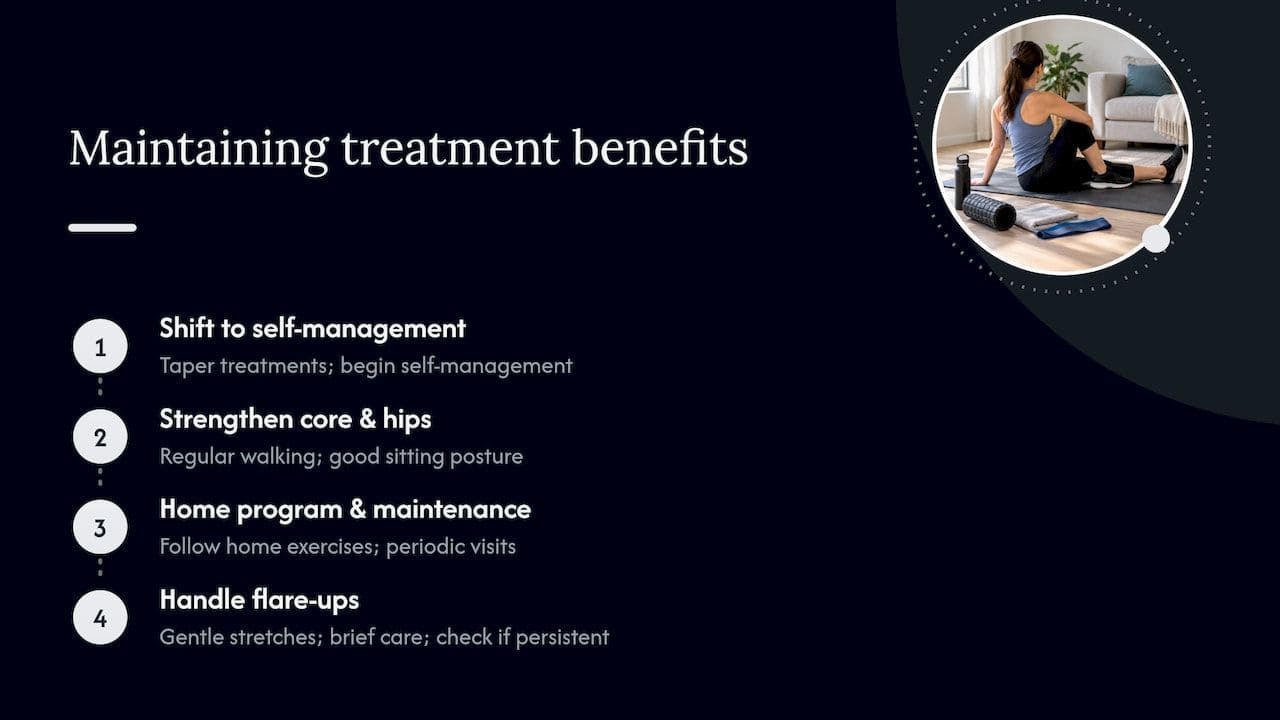
Flexion distraction creates a window of improved mobility and reduced nerve irritation, but what you do with that window determines whether the relief holds. Most plans shift toward active self-management once acute symptoms settle.
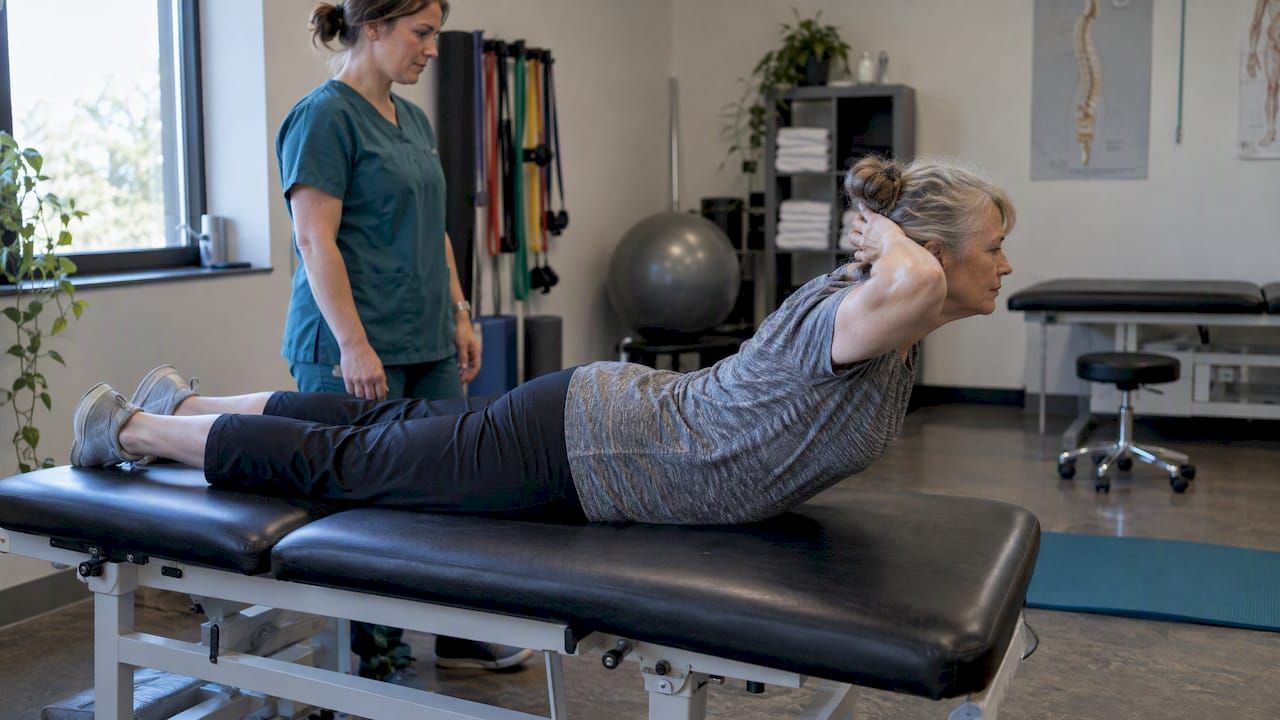
Core and hip strengthening exercises matter most here, since weak stabilizing muscles let the same mechanical stress return to the lumbar spine. Walking regularly, maintaining good sitting posture during long desk hours, and avoiding prolonged static positions all help preserve the gains made on the table. Many clinics, including ours, pair the tapering treatment phase with a home exercise program so you're not relying on passive care indefinitely.
Flare-ups can still happen, especially after a long drive, a heavy lifting day, or a period of inactivity. Rather than panicking, most people benefit from a brief return to gentle stretching, the same positions that felt relieving during treatment, and a check-in visit if symptoms don't settle within a few days. Our resource on chiropractic methods for chronic back pain covers how rehab exercises and periodic maintenance visits work together long after the initial treatment course ends.
The honest takeaway is that flexion distraction treats the mechanical piece of your pain. Keeping that benefit requires addressing the strength and movement habits that let the problem develop in the first place.
Paying for Flexion Distraction Treatment
Chiropractic care, including flexion distraction sessions, is commonly covered under many health insurance plans, though coverage details vary significantly by insurer, plan tier, and whether your case involves a work injury or auto accident. Auto and personal injury cases often route through different coverage, such as personal injury protection, rather than standard health insurance.
Because coverage varies so much, the only reliable way to know your actual cost is to have your specific plan verified before treatment starts. Many clinics, including ours, verify benefits directly with your insurer and walk you through estimated out-of-pocket costs before your first session, rather than leaving you to interpret a benefits summary on your own. Veterans using VA benefits may have a distinct path to coverage as well, which is worth confirming directly with your provider.
If you're paying out of pocket, ask specifically how flexion distraction sessions are billed, since some clinics bundle it with an office visit while others itemize it separately. Getting a clear answer before your first appointment avoids surprises on your statement later.
Who Is a Good Candidate Beyond the Red Flags
Ruling out red flags is the first filter, but candidacy for flexion distraction goes further than that. Clinicians generally look at how your pain behaves, not just where it's located.
Patients whose pain centralizes, meaning leg or radiating symptoms pull back toward the spine with certain movements, tend to respond well to flexion and extension-based techniques like this one. Those whose symptoms worsen with flexion-based positions, by contrast, may be better suited to a different mobilization approach entirely.
Your clinician will also factor in how long you've had symptoms, since the strongest subgroup results in the available trial data came from chronic, moderate-to-severe cases rather than brief acute flare-ups. Baseline mobility matters too: patients with significant stiffness often notice distraction's gentle range-of-motion effect more distinctly than those whose primary issue is muscular guarding rather than joint restriction. None of this replaces imaging or a thorough history. It simply means the decision to use flexion distraction, versus another manual technique or a referral elsewhere, comes from a pattern-matching exam rather than a one-size-fits-all default.
How to Know If It's Working
Most clinicians track a combination of pain scores, functional measures, and specific symptom changes rather than relying on how you feel in the moment on the table.
Early signs of a good response often appear within the first one to two weeks: reduced leg symptoms, easier transitions from sitting to standing, or a smaller area of pain.
If you're not seeing any measurable change by four to six weeks, that's typically a signal to reassess the plan rather than continue unchanged. That might mean adjusting frequency, adding rehab exercise, or revisiting the original diagnosis. Centralization of symptoms, meaning pain that was radiating into the leg pulling back toward the spine, is one of the more reliable early indicators that the mechanical approach is working as intended, even before pain scores drop significantly.
What the Evidence Actually Tells Us to Prioritize
The real story in the flexion-distraction research isn't that it works, it's that it works unevenly, and that unevenness is useful information rather than a weakness. The trial data points toward a specific group: chronic patients with moderate-to-severe symptoms and those with radiculopathy. Treating flexion distraction as a universal back pain remedy ignores exactly what the subgroup analysis is trying to tell us.
Conventional wisdom in a lot of chiropractic marketing treats technique choice like a brand decision, flexion distraction versus decompression versus manipulation, as if one is simply superior. The more defensible position, backed by how pragmatic versus prescriptive trial designs change outcomes, is that clinician judgment matched to your specific presentation outperforms any single default technique. A good clinician choosing the right tool for your pattern will likely outperform a great tool applied to the wrong patient.
If you take one thing from this, it's to ask your provider why they're recommending flexion distraction for your specific symptoms rather than assuming any table with a segmented design produces the same result.
Scheduling a Flexion Distraction Evaluation With Us
If you've been dealing with chronic low back pain, leg symptoms, or stiffness that hasn't responded to rest, we can determine during an in-person exam whether flexion distraction fits your presentation or whether a different approach makes more sense.
What that evaluation typically covers:
- A screening exam to rule out red flags and confirm your symptom pattern.
- A discussion of whether flexion distraction, manual therapy, spinal decompression, or a combination fits your case.
- A personalized plan with a realistic timeline based on how your symptoms have behaved.
Candidacy isn't something we can determine from a questionnaire alone. It comes from a hands-on exam that looks at how your symptoms move and respond. You can get started by visiting our chiropractic care page to schedule an evaluation at one of our West Central Florida locations.
This article is general information, not a substitute for advice from a qualified doctor. Consult a qualified healthcare professional about your own circumstances before acting on anything here.
FAQ
Does flexion distraction work for back pain?
Research shows flexion distraction can produce meaningful pain relief for chronic low back pain, with the strongest results in patients with moderate-to-severe symptoms and those with radiculopathy. It appears less clearly superior for milder or acute cases, where general exercise may work comparably well.
What is considered a red flag in chiropractic care?
Red flags include fever or signs of infection, a history of cancer, recent significant trauma, suspected fracture, and progressive neurological symptoms like worsening weakness or loss of bladder control. Any of these warrants urgent medical evaluation, as outlined in clinical guidance on spinal cord compression, rather than manual spinal treatment.
What's the difference between a flexion-distraction table and a spinal decompression table?
A flexion-distraction table is manually guided by the clinician, who controls hand contact, rhythm, and force throughout the session. A motorized spinal decompression table applies programmed, passive axial traction with a machine, and the two have different mechanisms and separate evidence bases, as discussed in reviews of decompression marketing claims.
Which flexion-distraction table or provider should I choose?
Rather than focusing on a specific table brand, look for a clinician trained in the Cox protocol or a comparable flexion-distraction method who performs a thorough screening exam first. The technique's effectiveness depends heavily on clinician skill and force application, as shown in force-feedback training research, more than on the equipment itself.
Recommended