

Inside a Multimodal Chiropractic Plan for Shoulder Impingement Patients

Essential ChiroCare Blogger • November 12, 2026

Inside a Multimodal Chiropractic Plan for Shoulder Impingement Patients

Chiropractic multimodal care, meaning manual therapy, joint mobilization, and a progressive exercise plan together, is a reasonable first-line option for many people with shoulder impingement. If your shoulder catches or aches when you reach overhead, start with a clinical evaluation, begin gentle pain-guided isometrics, and avoid loaded overhead work. If you see no meaningful change within the recommended timeframe, imaging or a specialist referral is the next step.

TL;DR:

  • Seek same day evaluation after trauma if you suddenly cannot lift your arm, or if fever, a suspected dislocation, or severe night pain prevents sleep.
  • When imaging is needed, an X-ray is usually first; ultrasound or MRI is reserved for symptoms that persist despite care or suspected cuff tears.
  • Begin with isometrics in a tolerable range, then progress to scapular drills and resistance; back off if pain rises during exercise or soreness lasts hours.
  • Most people improve within 6 to 12 weeks, but persistent disabling symptoms after three to six months of conservative care warrant specialist or surgical evaluation.
  • An injection guided by ultrasound may provide short term relief when severe pain blocks exercise, but it does not replace rehabilitation.
chiropractic care for shoulder impingement

Table of Contents

What Shoulder Impingement Actually Is and What Causes It

Shoulder impingement, often called subacromial pain syndrome (SAPS) in clinical literature, happens when the tendons and bursa under the tip of the shoulder blade get compressed during overhead movement. The pain usually shows up as a dull ache that sharpens when you lift your arm between roughly 60 and 120 degrees, sometimes called a painful arc.

The causes split into two camps. Intrinsic factors live inside the shoulder itself: rotator cuff tendinopathy, bursitis, or bone shape variations that narrow the subacromial space. Extrinsic factors come from how the whole shoulder girdle moves, especially scapular dysfunction that changes how the shoulder blade tracks during arm elevation.

Common risk factors include:

  • Repetitive overhead work or sport, like painting, swimming, or volleyball
  • Rounded, forward-shoulder posture that reduces subacromial clearance
  • Weak or poorly timed rotator cuff and scapular stabilizer muscles

Symptoms, Exam Tests, and Red Flags You Shouldn't Ignore

Most people describe a deep ache at the front or side of the shoulder that worsens with reaching, lifting overhead, or sleeping on that side. Reaching behind your back, like fastening a bra or reaching for a back pocket, often provokes it too.

Clinicians rely on a cluster of provocative tests rather than any single one:

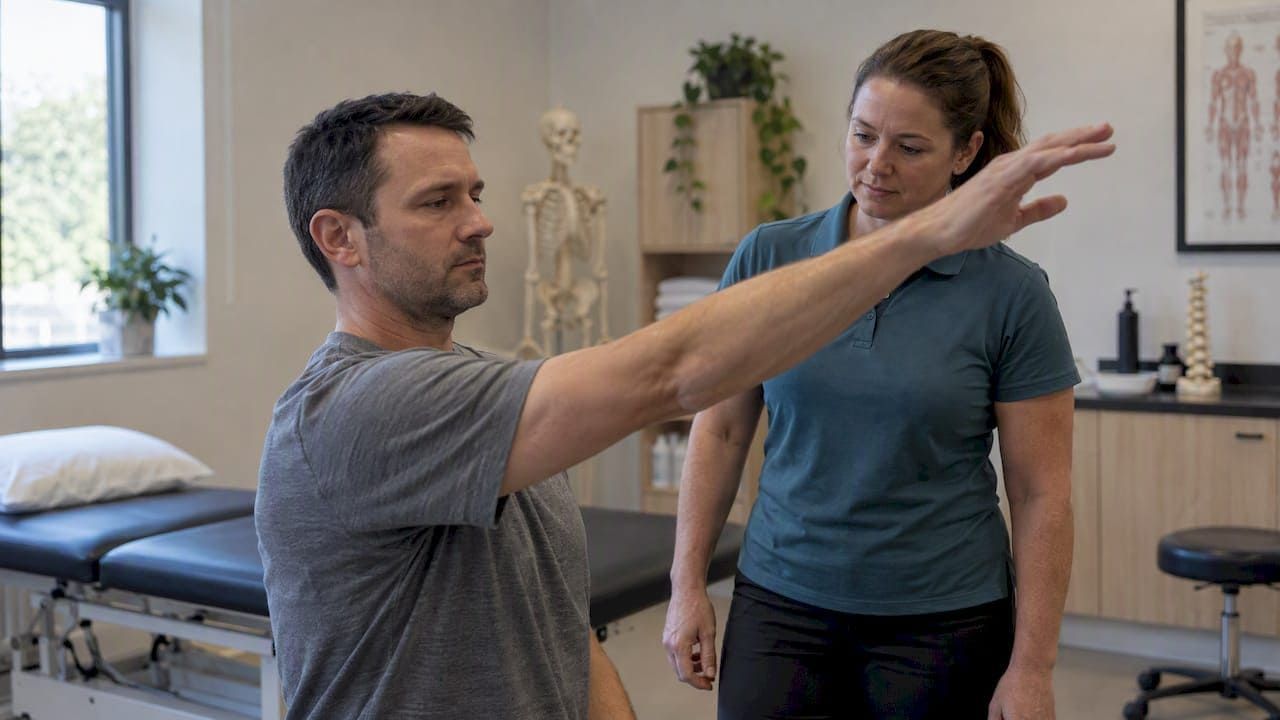
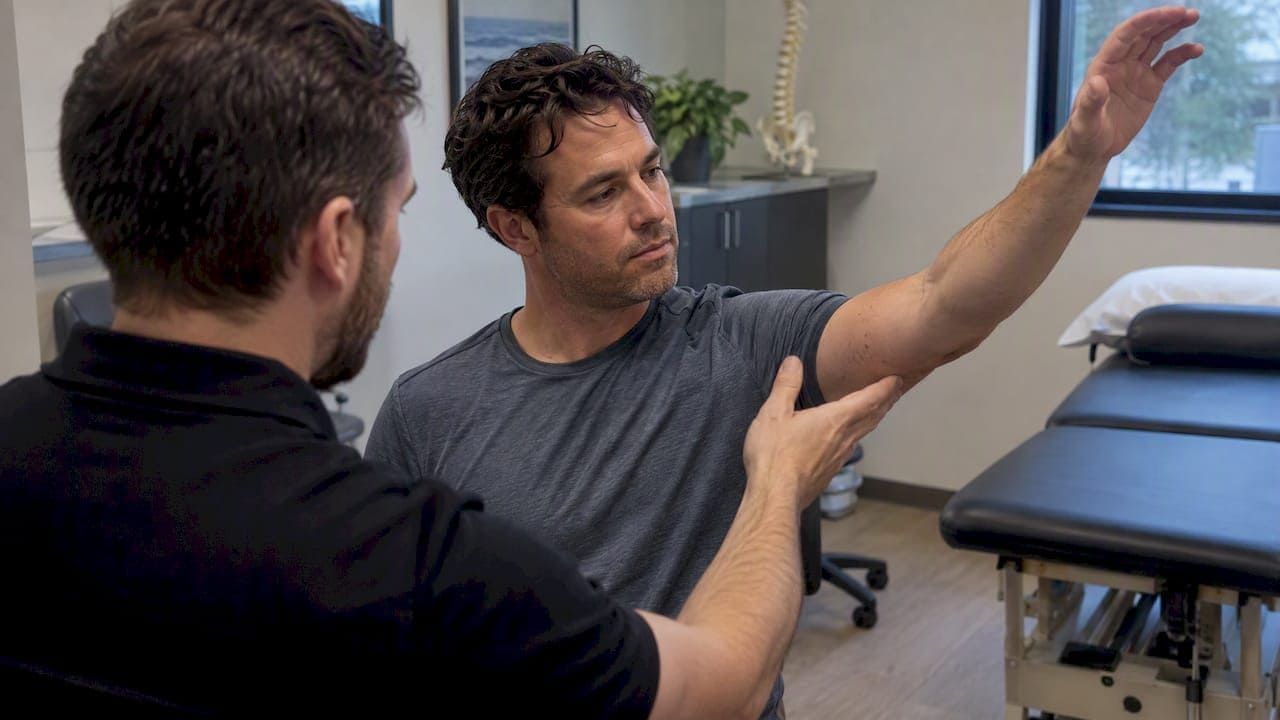
  • Hawkins-Kennedy test : internally rotating a forward-flexed arm reproduces pain when positive
  • Neer test : passively raising the arm overhead compresses the subacromial space
  • Jobe's test (empty can) : isolates the supraspinatus and often hurts or weakens with cuff pathology
  • Resisted external rotation : weakness or pain here points toward cuff tendon involvement

None of these tests confirms a diagnosis alone, but a cluster of positives raises confidence in the clinical picture.

Certain symptoms need urgent attention rather than a conservative care trial: fever or signs of infection, sudden severe weakness after trauma, an acute fall or dislocation, or night pain severe enough to prevent any sleep. These can signal fracture, septic joint, or acute full-thickness tear, none of which wait for a rehab program.

Pro Tip: If you can't lift your arm away from your body at all after an injury, that's a different problem than impingement and needs same-day evaluation.

When You Actually Need an X-Ray, Ultrasound, or MRI

Diagnosis starts with a clinical exam, not a scan. Most guidelines treat imaging as a secondary step reserved for specific situations rather than a routine first move.

According to the ACR Appropriateness Criteria for chronic shoulder pain, radiography is usually the appropriate first imaging study when imaging is needed at all, while ultrasound or MRI are reserved for cases that don't respond to conservative care or where a rotator cuff tear is suspected. That sequencing matters because jumping straight to MRI on a first visit often finds incidental findings that don't change treatment.

Here's how the imaging pathway typically breaks down:

  • X-ray : used after trauma, when red flags are present, or when the presentation looks atypical for simple impingement
  • Ultrasound : low-cost and accurate for rotator cuff assessment when performed by an experienced operator, and useful for dynamic viewing during arm movement
  • MRI : reserved for refractory cases or when surgical planning is on the table
  • Image-guided subacromial injection : can serve a dual purpose, diagnostic and therapeutic, in selected cases where the pain source is unclear

Radiography is usually the appropriate first imaging test for shoulder impingement, with ultrasound and MRI reserved for cases that don't improve with conservative care , according to the ACR Appropriateness Criteria. That hierarchy protects patients from unnecessary cost and incidental findings that rarely change the treatment plan.

What a Chiropractic Session for Shoulder Impingement Looks Like

A multimodal chiropractic approach treats the shoulder as part of a connected system rather than an isolated joint. A case report describing conservative treatment for shoulder impingement and rotator cuff disease documented full recovery in a small case series using soft tissue therapy, phonophoresis, joint manipulation, and exercise together.

A typical protocol draws from several tools:

  • Glenohumeral and AC joint mobilization to restore joint play
  • Thoracic and cervicothoracic manipulation, since stiffness in the upper back changes how the shoulder blade moves
  • Soft-tissue techniques like ischemic compression or cross-friction on irritated tendons
  • Adjunct modalities such as therapeutic ultrasound or phonophoresis in some protocols
  • A staged exercise plan that starts with isometrics and progresses to resisted and dynamic movement

A preliminary trial on cervicothoracic manipulation combined with supervised exercise found greater improvements in pain and range of motion compared with a home exercise program alone after five weeks, though the sample size was small enough that the finding should be read as encouraging rather than definitive.

A typical visit flow runs assessment, targeted manual therapy, exercise coaching, then a home program to carry between sessions. Our guide on manual therapy techniques breaks down what each technique feels like and when a clinician reaches for it.

Pro Tip: Ask your chiropractor to show you the home version of any in-clinic mobilization. The carryover between sessions often matters more than the session itself.

Building Your Shoulder Rehab Program Step by Step

Progression matters more than any single exercise; detailed clinician-curated shoulder impingement exercises can guide your gradual rehab progress. Jumping into resistance work before your shoulder tolerates basic movement tends to backfire.

  1. Pain-limited isometrics : hold the arm still against light resistance in a pain-free range to build tolerance without provoking the irritated tendon.
  2. Scapular control drills : retractions and rows that train the shoulder blade to stabilize before the arm moves much.
  3. Theraband resistance : light external rotation work once isometrics feel easy, usually two to three times weekly.
  4. Wall slides and thoracic mobility drills : restore the upward rotation and extension needed for full overhead reach.
  5. Dynamic overhead control : sport or work-specific overhead patterns added last, once strength and range hold up under load.

Watch for lingering soreness that lasts more than a few hours after a session, or pain that climbs during a set rather than easing. Either signal means back off the load or range for a few days before trying again.

Pro Tip: A good rule: some discomfort during exercise is acceptable if it settles within an hour and doesn't worsen the next day. Anything beyond that means you've pushed too far.

chiropractic treatment for shoulder pain

How Long Recovery Takes and What to Expect

Most people notice real improvement within 6 to 12 weeks of consistent conservative care. According to updated guidelines for subacromial pain syndrome, non-surgical treatment is effective in many cases for some presentations, with surgery considered only if there's no improvement after three to six months of guideline-based conservative management.

Recovery milestones usually follow this order:

  • Pain at rest eases first, often within two to three weeks
  • Range of motion improves next, particularly reaching overhead and behind the back
  • Strength and endurance return last, which is why return to sport or heavy work comes after pain-free range is established

Some factors slow things down: larger rotator cuff tears, longer symptom duration before treatment starts, and older age all predict a longer road. These don't rule out conservative care, but they usually call for closer monitoring and a longer timeline before expecting full function.

Non-surgical treatment resolves symptoms in roughly 75% of certain shoulder impingement presentations , with surgical referral reserved for those who don't improve within the guideline window, according to the updated SAPS guideline.

When to Consider Injections, Referral, or Surgery

Conservative care doesn't work for everyone, and knowing the exit points matters as much as the program itself.

  • A corticosteroid injection, ideally ultrasound-guided, can offer short-term relief when pain is severe enough to block participation in exercise therapy
  • Referral or surgical evaluation becomes reasonable after persistent, disabling symptoms that don't respond to a full guideline-recommended conservative trial, typically three to six months
  • A confirmed structural lesion on imaging, such as a significant cuff tear, changes the calculus toward earlier specialist input

Guidelines increasingly caution that routine arthroscopic subacromial decompression often performs no better than structured conservative care for many patients, according to the updated SAPS guideline, which is a strong argument for exhausting conservative options first.

Keeping Your Shoulder Healthy After Recovery

Staying out of impingement pain again comes down to managing load, not avoiding activity altogether.

  • Adjust training volume and technique for overhead sports or repetitive work tasks rather than pushing through fatigue
  • Keep up scapular control and postural habits learned during rehab, since they tend to fade without reinforcement
  • Build a short maintenance routine, two sessions a week is often enough, to keep rotator cuff and scapular strength from drifting backward

Our piece on acute pain relief strategies covers what to do at the first sign of a flare before it becomes a bigger problem.

Pro Tip: Schedule a check-in with a clinician every few months if you play an overhead sport seasonally. Catching stiffness early is easier than rebuilding range after it's lost.

Our Approach to Shoulder Impingement Care

We treat the shoulder as part of a connected system, assessing thoracic mobility, scapular control, and posture alongside the joint itself rather than isolating the symptom. Visits typically move through assessment, targeted manual therapy, exercise instruction, and a scheduled follow-up to track progress. Some clinicians have backgrounds working alongside sports teams, which influences how overhead athletes and active patients are approached.

A Clinician's View on Treating Shoulder Impingement

The biggest mistake I see is waiting too long to get evaluated, then expecting a single session to undo months of compensation patterns. A reasonable plan starts small: confirm the diagnosis, calm the irritated tissue, then build load back gradually. One patient I think of often came in after months of avoiding overhead reaching entirely. Within weeks of starting isometrics and scapular work, she was back to light overhead tasks without the sharp catch that had stopped her before.

Ready to Get Your Shoulder Moving Again?

If overhead reaching still catches or aches, we offer chiropractic adjustments alongside physical rehab built around your specific movement limitations, not a generic protocol. We also treat sports injuries for overhead athletes dealing with the same impingement pattern.

Before your first visit, bring a list of when the pain started, what movements provoke it, and any prior imaging or treatment you've tried. Your first appointment includes a hands-on assessment and the start of a personalized plan, covering:

  • A movement and strength assessment to pinpoint what's driving your symptoms
  • Manual therapy targeted to the joints and tissues actually limiting your motion
  • A take-home exercise plan you can start progressing right away

Book your evaluation through our chiropractic care page or explore our physical rehab services to see how a guided program fits your situation.

This article is general information, not a substitute for advice from a qualified doctor. Consult a qualified healthcare professional about your own circumstances before acting on anything here.

FAQ

  • Does chiropractic fix shoulder pain?

    Chiropractic care, especially combined with exercise, can meaningfully reduce shoulder impingement pain and improve range of motion for many patients. It works best as part of a broader conservative plan rather than a single adjustment, and a small case series documented full recovery using a multimodal approach.

  • How long does it take to recover from a shoulder manipulation?

    Most people notice improvement within days of a manipulation session, though full recovery from shoulder impingement typically takes 6 to 12 weeks of consistent conservative care. A single session rarely resolves the underlying movement pattern on its own.

  • Can you massage out a shoulder impingement?

    Soft-tissue massage techniques like ischemic compression or cross-friction can ease muscle tension and tenderness around the shoulder, but they work best paired with joint mobilization and a structured exercise plan. Massage alone rarely addresses the scapular and postural factors driving impingement.

  • Can a chiropractic adjustment make you tired?

    Mild fatigue or soreness after an adjustment is common and usually resolves within a day as the body adjusts to new movement patterns. It's not a sign of harm, but persistent or worsening fatigue after sessions is worth mentioning to your clinician.

Sources

Recommended

chiropractic care for spinal stenosis
By Essential ChiroCare Blogger • November 11, 2026
Evidence based guide to multimodal chiropractic care for spinal stenosis. Learn how manual therapy plus exercise can ease pain and improve walking in...
chiropractic treatment for plantar fasciitis
By Essential ChiroCare Blogger • November 10, 2026
Evidence based chiropractic care for plantar fasciitis patients: guidelines, dry needling data, a 4–8 week clinic plan, and specific home exercises.
chiropractic treatment for spondylolisthesis
By Essential ChiroCare Blogger • November 9, 2026
Learn when chiropractic care is appropriate for low‑grade spondylolisthesis, which gentle techniques reduce pain, and which red flags need prompt surgical...

Shoulder pain chiropractor Tampa
By Essential ChiroCare Blogger • November 8, 2026
Learn how the best chiropractor in Tampa evaluates holiday shoulder pain, identifies likely causes, and creates a personalized plan for relief and mobility.

Chiropractic care after a car accident
By Essential ChiroCare Blogger • November 7, 2026
Learn which post-crash mistakes can slow healing and when to see a car accident chiropractor in Tampa for personalized care and support after a collision.
Chiropractic care for migraine relief
By Essential ChiroCare Blogger • November 6, 2026
Clinic authored, evidence informed guide to trying chiropractic for migraines safely: run a defined trial of several weeks, track migraine days, and...

Posterior canal BPPV treatment
By Essential ChiroCare Blogger • November 5, 2026
Evidence based guide to vertigo chiropractic treatment: maneuvers that work, tests that guide care, and safe options for limited neck mobility.
chiropractor for degenerative disc disease
By Essential ChiroCare Blogger • November 4, 2026
Evidence-forward, safety-first guidance on chiropractic care for degenerative disc disease. Read research takeaways, realistic expectations, and five...
Can chiropractic care help a dowager’s hump
By Essential ChiroCare Blogger • November 3, 2026
Clinic-rooted, evidence-aware care for patients with a dowager's hump. Combines exercise, manual therapy, and screening that commonly reduces kyphosis by...

Chiropractic treatment for jaw pain
By Essential ChiroCare Blogger • November 2, 2026
Evidence first TMJ chiropractic care. Which manual therapies have trial support, realistic gains in 6–12 sessions, and key safety tips and visit expectations.
Show More