
Patients: 5 Questions to Ask a Chiropractor for Degenerative Disc

Essential ChiroCare Blogger • November 4, 2026

Patients: 5 Questions to Ask a Chiropractor for Degenerative Disc

Chiropractic care can ease pain and improve function for some people with symptomatic degenerative disc disease, usually as one part of conservative treatment rather than a standalone fix. It does not reverse disc degeneration, and the research behind it shows modest, variable results with low to moderate certainty. Anyone with new bowel or bladder changes, spreading weakness, or numbness in the groin or inner thighs needs urgent medical evaluation, not a chiropractic appointment.

TL;DR:

  • Chiropractic care can provide modest pain relief and improve function when combined with active rehabilitation, but it cannot reverse disc degeneration.
  • Most treatments focus on restoring mobility and reducing muscle guarding through manipulation, mobilization, soft-tissue therapy, and spinal decompression, rather than expecting structural changes in the disc.
  • Evidence shows limited benefit from spinal manipulation for chronic low-back pain, with a slight pain reduction seen mainly in group averages and uncertain individual outcomes.
  • Serious adverse effects are rare, but red flags like new bladder or bowel symptoms or progressive weakness require urgent medical evaluation before considering chiropractic care.
  • Effective care involves careful screening, a multimodal treatment plan, tapering as symptoms improve, and coordination with other healthcare providers if red flags or neurological deficits appear.
chiropractor for degenerative disc disease

Table of Contents

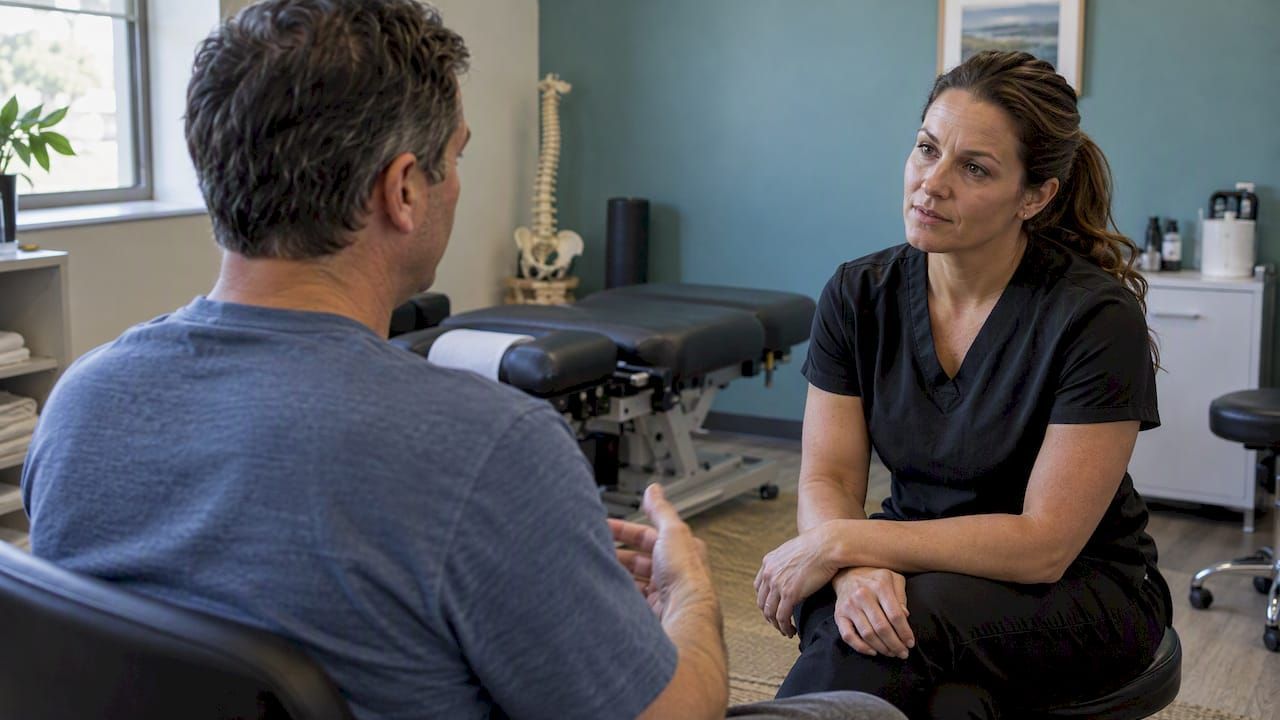
What chiropractors do for degenerative disc disease

Chiropractors treating degenerative disc disease (DDD) typically combine a few techniques rather than relying on one. High-velocity, low-amplitude (HVLA) spinal manipulation delivers a quick, controlled thrust to a joint, while mobilization uses slower, lower-force movement through the joint's range. Both aim to restore motion in stiff spinal segments and reduce the muscle guarding that often accompanies disc-related pain.

Most treatment plans layer in adjuncts rather than manipulation alone:

  • Soft-tissue therapy to release tight muscles around the spine
  • Spinal decompression or traction to reduce pressure on affected discs, an approach some clinics offer as a dedicated program
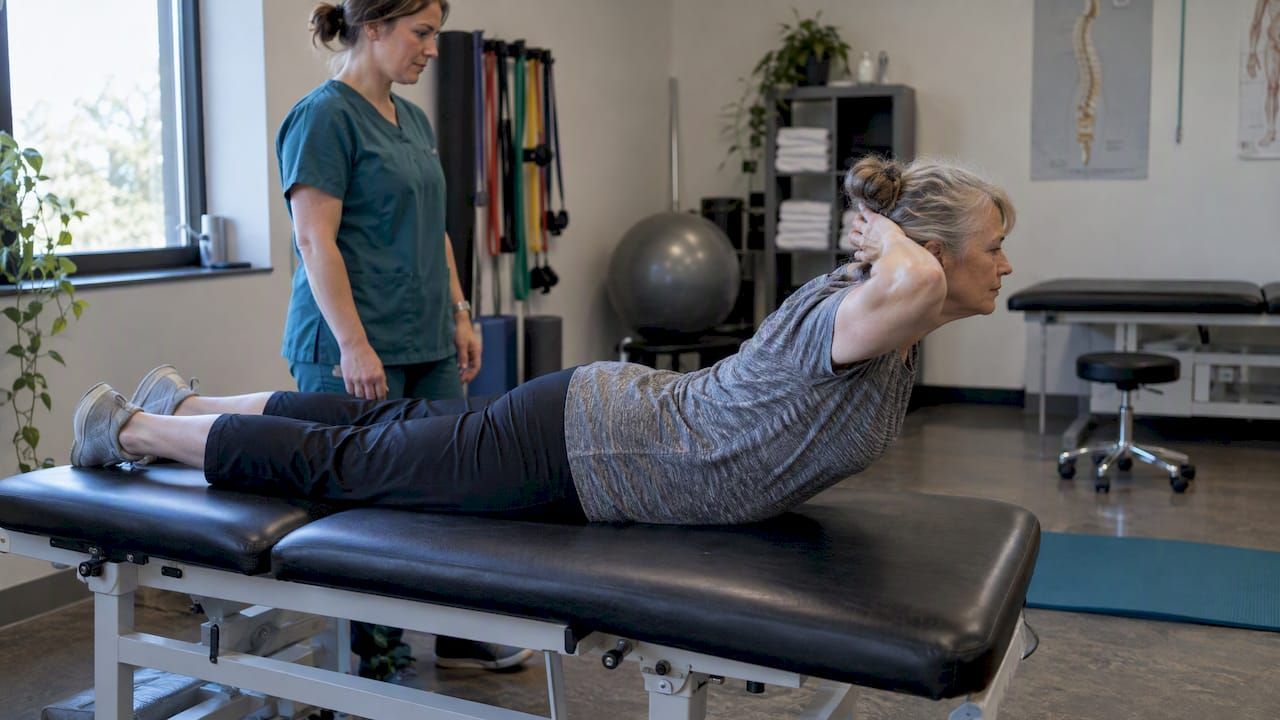
  • Home exercise programs that build core and spinal support
  • Patient education on posture, movement, and pacing activity

A roundup of common chiropractic modalities shows how clinics typically sequence these tools rather than treating them as interchangeable.

The rationale is functional, not structural: manipulation and mobilization aim to restore movement and reduce guarding so a patient can tolerate active rehabilitation sooner. A 2020 Delphi-based clinical practice guideline for chronic musculoskeletal pain reinforces this, recommending that passive treatments like manipulation be paired with active interventions and self-management rather than used as a cure-all. The disc itself does not regenerate from an adjustment. What can change is how much the surrounding muscles and joints interfere with movement and pain.

What the research shows about outcomes

The evidence for spinal manipulation in chronic low-back pain, including DDD-related pain, is real but limited. A 2026 Cochrane review update found spinal manipulative therapy offers little to no additional pain relief compared with other conservative treatments, and only a modest benefit compared with sham treatment, with certainty graded low to very low.

A 2026 Cochrane update found spinal manipulation produced a pain reduction of 7.01 points versus sham at one month, but certainty in that estimate was rated low to very low. That gap between a measurable average effect and low confidence in the number is the central tension in this field: the benefit shows up in group data, but it is not guaranteed for any one patient.

A more encouraging signal comes from a 2025 secondary analysis of older adults, average age 70.4, who received 12 weeks of chiropractic spinal manipulation plus home exercise. People with moderate or severe disc degeneration on imaging improved at similar rates to those with milder findings.

What this means practically:

  • Expect meaningful, not dramatic, improvement for many patients
  • Imaging findings alone should not determine whether to try conservative care
  • Low-certainty evidence means individual response varies more than averages suggest

Safety, contraindications, and when imaging matters

Most people tolerate chiropractic care well. Cleveland Clinic notes temporary soreness is the most common side effect after an adjustment, usually resolving within a day or two. Serious complications are uncommon, but certain conditions call for caution or a different approach entirely. Before your first visit, you should disclose:

  1. A history of osteoporosis or low bone density
  2. Any cancer history, especially spine or bone involvement
  3. Prior spinal surgery or spinal hardware
  4. Use of blood thinners or anticoagulant medication
  5. Any new or worsening numbness, tingling, or weakness

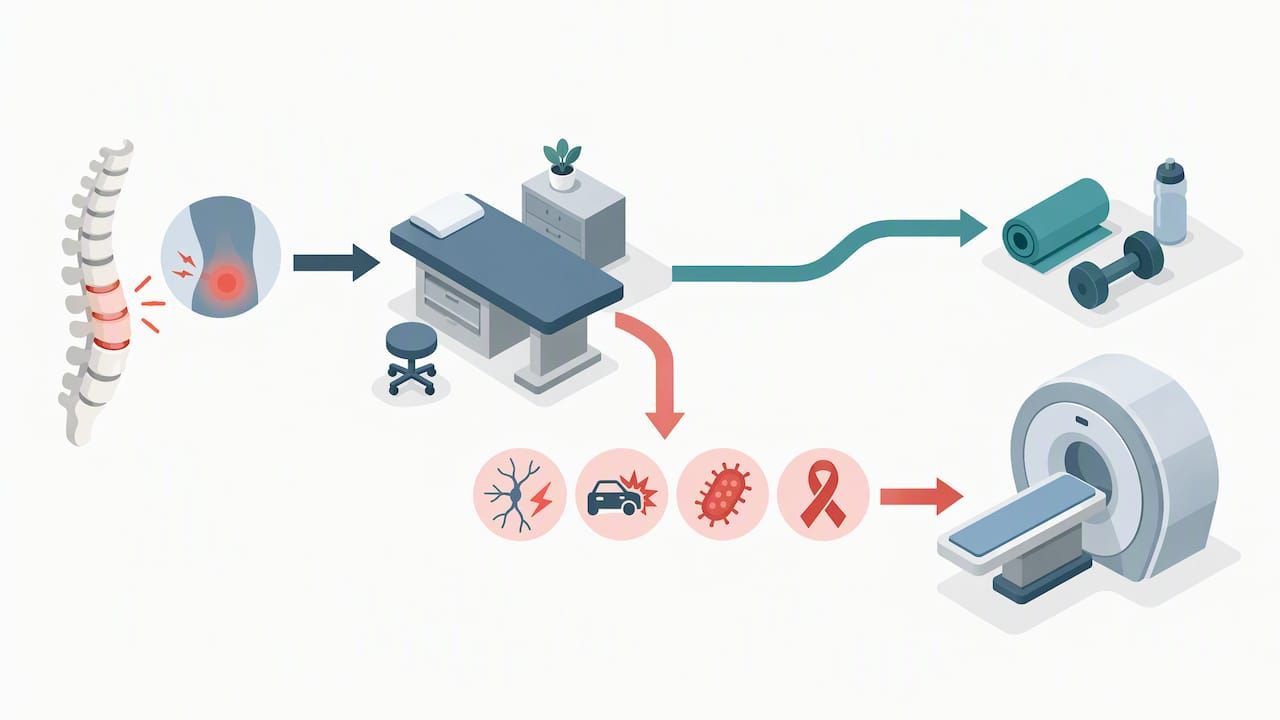
Some symptoms require urgent medical care, not a chiropractic visit. Seek emergency evaluation for new loss of bladder or bowel control, numbness in the saddle area (inner thighs, groin, or buttocks), progressive weakness in a leg, fever with back pain, unexplained weight loss, or back pain following major trauma. A guide to early disc symptoms walks through how to tell routine stiffness from a warning sign.

On imaging, the American College of Radiology advises against routine early MRI for uncomplicated low-back pain. MRI becomes appropriate when red flags appear: progressive neurologic deficit, suspected cauda equina syndrome, cancer history, infection risk, or significant trauma. For most DDD-related pain without those features, a clinical exam guides treatment better than a scan does.

Pro Tip: Write down your symptoms and any red-flag signs before your first visit so nothing gets missed in the conversation.

What a typical course of chiropractic care looks like

A first visit usually starts with a medical history review, a focused neurologic exam, and tests of spinal mobility. MedlinePlus describes this initial evaluation as taking about an hour, with imaging or additional tests ordered only when clinically indicated rather than as a routine step.

Visit frequency and session length vary by clinic and by what a treatment plan includes:

  • Early phase often runs two to three visits per week for several weeks
  • Sessions typically last 10 to 60 minutes depending on the interventions used
  • Frequency tapers as pain decreases and function improves
  • Plans are adjusted based on how a patient responds, not fixed in advance

A breakdown of adjustment frequency by phase covers how this tapering typically unfolds over a course of care. Clinicians track progress with tools like pain rating scales and functional questionnaires such as the Oswestry Disability Index, the same measure used in the 2025 older-adult trial. If a patient shows no meaningful change after a reasonable trial of care, usually four to six weeks, that is a signal to reassess the plan or refer out rather than continue the same approach indefinitely.

degenerative disc disease treatment

Choosing a chiropractor and knowing when to co-manage

Look for a clinician who treats manipulation as one tool among several rather than the whole plan. The strongest fit for DDD is a practice built on a biopsychosocial model: one that addresses pain alongside movement, stress, and daily habits, and that prioritizes active rehabilitation over passive treatment alone, consistent with the chronic pain management guideline mentioned earlier.

Questions worth asking at a first visit:

  1. What is your policy on ordering imaging, and when would you skip it?
  2. How will you measure progress, and how often will we reassess?
  3. What does a realistic timeline look like for my symptoms?
  4. How do you screen for red flags before starting manipulation?
  5. Do you coordinate with other providers if I'm not improving?

Co-management or referral becomes appropriate when a patient shows progressive neurologic deficit, severe radiculopathy (nerve-related leg pain with weakness or numbness), signs of a surgical candidate, or no meaningful improvement after a reasonable evidence-based trial. A look at what shooting leg pain reveals about a disc problem explains how those referral decisions typically get made. Some patients also benefit from exploring regenerative and interventional options alongside conservative care when progress stalls.

How a multimodal clinic approaches DDD in practice

Essential ChiroCare structures care around this same multimodal approach: individualized treatment plans that combine chiropractic adjustments, physical rehab, and spinal decompression rather than manipulation alone. Providers with backgrounds working with sports teams bring experience managing active patients through graded recovery. Online scheduling and multiple West Central Florida locations make follow-up visits easier to keep consistent, which matters given how much tapering and reassessment shape outcomes. Whatever clinic you choose, verify credentials, ask how progress gets measured, and bring any prior imaging to your first visit.

A realistic view on chiropractic care for disc pain

Conservative, activity-focused chiropractic care, paired with careful screening for red flags, is a reasonable option for many people with symptomatic DDD. It is not a reset button for an aging disc, and anyone promising that is overstating what the evidence supports. The honest pitch is smaller than that: manageable pain, better function, and a path toward staying active, which for a lot of patients is exactly the goal.

Before your first appointment, write a short symptom list, gather any prior imaging, and ask directly about red-flag screening and what an exercise plan will look like. That one step shapes the whole first visit.

If you want in-person care, here's what to expect

If you're dealing with disc-related back pain and want hands-on evaluation, Essential ChiroCare offers chiropractic adjustments, spinal decompression, and physical rehab built around an individualized plan rather than a one-size approach. You get:

  • Multiple clinic locations for convenient follow-up
  • Online scheduling available for appointments
  • Treatment plans that combine manual therapy with rehabilitation goals

Before you book, pull together your symptom timeline, any prior scans, and the questions above about screening and progress measurement. Request an initial consult to start that conversation.

This article is general information, not a substitute for advice from a qualified doctor. Consult a qualified healthcare professional about your own circumstances before acting on anything here.

Sources

FAQ

  • Should you see a chiropractor if you have degenerative disc disease?

    For many people with symptomatic DDD and no red-flag symptoms, chiropractic care is a reasonable conservative option that can ease pain and improve function. It works best combined with exercise and self-management rather than used alone, and anyone with progressive weakness or bladder or bowel changes should see a medical provider first.

  • What exercises help people with degenerative disc disease?

    Clinicians generally recommend core-strengthening and flexibility exercises tailored to the individual rather than a fixed routine, often paired with manual therapy. The 2025 trial on older adults combined chiropractic manipulation with a home exercise program over 12 weeks, and that pairing, not manipulation alone, drove the reported improvement.

  • What kind of doctor helps with degenerative disc disease?

    Primary care physicians, physical therapists, chiropractors, and spine specialists all manage DDD depending on severity and symptoms. Chiropractors typically handle conservative, nonsurgical cases, while orthopedic surgeons or neurosurgeons become involved when there's progressive neurologic deficit or a suspected surgical issue.

  • Does physical therapy help degenerative disc disease?

    Physical therapy centered on exercise and movement retraining is a core part of conservative DDD management and is often used alongside or instead of chiropractic care. Active rehabilitation, rather than passive treatment alone, is the approach clinical guidelines consistently prioritize for chronic musculoskeletal pain.

Recommended

Can chiropractic care help a dowager’s hump
By Essential ChiroCare Blogger • November 3, 2026
Clinic-rooted, evidence-aware care for patients with a dowager's hump. Combines exercise, manual therapy, and screening that commonly reduces kyphosis by...

Chiropractic treatment for jaw pain
By Essential ChiroCare Blogger • November 2, 2026
Evidence first TMJ chiropractic care. Which manual therapies have trial support, realistic gains in 6–12 sessions, and key safety tips and visit expectations.
chiropractor after car accident Tampa FL
By Essential ChiroCare Blogger • November 1, 2026
Learn how a symptom diary can support your recovery and help a car accident chiropractor in Tampa evaluate injuries after a collision with personalized care.

Chiropractic clinic in Tampa
By Essential ChiroCare Blogger • October 31, 2026
See how a chiropractic clinic in Tampa creates personalized recovery plans to support pain relief, injury healing, better mobility, and long-term wellness.

spinal decompression contraindications
By Essential ChiroCare Blogger • October 30, 2026
A safety-first checklist for patients: learn the 8 absolute and 5 relative contraindications for spinal decompression, how clinics screen for risk, and...

how to prevent sciatica pain while driving
By Essential ChiroCare Blogger • October 29, 2026
Set your seat, take hourly breaks, and use a 3 move routine to prevent sciatica pain while driving. Clinic backed setup steps, safe stretches, and red...

cervical adjustment safety in Florida
By Essential ChiroCare Blogger • October 28, 2026
An evidence-first safety briefing for Florida patients: clear incidence notes, the screening questions to ask, red flags to watch, and clinic safeguards...

How to treat cervicogenic dizziness
By Essential ChiroCare Blogger • October 27, 2026
A practical, evidence led roadmap for cervicogenic dizziness: triage red flags, upper neck manual therapy plus home exercises. Vestibular rehab is added...
spinal decompression results
By Essential ChiroCare Blogger • October 26, 2026
Evidence based guidance for patients on spinal decompression results: who benefits, expected timeline (3–6 sessions, 4–8 weeks), and how to keep relief...

Tampa chiropractor for back pain
By Essential ChiroCare Blogger • October 25, 2026
Learn how the best chiropractor in Tampa can help address fall training pain, improve mobility, and support sports injury recovery with personalized care.
Show More