6–12 Sessions: Evidence Backed TMJ Chiropractic Treatment for Patients
Chiropractic and manual therapy can help TMJ pain and jaw dysfunction, according to a 2023 clinical practice guideline and a systematic review of randomized trials that both point to therapist-assisted mobilization and supervised exercise as effective conservative options. The benefits tend to be small to moderate, not dramatic, and they work best paired with home exercises, posture correction, and basic self-care rather than as a standalone fix.
TL;DR:
- Manual therapy offers modest, short-term improvements in pain and jaw opening, especially when combined with home exercises, posture correction, and self-care.
- Effective techniques include joint mobilization, trigger-point therapy, and cervical adjustments, while aggressive active methods carry higher risks.
- Treatment generally requires several weeks and multiple sessions, with better outcomes for patients with shorter symptom duration and mild joint issues.
- Manual therapy is not suitable for cases with infection, neurological deficits, or significant joint degeneration without prior medical or dental evaluation.
- A comprehensive, multidisciplinary approach targeting jaw, neck, and posture yields better results than isolated or passive treatments alone.

Table of Contents
- How chiropractors and manual therapists understand and treat TMJ dysfunction
- What the best evidence and clinical guidelines say right now
- Specific manual and adjunct techniques you'll commonly receive
- Realistic improvement, typical timeline, and measures clinicians use
- Who should not have certain manual techniques and when to get a referral
- A practical walkthrough of an initial evaluation and a typical course of care
- Safety profile, common side effects, and how to minimize risk
- Essential ChiroCare's clinical approach to TMJ
- How to get an evaluation and schedule care at Essential ChiroCare
- Sources
- FAQ
How chiropractors and manual therapists understand and treat TMJ dysfunction
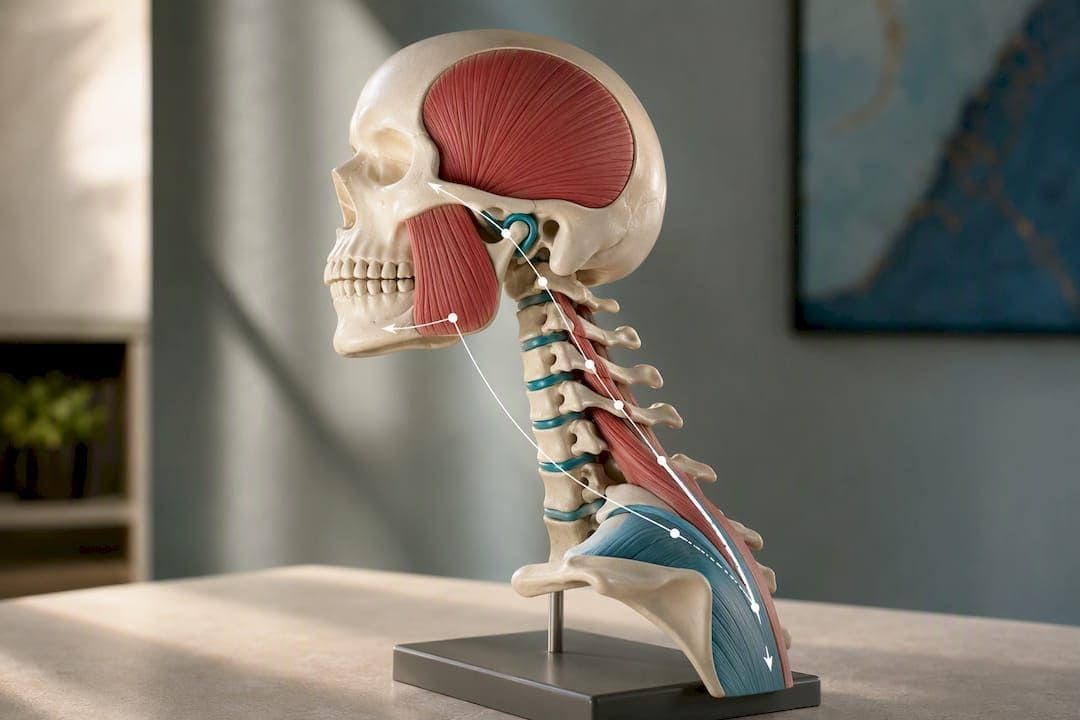
Temporomandibular joint dysfunction rarely stays contained to the jaw. The joint itself, the muscles that move it (the masseter, temporalis, and pterygoids), and the surrounding connective tissue all interact with the neck and upper back. A forward head posture or restricted cervical motion changes how the jaw closes and how much strain the chewing muscles absorb, which is why manual therapists rarely treat the jaw in isolation.
Chiropractic care approaches TMJ dysfunction from this wider angle, treating the joint directly while also addressing the neck and postural patterns that feed into it. The guiding philosophy is conservative first: try reversible, low-risk interventions before considering splints, injections, or surgery.
That approach generally involves:
- Assessing jaw mechanics alongside cervical spine mobility and posture
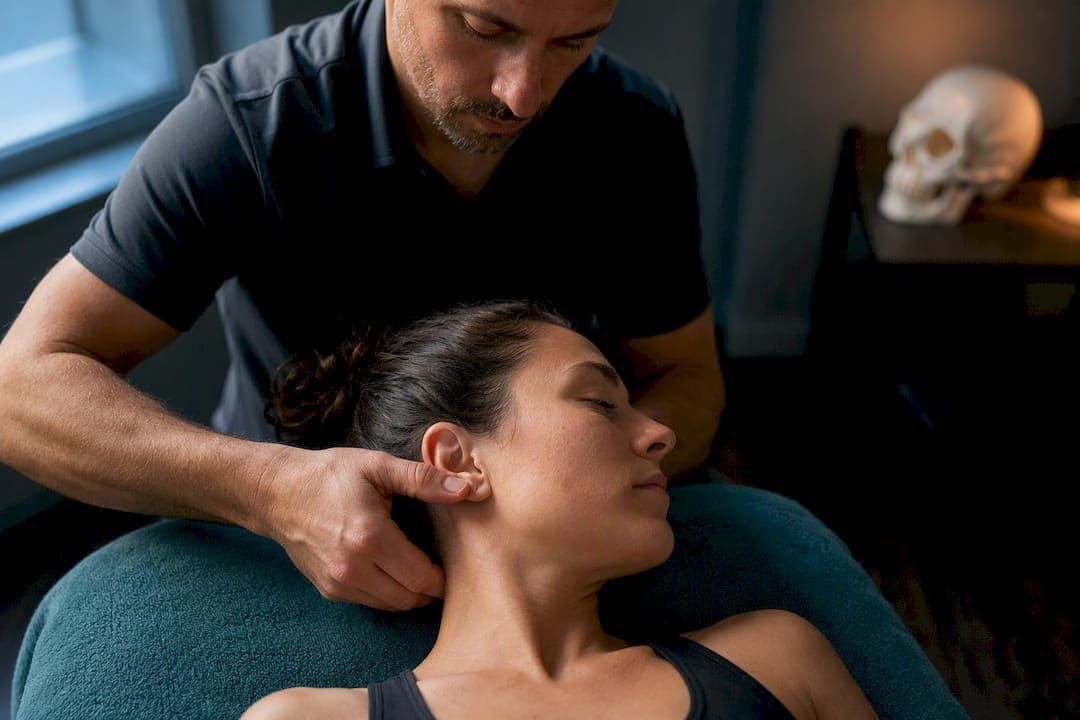
- Using hands-on techniques to reduce muscle tension and restore joint motion
- Building a home program so gains from in-office visits carry over into daily life
What the best evidence and clinical guidelines say right now
The clearest guidance comes from a 2023 international clinical practice guideline for chronic TMD, which covers cases lasting three months or longer. It gives strong recommendations in favor of therapist-assisted joint mobilization, manual trigger point therapy, and supervised postural and jaw exercises. It also offers conditional support for manual manipulation, while strongly recommending against irreversible interventions like permanent oral splints or discectomy as first-line care.
Backing this up, a systematic review and meta-analysis of manual therapy trials found moderate to high quality evidence that manual therapy improves both pain intensity and maximum mouth opening, in the short term and at longer follow-up.
Manual therapy shows measurable, if modest, benefit for TMD pain and mouth opening , according to the pooled trial evidence, though the review notes that effect sizes are small and may not feel life-changing for every patient.
That caveat matters. Outcomes vary by who delivers the treatment and how, and most of the strongest trial data comes from physiotherapy and rehabilitation settings, though chiropractic case series and RCTs also show benefit when techniques are applied with appropriate skill and dosing. An RCT that added manual therapy of the TMJ and upper cervical spine to routine conservative care found significant improvements in jaw pain, mouth opening, and cervical flexion after ten sessions, compared with routine treatment alone.
Manual therapy improves pain intensity and maximum mouth opening in the short and long term, but effect sizes are small and outcomes vary by technique quality and case selection.
The takeaway isn't that manual therapy is a cure. It's that a specific, guideline-backed set of techniques has real support, and that multidisciplinary care, not any single provider working alone, gets the best results for chronic cases.
Specific manual and adjunct techniques you'll commonly receive
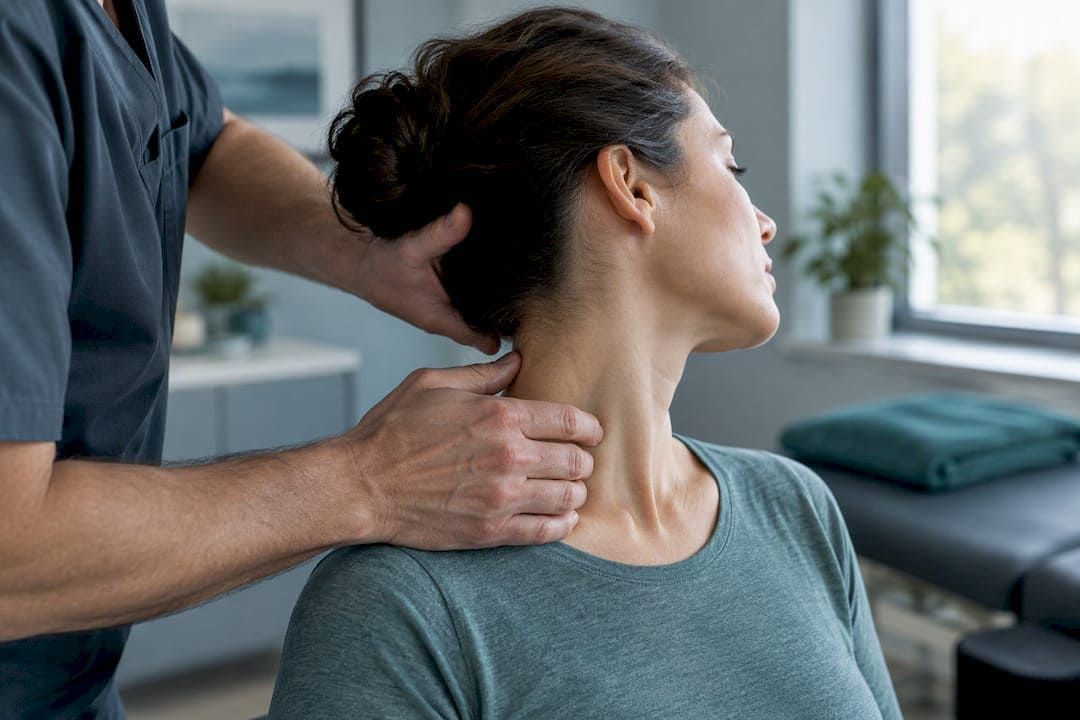
A typical course of care draws from a defined toolkit rather than one signature move. Direct TMJ mobilization, applied medially or in an anterior-posterior direction, aims to restore normal joint glide using gentle, graded pressure delivered intraorally or extraorally.
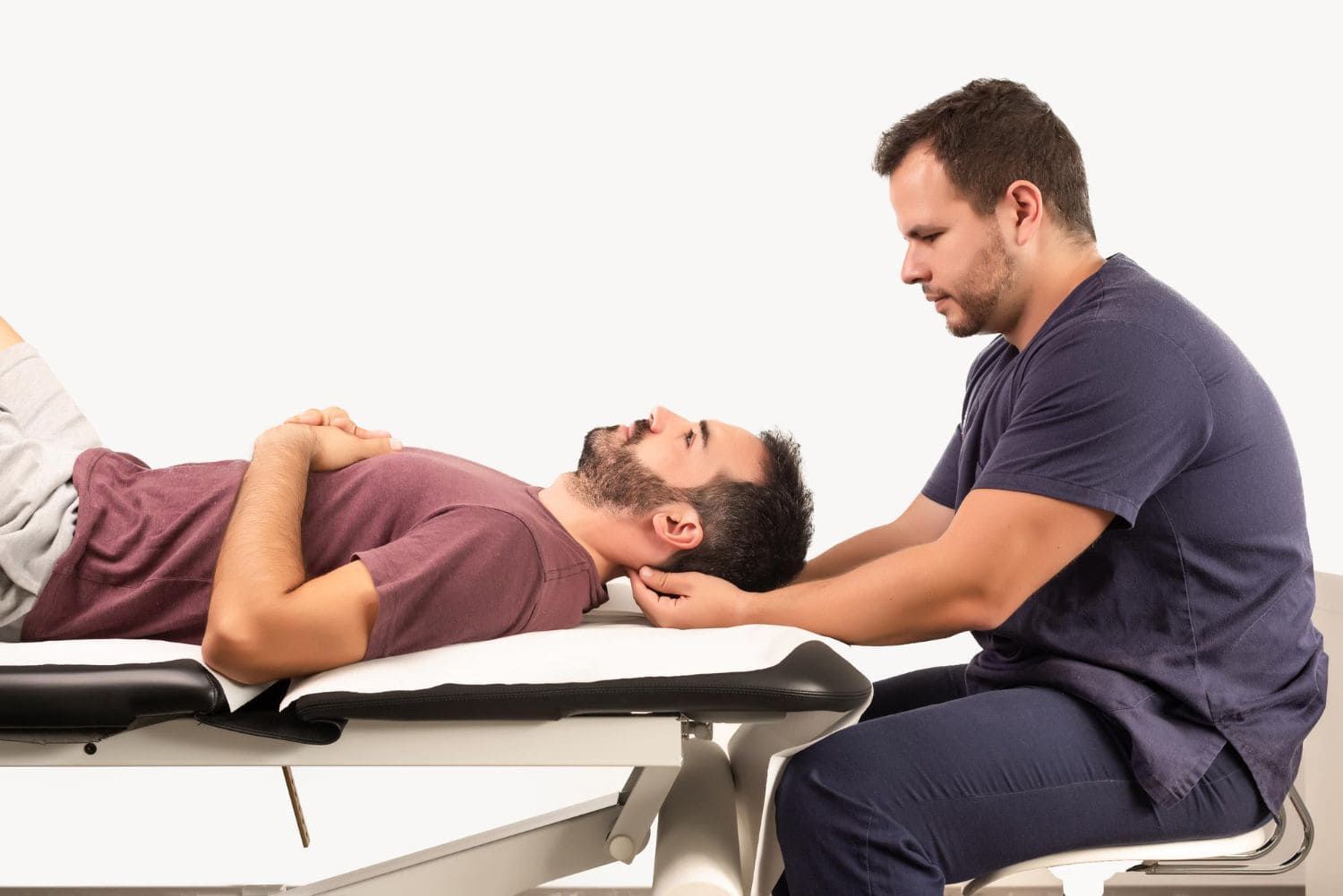
Because jaw mechanics are tied to the neck, upper-cervical and thoracic adjustments often get added when a postural or joint restriction there is contributing to jaw strain. Soft-tissue work, including myofascial release and trigger-point therapy, uses sustained or ischemic compression to release tight bands in the masseter and temporalis.
Muscle Energy Techniques and Balanced Ligamentous Tension represent two different philosophies: MET uses the patient's own muscle contraction against light resistance, while BLT is a passive, low-force approach. Passive techniques generally carry a lower risk profile than active ones like aggressive MET.
Common components of a treatment plan include:
- Direct joint mobilization with gradual, monitored pressure increases
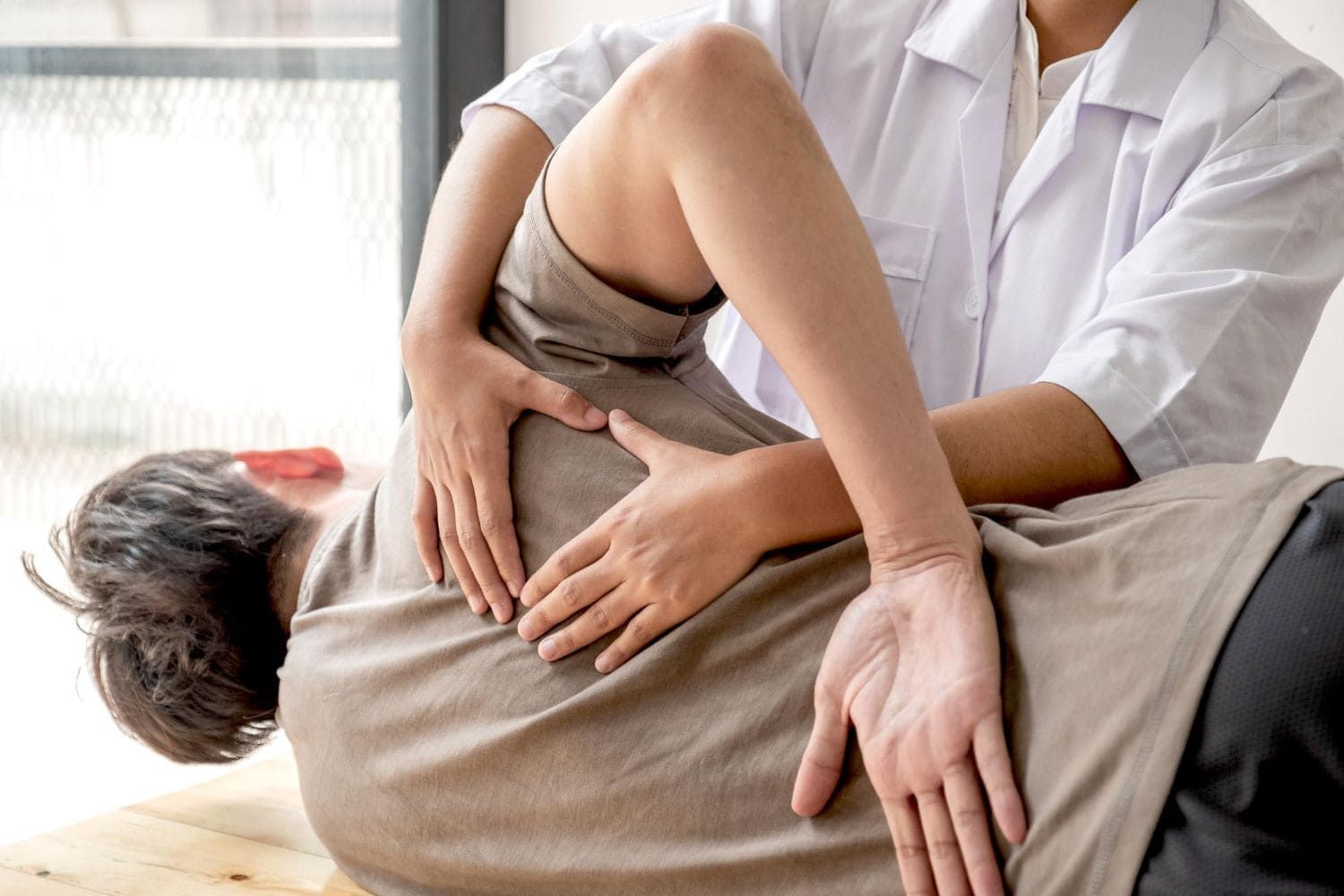
- Cervical and thoracic adjustments when neck restriction is present
- Trigger-point and myofascial release for chewing muscle tension
- Supervised jaw and postural exercises to reinforce gains between visits
- Adjunct modalities such as heat, cold, or photobiomodulation for acute soreness
Pro Tip: Ask your provider whether a technique is active or passive; if a session leaves you unusually sore, request a gentler, more passive approach next time.
Realistic improvement, typical timeline, and measures clinicians use
Trial data points to modest, incremental gains rather than overnight relief. Most studies track two outcomes: self-reported pain and maximum mouth opening (MMO), measured in millimeters.
- Expect gradual improvement over several weeks, not days
- A common checkpoint is reassessment after roughly six to twelve sessions
- Shorter symptom duration, consistent home exercise, and mild joint findings all predict a better response
Improvements in pain and mouth opening tend to build over the course of treatment , based on the manual therapy trial evidence, rather than resolving in one or two visits. Patients with longstanding, severe joint degeneration typically see smaller gains from manual therapy alone and may need additional input from a dentist or specialist.
Who should not have certain manual techniques and when to get a referral
Not every TMJ complaint is a candidate for manual therapy right away. Some signs call for medical or dental evaluation first.
- Seek urgent care for signs of infection, a progressive neurologic deficit, or recent significant trauma to the face or jaw.
- Flag connective tissue disorders, uncontrolled anticoagulation, or an active systemic infection to your provider before any manual technique, since these raise the risk of complications.
- Ask for a dental or surgical opinion if imaging shows significant joint degeneration or if a locked jaw doesn't resolve with a reasonable trial of conservative care.
Conservative, noninvasive management, including manual therapy, self-care, and physiotherapy, is generally recommended as the first step for many TMD cases, but should be combined with evaluation when concerning symptoms arise.

A practical walkthrough of an initial evaluation and a typical course of care
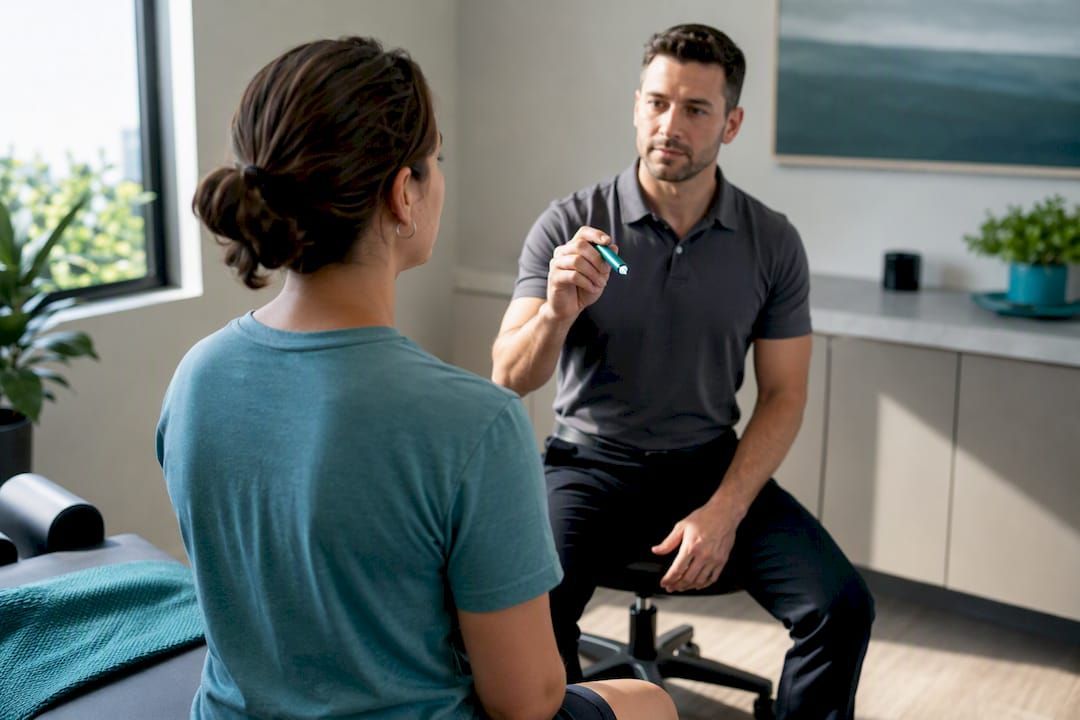
A first visit usually starts with a detailed history: when pain started, what makes it worse, and any clicking, locking, or grinding. From there, the provider measures how far you can open your mouth, checks neck and postural alignment, and palpates the jaw and cervical muscles for tender points.
A typical in-clinic sequence, described step by step here, moves through:
- Assessment and remeasurement of mouth opening and pain levels
- Manual therapy targeting the jaw and any related cervical restrictions
- Adjunct modalities like heat or cold for acute soreness
- Supervised exercise to reinforce the session's gains
- A home program of stretches and postural cues to continue between visits
Progress gets tracked using the same measures from the first visit, mouth opening and pain scores, with the plan adjusted if those numbers stall.
Safety profile, common side effects, and how to minimize risk
Manual therapy for TMJ is generally low risk, but it isn't risk-free. Mild, short-term soreness or a temporary increase in jaw stiffness after a session is common and usually settles within a day or two.
- Active techniques like aggressive MET carry a higher risk profile than passive alternatives such as BLT or gentle myofascial release
- Clinicians typically start with low-force intraoral or extraoral mobilization and increase intensity only once soreness has resolved
- Informed consent and clear communication about sensation during treatment reduce the chance of an unwanted flare-up
Pro Tip: After a session, drink water, keep jaw movement gentle for the rest of the day, and avoid hard or chewy foods until any soreness fades.
Essential ChiroCare's clinical approach to TMJ
Our approach to TMJ pain follows the same conservative, root-cause logic the evidence supports: manual therapy paired with supervised rehabilitation and a home exercise program, rather than a single adjustment and a hope for the best. We look at the jaw alongside neck and postural mechanics, since the two are rarely separate problems.
Essential ChiroCare's manual therapy services are delivered by a team that includes staff with sports team chiropractic backgrounds, and every plan is built around the individual patient rather than a fixed protocol.
How to get an evaluation and schedule care at Essential ChiroCare
If jaw pain, clicking, or limited opening has been dragging on, a hands-on evaluation that looks at both your jaw and your neck is a reasonable next step. Essential ChiroCare offers manual therapy, chiropractic adjustments, and physical rehab as part of one coordinated plan rather than separate, disconnected appointments.
Scheduling an initial visit is straightforward through our chiropractic care page, and it helps to bring any prior dental notes or imaging so your first assessment starts with the full picture. From there, we build a plan around what your jaw and neck actually need, not a one-size protocol.
Sources
This article is general information, not a substitute for advice from a qualified doctor. Consult a qualified healthcare professional about your own circumstances before acting on anything here.
FAQ
Is it good to go to a chiropractor for TMJ?
For many people with jaw pain or limited opening, manual therapy from a chiropractor can help, since a clinical practice guideline supports therapist-assisted mobilization and supervised exercise for chronic TMD. It works best as part of a conservative plan that includes home exercises and self-care, not as an isolated fix.
What is the most successful treatment for TMJ?
No single treatment outperforms all others across the board. Current guidelines favor a conservative combination of therapist-assisted mobilization, manual trigger point therapy, and supervised jaw and postural exercises, reserving irreversible options like discectomy for cases that don't respond.
What autoimmune disease is associated with TMJ?
Definitions and associations vary across sources, and this article's evidence base does not cover a specific autoimmune link to TMJ. If autoimmune disease is a concern, a rheumatologist or your dentist can evaluate that connection directly.
How do I realign my jaw in TMJ?
Rather than a single realignment move, care typically involves gentle joint mobilization, muscle release techniques, and supervised jaw exercises done consistently over several weeks. Trying to force alignment on your own isn't supported by the evidence and can aggravate symptoms.