How sports injuries affect the spine: recovery guide
How sports injuries affect the spine: recovery guide
Athletes push their bodies to extremes, but many don't realize how vulnerable their spine is during competition and training. A single tackle, awkward landing, or repetitive motion can lead to injuries ranging from mild strains to career-ending fractures. Understanding how different sports impact spinal health and what recovery options exist can mean the difference between a quick return to play and chronic pain. This guide breaks down the mechanisms behind spinal sports injuries, identifies high-risk activities, and explores evidence-based treatment approaches including chiropractic care that help athletes in West Central Florida recover faster and prevent future problems.

Table of Contents
- Understanding How Sports Injuries Impact The Spine
- Which Sports Pose The Highest Spinal Injury Risks And Why
- Recovery Options For Spinal Sports Injuries: Conservative Management And Chiropractic Care
- Preventing Spinal Sports Injuries And Enhancing Long-Term Spinal Health
- Explore Chiropractic Care For Sports Injury Recovery And Prevention
- Frequently Asked Questions
Key takeaways
| Point | Details |
|---|---|
| Multiple forces injure the spine | Axial compression, hyperflexion, hyperextension, rotation, and repetitive loading cause different injury patterns in athletes. |
| Certain sports carry higher risks | Football, wrestling, ice hockey, diving, and gymnastics show elevated rates of spinal trauma affecting specific regions. |
| Conservative care works effectively | Bracing, physical therapy, and chiropractic treatment support recovery for most mild to moderate spinal injuries without surgery. |
| Prevention reduces reinjury rates | Proper training, protective equipment, early symptom recognition, and ongoing chiropractic care minimize recurrence and enhance longevity. |
Understanding how sports injuries impact the spine
Your spine faces intense mechanical stress during athletic activity. Four primary forces create injury patterns that affect different spinal structures. Axial compression occurs when force travels directly down the spine, common in head-first collisions or hard landings. Hyperflexion and hyperextension happen when the spine bends too far forward or backward beyond normal range. Rotational forces twist vertebrae against each other during quick directional changes. Repetitive loading gradually damages tissues through cumulative microtrauma over time.
These biomechanical forces produce distinct injury types. Compression fractures, strains, herniations, and catastrophic injuries each affect spinal structures differently and require specific management approaches. Compression fractures occur when vertebral bodies collapse under excessive axial load, often seen in gymnasts and football players. Muscle and ligament strains result from overstretching or tearing of soft tissues supporting the spine. Disc herniations develop when the gel-like nucleus pushes through the outer ring, potentially compressing nerve roots. Severe dislocations and fractures represent the most serious injuries, sometimes causing permanent neurological damage.
Recognizing injury mechanisms helps you understand vulnerability:
- Axial compression creates vertebral body fractures and disc damage through direct downward force
- Hyperflexion injuries affect anterior structures like discs and anterior longitudinal ligaments
- Hyperextension damages posterior elements including facet joints and spinous processes
- Rotational forces tear ligaments and create shear stress on intervertebral discs
- Repetitive loading causes stress fractures and degenerative changes over months or years
Pro Tip: Pain that worsens with movement, numbness, tingling, or weakness signals potential nerve involvement requiring immediate evaluation before continuing activity.
Understanding these patterns helps athletes and coaches recognize when chiropractic sports injury recovery becomes necessary. Early intervention prevents minor strains from progressing to chronic conditions. Many athletes benefit from chiropractic for sports injuries as part of comprehensive treatment addressing both symptoms and underlying biomechanical dysfunction.
Which sports pose the highest spinal injury risks and why
Not all sports create equal spinal injury risk. Research identifies specific activities with elevated rates of spine trauma affecting different regions. Football, ice hockey, wrestling, diving, skiing, and gymnastics top the list due to collision forces, impact velocities, and extreme ranges of motion required.
The thoracic spine shows lower injury rates than cervical or lumbar regions because rib cage attachment provides structural stability. However, when thoracic injuries occur, they often involve serious fractures or dislocations requiring extended recovery. Lumbar spine injuries dominate in sports involving repetitive flexion, extension, or rotation like rowing, golf, and gymnastics. Cervical injuries pose the greatest risk in contact sports where head and neck absorb direct impacts.
| Sport | Primary Injury Type | Typical Spinal Region | Risk Factors |
|---|---|---|---|
| Football | Compression fractures, strains | Cervical, lumbar | Tackling, collisions, repetitive impacts |
| Wrestling | Strains, disc injuries | Cervical, thoracic | Bridging maneuvers, throws, hyperextension |
| Ice Hockey | Catastrophic injuries, fractures | Cervical | Boarding, checking, high-speed collisions |
| Diving | Compression fractures, dislocations | Cervical | Water entry errors, shallow depth |
| Gymnastics | Stress fractures, spondylolysis | Lumbar | Repetitive hyperextension, landing forces |
| Skiing | Compression fractures | Thoracic, lumbar | High-velocity falls, twisting impacts |
Football accounts for the highest absolute number of spinal injuries due to participation rates and collision frequency. Defensive players face greater risk during tackling when the head leads contact. Wrestling shows concerning patterns with severe injuries and high reinjury rates when athletes return too quickly. Ice hockey's combination of speed and hard boards creates potential for catastrophic cervical trauma. Diving injuries often result from misjudging water depth or entry angle.
Several factors amplify injury risk across these sports:
- Inadequate protective equipment or improper fitting reduces impact absorption
- Poor technique during high-risk maneuvers increases force concentration on vulnerable structures
- Insufficient core strength fails to stabilize the spine during extreme movements
- Fatigue late in competition compromises neuromuscular control and reaction time
- Previous injury creates weakness predisposing athletes to recurrence
Athletes in West Central Florida participating in these high-risk activities benefit from proactive chiropractic care for athletes addressing biomechanical imbalances before injury occurs. Regular assessment identifies movement dysfunction and joint restrictions that increase vulnerability. Understanding sport-specific patterns helps implement targeted preventing sports re-injury strategies through strength training, flexibility work, and technique refinement.
Recovery options for spinal sports injuries: conservative management and chiropractic care
Most spinal sports injuries respond well to conservative treatment without surgical intervention. The approach depends on injury severity, location, and neurological involvement. Bracing and physical therapy provide effective management for compression fractures and soft tissue injuries, allowing healing while maintaining some activity level.
Bracing immobilizes injured segments, reducing painful movement and preventing further damage during the acute phase. Thoracolumbosacral orthoses support the mid and lower back for compression fractures, typically worn for 6 to 12 weeks. Physical therapy begins after initial healing, focusing on restoring range of motion, building core strength, and retraining movement patterns. Progressive loading prepares tissues for return to sport demands.
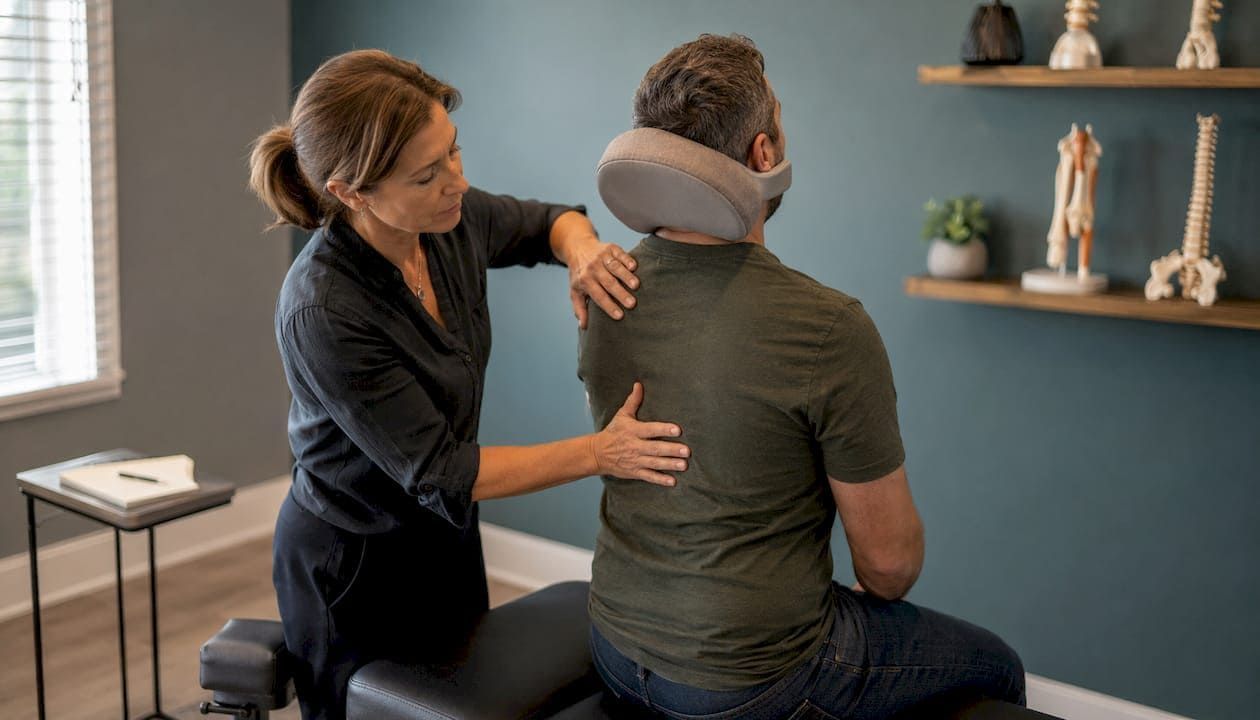
Chiropractic care offers distinct advantages for spinal sports injuries by addressing alignment, joint mobility, and neuromuscular function. Spinal manipulation and mobilization restore normal vertebral positioning and reduce nerve irritation. Upper cervical specific manipulation may improve sensorimotor control, enhancing balance and coordination critical for athletic performance. Research demonstrates cost effectiveness compared to exercise alone for certain spinal pain conditions.
| Approach | Primary Benefits | Limitations | Best For |
|---|---|---|---|
| Bracing | Immobilizes injury, prevents further damage, allows healing | Restricts movement, muscle atrophy risk | Acute fractures, unstable injuries |
| Physical Therapy | Strengthens muscles, restores function, prevents reinjury | Requires time commitment, gradual progression | Post-acute rehabilitation, functional recovery |
| Chiropractic Care | Restores alignment, improves mobility, reduces pain, enhances neuromuscular control | Contraindicated in acute fractures, requires clearance | Strains, joint dysfunction, chronic pain, prevention |
Before beginning chiropractic treatment for spinal injuries, consider these essential factors:
- Obtain imaging clearance to rule out fractures, dislocations, or unstable injuries requiring different management
- Watch for red flags including progressive weakness, bowel or bladder changes, or severe unrelenting pain suggesting serious pathology
- Ensure your chiropractor has sports injury experience and understands return-to-play protocols specific to your activity
- Communicate all symptoms honestly, including changes that occur between treatment sessions
Pro Tip: Combining chiropractic adjustments with targeted rehabilitation exercises produces superior outcomes compared to either approach alone, addressing both structural alignment and functional strength.
Athletes seeking sports injury treatment benefit from integrated care models. Chiropractic sports injury recovery works synergistically with other therapies, accelerating healing and reducing recurrence risk. Comprehensive chiropractic care addresses not just the injury site but contributing factors like muscle imbalances, joint restrictions in adjacent segments, and movement compensations that develop during the injury period.
Preventing spinal sports injuries and enhancing long-term spinal health
Prevention proves more effective than treatment for maintaining athletic careers and quality of life. Wrestling demonstrates high severe injury and reinjury rates, with 30.9% of spinal injuries classified as severe and significant recurrence among athletes returning prematurely. Similar patterns appear across high-risk sports when prevention strategies are neglected.
Effective prevention requires multifaceted approaches addressing technique, conditioning, and early intervention. Proper training teaches athletes safe movement patterns during high-risk maneuvers, reducing force concentration on vulnerable spinal structures. Protective equipment including properly fitted helmets, padding, and sport-specific bracing absorbs impact energy. Comprehensive conditioning programs build core strength, flexibility, and endurance that stabilize the spine during extreme demands. Early symptom recognition allows intervention before minor issues progress to serious injuries.
Personalized chiropractic care supports injury prevention through several mechanisms. Regular adjustments maintain optimal spinal alignment, reducing abnormal stress on joints and discs. Improved joint mobility enhances movement efficiency and reduces compensation patterns that overload certain segments. Enhanced sensorimotor integration through upper cervical care improves body awareness and reaction time. Ongoing assessment identifies developing problems before they cause symptoms or limit performance.
Follow these steps to maintain spinal health throughout your athletic career:
- Schedule baseline spinal evaluation before each season to identify restrictions and imbalances
- Implement sport-specific core strengthening targeting muscles that stabilize your spine during competition
- Perform dynamic warm-ups activating spinal stabilizers before training and competition
- Address minor pain or stiffness immediately rather than pushing through symptoms
- Maintain regular chiropractic care during off-season to correct accumulated dysfunction
- Gradually progress training intensity and volume, avoiding sudden spikes that overload tissues
Avoid these common pitfalls that increase injury risk:
- Ignoring early warning signs like morning stiffness, localized tenderness, or reduced range of motion
- Skipping rehabilitation exercises after injury resolution, leaving weakness that predisposes to recurrence
- Returning to full competition before achieving complete functional recovery and sport-specific conditioning
- Neglecting flexibility work in opposing muscle groups, creating imbalances that stress the spine
- Training through fatigue when neuromuscular control deteriorates and injury risk peaks
Ongoing chiropractic care reduces recurrence rates by maintaining the biomechanical improvements achieved during injury treatment. Athletes who continue regular adjustments show better long-term outcomes than those who stop care after symptoms resolve. Preventing sports re-injury requires sustained attention to spinal health, not just reactive treatment when problems arise. The chiropractic injury rehab role extends beyond acute care into performance optimization and career longevity.
Explore chiropractic care for sports injury recovery and prevention
Your spine deserves the same attention you give to training and nutrition. Essential ChiroCare specializes in helping athletes throughout West Central Florida recover from spinal sports injuries and prevent future problems through personalized treatment plans. Our experienced doctors understand the unique demands your sport places on your body and create strategies aligned with your competitive goals.
Whether you're dealing with current pain or want to optimize performance and reduce injury risk, our comprehensive chiropractic care addresses the root causes affecting your spinal health. We combine adjustments, rehabilitation exercises, and evidence-based sports injury treatment to get you back in action safely. Our preventing sports re-injury programs help you maintain the improvements we achieve together.
Schedule a consultation at one of our convenient Tampa, Brandon, Sarasota, Lakeland, or Pinellas Park locations to discuss your specific situation and develop a customized plan.
Frequently asked questions
What are the most common spinal injuries in athletes?
Compression fractures, muscle and ligament strains, disc herniations, and stress fractures occur most frequently across sports. Football and wrestling show high rates of cervical injuries, while gymnastics and rowing commonly cause lumbar stress fractures from repetitive hyperextension.
How long does recovery take for spinal sports injuries?
Recovery time varies by injury severity and type. Minor strains may resolve in 2 to 4 weeks with conservative care, while compression fractures typically require 8 to 12 weeks of bracing and rehabilitation. Disc herniations often improve within 6 to 12 weeks, though some cases need longer management.
Is chiropractic care safe after a spinal sports injury?
Chiropractic care is safe and effective for most spinal sports injuries after ruling out fractures, dislocations, or neurological compromise through imaging and examination. Your chiropractor will modify techniques based on injury type and healing stage, avoiding manipulation of unstable segments while addressing adjacent dysfunction.
Can I prevent spinal injuries if I play high-risk sports?
While you cannot eliminate all risk, proper technique training, adequate protective equipment, comprehensive conditioning programs, and regular chiropractic care significantly reduce injury rates. Early intervention when minor symptoms appear prevents progression to serious injuries requiring extended time away from sport.
When should I see a chiropractor for back pain from sports?
Schedule an evaluation when you experience persistent pain lasting more than a few days, pain that worsens with specific movements, stiffness limiting your performance, or recurrent episodes affecting the same area. Early chiropractic intervention prevents minor issues from becoming chronic problems requiring more intensive treatment.
Recommended