
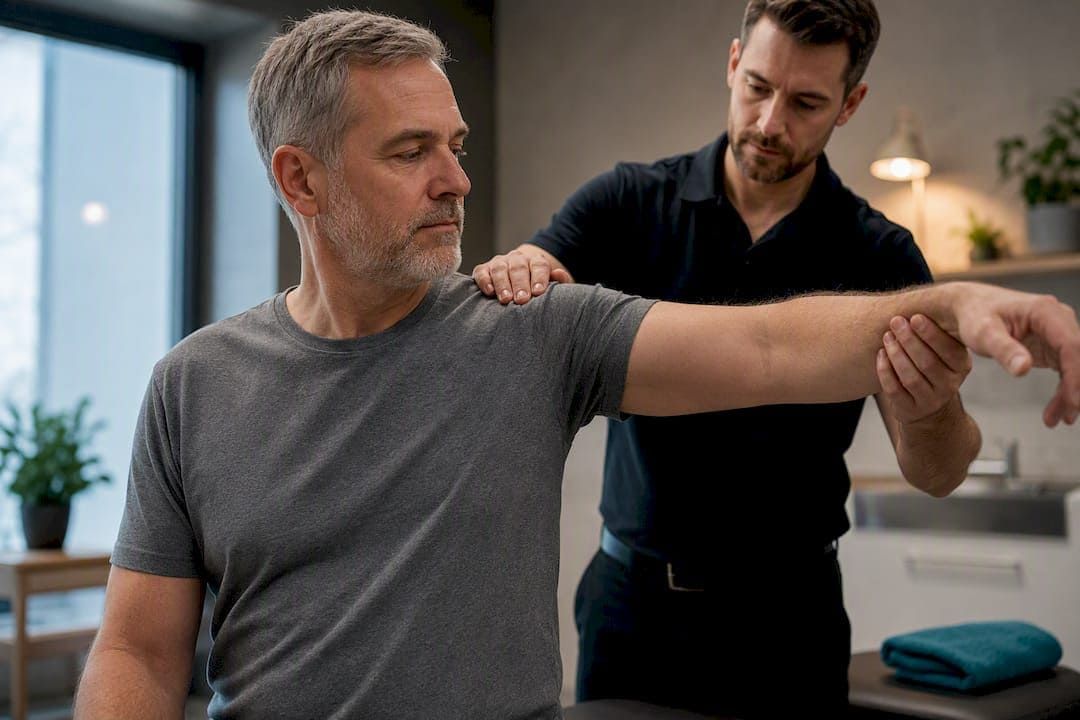


3 Stages of Frozen Shoulder: How Clinicians Match Treatment

Essential ChiroCare Blogger • October 5, 2026

3 Stages of Frozen Shoulder: How Clinicians Match Treatment

Frozen shoulder, medically called adhesive capsulitis, moves through three stages: freezing (pain-dominant), frozen (stiffness-dominant), and thawing (gradual recovery). Each stage has a different timeline and a different treatment priority, which is exactly why your doctor or chiropractor keeps asking "how long has this been going on?" Most people who get appropriate, timely care regain close to normal shoulder function, though the full arc can run well over a year.

TL;DR:

  • Early treatment with anti-inflammatories and gentle movement during the freezing stage significantly improves outcomes and prevents progression to stiffness.
  • The frozen stage requires targeted joint mobilization and sustained stretching, with procedures like hydrodilatation considered if conservative methods stall.
  • Recovery timelines vary widely, with some patients improving in five months and others taking over a year, especially those with diabetes or delayed care.
  • Combining steroid injections with physiotherapy provides the best short-term pain relief and functional gains across all stages.
  • Proper staging ensures personalized care, as inappropriate exercises or stretching during the inflammation phase can worsen the condition.
frozen shoulder stages

Table of Contents

Why Clinicians Stage Frozen Shoulder in the First Place

Staging isn't a formality. The shoulder capsule, the flexible tissue sac surrounding the joint, goes through a predictable sequence: inflammation first, then thickening and scarring of that capsule (fibrosis), then a slow remodeling as the tissue loosens back up. Each phase produces different symptoms, so the same exercise or injection that helps in one stage can aggravate things in another.

This is the part patients often miss: aggressive stretching during the acute, inflamed phase tends to backfire, while that same stretching becomes essential once stiffness takes over. Knowing your stage tells you and your provider what to actually do this week, not just what the diagnosis is called.

The commonly cited timeline ranges look like this, though they overlap more than the neat labels suggest:

  • Freezing: a period dominated by escalating pain lasting several months
  • Frozen: a period dominated by stiffness with less pain lasting several months
  • Thawing: a period of gradual and sometimes uneven return of motion lasting a variable amount of time

Add those phases up and you can see why some patients deal with this for over a year, and recovery times vary widely.

Stage 1: The Freezing Phase and What to Do About It

Pain arrives first, and it's often worse at night than during the day. You might notice a dull ache that gradually sharpens, then find yourself waking up because you rolled onto the affected shoulder. Range of motion narrows quietly during this stretch. Reaching for a top shelf or fastening a bra starts to feel harder, even though nothing looks obviously wrong.

Clinicians identify the freezing stage by that combination: pain that's building week over week, plus an early, mild loss of motion rather than a dramatic one. Sleep-position changes(avoiding the affected side, propping the arm with a pillow) are a surprisingly effective, low-effort fix for the night pain that defines this phase.

Here's a reasonable sequence for this stage:

  1. Get evaluated early rather than waiting out the pain, since early diagnosis widens the window for interventions to work well.
  2. Control inflammation with NSAIDs or topical anti-inflammatories as your provider advises.
  3. Keep the joint moving with gentle, pain-limited range-of-motion work, not forceful stretching.
  4. Discuss a corticosteroid injection with your provider if pain is severe, since it tends to work best when given early in the disease course.

Pro Tip: Don't wait for the pain to become unbearable before booking an evaluation. The freezing stage is the window where anti-inflammatory treatment has the most leverage; waiting three extra months to "see if it goes away" often means walking straight into the frozen stage with a stiffer joint and fewer easy options.

Stage 2: The Frozen Phase and the Shift Toward Stiffness

Pain usually eases during this stage, but don't mistake that for improvement. Stiffness takes over as the dominant problem, and it's a different beast entirely. The joint capsule has thickened and contracted, and both active motion (you moving the arm yourself) and passive motion (someone else moving it for you) become limited across multiple directions, not just one.

Clinicians look for a specific sign here: loss of the normal axillary fold, the soft crease under the arm, which reflects capsular tightening. This phase commonly runs four to twelve months, and it's the stretch where rehabilitation strategy changes completely.

  • Targeted joint mobilization and manual therapy take priority over generic strengthening.
  • Progressive, sustained stretching (not ballistic or bouncing movements) helps restore lost motion.
  • Some clinicians document range-of-motion measurements at each visit to track whether mobilization is actually working.
  • Procedural options, like hydrodilatation or a repeat steroid injection, get considered when conservative work stalls.

A manual therapy approach built around specific mobilization techniques tends to restore external rotation more effectively than generic strengthening exercises alone during this phase. That distinction matters because a lot of home programs skip straight to strengthening, which does little for a capsule that's simply too tight to move through.

Stage 3: The Thawing Phase and Getting Back to Normal Life

Motion starts coming back, slowly and sometimes frustratingly unevenly. You might regain the ability to reach overhead one week, then feel stuck again the next. That's normal here. The thawing stage means the capsule is remodeling and loosening, not that recovery flips on like a switch.

Timeline variability is the biggest surprise for most patients. Some people move through thawing in five or six months; others are still working on it after a year or two. The stage's name implies a quick melt, but the reality is closer to a long, patchy defrost.

  • Keep mobility work as a daily habit, even after motion feels "good enough."
  • Add staged strengthening once range of motion returns, rather than rushing back to full activity.
  • Pace your return to sports, lifting, or overhead work in increments, and expect occasional setbacks.

Patients commonly assume thawing means they're basically done. Counseling on pacing and realistic timelines during this stage genuinely improves how well people stick with rehab, which in turn affects how completely they recover.

How Treatment Priorities Change Across the Three Stages

Treatment isn't one-size-fits-all here, and the evidence backs up why. Intra-articular corticosteroid injections produce superior short-term pain relief and functional improvement, with benefits that can last up to about six months, particularly when given during the freezing stage. A network meta-analysis found that combining a steroid injection with physiotherapy often outperforms either approach alone in the short term.

Combined steroid plus physiotherapy delivered greater short-term gains in range of motion and function than physiotherapy by itself, according to that same comparative analysis.

Here's roughly how the approach shifts stage by stage:

  • Freezing: pain control first, gentle motion work, steroid injection considered early
  • Frozen: manual therapy and structured mobilization become the main lever, home exercise programs matter more
  • Thawing: progressive strengthening and staged return to activity, with mobility maintenance as the baseline

Supervised physiotherapy adds value across all three stages, not just one, and a consistent home exercise program between visits tends to compound those gains. When conservative treatment fails after a reasonable trial, options like hydrodilatation, manipulation under anesthesia, or arthroscopic capsular release enter the conversation, but these stay reserved for refractory cases rather than first-line moves. Diabetes changes this calculus: clinicians often lean toward physiotherapy and non-steroidal management earlier, since outcomes tend to run worse and steroids can affect blood sugar control.

frozen shoulder treatment

What Recovery Actually Looks Like Over Time

Most people do well. Roughly 80% of patients regain near-normal shoulder function with appropriate, timely treatment. That's the headline number worth holding onto if you're early in this process and feeling discouraged.

It's not universal, though. About 10 to 20% of patients end up with some long-term residual stiffness, and that risk climbs for people with diabetes, thyroid disease, a history of prolonged immobilization, or those who delayed getting treatment in the first place.

  • Diabetes and thyroid conditions are the two comorbidities most consistently tied to slower or incomplete recovery.
  • Delayed treatment narrows the window where early interventions, like a well-timed steroid injection, work best.
  • If pain or stiffness plateaus for months without any change, that's a reasonable point to revisit the diagnosis or ask about a specialist referral.

Practical Steps We Recommend at Essential ChiroCare

Getting a professional read on which stage you're in changes what exercises are safe. In the freezing stage, we favor pendulum swings and gentle passive-assisted reaches, kept well under the pain threshold. Once stiffness sets in during the frozen stage, targeted Active Release Technique work and joint mobilization aim directly at the tight capsule rather than general strengthening.

  • Progress range-of-motion exercises gradually, and never push through sharp pain.
  • Manual therapy and mobilization can measurably improve external rotation when applied at the right stage.
  • A structured home program between visits speeds along whatever a clinician does in-office.
  • Call for an evaluation if pain worsens rapidly, night pain becomes severe, or you lose the ability to perform daily tasks like dressing or reaching overhead.

Staging Helps, But It Doesn't Replace Judgment

Frozen shoulder staging is a genuinely useful map, but it's not a schedule anyone's body is obligated to follow. Two patients can start on the same day with the same diagnosis and land in completely different places at the six month mark, and that variation isn't a sign anyone did something wrong. What staging actually does well is tell a clinician which lever to pull this month: calm the inflammation, break up the stiffness, or rebuild strength.

The mistake I see most often isn't skipping treatment. It's expecting a straight line where the biology simply doesn't offer one. If you want a plan that adjusts as your shoulder moves through these phases, that's exactly what staged, supervised rehab is built to do.

Getting a Stage-Specific Plan Instead of Generic Advice

Generic shoulder stretches you find online don't account for which stage you're actually in, and that's often why progress stalls. Care builds around where your shoulder is in the freezing, frozen, or thawing process, combining chiropractic assessment with manual therapy and a rehab plan that shifts as your motion changes.

Our approach starts with pinpointing your stage, then applying the right mix of joint mobilization, Active Release Technique, and progressive exercise rather than a one-size-fits-all handout. That matters most during the frozen stage, when the wrong exercise at the wrong time can stall progress for weeks. With multiple clinic locations across the West Central Florida area and online scheduling available, getting evaluated doesn't require waiting weeks for an opening. If your shoulder pain or stiffness has been dragging on, book a chiropractic care evaluation and find out exactly which stage you're dealing with.

This article is general information, not a substitute for advice from a qualified doctor. Consult a qualified healthcare professional about your own circumstances before acting on anything here.

Sources

FAQ

  • How Do You Know Which Stage of Frozen Shoulder You're In?

    Pain that's building and worse at night usually signals freezing; reduced pain paired with severe stiffness in most directions points to frozen; gradually returning motion marks thawing. A clinical exam, including passive and active range-of-motion testing, gives a more precise answer than symptoms alone.

  • What's the Fastest Way to Heal a Frozen Shoulder?

    There's no shortcut that skips the biology, but early diagnosis paired with a corticosteroid injection and physiotherapy during the freezing stage gives the best shot at a shorter course, since combined treatment often outperforms either approach alone in the short term.

  • What Gets Mistaken for Frozen Shoulder?

    Rotator cuff tears, shoulder arthritis, and cervical spine issues can all mimic frozen shoulder's pain and restricted motion, which is why a proper exam matters before assuming the diagnosis. A [chiropractic or manual therapy assessment](https://essentialchirocare.com/manual-therapy) can help distinguish capsular stiffness from other causes.

  • What Can Trigger a Frozen Shoulder?

    Diabetes, thyroid disorders, and prolonged shoulder immobilization (after surgery, injury, or a sling) are the most consistently reported risk factors. Prior shoulder injury also raises the odds, even without a clear mechanical cause.

Recommended

pediatric chiropractor Tampa
By Essential ChiroCare Blogger • October 4, 2026
Learn what to expect from a pediatric chiropractor in Tampa, including visit safety, common concerns, and tips for choosing the right care for kids.

headache treatment chiropractor Sarasota
By Essential ChiroCare Blogger • October 3, 2026
Learn how a headache treatment chiropractor in Sarasota evaluates tension headaches vs migraines, helps relieve pain, and knows when to refer out.

chiropractic care for pinched nerve
By Essential ChiroCare Blogger • October 2, 2026
Clinic backed chiropractic care for pinched nerve pain: spinal adjustments, decompression, and rehab, with a realistic 4–6 week recovery timeline.

how to stop lower back pain when driving
By Essential ChiroCare Blogger • October 1, 2026
Clinic backed seat setup and movement plan for drivers with car seat pain. Set seat to 100–110 degrees, add lumbar support, and take breaks.
Chiropractor for back pain in Tampa FL
By Essential ChiroCare Blogger • September 30, 2026
Learn how chiropractors diagnose and treat facet joint pain, why imaging can mislead, when diagnostic blocks are used, and the 4–12 week conservative plan.

Eccentric hamstring exercise
By Essential ChiroCare Blogger • September 29, 2026
Clinic led progressive loading program based on evidence, with a 6–8 week sample plan, objective strength benchmarks, and a staged return to sport.

chiropractor for hip bursitis
By Essential ChiroCare Blogger • September 28, 2026
Essential ChiroCare treats hip bursitis with a biomechanics focused 4 part chiropractic plan: adjustments, soft tissue work, and rehab.

headache treatment chiropractor Sarasota
By Essential ChiroCare Blogger • September 27, 2026
Learn common headache patterns and when to seek a headache treatment chiropractor in Sarasota for personalized care and lasting relief. Read on!

back adjustment chiropractor Sarasota
By Essential ChiroCare Blogger • September 26, 2026
Learn risks, who should avoid care, and what to ask your first visit. Find a trusted back adjustment chiropractor in Sarasota for safe relief.

VA community care chiropractic
By Essential ChiroCare Blogger • September 25, 2026
Veterans: Use a five minute checklist and five clear steps to secure VA Community Care chiropractic authorization, cut wait times, confirm costs, and...
Show More