Clinic Backed Car Seat Back Pain Fix for Drivers: 100–110° Recline
Clinic Backed Car Seat Back Pain Fix for Drivers: 100–110° Recline
Adjust the seat so your hips sit level with or slightly above your knees, set the backrest to roughly 100 to 110 degrees, add lumbar support at belt height, and stop every 45 to 60 minutes to move. Most driving-related back pain comes from mechanical stress, not injury, and it usually improves within days once posture and movement change. If pain is severe, spreading down a leg, or not budging after a few weeks of these fixes, that's your signal to get it checked out.
TL;DR:
- Proper seat height benefits most drivers, with hips level or above knees to prevent posterior pelvic tilt and reduce disc load.
- Reaching a backrest angle between 100 and 110 degrees minimizes spinal compression and neck strain during long drives.
- Adjusting lumbar support to belt line height ensures the natural curve of the lower back is maintained without overcorrecting.
- Breaking every 45 to 60 minutes and incorporating movement exercises can significantly decrease mechanical stress on the lower back.
- If pain persists after several weeks of proper setup and habits, seeking professional care is recommended, especially if symptoms worsen or involve neurological signs.
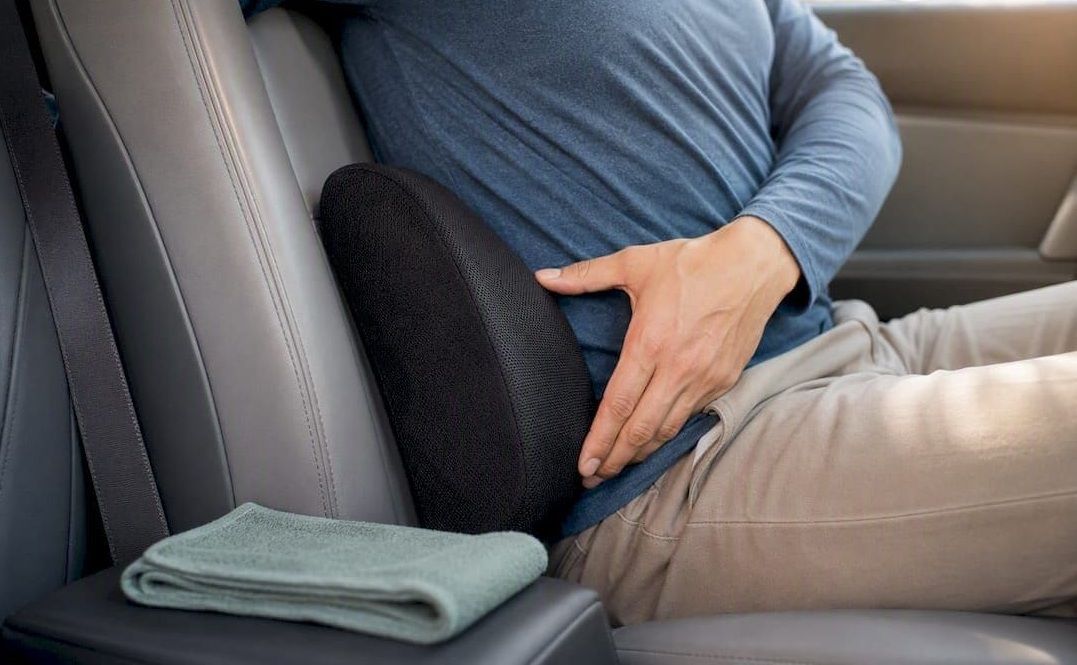
Table of Contents
- Car Seat Back Pain: Quick Adjustment Checklist
- Lumbar Support Options And How To Fit Them
- Stretches And Exercises For Back Pain From Driving
- Driving Habits That Prevent Back Pain From Getting Worse
- When Driving-Related Back Pain Needs a Professional Look
- How Chiropractic Care Fits Into Driving-Related Back Pain
- The Real Reason Car Seats Trigger Back Pain
- Common Patterns We See in Drivers With Back Pain
- Ready for Relief? What to Expect From an Evaluation
- Sources
Car Seat Back Pain: Quick Adjustment Checklist
Getting the seat right takes about five minutes, and it matters more than any cushion you could buy afterward. Do these steps in order, because each one depends on the last.
- Sit all the way back into the seat. Your hips and lower back should touch the seat back fully before you adjust anything else. Sitting forward on the cushion is the single most common setup mistake, and it throws off every measurement that follows.
- Set the distance so your knee stays slightly bent at full pedal depression. A locked knee forces you to lock your hip and pelvis to reach the pedal, which flattens your lower back curve. Aim for a soft bend, not a stretch.
- Raise the seat height until your hips sit level with, or a touch above, your knees. When your knees ride higher than your hips, your pelvis rolls backward into what's called posterior pelvic tilt. That flattens the natural curve in your lower back and shifts load onto the discs instead of the muscles built to carry it. Research backs a target hip position at or slightly above knee height for this exact reason.
- Recline the backrest to somewhere between 100 and 110 degrees. That's a slightly open angle, not upright and not reclined. Seats set at 90 degrees compress the front of your spine and hip flexors over time; seats reclined much past 110 degrees force your head and neck forward to see the road, which adds strain higher up.
- Position lumbar support at belt line height, roughly where your L3 and L4 vertebrae sit. This is the small inward curve just above your belt. Support placed too high pushes on your mid back; too low and it does nothing useful.
- Check your headrest and steering wheel last. The headrest should sit close enough that your head doesn't tilt forward to reach it. The wheel should let your elbows stay softly bent, not locked out at arm's length, which pulls your shoulders and upper back forward.
Why does this sequence matter so much? Prolonged hip flexion combined with a static, poorly supported spine increases pressure on the lower discs faster than most people expect. One ergonomics review found that as little as 10 to 15 minutes in a poor driving posture can trigger discomfort at the L5 to S1 level, the joint that takes the brunt of seated load. That's not a long commute. That's one red light and a stretch of highway.
If your car's seat doesn't adjust enough to hit these marks, a rolled towel behind the lower back or a low-profile inflatable lumbar cushion can approximate the support until you find a permanent fix. It's not ideal, but it beats driving unsupported.
Pro Tip: Do the seat setup once with the engine off and the car parked, not while you're rushing to leave. It takes longer under pressure, and you'll skip steps.
Lumbar Support Options And How To Fit Them
Not every back needs the same kind of support, and the option that works for a coworker's sedan might do nothing for your SUV. Four categories cover most situations drivers run into.
- Built-in adjustable lumbar support. Many mid-range and higher trims include a dial or lever that inflates or extends a bladder in the seat back. It's the most precise option because you can fine-tune firmness without buying anything, but older or base-model vehicles often lack it entirely.
- Foam lumbar rolls. These strap or rest against the seat back and work well for smaller cars or aftermarket setups. They're firm, cheap, and portable between vehicles, though a rigid roll can feel uncomfortable on longer drives if it's too dense.
- Inflatable lumbar cushions. You control the firmness by adding or releasing air, which makes these useful if your support needs shift throughout the day. The tradeoff is they tend to shift position more than a strapped roll unless secured well.
- Contoured memory foam cushions. These spread pressure across a wider area of the lower back rather than concentrating it at one point. Good for drivers who find a hard roll digs in uncomfortably, though they're bulkier and can push you further from the wheel than expected.
Fitting any of these correctly comes down to one goal: restoring the natural inward curve of your lower back, called lordosis, without exaggerating it. Press the support into place, then sit back normally. You should feel gentle contact across your lower back, not a hard push that arches you forward. If your lower back feels like it's being forced into a curve rather than gently supported into one, the cushion is too thick or positioned too low.
Older ergonomics research on seat comfort actually used drivers with existing back trouble as test subjects, because their feedback exposed flaws standard testing missed. The takeaway still holds: adjustability matters more than any single "perfect" shape, since spines and torso lengths vary too much for one design to fit everyone.
Here's a real benchmark worth knowing. A 2022 study on driving posture found that 44.1% of surveyed drivers reported lower back pain, and 54.4% were observed driving in a posture strongly linked to chronic cases. More than half the people on the road right now are sitting in a way that's setting them up for exactly this problem, often without realizing it.
Give a new lumbar setup 10 to 15 minutes of actual drive time before judging it. You're looking for less pressure buildup across your lower back and less stiffness when you finally get out of the car, not instant relief. If your legs start tingling, your arms feel restricted, or the cushion pushes your torso into an awkward angle relative to the headrest, remove it and adjust the placement.
One safety note that gets skipped too often: never position a cushion or roll in a way that blocks a side airbag, interferes with how the seatbelt lies across your hip and shoulder, or forces your neck into a tilted position to see comfortably. A support that fixes your lower back while straining your neck isn't a fix. It's a trade.
Stretches And Exercises For Back Pain From Driving
Seat adjustments reduce the load on your spine. They don't replace what movement does for it. Blood flow to spinal discs and surrounding muscle tissue depends on motion, and a perfectly positioned seat still leaves you static for long stretches. Britni Barber, a physical therapist, makes this point directly: even a well-set-up seat can't substitute for regular movement breaks that restore circulation and take pressure off spinal structures.
Before you drive
Three moves, about five minutes total, done at home or in the driveway:
- Hip flexor stretch. Step one foot forward into a half kneel, tuck your pelvis slightly, and lean forward until you feel a stretch across the front of the hip on the back leg. Hold 30 seconds each side. Tight hip flexors from sitting pull your pelvis forward and flatten your lower back curve before you've even started the car.
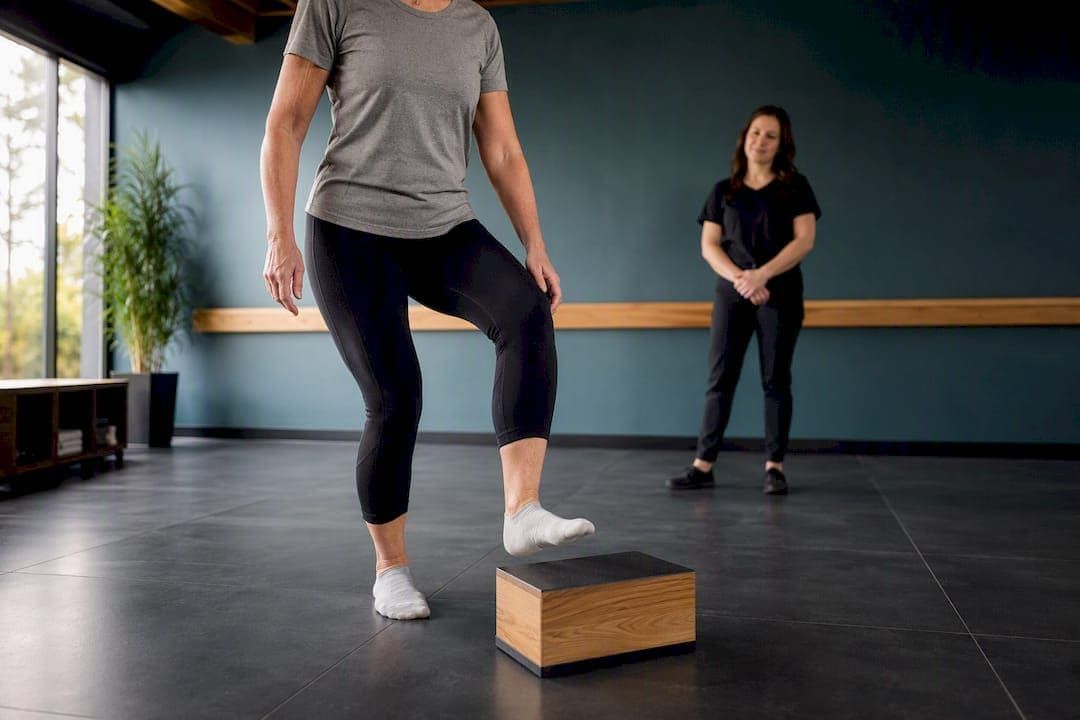
- Hamstring mobilizer. Stand and place one heel on a step or curb with your leg straight, then hinge gently at the hips. Hold 20 to 30 seconds per side. Tight hamstrings restrict how your pelvis moves in the seat, which forces your lower back to compensate.
- Gentle back extension. Stand with hands on your lower back and lean back slightly, holding two to three seconds, repeating 8 to 10 times. This counters the forward-flexed position you're about to sit in for the next hour.
During the drive
At stoplights or in slow traffic, small movements make a real difference without taking your attention off the road:
- Seated pelvic tilts. Gently rock your pelvis forward and back a few times to keep the lower back from locking into one position.
- Shoulder blade squeezes. Pull your shoulder blades together and hold for five seconds, releasing tension that builds across the upper back and neck.
- Trunk rotations, only when fully stopped. A gentle twist left and right while parked at a light, never while the car is moving.
At stops
If you're driving more than 90 minutes, plan a real stop, not just a bathroom break:
- Get out and walk for 5 to 10 minutes. This is the single highest-value thing you can do, more effective than any stretch done sitting down.
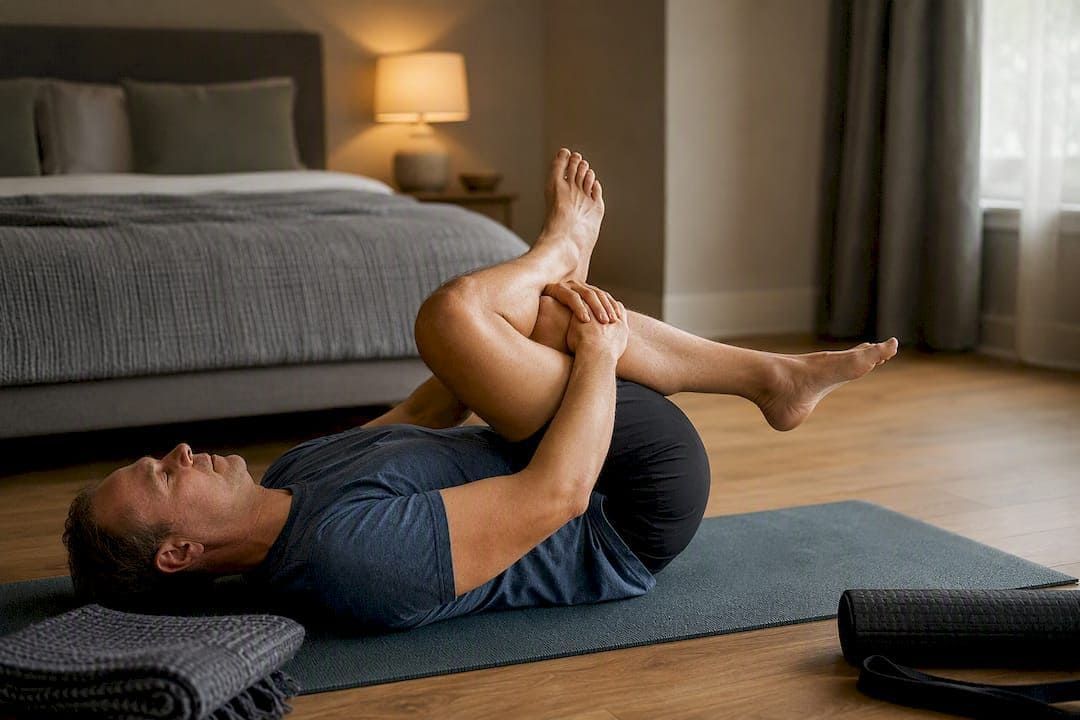
- Do a standing hip opener: cross one ankle over the opposite knee while standing (holding a wall for balance if needed) and hold 20 seconds per side.
- Do a standing lumbar extension, the same move from your pre-drive routine, repeated 8 to 10 times.
After you arrive
A short strengthening progression, done three or four times a week rather than only after long drives, builds the endurance that keeps your back resilient between trips:
- Glute bridges. Lie on your back, knees bent, feet flat, and lift your hips until your body forms a straight line from knees to shoulders. Two sets of 10 to 15.
- Bird dogs. On hands and knees, extend opposite arm and leg simultaneously, holding briefly. Two sets of 8 per side.
- Dead bugs. Lying on your back with knees bent at 90 degrees, lower one arm and the opposite leg toward the floor without letting your lower back arch off the ground. Two sets of 8 per side.
If you have a diagnosed spinal condition like a herniated disc or spinal stenosis, skip deep hip flexor stretches that overextend the lower back and check with a provider before starting a new strengthening routine. Pain that sharpens or radiates during any of these moves means stop and reassess, not push through.
Pro Tip: Keep a resistance band in the glovebox. A few standing rows at a rest stop take 60 seconds and counter the rounded-shoulder posture that builds up over highway miles.

Driving Habits That Prevent Back Pain From Getting Worse
Seat setup and stretching handle the mechanics. What you do with your trip planning and habits behind the wheel determines whether those fixes hold up over a three-hour drive or fall apart after 45 minutes.
- Stop every 45 to 60 minutes for 5 to 10 minutes. This single habit does more to prevent symptom escalation than any product you could buy. Research on driving-related pain points to this exact interval as the threshold before static posture starts compounding into real discomfort.
- Use cruise control on straight, low-traffic stretches to shift leg position. Constant pedal pressure keeps one leg in a fixed position for miles at a time. Cruise control, used safely and only where conditions allow, lets you shift your foot and change the angle of your hip periodically.
- Skip thick wallets and phones in your back pockets. Sitting on a raised object for hours tilts your pelvis unevenly and can aggravate one side of the lower back or irritate the sciatic nerve. Empty your pockets before a long drive.
- Wear shoes with a stable, low heel for driving. Bulky boots or heels change how your foot contacts the pedal and can throw off your whole leg alignment over a long trip.
- Stay hydrated. Spinal discs are largely water, and mild dehydration can reduce their ability to cushion load during long stretches of sitting.
- Address vehicle vibration where you reasonably can. Underinflated tires, worn shocks, and rough pavement all increase the vibration transmitted through the seat into your spine, which adds to muscle fatigue over time. Keeping tires properly inflated and staying current on suspension maintenance helps, though no amount of maintenance eliminates vibration on rough roads entirely. A supportive seat cover can improve comfort but won't fix an underlying seat structure that's worn out or poorly designed.
None of these habits work in isolation. Cruise control without breaks still leaves you static. Breaks without proper seat height still leave your pelvis rolled backward the moment you sit back down. Stack them together and each one compounds the others.
When Driving-Related Back Pain Needs a Professional Look
Most car seat back pain responds to the adjustments and habits already covered here. Some symptoms don't wait for a home fix, and knowing the difference matters.
Get care immediately if you notice:
- Rapidly worsening weakness in one or both legs
- Numbness in the groin or inner thighs, sometimes called saddle anesthesia
- New loss of bladder or bowel control
These are rare, but they signal pressure on nerve structures that needs same-day evaluation, not a wait-and-see approach.
Get an evaluation, though not urgently, if:
- Pain persists longer than two to four weeks despite consistent seat and movement changes
- Pain limits your ability to work, sleep, or do normal daily activities
- Discomfort radiates down a leg past the knee, or you notice tingling that doesn't resolve
- Pain keeps returning every time you drive, even short trips, despite a properly adjusted seat
A clinician evaluating driving-related back pain typically checks a few consistent things:
| What's assessed | Why it matters |
|---|---|
| Neurologic signs (reflexes, strength, sensation) | Rules out nerve involvement requiring different treatment |
| Range of motion and movement patterns | Identifies which movements reproduce or ease your pain |
| Postural drivers (hip tightness, core endurance, pelvic position) | Finds the mechanical root, not just the painful spot |
| Prior treatments and driving habits | Shapes a plan around your actual daily exposure, not a generic protocol |
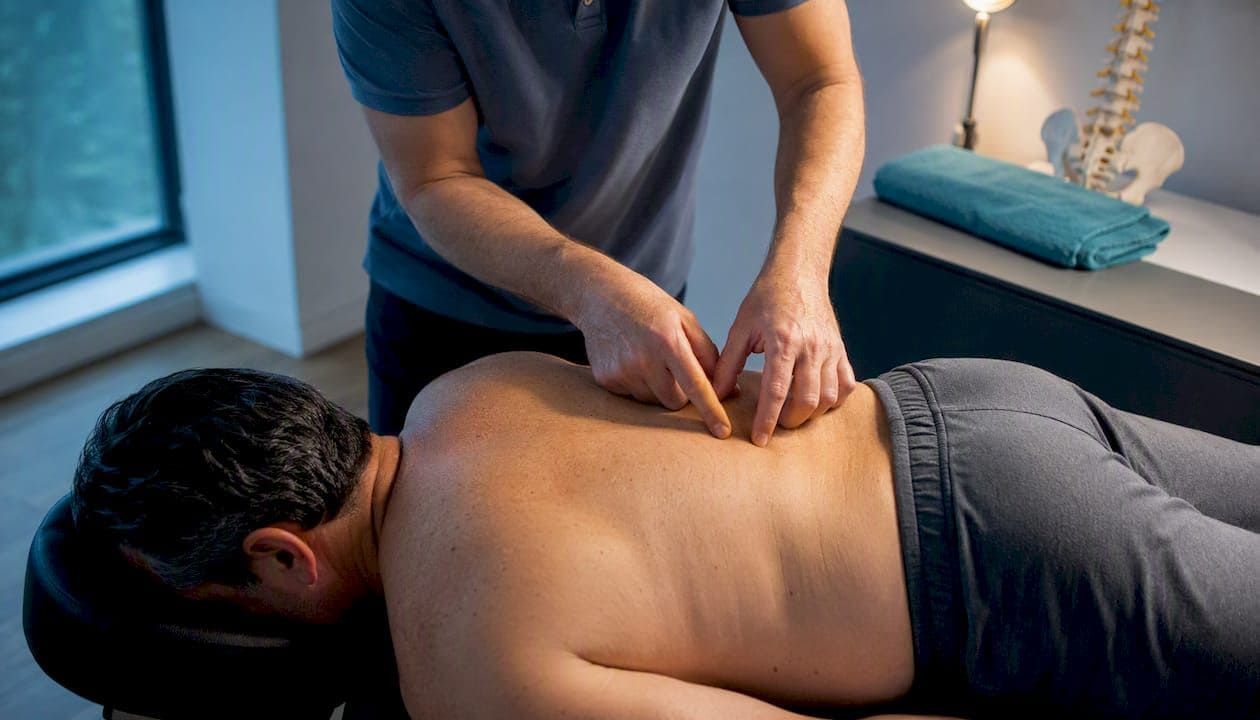
Conservative approaches for mechanical driving-related pain commonly include manual therapy, targeted exercise, and short-term activity modification. Bring a simple symptom diary if you can: when pain started, how long you typically drive, what seat position you use, and anything you've already tried. That single piece of preparation often cuts the guesswork out of a first visit. If a recent rear-end collision or accident triggered your symptoms, stiffness that lingers afterward deserves a look sooner rather than later, even if the pain seems mild at first.
How Chiropractic Care Fits Into Driving-Related Back Pain
Self-care handles a lot of driving-related back pain, but not all of it. When pain persists despite a correctly adjusted seat, consistent breaks, and a few weeks of stretching, that's usually a sign something beyond posture needs attention, whether that's a restricted joint, muscle imbalance, or an old injury flaring under repeated static load.
Some chiropractic clinics work with exactly this pattern across multiple clinic locations in the Tampa Bay area. Chiropractic adjustments address joint restrictions in the spine and pelvis that can develop from years of poor seated posture, restoring motion to segments that have stiffened from static loading. Spinal decompression takes a different approach, gently reducing pressure on compressed discs, which matters directly for drivers whose pain traces back to the disc compression that builds during long hours behind the wheel.
Manual therapy and physical rehabilitation round out a typical care pathway. Rather than treating a single sore spot, this combination usually addresses the surrounding pattern: tight hip flexors from sitting, weak glutes that aren't stabilizing the pelvis, and a lower back compensating for both. That mirrors the strengthening progression covered earlier in this guide, but with a trained eye adjusting the plan based on what's actually restricted in your body rather than a generic routine.
For drivers whose pain started or worsened after an accident, the picture often includes whiplash-related tension or soft tissue injury layered on top of ordinary postural strain. Auto injury care at Essentialchirocare is built around this exact overlap, since accident-related pain and posture-driven pain frequently show up together and respond to different pieces of the same treatment plan.
A realistic first visit usually includes:
- A movement and posture assessment, similar to what's outlined in the previous section
- Discussion of your specific driving habits, commute length, and vehicle setup
- A treatment plan tailored to what's actually restricted, not a one-size protocol
- Practical guidance on exercises and seat adjustments you can apply between visits
None of this replaces the checklist and stretches covered earlier. It builds on them. A properly adjusted seat and a consistent stretching habit make any clinical treatment plan work faster, because you're not undoing progress every time you get back in the car. For readers who want a broader look at conservative approaches beyond chiropractic care, natural back pain relief strategies cover additional options worth knowing about.
The Real Reason Car Seats Trigger Back Pain
Your spine wasn't built to sit still. It was built to move, load, and unload repeatedly throughout the day. A car seat asks it to do the opposite: hold one position, often a compromised one, for extended stretches with almost no variation.
Three mechanical factors converge here. First, prolonged hip flexion. Sitting with your hips bent at roughly 90 degrees for an hour or more tightens the hip flexor muscles, which attach near the front of your lower spine and pull on it when they shorten. Second, static posture itself. Muscles that hold a fixed position without movement fatigue faster than muscles doing dynamic work, and fatigued muscles stop supporting the spine effectively. Third, whole-body vibration transmitted from the road through the seat into your spine, which adds a layer of mechanical stress that standing or sitting in a chair simply doesn't produce.
Hip and knee height compounds all three. When your knees sit higher than your hips, which happens in low bucket seats or sedans with limited height adjustment, your pelvis rotates backward. That flattens the natural inward curve of your lower back, called lordosis, and shifts load from the muscles designed to bear it onto the spinal discs, which aren't built for sustained compression in that position.
Put those factors together over a daily commute, and you get the commonly observed pattern of low back pain among drivers, closely tied to seat positioning rather than driving duration. The fix isn't complicated, but it does require actually changing the setup, not just tolerating it.
Common Patterns We See in Drivers With Back Pain
A pattern shows up again and again in people dealing with driving-related back pain: they've tried a cushion, sometimes two, before ever touching the actual seat adjustments. The cushion becomes a patch over a seat that's still tilted wrong, still too far back, still positioned so the knees sit above the hips. It helps a little. It never fully resolves anything, because the underlying geometry never changed.
Another pattern worth naming: people treat movement breaks as optional once they feel a little better. Pain eases after a week of stretching and proper seat setup, so the stops get skipped, the stretches stop, and the discomfort creeps back within a month. Consistency matters more than intensity here. A five-minute walk every hour beats an occasional 20-minute workout squeezed in once a week.
Give the checklist in this guide a full week before deciding whether it's working. Mechanical pain driven by posture and static loading typically responds within days to a couple of weeks once the actual triggers change, not instantly and not. If you've made every adjustment described here, stuck with it consistently, and pain still isn't improving, that's a reasonable point to get an actual assessment rather than keep guessing at home.
Movement is the piece people underestimate most. A perfect seat setup reduces the damage; it doesn't undo the basic reality that your spine needs to move regularly to stay healthy. Small, repeatable habits, the kind that take five minutes and happen every single drive, tend to outperform occasional heroic efforts every time.
Ready for Relief? What to Expect From an Evaluation
If the seat adjustments, lumbar support, and movement breaks in this guide haven't eased your pain after a couple of weeks, that's not a failure on your part. It usually means something beyond posture needs a closer look. Essentialchirocare offers chiropractic care built around exactly this kind of mechanical, driving-related back pain, alongside physical rehabilitation and auto injury treatment for readers whose symptoms trace back to an accident rather than ordinary commuting strain.
A first visit typically starts with a conversation about your specific pain pattern, your commute, and what you've already tried, followed by a movement and posture assessment that pinpoints what's actually restricted. From there, treatment plans are built around your situation rather than a standard script, whether that means adjustments, spinal decompression, manual therapy, or a combination. Multiple clinic locations in the Tampa Bay area can make it easier to find a convenient spot. If you're ready to stop guessing at home fixes, schedule an evaluation and get a plan built around what your body actually needs.
Sources
- Driving and low back pain: prevalence and associated postural patterns (PMC 2022)
- Driving-induced lower back pain: causes and ergonomic recommendations (F1000Research 2021)
- Lower back pain while driving: causes and seat fixes (Korbaspineclinic)
- Lower back pain when driving: causes and fixes (Healthline 2023)
This article is general information, not a substitute for advice from a qualified doctor. Consult a qualified healthcare professional about your own circumstances before acting on anything here.
Recommended