Chiropractic for Golfers: Performance and Injury Guide
Chiropractic for Golfers: Performance and Injury Guide
TL;DR:
- Chiropractic care for golfers focuses on restoring spinal mobility and nervous system function to improve swing mechanics. It also helps prevent injuries by addressing movement restrictions early and enhances athletic performance through regular adjustments. Most top golfers and major champions use chiropractic treatment as part of their performance routine.
Chiropractic care for golfers is defined as the clinical application of spinal and musculoskeletal adjustments to restore joint mobility, correct movement restrictions, and support the nervous system function that golf's rotational demands require. The role of chiropractic for golfers extends well beyond pain relief. It directly shapes swing mechanics, injury resilience, and long-term performance. The numbers back this up: 18 of the last 20 major golf champions work with Titleist Performance Institute (TPI) certified chiropractic experts, and 25 of the top 30 ranked players do the same. That level of adoption at the elite tier signals something worth paying attention to.

How does chiropractic care improve your golf swing?
The golf swing is one of the most physically demanding movements in sport. It requires coordinated rotation across the thoracic spine, hips, and shoulders at high velocity, all within a fraction of a second. When any segment of that chain is restricted, the body compensates, and compensation is where injuries and inconsistency begin.
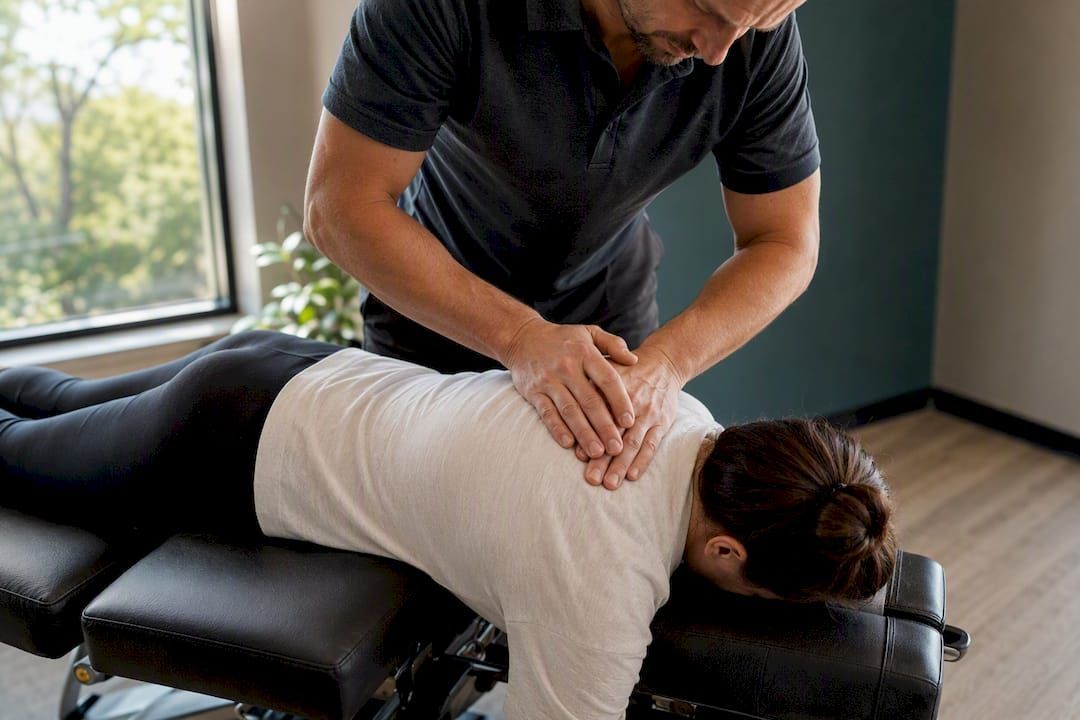
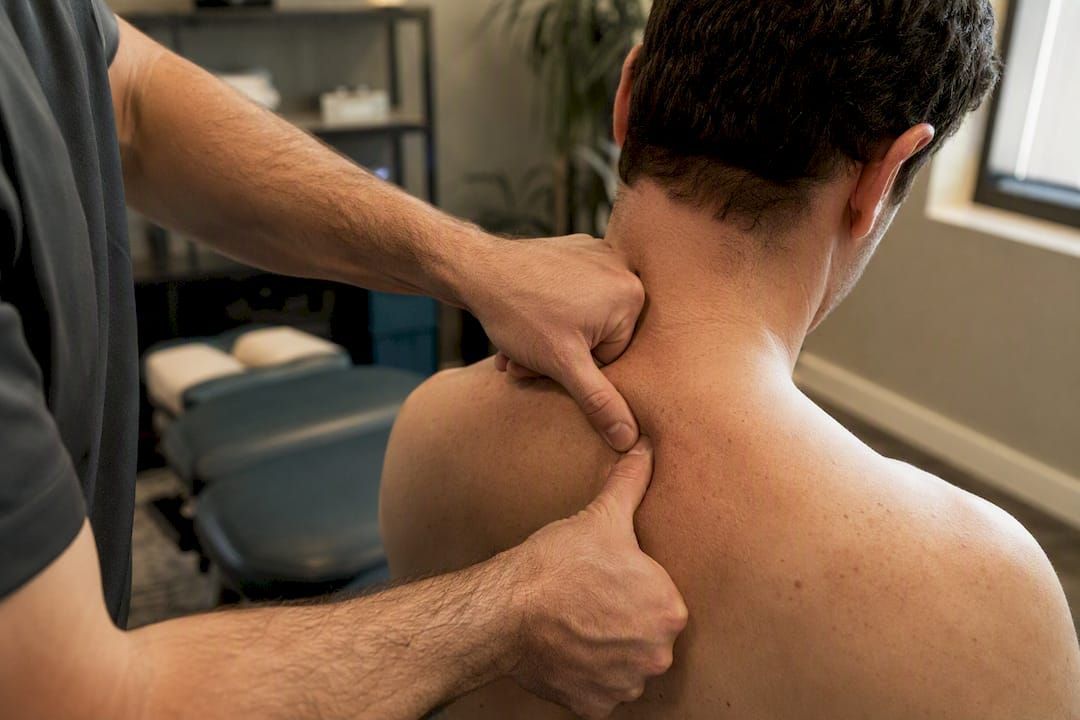
Thoracic spine adjustments restore segmental motion and reduce muscle tension, which directly enables a fuller backswing and reduces strain on the lower back. A golfer who cannot rotate freely through the mid-back will typically over-rotate at the lumbar spine instead. That substitution pattern is a primary driver of the low-back injuries that sideline recreational and competitive players alike.
Chiropractic care also works through the nervous system. Spinal adjustments reduce joint fixations that interfere with proprioception, which is the body's ability to sense its own position in space. Better proprioception means more consistent club path, better timing, and more reliable contact. Golf's rotational demands uniquely tax the spine, and chiropractic care helps maintain nervous system function for consistent ball striking.
Golfers who receive regular chiropractic adjustments often report more fluid, powerful swings as mobility improves, stiffness decreases, and muscular activation becomes more efficient. The change is not mechanical coaching. It is the body performing the swing it already knows, without the physical restrictions that were getting in the way.
Pro Tip: Ask your chiropractor about a TPI assessment before your first adjustment. TPI screening identifies specific hip or thoracic mobility deficits that cause inefficient swing mechanics and back injuries, so treatment targets the exact restrictions affecting your game rather than general areas of tension.
- Thoracic spine mobility directly controls backswing depth and follow-through range
- Hip rotation deficits force the lumbar spine to overcompensate, increasing injury risk
- Nervous system optimization through spinal alignment improves coordination and timing
- Reduced joint fixation leads to more consistent muscular activation during the swing
- Improved spinal alignment supports the full kinematic chain from feet to club face
Why is chiropractic essential for golf injury prevention?
Golf injuries are rarely dramatic. They accumulate. Repetitive rotation across hundreds of swings per week creates micro-trauma in the lumbar spine, sacroiliac joints, and thoracic segments. By the time pain appears, the underlying restriction has usually been present for weeks or months.
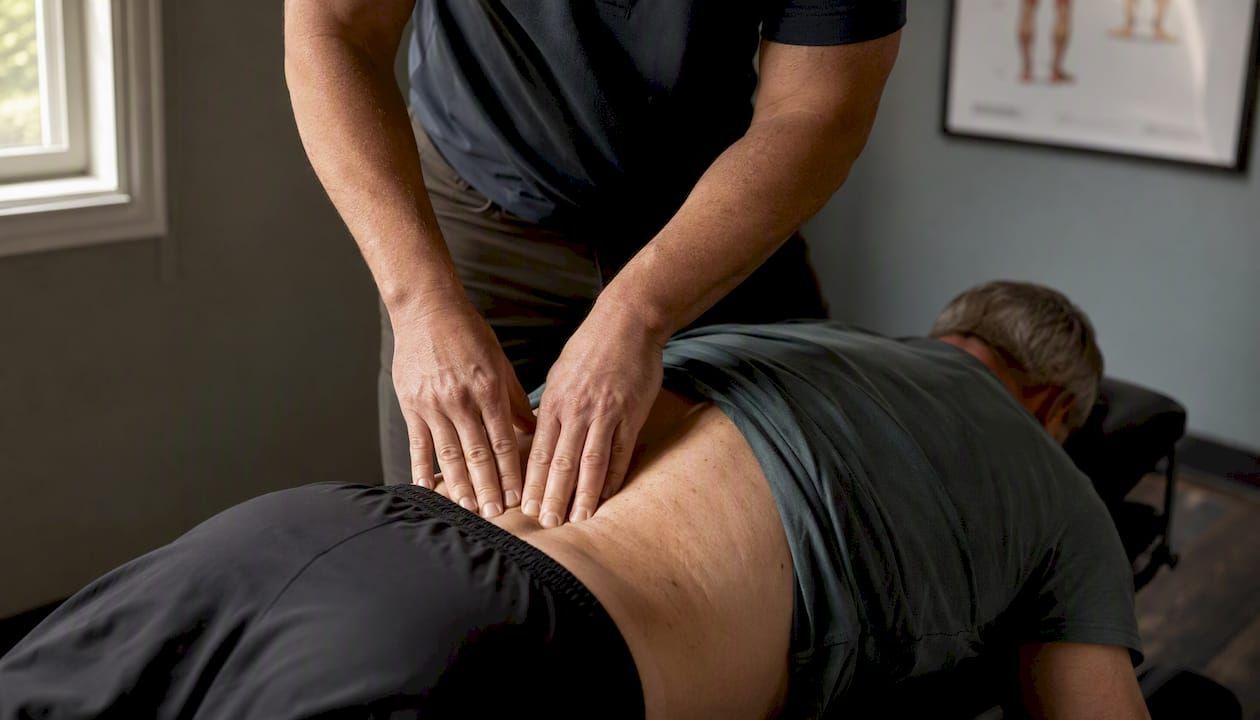
Chiropractic care addresses physical restrictions before they become painful injuries. A chiropractor trained in sports injury prevention identifies joint mobility deficits and movement asymmetries during assessment, then corrects them before cumulative stress causes tissue damage. This proactive model is fundamentally different from waiting for pain and then seeking treatment.
The most common golf injuries, including lumbar disc problems, golfer's elbow, and sacroiliac joint dysfunction, all share a root cause: the body routing force through restricted segments. Chiropractic care interrupts that pattern. Research confirms that golfers with chronic low-back pain who received chiropractic care plus exercise experienced 38% less pain and 30% better functional outcomes at six months compared to exercise alone. That is a clinically meaningful difference, not a marginal one.
Pro Tip: Schedule a maintenance chiropractic visit within 48 hours after a tournament round or a heavy practice session. Addressing cumulative rotational micro-trauma early prevents the stiffness that compounds across multi-round events and limits late-round performance.
Recovery support between rounds is equally important. The following steps outline a practical approach to managing rotational stress throughout a golf season:
- Book a baseline assessment at the start of the season to identify existing mobility restrictions and asymmetries.
- Schedule maintenance visits every two to four weeks during active play periods, not only when pain appears.
- Integrate soft tissue therapy such as myofascial release or instrument-assisted techniques alongside spinal adjustments to address muscle tension that limits joint mobility.
- Add targeted mobility exercises prescribed by your chiropractor to reinforce the range of motion gained during adjustments.
- Prioritize post-tournament recovery with a chiropractic visit to address cumulative micro-trauma from repetitive rotation before stiffness sets in.
What does the research say about chiropractic and golf performance?
The clinical evidence for chiropractic benefits in golf is specific and growing. Studies measuring athletic performance, not just pain scores, show consistent gains across short and medium timeframes.
Athletes receiving consistent chiropractic care showed performance improvements of 10.6% at six weeks and 16.7% at twelve weeks compared to control groups. Those numbers represent measurable gains in output, not subjective comfort ratings. For a golfer, a 16.7% improvement in physical performance capacity translates directly to more consistent swing speed, better endurance across 18 holes, and faster recovery between rounds.
The table below summarizes key outcome data from chiropractic research relevant to golf performance:
| Outcome Measured | Result | Timeframe |
|---|---|---|
| Pain reduction (low-back, chiropractic + exercise) | 38% improvement | 6 months |
| Functional outcome improvement | 30% improvement | 6 months |
| Athletic performance gain | 10.6% improvement | 6 weeks |
| Athletic performance gain | 16.7% improvement | 12 weeks |
| Elite golfer adoption (TPI-certified chiropractic) | 25 of top 30 ranked players | Ongoing |
TPI-certified chiropractic professionals occupy a specific role in elite golf because they understand both the biomechanics of the swing and the clinical interventions that address physical limitations within it. The TPI certification framework trains practitioners to identify the "body-swing connection," mapping physical restrictions directly to swing faults. That specificity is what separates golf-focused chiropractic care from general musculoskeletal treatment.
Chiropractic combined with rehabilitation exercises also produces lasting swing improvements beyond short-term relief. Spinal stability and motor control training alongside adjustments creates durable changes in movement patterns, not just temporary mobility gains. That distinction matters for golfers who want consistent performance across a full season, not just relief after a flare-up.
How does chiropractic fit into a complete golf fitness plan?
Chiropractic care works best as part of a broader performance system, not as a standalone treatment. Chiropractors who specialize in chiropractic care for athletes routinely collaborate with golf coaches, strength trainers, and physical therapists to address the full picture of a golfer's physical capacity.
The collaboration works in a specific direction. Chiropractic adjustments remove the physical restrictions that prevent a golfer from executing what their coach is teaching. A swing coach can identify a fault, but if the fault exists because of a thoracic mobility deficit, no amount of technical instruction will fix it. Restoring the mobility first allows the coaching to take effect. This is what practitioners mean when they describe chiropractic as "unlocking body gates."
Strength, flexibility, and stability training alongside chiropractic adjustments compounds the benefit. Adjustments restore range of motion. Targeted exercises then build strength and control within that new range, making the gains durable. Without the exercise component, mobility improvements from adjustments tend to regress between visits.
The following practices integrate most effectively with chiropractic care for golfers:
- Rotational core training to build strength in the ranges of motion that chiropractic care restores
- Hip flexor and thoracic mobility work performed daily to maintain adjustment gains between visits
- Single-leg stability exercises to address the weight transfer mechanics that drive swing power
- Posterior chain strengthening including glutes and hamstrings to protect the lumbar spine during rotation
- Breathing and bracing drills to develop intra-abdominal pressure control, which stabilizes the spine at impact
Golfers who combine spinal health optimization with a structured fitness program consistently outperform those who rely on either approach alone. The physical capacity gains are simply greater when both systems work together.

Key Takeaways
Chiropractic care for golfers produces measurable gains in swing efficiency, pain reduction, and athletic performance by correcting the spinal and joint restrictions that golf's rotational demands create.
| Point | Details |
|---|---|
| Swing mechanics improve | Thoracic and hip adjustments restore rotation, enabling fuller backswing without lumbar compensation. |
| Pain reduction is significant | Chiropractic plus exercise reduces chronic low-back pain by 38% at six months versus exercise alone. |
| Performance gains are measurable | Athletes show 10.6% performance improvement at six weeks and 16.7% at twelve weeks with consistent care. |
| Elite adoption is widespread | 25 of the top 30 ranked golfers work with TPI-certified chiropractic professionals. |
| Integration multiplies results | Combining chiropractic adjustments with targeted strength and mobility training creates durable, season-long improvements. |
What I've learned treating golfers that most articles get wrong
Most golfers come in thinking chiropractic is a last resort. They've been managing stiffness for months, their swing has gotten shorter, and they've started blaming age or technique. What I actually find, almost every time, is a thoracic spine that stopped rotating properly and a body that quietly reorganized the entire swing around that restriction.
The part that surprises people most is this: restoring mobility often brings back their old swing rhythm without any mechanical changes at all. They don't need a new swing. They need their body to work the way it did before the restriction developed. That realization changes how golfers think about maintenance care. Once you understand that your physical capacity directly shapes what your swing can do, skipping visits between rounds starts to feel like skipping practice.
The other thing I'd push back on is the idea that chiropractic care is only for pain. The golfers who get the most out of it are the ones who come in before pain starts, use TPI assessments to identify what's limiting their rotation, and treat the whole season as a performance cycle. Recovery management across multi-round events is where I see the biggest gains. Stiffness that builds across a tournament weekend is not inevitable. It's manageable, and addressing it proactively is what separates players who finish strong from those who fade on the back nine of Sunday.
Essentialchirocare's sports chiropractic services for golfers
Golfers in West Central Florida have access to specialized sports chiropractic care through Essentialchirocare, with clinic locations across Tampa, Brandon, Sarasota, Lakeland, and Pinellas Park.
Essentialchirocare's doctors bring sports team experience to every assessment, including TPI-informed evaluations that identify the specific mobility restrictions affecting your swing. Treatment plans combine chiropractic adjustments with physical rehabilitation to address both the immediate restriction and the underlying movement patterns that caused it. Whether you're managing a recurring low-back issue or looking to add distance and consistency to your game, Essentialchirocare's sports injury care and comprehensive chiropractic services are built for golfers who take their physical performance seriously.
FAQ
How does chiropractic care improve a golf swing?
Chiropractic adjustments restore thoracic and hip rotation, which directly enables a fuller backswing and reduces compensatory strain on the lower back. Improved joint mobility and nervous system function also sharpen proprioception, leading to more consistent timing and club path.
Do professional golfers actually use chiropractic care?
Yes. Eighteen of the last 20 major golf champions and 25 of the top 30 ranked golfers work with TPI-certified chiropractic professionals. Elite adoption at that scale reflects chiropractic's role as a performance tool, not just a treatment for injury.
How often should a golfer see a chiropractor?
During active play periods, maintenance visits every two to four weeks are standard for managing cumulative rotational stress. Visits within 48 hours after heavy practice sessions or tournament rounds help prevent stiffness from compounding across multi-round events.
What golf injuries does chiropractic care prevent?
Chiropractic care addresses the joint mobility deficits and movement asymmetries that lead to lumbar disc problems, sacroiliac joint dysfunction, and golfer's elbow. Correcting restrictions before pain appears is the core of a proactive injury prevention approach.
Can chiropractic care help golfers who are not in pain?
Chiropractic care produces measurable performance gains even without pain as a starting point. Athletes receiving consistent care showed performance improvements of 10.6% at six weeks and 16.7% at twelve weeks, demonstrating that the benefits extend well beyond pain management.
Recommended