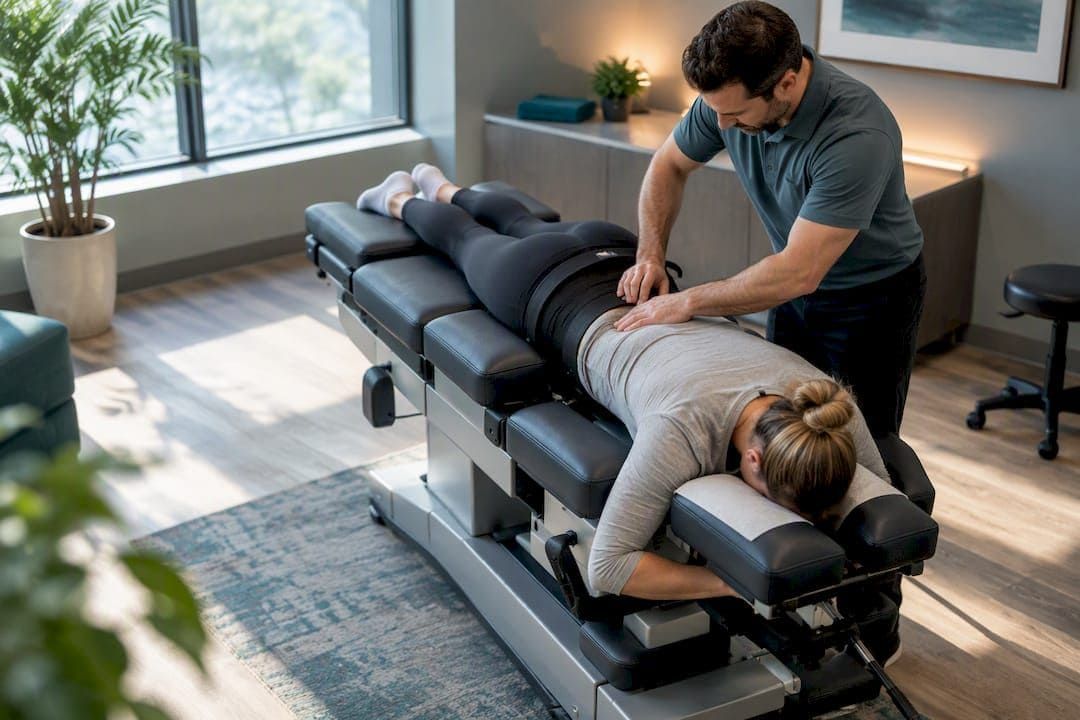
75% Improve with Conservative Care for Cervicogenic Dizziness
75% Improve with Conservative Care for Cervicogenic Dizziness
Neck-focused conservative care, meaning manual therapy paired with a targeted exercise program, is the primary evidence-backed cervicogenic dizziness treatment. Vestibular rehabilitation often gets added when balance or inner-ear dysfunction coexists with the neck problem. If dizziness comes with neurological symptoms, severe trauma, or sudden onset after an injury, that calls for urgent medical evaluation before any conservative treatment plan begins.
TL;DR:
- Manual therapy combined with targeted exercises has the strongest evidence for alleviating cervicogenic dizziness, especially when performed over several weeks.
- Proper diagnosis requires ruling out inner-ear issues like BPPV and central causes through vestibular and neurological screening before focusing on the neck.
- A typical treatment plan involves an initial conservative trial lasting four to six weeks, with progress measured by standardized scores like the DHI and NDI.
- Education on specific home exercises—gentle neck movements, deep flexor strengthening, and eye coordination drills—can accelerate symptom reduction when done consistently.
- Comprehensive triage to exclude red flags and vestibular causes ensures that neck-focused therapy is appropriate for the patient's condition.

Table of Contents
- Cervicogenic Dizziness Treatment Starts With Understanding the Mechanism
- Cervicogenic Dizziness vs BPPV and Vestibular Migraine: Telling Them Apart
- How Clinicians Diagnose Neck-Related Dizziness
- The Treatment Pathway: What to Try First and When to Escalate
- Manual Therapy and Exercise: Techniques, Frequency, and a Home Program
- When Vestibular Rehab and Medication Fit Into the Plan
- Invasive Procedures: Why They're a Last Resort
- How Long Does Recovery Take?
- Getting Care: Who to See and What to Bring
- How Essential ChiroCare Approaches Neck-Related Dizziness
- What the Research Actually Supports, and Where Common Advice Falls Short
- Ready to Get Your Neck-Related Dizziness Evaluated?
- Sources
- FAQ
Cervicogenic Dizziness Treatment Starts With Understanding the Mechanism
Cervicogenic dizziness (CGD) is a sense of imbalance or unsteadiness caused by dysfunction in the joints, muscles, or nerve receptors of the upper neck. It is not the spinning, room-tilting vertigo most people associate with inner-ear problems. Patients typically describe it as a vague, floating unsteadiness that shows up or worsens with neck movement, sustained postures, or pressure on the upper cervical spine.
The mechanism comes down to a sensory mismatch. Your brain constantly blends three streams of positional information: what your eyes see, what your inner ear (vestibular system) reports, and what proprioceptive receptors in the upper cervical joints and muscles signal about head and neck position. When those neck receptors send faulty signals, usually from joint stiffness, muscle spasm, or old whiplash-type injury, the brain receives conflicting input and produces a dizziness sensation even though nothing is wrong with the inner ear itself. A narrative review of the condition's pathogenesis describes this proprioceptive mismatch as the core driver, which is why treatment aimed only at the inner ear often falls short.
CGD is widely considered a diagnosis of exclusion. No blood test or scan confirms it outright, so clinicians work backward, ruling out inner ear disorders, migraine variants, and cardiovascular causes first. It also frequently overlaps with other vestibular conditions rather than existing in isolation, which is part of why a multidisciplinary approach tends to work better than treating the neck or the inner ear alone.
To track whether treatment is working, clinicians lean on a couple of standardized tools:
- Dizziness Handicap Inventory (DHI): a questionnaire scoring how dizziness affects physical, functional, and emotional life, used to measure treatment response over time.
- Neck Disability Index (NDI): a parallel measure for neck pain and function, useful when cervical symptoms drive the dizziness.
- Symptom diary: a low-tech but genuinely useful record of when dizziness spikes, what preceded it, and how long it lasted.
These scores give both you and your provider a number to watch instead of a vague "does it feel better" conversation at each visit.
Cervicogenic Dizziness vs BPPV and Vestibular Migraine: Telling Them Apart
Getting the diagnosis right matters more than most people realize, because the treatments for these three conditions barely overlap. Someone treating BPPV with neck exercises, or treating CGD with repositioning maneuvers meant for inner-ear crystals, is going to spend weeks getting nowhere.
Cervicogenic dizziness tends to follow a fairly consistent pattern:
- Unsteadiness or a "floating" feeling rather than true spinning vertigo.
- Onset or worsening tied to neck movement, prolonged static posture (desk work, driving), or pressure over the upper cervical spine.
- Accompanying neck pain, stiffness, or reduced range of motion, often on the same side as the dizziness.
- Episodes lasting minutes to hours rather than seconds.
- A history of whiplash, cervical arthritis, poor posture, or a prior neck injury.
Benign paroxysmal positional vertigo (BPPV) looks and feels different. It produces brief, intense spinning episodes, usually under a minute, triggered by specific head positions like rolling over in bed or looking up at a shelf. It is caused by displaced calcium crystals in the inner ear's semicircular canals, and it responds to canalith repositioning maneuvers, not neck therapy. Vestibular migraine, meanwhile, tends to bring dizziness lasting hours to days, often with light or sound sensitivity, and a personal or family history of migraine headaches.
A common clinical pitfall is misdiagnosing BPPV as cervicogenic dizziness, since both conditions can be provoked by head movement. A trained clinician distinguishes them using positional testing rather than symptom description alone.
Pro Tip: Before your appointment, note whether your dizziness starts when you turn your head in bed (suggesting BPPV) versus when you hold your neck in one position too long, like scrolling on a phone (suggesting a cervical origin). That single detail can speed up an accurate diagnosis.
How Clinicians Diagnose Neck-Related Dizziness
Because no single test confirms cervicogenic dizziness, clinicians follow a stepwise process designed to rule out dangerous causes first, then rule out competing vestibular diagnoses, and only then zero in on the neck.
1. Red-flag triage. Before anything else, a clinician screens for neurological deficits, sudden severe headache, double vision, slurred speech, or major trauma. When neck trauma is involved, providers often apply the Canadian C-Spine Rule, a validated clinical decision tool that determines whether imaging is needed before any manual treatment proceeds. This step also screens for cervical arterial dissection, a rare but serious condition where forceful or unguided neck movement could cause harm, which is why provocative instability testing is used sparingly and only when clearly indicated.
2. Vestibular screening. Since BPPV is common and treatable with a different approach entirely, clinicians typically perform the Dix-Hallpike maneuver and other positional tests before assuming the neck is the culprit. This sequencing matters: skipping straight to cervical tests risks missing an inner-ear problem that mimics CGD almost perfectly.
3. Cervical-specific testing. Once vestibular causes are reasonably excluded, attention turns to the neck itself:
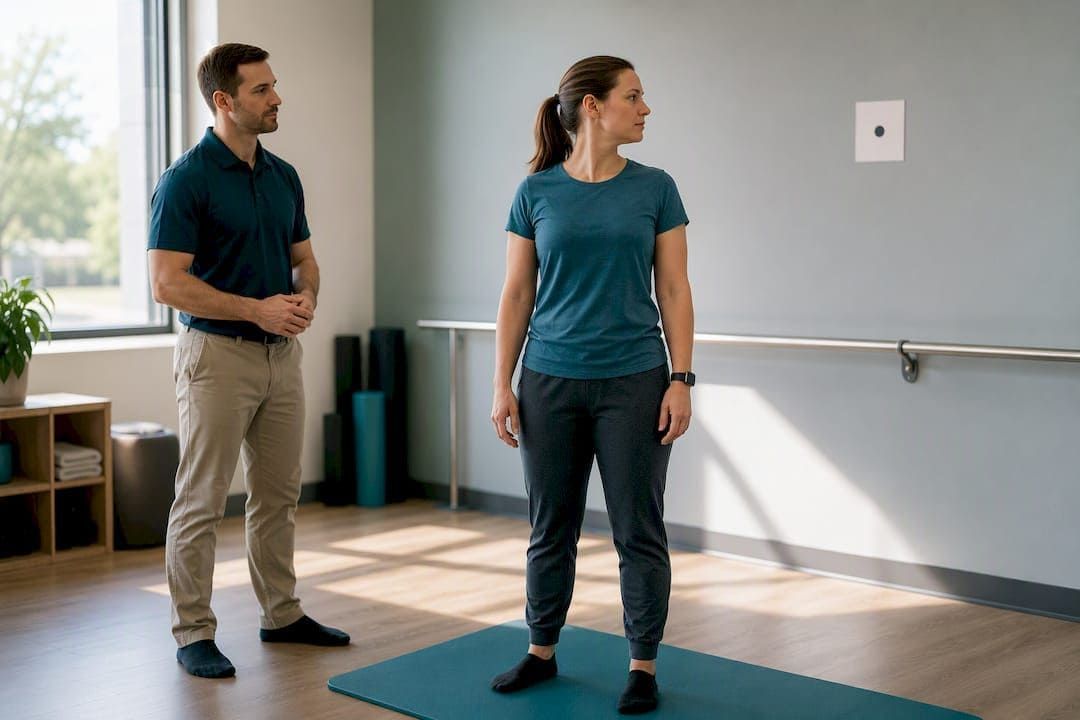
- Cervical relocation test (joint position error test): the patient is blindfolded, asked to rotate the head to a target, then return to a perceived neutral position; the discrepancy between perceived and actual position indicates altered cervical proprioception.
- Cervical neck torsion test: the trunk is rotated while the head stays fixed forward, isolating cervical input from vestibular input by keeping the inner ear stationary while stressing the neck.
Research describing this framework notes that the cervical neck torsion test carries clinical utility as a rule-in tool, though neither test functions as a definitive gold standard on its own. Clinicians interpret them alongside the patient's history and other exam findings rather than in isolation.
4. Coordinated referral when needed. Because CGD sits at the intersection of multiple specialties, a persistent or ambiguous presentation often benefits from input across disciplines:
- Primary care or urgent care for red-flag screening and initial workup.
- ENT or neurology when vestibular or central causes remain on the table.
- Vestibular physical therapists for detailed balance and eye-movement testing.
- Chiropractors or physiotherapists trained in cervical manual therapy for the neck-specific piece.
This layered approach reflects the reality that dizziness is rarely a single-system problem. A narrative review of proprioceptive cervicogenic dizziness argues explicitly for treating it as a multidisciplinary condition rather than handing it to one specialty alone.
The Treatment Pathway: What to Try First and When to Escalate
Conservative, neck-focused care is the first-line approach for cervicogenic dizziness, and the evidence behind it, while not flawless, is meaningfully stronger than for any alternative. A systematic review and meta-analysis of therapeutic management for cervicogenic dizziness found moderate-quality evidence that manual therapy reduces symptoms, with a clear signal that combining manual therapy with exercise outperforms manual therapy delivered alone.
That combination effect is the single most important finding for anyone deciding where to start treatment.
Combined manual therapy plus exercise consistently shows better outcomes on dizziness measures than manual therapy by itself , according to the pooled evidence in that same systematic review.
Here is how the treatment hierarchy typically unfolds in practice:
- First-line: Manual therapy targeting upper cervical joint mobility (mobilizations, soft-tissue work) combined with an active exercise program addressing strength, mobility, and oculomotor control.
- Common adjunct: Vestibular rehabilitation exercises added when a balance or inner-ear component coexists alongside the cervical issue.
- Short-term symptomatic support: Muscle relaxants or antiemetic medications for acute flare periods, used to manage symptoms rather than fix the underlying cervical dysfunction.
- Escalation trigger: Persistent symptoms despite an adequately dosed conservative trial, evidence of structural pathology on imaging, or new progressive neurological signs.
Medication deserves a realistic framing here. Muscle relaxants can ease acute spasm and antiemetics can blunt nausea during a bad flare, but neither addresses the proprioceptive mismatch driving the dizziness. They buy comfort, not resolution. A review of cervical vertigo treatments and evidence notes that physical therapy for the neck has more supporting data behind it than other modalities, though the researchers are candid that study quality across the field still varies and larger, more rigorous trials are needed.
What does "adequate conservative care" mean before considering escalation? Most treatment protocols run a structured trial of manual therapy plus exercise for several weeks, often four to six, with progress tracked using DHI or NDI scores, before concluding the approach isn't working. Stopping after two sessions and assuming failure is a common and avoidable mistake. So is the opposite: continuing an unmodified program for months without reassessment when scores have plateaued.
Escalation does not mean the next step is automatically surgery or injections. Often it means bringing in a vestibular physical therapist to address a balance component that neck therapy alone can't touch, or getting imaging to rule out a structural issue that conservative care would never fix regardless of how well it's executed. The decision hinges on whether the trial of neck-directed care produced any measurable movement in symptoms or functional scores. No improvement at all after a proper trial is a very different signal than partial improvement that has slowed down.
Manual Therapy and Exercise: Techniques, Frequency, and a Home Program
The manual therapy component targets the upper cervical spine specifically, the joints between the skull, atlas (C1), and axis (C2), since research consistently points to this region as the primary source of proprioceptive dysfunction in CGD. Common techniques include:
- Joint mobilizations: graded, rhythmic movements applied to stiff cervical segments to restore normal joint mechanics.
- Sustained Natural Apophyseal Glides (SNAGs): a mobilization technique combining sustained gliding pressure with active neck movement, often used for upper cervical restrictions.
- Soft-tissue work: addressing muscle guarding and trigger points in the suboccipital and upper trapezius muscles that commonly accompany cervical dysfunction.
Safety matters here. Manual therapy to the upper cervical spine should always follow the red-flag and instability screening described earlier, and providers avoid aggressive high-velocity techniques when instability or vascular risk factors are present.
A 2023 randomized controlled trial gives a genuinely useful blueprint for the exercise side of treatment. It tested a structured home-based program combining strength work, cervical mobilization, and oculomotor training in patients with non-traumatic cervicogenic dizziness, and found significant improvement in DHI scores within two weeks when used as an add-on to standard care. A practical home program modeled on that approach generally includes:
- Gentle cervical range-of-motion exercises: slow, controlled rotation, flexion, and side-bending, performed within a pain-free range, several times daily.
- Deep neck flexor strengthening: low-load exercises like chin tucks that build endurance in the stabilizing muscles rather than the larger, overactive superficial muscles.
- Oculomotor training: smooth pursuit and saccadic eye exercises that help recalibrate the connection between eye movement and head position.
- Cervical proprioception drills: exercises like the "laser pointer" head-repositioning task, where a patient practices returning the head accurately to a fixed target with eyes closed.
The RCT protocol used a frequency around three to five sessions per week, and that cadence lines up with what most clinical programs recommend for meaningful short-term change. Consistency beats intensity here. Overdoing aggressive stretching or forceful self-mobilization can actually provoke symptoms rather than resolve them.
Track progress with the DHI or NDI every couple of weeks rather than relying on day-to-day gut feeling, since dizziness naturally fluctuates and can mask a real underlying trend. If scores plateau or worsen after a few weeks of consistent effort, that's the cue to have a clinician reassess and modify the program rather than pushing through unchanged.
Pro Tip: If a specific neck movement reliably triggers dizziness, don't avoid it entirely. Gradual, controlled exposure to that movement, done slowly and within tolerance, is usually part of retraining the proprioceptive system rather than something to eliminate from daily life.
When Vestibular Rehab and Medication Fit Into the Plan
Vestibular rehabilitation earns its place as an adjunct, not a replacement, for cervical treatment. It focuses on gaze stabilization exercises, habituation drills for movement-provoked symptoms, and balance training designed to retrain the vestibular system's compensation ability. Clinicians typically add it when testing suggests a genuine vestibular hypofunction alongside the cervical component, rather than applying it by default to every dizzy patient.
The evidence for combining the two remains a genuine gray area. A systematic review of manual therapy with and without vestibular rehabilitation found a reasonable theoretical rationale for pairing them, but concluded the trial evidence is too limited to confirm that combined treatment beats neck therapy alone. Vestibular rehab is a sensible add when balance testing points that direction, not an automatic upgrade.
Medications occupy a narrow, symptomatic role:
- Muscle relaxants: short courses for acute muscle spasm contributing to neck stiffness.
- Antihistamines or antiemetics: used briefly to manage nausea or acute dizziness spikes, not as a long-term strategy.
- Soft cervical collars: limited to one to two hours per day acutely after trauma, since prolonged use encourages muscle deconditioning that slows recovery.
Acupuncture, dry needling, and cervical injections show up in the literature but with thin, low-quality evidence behind them for this specific condition. These approaches sit well behind manual therapy and exercise in the treatment hierarchy and are reasonable only as a secondary consideration, not a starting point.
Invasive Procedures: Why They're a Last Resort
A small subset of case reports describe more aggressive interventions for persistent cervicogenic dizziness, but nothing here carries strong evidence:
- Medial branch blocks: diagnostic or therapeutic injections targeting the nerves supplying cervical facet joints.
- Radiofrequency ablation: a procedure that uses heat to disrupt pain-signaling nerve fibers in the neck.
- Surgical decompression: reserved for cases with clear structural nerve or spinal cord compression.
Outcomes across these reports vary widely, and none should be considered without a confirmed structural cause and agreement across multiple specialists. If a provider suggests an invasive procedure early, before a real trial of conservative care, get a second opinion and ask directly what evidence supports it for your specific presentation.
How Long Does Recovery Take?
Most patients see meaningful improvement, and the numbers back that up. The Vestibular Disorders Association reports that roughly 75% of patients with cervicogenic dizziness improve with conservative neck treatment, including gentle mobilizations, targeted exercise, and posture correction.
Timeline varies more than that headline number suggests. Some patients notice a shift within two to four weeks of starting a combined manual therapy and exercise program, echoing the two-week DHI improvements seen in the 2023 home-exercise trial. Others, particularly those with longstanding symptoms or a traumatic origin like whiplash, need several months of consistent treatment before symptoms settle meaningfully.
A few factors reliably predict how smoothly recovery goes: whether the injury was traumatic (whiplash cases tend to take longer), how long symptoms have been present before treatment starts, whether a coexisting vestibular condition is muddying the picture, and, perhaps most controllable of all, how consistently the patient sticks with the home exercise program between clinic visits.
Getting Care: Who to See and What to Bring
Matching your symptoms to the right provider saves time and frustration. Here's a rough map of who handles what:
- Primary care physician: first stop for new or unclear dizziness, especially to screen for red flags before anything else proceeds.
- ENT or neurology: appropriate when vestibular or central nervous system causes remain suspected after initial screening.
- Vestibular physical therapist: best suited for detailed balance testing and gaze-stabilization work when a vestibular component is confirmed.
- Chiropractor or physiotherapist trained in cervical manual therapy: the right choice once the cervical origin is reasonably established and neck-focused treatment is the plan. Readers weighing this decision after an accident or injury may find it useful to compare chiropractic care versus physical therapy before booking.
Before your first appointment, bring a few things that will speed up an accurate diagnosis:
- A symptom diary noting when dizziness occurs, how long it lasts, and what triggers it.
- A list of any prior neck injuries, whiplash events, or existing arthritis diagnoses.
- Copies of any prior imaging (X-rays, MRI) if you've had them.
- A current medication list, including anything taken specifically for dizziness so far.
Worth asking directly at that appointment: How confident are you in this diagnosis versus BPPV or vestibular migraine? What does the recommended treatment plan look like, and over what timeframe? Will I need imaging before starting manual therapy? Should vestibular rehab be part of this from the start, or added later if progress stalls?
How Essential ChiroCare Approaches Neck-Related Dizziness
Essentialchirocare treats cervicogenic dizziness within the same framework outlined above: careful evaluation of the cervical spine, manual therapy targeting the upper neck, and a structured rehabilitation plan built around each patient's specific findings. Clinics across West Central Florida combine manual therapy techniques with physical rehab programming rather than treating either in isolation.
A typical pathway starts with an intake exam that screens for red flags and rules out non-cervical causes, moves into targeted manual therapy paired with a home exercise program, and includes referral coordination when a vestibular or neurological component needs a different specialist. Multiple locations and online scheduling make it practical to start that evaluation without a long wait between the first phone call and the first hands-on visit.
What the Research Actually Supports, and Where Common Advice Falls Short
The biggest gap between how cervicogenic dizziness gets discussed online and what the evidence actually shows comes down to sequencing. A lot of dizziness advice jumps straight to vestibular exercises, balance apps, or generic "dizziness cures," treating the inner ear as the default suspect. The research points somewhere more specific: for neck-origin dizziness, the neck has to be part of the treatment plan from day one, not an afterthought after vestibular therapy fails.
The second piece conventional advice tends to undersell is how much the combination matters more than either component alone. Manual therapy by itself helps some people. Exercise by itself helps some people. But the systematic review evidence is fairly clear that doing both together outperforms either one solo, and yet plenty of patients get handed one or the other, not both.
If there's one thing worth prioritizing above everything else in this article, it's proper triage before treatment starts. Skipping the step that rules out BPPV, vascular red flags, or central causes is how people end up months into a neck treatment plan for a problem that was never coming from the neck.
Ready to Get Your Neck-Related Dizziness Evaluated?
If you've been living with unsteadiness tied to neck stiffness, poor posture, or an old whiplash injury, Essentialchirocare offers an in-person evaluation built around exactly the triage-then-treat approach described above. Rather than guessing between a chiropractor, a physical therapist, or an ENT, you get a coordinated assessment that checks for red flags first and then builds a manual therapy and exercise plan matched to what's actually driving your symptoms.
A first visit typically includes a detailed history, cervical and basic vestibular screening, and a discussion of what a combined manual therapy and home exercise plan would look like for your specific case. Locations across Tampa, Brandon, Sarasota, Lakeland, and Pinellas Park make it straightforward to get in without a long drive, and appointments book directly online. Start by exploring the chiropractic care and adjustment services page and requesting a consultation to get your neck, not just your inner ear, properly assessed.
This article is general information, not a substitute for advice from a qualified doctor. Consult a qualified healthcare professional about your own circumstances before acting on anything here.
Sources
FAQ
How Long Does It Take for Cervicogenic Dizziness to Go Away?
Many patients notice improvement within two to four weeks of starting combined manual therapy and exercise, based on the DHI score improvements seen in a 2023 randomized controlled trial. Full recovery timelines vary depending on whether the cause was traumatic and how long symptoms lasted before treatment began, with some cases taking several months.
Can an MRI Show Cervicogenic Dizziness?
An MRI cannot directly diagnose cervicogenic dizziness, since the condition stems from functional proprioceptive dysfunction rather than a visible structural lesion. Imaging is still useful to rule out other causes, like disc herniation or instability, especially when trauma or red flags are present, per the stepwise diagnostic framework clinicians follow.
How to Fix Cervicogenic Dizziness at Home?
A home program centered on gentle cervical range-of-motion exercises, deep neck flexor strengthening, oculomotor training, and proprioception drills can meaningfully reduce symptoms, especially when done consistently three to five times a week. These exercises work best as a complement to professional manual therapy rather than a full replacement for it, and a clinic like Essentialchirocare can help structure that home program around your specific exam findings.
What Kind of Doctor Should I See for Cervicogenic Dizziness?
Start with a primary care physician if the dizziness is new or unclear, since red flags need to be ruled out first. Once a cervical origin seems likely, a chiropractor or physiotherapist trained in cervical manual therapy, sometimes alongside a vestibular physical therapist, is typically the right next step.
Recommended