
Five Step Lifting Form for Back Safety: Clinician Backed Guidance
The safest way to lift almost anything: stand close to the load, bend at your knees and hips instead of your waist, keep your spine neutral, hold the object tight against your body, and stand up by pushing through your legs. Never twist while you're holding weight. If something feels too heavy, awkward, or off balance, stop and get help or grab a dolly instead of forcing it.
TL;DR:
- Keeping the load close to your body and within the power zone reduces leverage and minimizes strain on your lower back during lifting.
- Avoid twisting your torso while holding weight and never jerk or rapidly lift objects to prevent muscle strain and disc injuries.
- Before lifting, test the object's weight, check your path for obstacles, and seek assistance or equipment if the load feels heavy or awkward.
- Use proper warm-up exercises and build core and leg strength to lower long-term injury risk and improve lifting capacity.
- Visit a healthcare professional if pain or numbness persists after lifting to rule out serious injury and receive appropriate treatment.

Table of Contents
- Proper Lifting Form for Back Safety: The Five-Step Sequence
- How Do You Decide If a Lift Is Safe to Attempt?
- Why Does the Power Zone Protect Your Lower Back?
- Common Lifting Mistakes That Lead to Back Injuries
- When Should You Use Equipment Instead of Lifting?
- Warm-Up and Conditioning Habits That Lower Your Long-Term Risk
- What Chiropractic Care Adds to Back Safety
- Where to Learn More About Safe Lifting
- Sources
- FAQ
Proper Lifting Form for Back Safety: The Five-Step Sequence
Good lifting mechanics come down to a short, repeatable sequence. OSHA's guidance on proper lifting techniques breaks it into steps simple enough to run through in your head every single time, whether you're loading a truck or picking up a laundry basket.
- Set your stance. Feet shoulder-width apart, one foot slightly ahead of the other, positioned close enough to the load that you're not reaching.
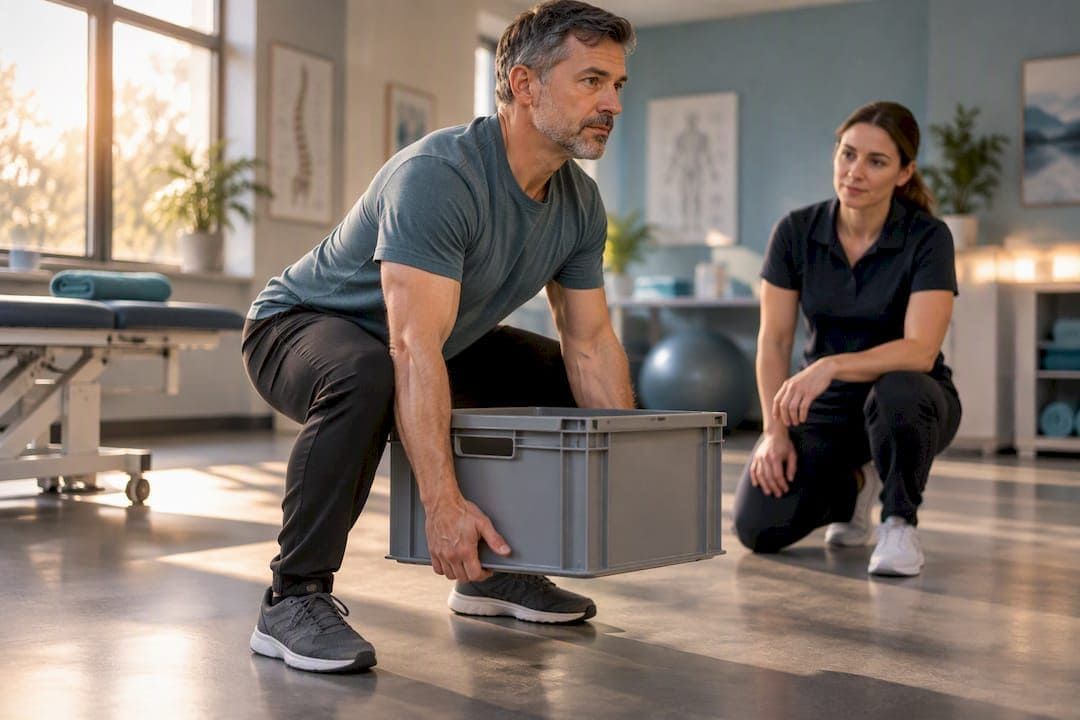
- Bend at the hips and knees, not the waist. Squat down while keeping your chest up and your spine in its natural, neutral curve. Rounding your lower back here is where most lifting injuries start.
- Get a solid grip and pull the load into your power zone. That means the space between your mid-thigh and mid-chest, where your muscles and joints handle load with the least strain.
- Brace your core and drive up through your legs. Stand up smoothly, no jerking or yanking. Your legs are doing the work, not your lower back.
- Reverse the whole process to set it down. Squat, keep the load close, place it down with control. If you need to turn, move your feet. Never twist your torso while holding weight.
This sequence works because it keeps the heaviest demand on your thighs and glutes, the biggest, strongest muscles in your body, instead of the comparatively small stabilizing muscles along your spine.
How Do You Decide If a Lift Is Safe to Attempt?
Before you touch the load, run a quick risk check. MedlinePlus recommends testing an object's weight before committing to a full lift, especially if you're not sure what's inside a box or container.
- Nudge one corner or try a small test-lift to gauge how heavy it actually is.
- Look at the path ahead: is the floor clear, is your footing solid, can you see where you're stepping the whole way?
- Check for stairs, thresholds, or narrow doorways that will force an awkward mid-carry adjustment.
- If the load feels heavy or off balance, split it into smaller pieces, ask someone to help, or use equipment instead.
- Factor in your own condition. A recent back strain, general fatigue, older age, or an existing health condition all raise your risk, even for a load you've handled fine before.
Pro Tip: Do the "two-second test": lift one corner an inch off the ground and hold it for two seconds. If your instinct says "put this down and get help," listen to it. That reaction is usually more reliable than trying to guess a weight in pounds.
Why Does the Power Zone Protect Your Lower Back?
The mechanics behind "keep it close" come down to leverage. When a load moves away from your body, it acts like a longer lever arm on your spine, and your lower back muscles have to generate far more force to counteract it. UNC's Environment, Health and Safety office recommends keeping objects between mid-thigh and mid-chest height for exactly this reason: it shortens that lever arm and cuts the strain on your lumbar discs.
- Neutral spine means preserving the natural S-curve of your back, not flattening or rounding it, while your hips and knees do the bending.
- "Nose between toes" is a cue OSHA uses to remind you to step your feet around rather than twist your trunk when changing direction with a load in hand.
- Core bracing , tightening your abdominal muscles like you're about to take a light punch, builds intra-abdominal pressure that stabilizes your spine from the inside.
Small rotations under load raise injury risk sharply, which is exactly why full foot-step turns matter more than they seem to.
Common Lifting Mistakes That Lead to Back Injuries
Most lifting injuries trace back to a handful of repeat offenders, not some rare fluke movement.
- Bending at the waist instead of the hips and knees puts nearly all the load on your lower back muscles and discs.
- Twisting mid-lift , even a small pivot, dramatically increases shear force on the spine.
- Jerking the load up fast instead of a slow, controlled lift spikes muscle strain.
- Carrying loads that block your view or that are unevenly weighted on one side throw off your balance and posture without you realizing it.
- Lifting repeatedly with no rest lets fatigue creep in, and tired muscles stop stabilizing your spine the way they should.
If you notice pain, tingling, or numbness during or after a lift, stop immediately. The fix is almost always the same: slow down, set the load down safely, reset your form, and reorganize the task so it's less repetitive going forward.
When Should You Use Equipment Instead of Lifting?
Sometimes the safest lifting form is not lifting at all. A hand truck or dolly beats a solo lift every time for bulky or heavy items, and getting a second person involved for anything roughly heavier or more than a moderate load, or anything awkwardly shaped, is not overkill. It's the smart move.
- Slide, roll, or push loads across a distance rather than carrying them; pushing puts less strain on your back than pulling.
- Use ramps or lift tables to avoid lifting something up onto a ledge or truck bed by hand.
- Reposition storage so frequently lifted items already sit in your power zone instead of on a high shelf or the floor.
Pro Tip: If you catch yourself thinking "I can probably muscle through this one," that's usually the exact moment to stop and grab help instead.

Warm-Up and Conditioning Habits That Lower Your Long-Term Risk
A cold body handling a heavy box is asking for trouble. A short warm-up, hip hinges, hamstring swings, a few bodyweight squats, primes the muscles that will actually be doing the work.
- Build baseline strength with squats, coached deadlifts, and planks so your legs and core can handle everyday loads without your back compensating.
- At work, take breaks between repetitive lifts, rotate tasks with a coworker, and plan ahead so you're not rushing the heaviest lift of the day.
- Progress gradually. Adding load or frequency in small steps gives your tissues time to adapt.
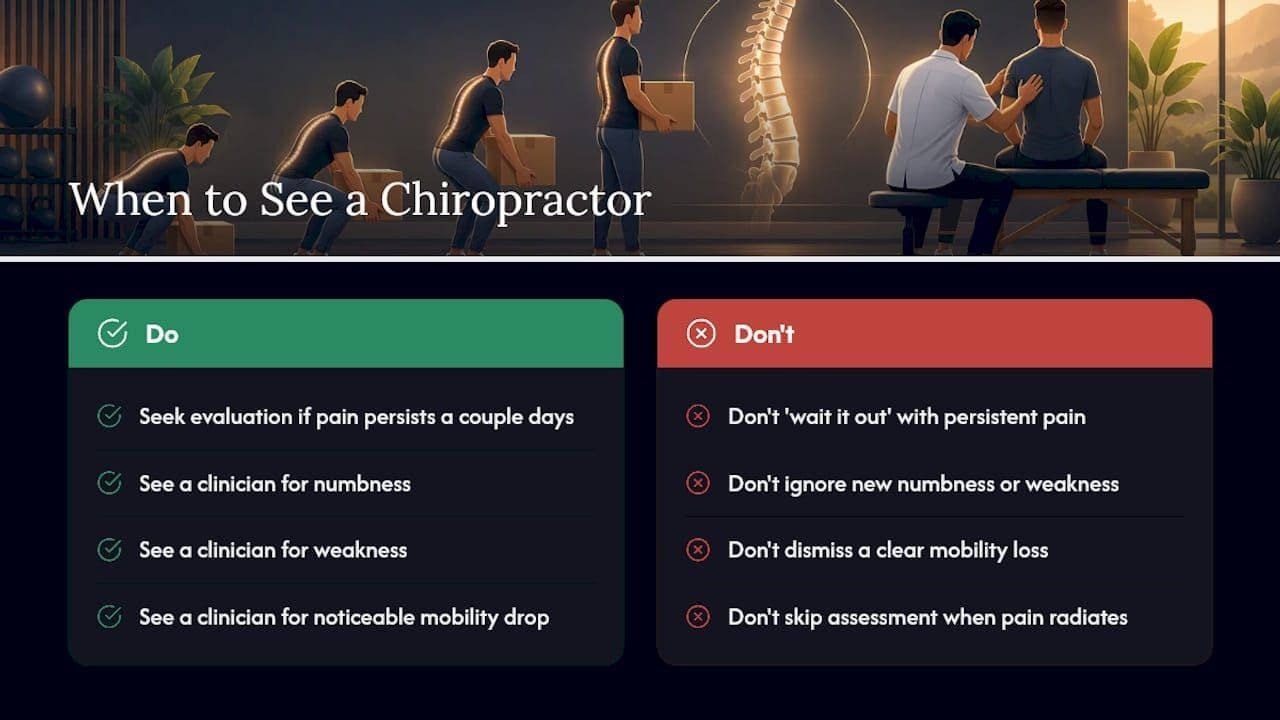
- If pain lingers more than a couple of days, or you notice numbness, weakness, or reduced range of motion, that's the point to see a clinician rather than push through it.
Reviewing daily habits that stress your back, like common everyday movements worth avoiding, is a useful next step for anyone who lifts often, whether at work or just moving things around the house.
What Chiropractic Care Adds to Back Safety
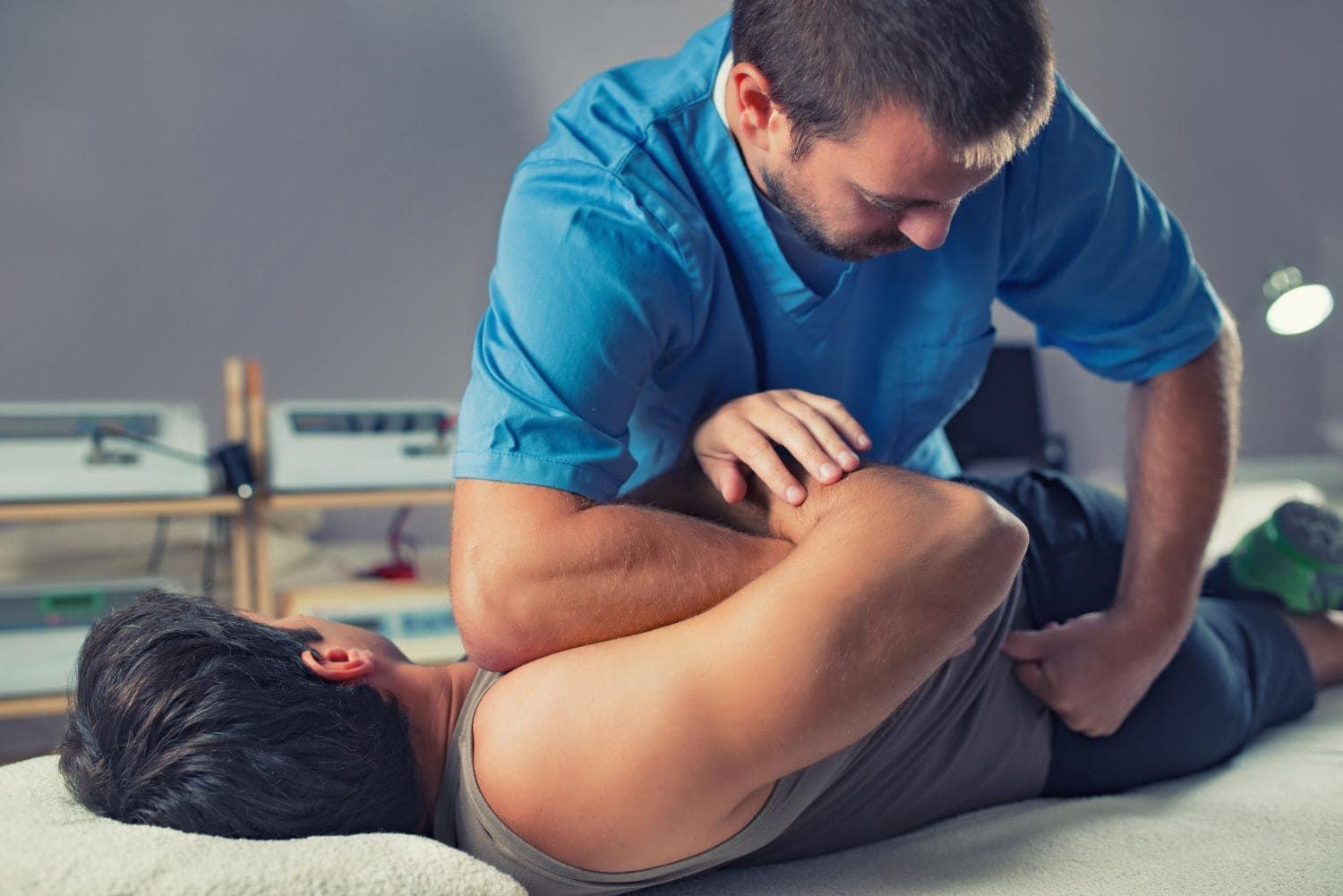
Good lifting form prevents a lot of injuries, but not all of them. At Essential ChiroCare, clinicians with backgrounds working alongside sports teams evaluate lifting-related pain by screening for mechanical patterns, which movements provoke the pain, where it radiates, whether strength or sensation has changed. That assessment guides whether conservative chiropractic care and guided rehab make sense as a first step, which is the common path for most strain-related back pain.
If a lift leaves you with pain that doesn't ease up within a couple of days, or with numbness, weakness, or a noticeable drop in mobility, that's a signal worth having a professional look at rather than waiting it out. Understanding how posture affects long-term spinal health also helps explain why the same alignment principles behind safe lifting matter well beyond the moment you set the box down.
Where to Learn More About Safe Lifting
The guidance in this article draws directly from public health and workplace safety authorities. OSHA's lifting techniques guide and MedlinePlus's lifting and bending instructions cover the core mechanics in more depth, while UNC's EHS office and Washington State University's EHS back injury factsheet go further into workplace ergonomics and employer training programs.
This article is general information, not a substitute for advice from a qualified doctor. Consult a qualified healthcare professional about your own circumstances before acting on anything here.
Sources
FAQ
What Are the Best Lifting Techniques for Back Safety?
The core technique is a squat with a neutral spine: bend at your knees and hips, keep the load close to your body within your power zone, and stand up by driving through your legs rather than your back. OSHA's guidance also stresses avoiding any twisting motion while the load is in your hands.
How Do I Protect My Back When Lifting?
Plan before you lift: test the weight, clear your path, and decide if you need help or equipment before you bend down. Keeping loads close to your body and moving your feet instead of twisting your torso are the two habits that prevent the most injuries.
What Is the Safest Position for Your Back When Lifting?
A neutral spine, meaning your back keeps its natural curves rather than rounding or arching, paired with bent knees and hips, is the safest position. The load should stay in your power zone, between mid-thigh and mid-chest, to minimize strain on your lower back.
What Is the Most Common Back Injury From Lifting?
Muscle and ligament strains in the lower back are the most frequent injury, usually from bending at the waist, twisting under load, or lifting something too heavy without help. Improper bending and lifting also raises the risk of disc-related injuries, particularly for older adults.