
3 Seat and Break Habits Drivers Can Use to Prevent Sciatica Pain
You can usually keep driving with sciatica if you set your seat correctly, plan hourly movement breaks, and take a few minutes to warm up before you start the car. The three moves that matter most are: adjust your lumbar support and seat height before you leave, stop approximately every hour to walk and stretch, and pack a lumbar roll and comfortable shoes so relief is within reach. Stop driving and get evaluated if you notice new leg weakness or any change in bladder or bowel control.
TL;DR:
- Setting your seat height and lumbar support correctly can significantly reduce nerve load and prevent exacerbating sciatica during long drives.
- Taking hourly breaks to walk and gently stretch helps relieve pressure on the sciatic nerve before pain increases, especially avoiding prolonged sitting.
- Preparing with gentle pre-drive stretches, appropriate medications, and supportive gear like lumbar rolls can improve comfort and minimize risks on the road.
- Red flags such as new leg weakness, foot drop, or bladder control issues require immediate medical evaluation rather than self-care.
- Regular movement, correct seat setup, and scheduled breaks are more effective than relying on stretches or gadgets to manage driving-related sciatic pain.

Table of Contents
- Why driving often makes sciatica worse
- Pre-drive checklist: stretching, meds, and packing
- How to set up your car seat and steering to reduce nerve load
- During-drive routine: micro-breaks, safe stretches, and in-seat moves
- After the drive: ice/heat, mobility, and short-term recovery
- Red flags: when to stop driving and seek urgent medical care
- Clinic perspective: assessment and conservative treatment options
- What the research gets right and what it leaves out
- Getting help when self-care isn't enough
- Sources
- FAQ
Why driving often makes sciatica worse
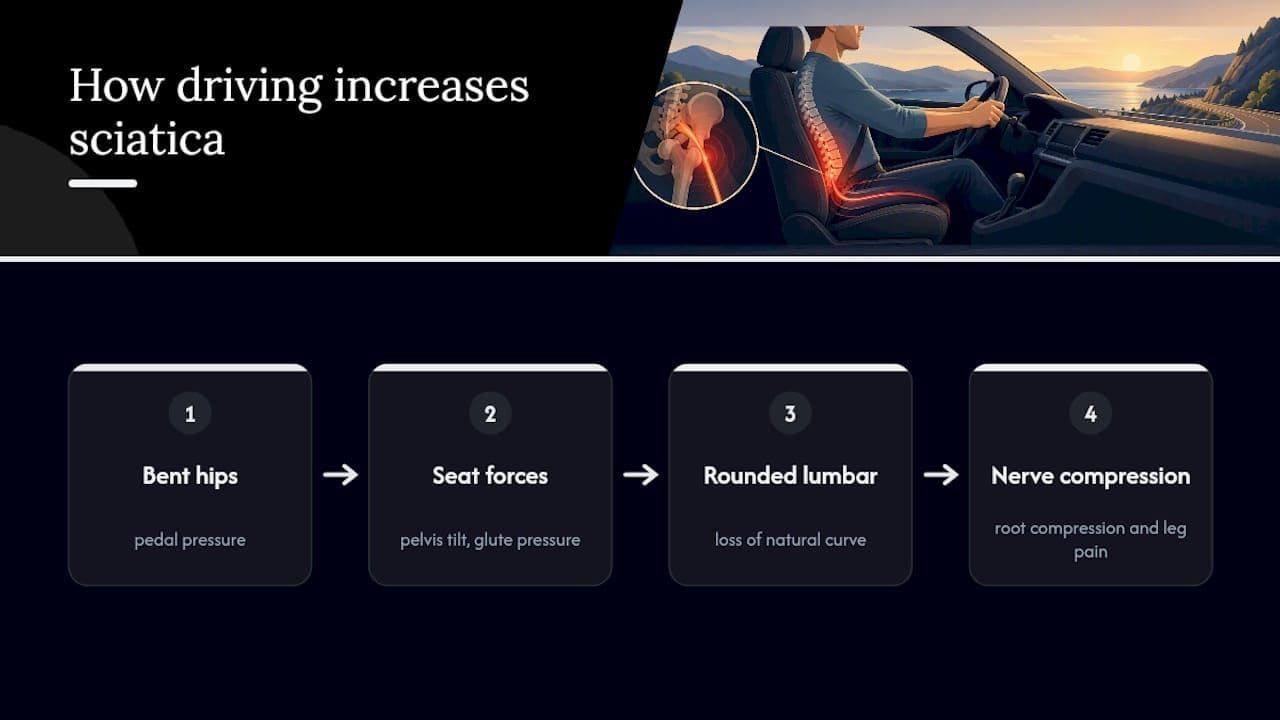
Sitting puts more pressure on your lower spine than standing does, and driving compounds the problem because you're locked into one position with your hips bent and your foot pressing pedals. That sustained hip flexion pulls on the lower back and can compress the nerve roots that feed the sciatic nerve, especially when your lumbar spine loses its natural curve and rounds into the seat back.
Car seats make this worse in ways office chairs don't. The seat pan angle often tilts your pelvis backward, your gluteal muscles get more sustained pressure than a wider chair provides, and there's little room to shift position without taking your eyes off the road. According to clinical guidance on sciatica, driving and machine operation are occupational factors linked to a higher risk of disc problems and sciatica.
The instinct to sit still and avoid movement usually backfires. Research on conservative management of sciatica supports staying active rather than resting in bed, since prolonged immobility tends to worsen radicular symptoms rather than calm them. That's the core tension of a road trip: the activity that helps your sciatica is the one thing a long drive doesn't let you do.
Pre-drive checklist: stretching, meds, and packing
A few minutes of preparation before you turn the key can change how the next hour feels. Loosen tight hips and hamstrings first, since a stiff piriformis or hamstring adds tension right where the sciatic nerve is already irritated.
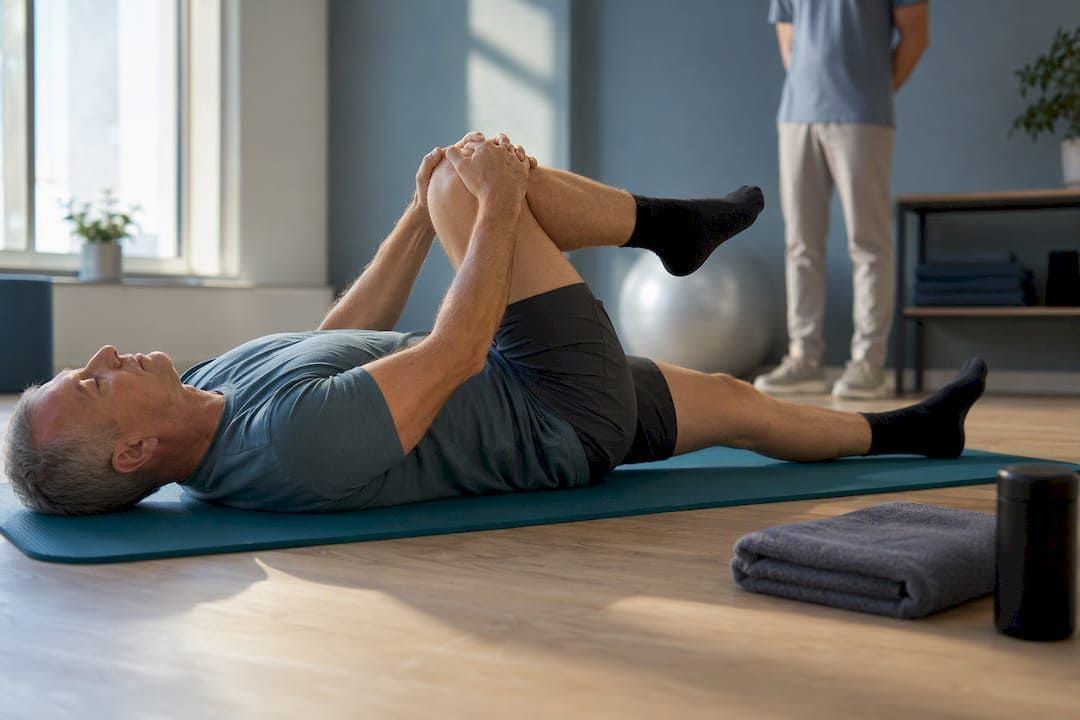
- Do a gentle warm-up: knee-to-chest stretches, a standing hamstring stretch, and a seated piriformis stretch before you get in the car.
- If your clinician has approved it, take an OTC NSAID before a long drive rather than waiting for pain to build.
- Pack a lumbar roll or small wedge cushion, a water bottle, and supportive shoes instead of flip-flops or heels.
- Plan your route around regular stops about once an hour instead of pushing through in one stretch.
Guidance on sciatica management cautions against relying on gabapentinoids, oral corticosteroids, benzodiazepines, or long-term opioids for routine sciatica, since the harms tend to outweigh the benefits compared with conservative, activity-based care. If you want a fuller pre-drive stretch routine, a step-by-step home routine walks through the same movements in more detail.
How to set up your car seat and steering to reduce nerve load
Most drivers set their seat once and never touch it again, but for sciatica, the setup itself is treatment. A seat that pushes your pelvis backward or forces you to reach for the pedals adds load to the exact nerve roots that are already irritated.
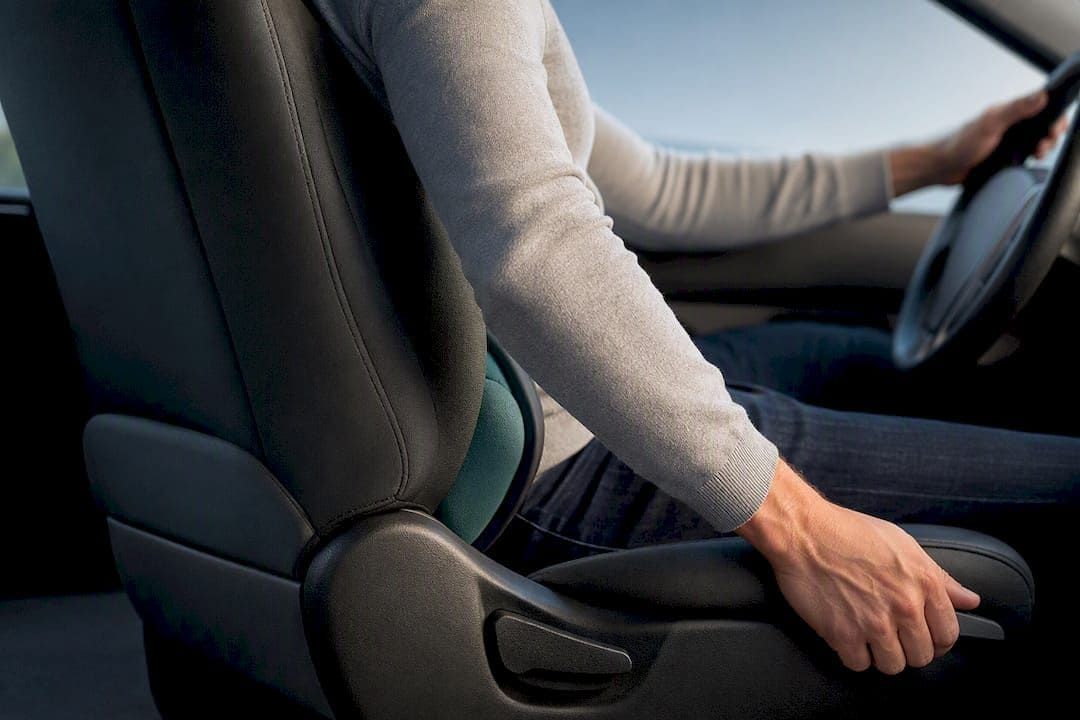
- Set seat height so your knees sit level with your hips or slightly higher, which keeps pressure off the back of your thighs.
- Move the seat close enough that you're not stretching for the pedals, since sliding forward rounds your lower back.
- Place a lumbar roll or small pillow at the curve of your lower back, not higher up near your shoulder blades.
- Check the seat bottom tilt: a slight downward angle at the front edge helps prevent "submarining," where your pelvis slides forward and flattens your lumbar curve.
- Adjust the steering wheel so your elbows stay slightly bent, which keeps tension out of your upper back and shoulders instead of transferring it down into your lower spine.
An occupational therapy resource on driving suggests using a firm cushion to raise seat height and considering power seats when choosing a vehicle, both useful if your car's factory adjustments don't go far enough.
Pro Tip: Before you fix your seat, check your back pocket. A wallet sitting under one hip tilts your pelvis just enough to reproduce one-sided leg pain, and removing it is a five-second correction.
During-drive routine: micro-breaks, safe stretches, and in-seat moves
The single most useful habit for sciatica while driving is breaking up the sitting itself, not finding the perfect stretch. Stopping every 45 to 60 minutes for a two to three minute walk resets pressure on your discs and nerve roots before pain has a chance to build.
- Use a stable prop, like your car's rear bumper, for a gentle hurdler-style hamstring stretch during each stop.
- While stopped at a light or parked, do a few ankle pumps to keep blood moving in your legs.
- Try a small pelvic tilt while stopped: gently flatten your lower back against the seat, hold briefly, then release.
- Skip anything that reproduces or worsens leg pain, including aggressive trunk twists or deep forward bends.
Travel-focused advice for sciatica points to frequent movement and hourly stops as the most reliable way to reduce flares on longer drives, using the same bumper-stretch approach.
Pro Tip: If a stretch reproduces shooting pain down your leg, stop immediately. Reproducing radicular pain is a sign the movement is loading the nerve, not releasing it.
After the drive: ice/heat, mobility, and short-term recovery
Once you're out of the car, timing matters. For a new flare, ice the area for the first 48 to 72 hours, then switch to heat once the acute inflammation has settled and stiffness is the main issue. Conservative care guidance supports this cold-then-heat sequence alongside gentle movement rather than rest.
Walk for a few minutes and run through a short mobility routine, the same knee-to-chest and hamstring stretches from your pre-drive warm-up, to restore normal movement after hours of sitting. Short courses of OTC anti-inflammatories can help manage discomfort, according to Cleveland Clinic's patient guidance on sciatica, though the same caution against long-term reliance on prescription nerve pain medications applies here too.

Red flags: when to stop driving and seek urgent medical care
Most sciatica responds to self-care and time, but a few symptoms mean you should stop driving and get evaluated promptly rather than waiting it out. Progressive weakness in your leg or foot, especially a new foot drop where you catch your toes when walking, needs prompt attention.
Numbness in the saddle area, or any new difficulty controlling your bladder or bowels, is a medical emergency and should not wait for a scheduled appointment. Severe or escalating pain and numbness that doesn't ease with rest, ice, or basic movement over a few days also warrants a proper exam rather than continued self-treatment. A guide to sciatica symptoms and warning signs covers these neurologic red flags in more detail if you're unsure whether what you're feeling qualifies.
Clinic perspective: assessment and conservative treatment options
An in-clinic evaluation for driving-triggered sciatica usually starts with a focused history: how long you've had symptoms, what makes them worse, and whether driving specifically sets them off. A neurologic exam checks reflexes, strength, and sensation in the leg, and imaging is reserved for cases with persistent or severe deficits rather than ordered routinely.
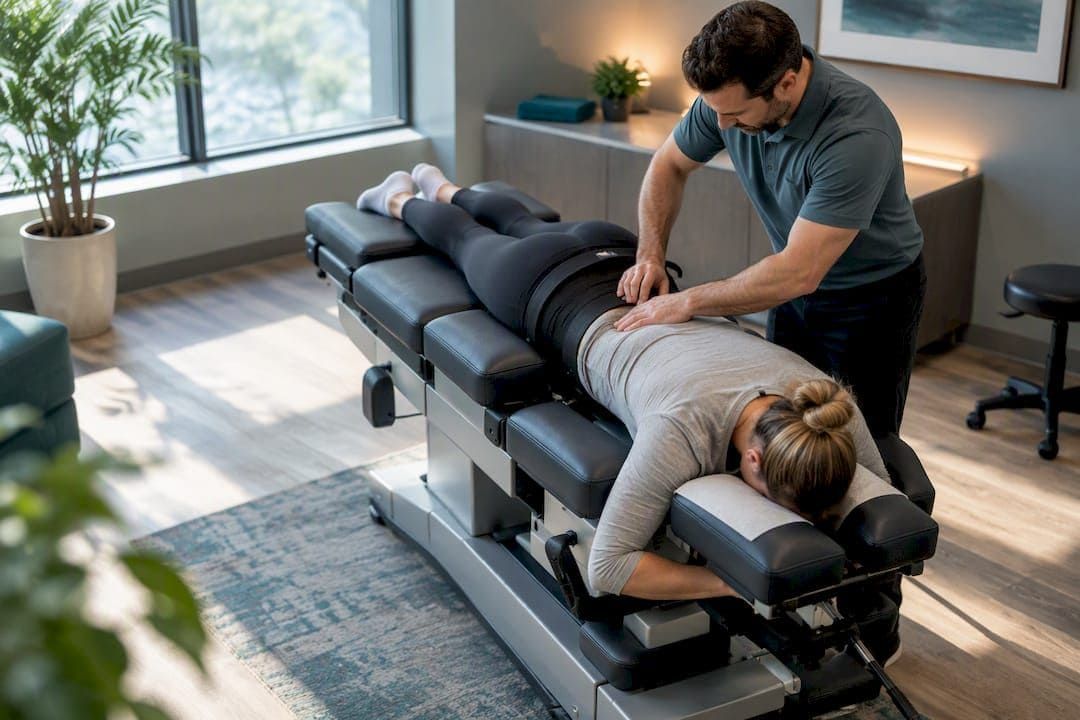
Conservative treatment commonly includes manual therapy, targeted rehab exercises to restore hip and lumbar mechanics, and spinal decompression when a disc issue is contributing to nerve irritation. Patient education, including pacing activity and a home exercise program, is typically part of a first visit alongside hands-on care. A closer look at chiropractic approaches to sciatica explains how these pieces fit together in practice.
What the research gets right and what it leaves out
The conservative-care consensus on sciatica, stay active, avoid prolonged rest, use ice then heat, is solid and well supported. Where it falls short is specificity: general advice to "stay active" doesn't tell a delivery driver or a commuter what to actually do at minute 50 of a two-hour trip.
That gap is where most people lose the thread. They know stretching helps in general but skip it in the car because there's no clear protocol, or they wait until pain is already severe before taking a break instead of building movement in on a schedule. The advice that matters most isn't the exotic stretch, it's the boring one: get out of the seat on a timer, every hour, before pain forces the issue.
If you take one thing from all of this, prioritize the seat setup and the break schedule over any single stretch or gadget. A correctly positioned lumbar support and a consistent 45 to 60 minute break interval will do more for driving-related sciatica than an expensive cushion used inconsistently.
Getting help when self-care isn't enough
Setting up your seat and building in breaks solves the problem for a lot of drivers, but persistent or worsening sciatica is a sign the underlying issue needs more than a driving routine to fix. Chiropractic clinics work with drivers whose sciatica flares on long commutes or road trips, starting with a focused exam to figure out what's actually driving the irritation.
- A chiropractic assessment identifies whether hip mechanics, disc irritation, or posture is the main driver of your symptoms.
- Manual therapy and physical rehab address the muscle and joint restrictions that make driving harder on your back.
- Spinal decompression may be considered when a disc issue is contributing to nerve compression.
If hourly stretch breaks and seat adjustments aren't cutting it, schedule a sciatica evaluation and get a plan built around how and where your pain actually shows up.
Sources
These sources informed the guidance above, covering conservative care, clinical definitions, and driving-specific tips.
This article is general information, not a substitute for advice from a qualified doctor. Consult a qualified healthcare professional about your own circumstances before acting on anything here.
FAQ
Is it better to sit or stand with sciatica?
Neither position alone is the answer since staying in one posture too long, sitting or standing, tends to increase nerve irritation. Alternating positions and moving regularly matters more than choosing one over the other, which is why breaking up long drives with short walks helps.
What to do about crippling sciatica?
Severe, disabling sciatica pain that isn't responding to rest, ice, heat, or basic movement needs a proper medical evaluation rather than continued self-treatment. A clinician can check for the neurologic red flags described above and rule out issues that need more than conservative care.
What are the symptoms of sciatica in its final stages?
Sciatica doesn't have official "stages," but advanced nerve compression can produce progressive leg weakness, a foot drop, or numbness that spreads and doesn't improve. These signs, along with any change in bladder or bowel control, call for prompt evaluation rather than waiting.
What should I do in my daily routine if I have sciatica?
Build in regular movement breaks rather than sitting or standing for long stretches, and keep up gentle stretching for your hamstrings, glutes, and hips throughout the day. Conservative care guidance supports staying active as the default, with rest reserved for genuine flare-ups rather than everyday routine.