Early Signs of Disc Problems: What to Notice and Do
Early Signs of Disc Problems: What to Notice and Do
TL;DR:
- Early signs of disc problems include localized back or neck pain that shifts from dull to sharp and new numbness or tingling in limbs. Severe symptoms like saddle anesthesia or loss of bladder control require immediate emergency care. Most herniated discs improve within six weeks through conservative treatment if symptoms are recognized early.
The earliest and most reliable signs of a disc problem are localized back or neck pain that shifts from a dull ache to something sharper or radiating, new numbness or tingling running into an arm or leg, and subtle muscle weakness you might not notice until you try to stand on your toes or grip something firmly. If you experience saddle anesthesia (numbness in the groin and inner thighs), sudden loss of bowel or bladder control, or rapidly progressing limb weakness, stop reading and go to an emergency room. Those signs can indicate cauda equina syndrome, a condition where delayed treatment risks permanent nerve damage.
Cleveland Clinic data notes that herniated disk diagnoses are common in the U.S., with adults aged 30–50 most commonly affected. The reassuring part: most herniated discs improve with conservative care over several weeks. The key is recognizing the warning signs early enough to act on them.
Pro Tip: Watch for a single triggering event. Many people carry low-grade back tightness for months, then one sneeze or awkward twist converts it into acute nerve pain. That event is often the disc problem announcing itself, not causing itself.
The early signs to watch for, at a glance:
- Localized neck or lower back pain that changes character (from dull to sharp or burning)
- Pain radiating into one arm or one leg
- Tingling or pins-and-needles along a specific path (not vague all-over numbness)
- Subtle muscle weakness: dropping objects, difficulty rising on your toes, or leg giving way
- Pain that worsens with coughing, sneezing, or bending forward
- Emergency: saddle anesthesia, sudden bowel/bladder loss, or rapidly progressing weakness

Table of Contents
- 1. What are the most common early symptoms you'll notice first?
- 2. How symptoms differ depending on where the disc problem is
- 3. Which signs require emergency care and which can wait?
- 4. What movements and triggers make disc pain worse?
- 5. How clinicians diagnose disc problems
- 6. What is the realistic recovery timeline for early disc symptoms?
- 7. What should you do first when symptoms start?
- 8. How Essentialchirocare evaluates and manages early disc problems
- Key Takeaways
- Ready to get a clinical evaluation at Essentialchirocare?
- Authoritative sources and further reading
1. What are the most common early symptoms you'll notice first?
Most people describe the earliest signs of spinal disc problems as a persistent ache or stiffness in the lower back or neck, the kind that feels like a pulled muscle but doesn't fully resolve. Then the character of the pain shifts. According to MedlinePlus, the key diagnostic cue clinicians look for is exactly that change: when localized ache becomes radiating or sharp, nerve involvement from a disc becomes far more likely.
Sensory symptoms follow a pattern called a dermatome, meaning the tingling or numbness follows the path of a specific nerve root rather than spreading diffusely. If you feel pins-and-needles running from your lower back into your left calf, that's different from a vague "my whole leg feels asleep." The former points to a specific nerve; the latter usually doesn't.
Functional clues are easy to miss. Weakness from nerve compression often shows up as small things: dropping a coffee mug, struggling to rise on your toes after a long walk, or noticing your gait feels slightly off. MedlinePlus notes that simple functional tests like heel-to-toe walking or a single-leg calf raise often reveal deficits patients didn't realize they had.
"Many people have intermittent, mild lumbar pain for years and interpret it as muscle tightness until a minor trigger — a sneeze, a twist, a light lift — provokes acute nerve pain that reveals a disc problem." — Harvard Health
Pro Tip: Try a simple home check: stand near a wall for safety and rise up on your toes ten times on each foot separately. Noticeable asymmetry in strength or balance is worth mentioning to a clinician.
2. How symptoms differ depending on where the disc problem is
The location of a disc problem shapes everything about how it feels, and knowing the difference helps you describe symptoms accurately to a provider.
Cervical (neck) discs: Pain typically starts in the neck and radiates into the shoulder, down the arm, and sometimes into specific fingers. A C6 nerve root issue often causes tingling in the thumb and index finger; C7 involvement tends to affect the middle finger. Weakness may show up as difficulty gripping or lifting the arm overhead.
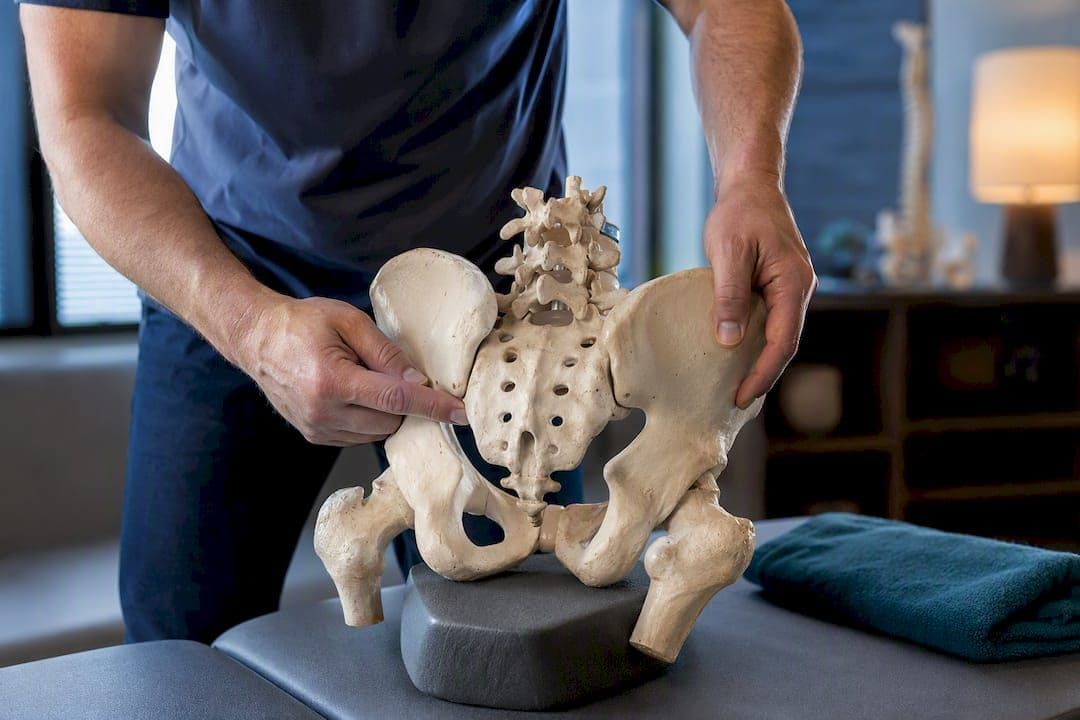
Lumbar (lower back) discs: Mayo Clinic notes that a herniated disk causes pain, numbness, or weakness in a leg depending on its location, with symptoms often occurring on one side of the body. The classic presentation is sciatica: a sharp or burning pain running from the low back through the buttock and down one leg, sometimes reaching the foot. An L4–L5 disc issue often affects the top of the foot; L5–S1 problems frequently cause pain along the outer calf and heel.
Thoracic (mid-back) discs: These are rare, and they're deceptive. Harvard Health points out that thoracic disc problems often present with vague chest, abdominal, or radiating leg pain, which can mislead diagnosis for weeks. If you've had chest or abdominal symptoms that cardiac and GI workups haven't explained, and neurological signs emerge, a thoracic disc deserves consideration.
| Disc Region | Common Early Symptoms | Activities That Worsen It |
|---|---|---|
| Cervical (neck) | Neck pain, arm/hand tingling, finger numbness | Looking down at a screen, overhead reaching |
| Lumbar (lower back) | Low back ache, sciatica, foot tingling | Sitting, bending forward, lifting |
| Thoracic (mid-back) | Mid-back pain, vague chest/abdominal discomfort | Twisting, prolonged sitting, deep breathing |
"The specific symptom profile is driven by disc level: cervical issues typically radiate into the shoulder and arm, lumbar issues commonly cause sciatica down one leg." — Mayo Clinic
For a deeper look at leg-radiating pain specifically, shooting leg pain and what it reveals about disc problems covers the sciatica pattern in detail.
Pro Tip: Before your first appointment, write down exactly where the pain starts and where it travels. "It goes from my lower back into my left heel" is far more useful to a clinician than "my whole back hurts."
3. Which signs require emergency care and which can wait?
This is the most important distinction in the article. Most disc symptoms are uncomfortable but not dangerous. A few are emergencies.
Go to the emergency room immediately if you experience:
- Saddle anesthesia: numbness or tingling in the groin, inner thighs, or perineum
- Sudden loss of bowel or bladder control (incontinence or inability to urinate)
- Rapidly progressing weakness in one or both legs within hours
Miami Spine's clinical guidance is direct: these signs can indicate cauda equina syndrome, where the nerve bundle at the base of the spine is severely compressed. Without prompt surgical decompression, the result can be permanent paralysis or loss of bladder and bowel function.
"Emergency symptoms such as saddle anesthesia, sudden loss of bowel or bladder control, or rapidly progressing limb weakness require immediate medical attention because they can indicate cauda equina syndrome." — Miami Spine
For non-emergency symptoms, the Cleveland Clinic's guidance is to try conservative care and seek medical evaluation if symptoms persist beyond 4–6 weeks or worsen at any point. Don't wait out worsening pain just because it hasn't hit the six-week mark.
Pro Tip: If you call a triage nurse or emergency line, lead with the specific symptom: "I have numbness in my groin and I can't control my bladder." That phrasing triggers a different response than "my back really hurts."
4. What movements and triggers make disc pain worse?
Disc-related pain has a mechanical signature. MedlinePlus confirms that Valsalva-type actions — coughing, sneezing, laughing, straining during a bowel movement — sharply increase pressure inside the disc and can intensify nerve pain almost instantly. If a sneeze sends a jolt of pain down your leg, that's a meaningful clinical clue.
Common aggravating factors:
- Bending forward at the waist (especially for lumbar discs)
- Prolonged sitting, particularly in a slumped posture
- Lifting with a rounded back
- Neck flexion (looking down at a phone for extended periods)
- Twisting the spine under load
Positions that often provide relief include lying on your back with knees bent, gentle walking, or for some cervical cases, mild neck extension. Relief in extension and worsening in flexion is a pattern worth noting for your clinician.
Safe immediate modifications:
- Bend at the hips and knees, not the waist, when picking anything up
- Avoid sitting for more than 30–40 minutes without a short walk
- Sleep on your side with a pillow between your knees to reduce lumbar rotation
Pro Tip: Keep a two-day symptom log noting what you were doing when pain spiked. Patterns emerge quickly, and that log becomes one of the most useful things you can hand a clinician.
5. How clinicians diagnose disc problems
The clinical exam comes first. Imaging is not the automatic first step, and for most early presentations, it doesn't need to be.
- Imaging: — Plain X-rays often come first to rule out fracture or instability. MedlinePlus is clear that MRI is indicated when nerve compression is suspected or when symptoms don't improve with conservative care. MRI shows the disc itself, the degree of herniation or bulge, and whether a nerve root is being compressed.
"The exam-first approach means most patients with early disc symptoms don't need an MRI on day one. The clinical picture guides the decision." — MedlinePlus
6. What is the realistic recovery timeline for early disc symptoms?
The honest answer is that most people do well. Cleveland Clinic data shows most herniated discs improve on their own with conservative care within about 4–6 weeks. That's the benchmark to hold in mind.
| Timeframe | What to Expect | Action |
|---|---|---|
| Week 1 | Acute pain, possible muscle spasm, limited mobility | Rest briefly, gentle movement, avoid aggravating activities |
| Weeks 2–4 | Gradual improvement, reduced radiating pain | Progressive walking, gentle stretching, start guided rehab |
| Weeks 4–6 | Major improvement for most people | Resume normal activity with modifications |
| Beyond 6 weeks | Symptoms unchanged or worsening | Seek clinical evaluation, consider imaging |
- If symptoms worsen significantly at two weeks, don't wait for the six-week window.
- If radiating pain is unchanged at four weeks, schedule a clinical evaluation.
- If red flags appear at any point, go to the emergency room.
After the acute phase, movement matters. Excessive inactivity weakens the muscles that support the spine and tends to extend recovery rather than shorten it. Gentle yoga for back pain can be a practical option once the acute phase settles, provided you avoid deep forward folds and loaded twisting.
Pro Tip: Track your pain on a simple 0–10 scale each morning. A downward trend over two weeks, even slow, is a good sign. A flat or rising trend at two weeks is a reason to call a clinician.

7. What should you do first when symptoms start?
The first 48–72 hours set the tone for recovery. The goal is to reduce irritation without creating the secondary problem of deconditioning from too much rest.
Do:
- Take short, gentle walks every few hours
- Apply ice for the first 48 hours (15–20 minutes at a time) to reduce inflammation, then switch to heat for muscle tension
- Sleep in a position that reduces nerve tension (side-lying with knees bent)
- Use over-the-counter NSAIDs (ibuprofen, naproxen) as directed if tolerated
- Start a symptom log
Don't:
- Stay in bed for more than a day or two
- Lift anything heavy or twist under load
- Sit for prolonged periods without breaks
- Push through sharp radiating pain during any exercise
For a structured approach to the first days, this home pain relief workflow walks through a step-by-step plan. When self-care isn't moving the needle by week two, the next step is a clinical evaluation for physical rehab or chiropractic assessment.
- Gentle walking (start with 5–10 minutes, increase daily as tolerated)
- Supported stretching: knee-to-chest, gentle cat-cow, or supine piriformis stretch
- Postural correction at your workstation (screen at eye level, lumbar support)
- Progressive return to normal activity, guided by symptom response
Pro Tip: Avoid the temptation to test your limits by doing the exact movement that caused the pain. Functional recovery happens through gradual loading, not through proving the disc is healed.
8. How Essentialchirocare evaluates and manages early disc problems
Essentialchirocare's approach to early disc symptoms starts with a thorough clinical evaluation before any treatment decision is made. The clinic's providers assess neurological function, movement patterns, and symptom history to determine whether the presentation fits conservative chiropractic care, physical rehabilitation, spinal decompression, or a referral for imaging.
What the evaluation typically includes:
- Full symptom timeline (when it started, what triggered it, what makes it better or worse)
- Neurological screening (strength, reflexes, sensation, functional movement tests)
- Postural and gait assessment
- Review of any prior imaging you bring
Treatment options offered at Essentialchirocare:
- Chiropractic adjustments to restore joint mobility and reduce nerve irritation
- Physical rehabilitation to rebuild supporting muscle strength and correct movement patterns
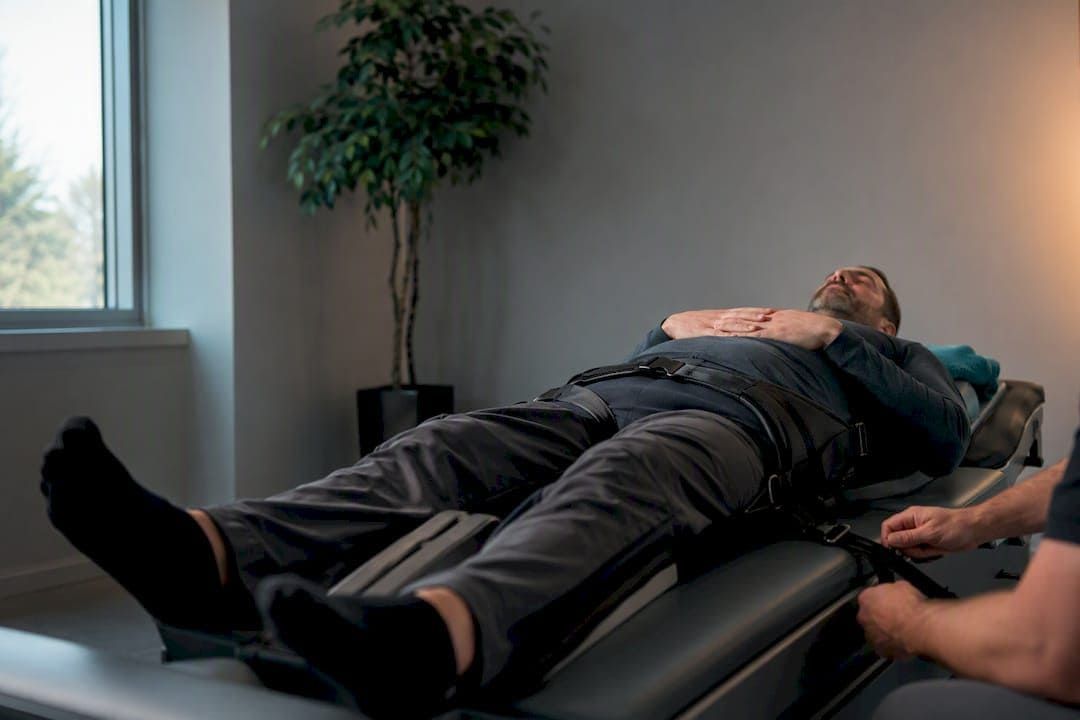
- Spinal decompression therapy for cases where disc bulge or herniation is contributing to nerve compression
- Sports injury protocols for active adults whose disc symptoms are activity-related
When symptoms suggest nerve compression that hasn't responded to conservative care, or when red-flag screening raises concern, the clinic refers for MRI or specialist consultation. The goal is to match the level of care to the clinical picture, not to escalate prematurely.
"Catching disc problems early means more conservative options stay on the table. Waiting until symptoms are severe often narrows the path." — Essentialchirocare clinical perspective
What to bring to your first visit: a written symptom timeline, any prior imaging (X-ray, MRI), a list of current medications, and notes on what positions or activities worsen or relieve your pain.
Essentialchirocare serves patients across Tampa, Brandon, Sarasota, Lakeland, and Pinellas Park, with online scheduling available at essentialchirocare.com.
Pro Tip: Bring your symptom log from the first week. A clinician who can see your pain trend over time makes a faster, more accurate assessment than one working from memory alone.
Key Takeaways
Recognizing the early signs of disc problems, acting on red flags immediately, and starting conservative care within the first week gives most people the best chance of recovering within 4–6 weeks without surgery.
| Point | Details |
|---|---|
| Early warning signs | Radiating pain, tingling along a nerve path, and subtle muscle weakness are the clearest early indicators. |
| Emergency red flags | Saddle anesthesia, sudden bowel/bladder loss, or rapid limb weakness require an ER visit, not a wait-and-see approach. |
| Recovery benchmark | Most herniated discs improve with conservative care within 4–6 weeks; seek evaluation if symptoms don't improve by then. |
| First-week action | Brief rest, gentle walking, ice/heat, and a symptom log are the right starting moves. |
| Essentialchirocare | Offers clinical evaluation, chiropractic adjustments, physical rehab, and spinal decompression across West Central Florida. |
Why catching disc problems early actually changes the outcome
The conventional framing around disc problems tends to be reactive: wait until the pain is bad enough, then get imaging, then decide. What that approach misses is that early recognition keeps the full range of conservative options available. Once symptoms have been present for months and muscle atrophy has set in, rehab takes longer and the window for non-surgical resolution narrows.
The part most people underestimate is the functional weakness piece. Patients often arrive describing "just some back pain" and then, during a simple toe-raise test, discover they've lost meaningful strength on one side without realizing it. That finding changes the treatment plan immediately. It also changes the urgency. A patient who knows their nerve is being compressed enough to cause measurable weakness is far more motivated to follow through with rehab than one who thinks they have a sore back.
Early pain intervention isn't about being alarmist. It's about preserving options. The patients who do best are the ones who caught the pattern early, understood what it meant, and acted before the disc problem became the defining feature of their daily life.
Ready to get a clinical evaluation at Essentialchirocare?
If your symptoms have been building for more than a week, or if you've had that one sharp episode that changed the character of your pain, a clinical evaluation is the clearest next step. Essentialchirocare offers a structured first-visit assessment covering neurological screening, movement analysis, and a personalized care plan, without the wait times of a hospital referral pathway.
The clinic's providers work with disc-related presentations daily, including herniated and degenerative disc cases, sciatica, and sports-related spinal injuries. Chiropractic care at Essentialchirocare is available across Tampa, Brandon, Sarasota, Lakeland, and Pinellas Park. New patient forms are available online, and appointments can be booked directly through the website.
Bring your symptom timeline, any prior imaging, and your medication list. The first visit focuses on understanding your specific presentation before any treatment begins. Book your evaluation and get a clear picture of what's happening and what to do about it.
Authoritative sources and further reading
These are the primary clinical sources used throughout this article. Each covers a specific aspect of disc problems and is selected for clinical reliability and alignment with current guidelines.
- Herniated Disk: Symptoms and Causes — Mayo Clinic: Covers symptom patterns by disc location, risk factors, and red-flag signs. One of the most widely cited clinical references for herniated disc presentations.
- Herniated Disk (Bulging Disk): Symptoms and Treatment — Cleveland Clinic: Covers incidence data (3 million+ U.S. cases annually), the 4–6 week recovery benchmark, and conservative care guidance.
- Herniated Disk — MedlinePlus Medical Encyclopedia: Covers the exam-first diagnostic approach, Valsalva aggravation, and when MRI is indicated. Published by the U.S. National Library of Medicine.
- Herniated Disk: A to Z — Harvard Health: Covers the typical progression from chronic tightness to acute nerve pain, and the atypical presentation of thoracic disc problems.
Recommended