Fix Neck Pain From Sleeping Tonight: 3 Pillow and Position Fixes
Fix Neck Pain From Sleeping Tonight: 3 Pillow and Position Fixes
Most morning neck pain comes from mechanics, not disease: an awkward sleep position, the wrong pillow, or a mattress that lets your spine sag out of alignment overnight. Tonight, try three things. Swap a stacked or overstuffed pillow for a lower, contoured one, do a few minutes of gentle neck movement before you get out of bed, and apply heat or ice depending on how fresh the pain feels. If you have fever, numbness, or weakness spreading down an arm, skip the home fixes and get checked out.
TL;DR:
- Using a lower, contoured pillow and adjusting sleep position from stomach to back or side can significantly reduce morning neck pain caused by mechanical strain.
- Applying ice within the first 48 hours of sharp pain and then switching to heat helps manage inflammation and relax tight muscles effectively.
- Gentle, pain-free movements like chin tucks and shoulder rolls each morning can alleviate stiffness and restore neck mobility without risking further injury.
- If pain persists beyond a week or worsens despite home care, consulting a healthcare professional is recommended, especially if symptoms include numbness or weakness.
- Proper pillow shape, mattress firmness, room temperature, and bedroom setup play critical roles in maintaining neck alignment and preventing recurrent pain.

Table of Contents
- What Causes Neck Pain From Sleeping?
- How Do You Relieve Neck Pain Right Now?
- What's the Best Sleeping Position for Neck Pain?
- What Stretches Help a Stiff Neck in the Morning?
- When Should You See a Doctor for Neck Pain?
- Can Chiropractic Care Help With Neck Pain From Sleeping?
- Does Your Bedroom Setup Affect Neck Pain?
- A Realistic Timeline for Getting Better
- When Home Fixes Aren't Enough, Essential ChiroCare Can Help
- Where to Learn More About Neck Pain and Sleep
- Sources
- FAQ
What Causes Neck Pain From Sleeping?
Your neck has to hold roughly ten to twelve pounds of head weight in a neutral line for six to eight hours straight, unsupervised. Most nights it manages fine. Some nights it doesn't, and the reasons are almost always mechanical.
Stomach sleeping is the biggest offender. It forces your head to rotate sharply to one side for hours, twisting the joints and straining the muscles that run along your cervical spine. Add a pillow that's too thick, too flat, or stacked two high, and you're asking your neck to hold an unnatural angle all night long. Neck pain affects roughly 10% to 20% of adults at any given time, and overuse or awkward sleep posture is a leading trigger.
Daytime habits set the stage, too. Hours hunched over a phone or laptop, the posture doctors nickname "tech neck," leave your shoulder and neck muscles already tight and fatigued by bedtime. That fatigue makes it easier for one bad sleep position to push things over the edge into a genuinely stiff, painful morning.
A few other contributors worth flagging:
- Recent trauma, even a minor fender bender or an awkward fall, can make your neck far more sensitive to normal sleep positions for weeks afterward.
- Existing cervical issues like arthritis or a bulging disc lower your tolerance for anything but a well-supported neutral position.
- Old, flattened pillows lose their ability to fill the gap between your neck and the mattress, which lets your head tip into a bad angle without you noticing.
- Poor sleep quality itself raises your risk. People with moderate to severe sleep disturbances are more likely to develop chronic musculoskeletal pain within a year compared with people who sleep well, which means the stiffness and the bad sleep can start feeding each other.
How Do You Relieve Neck Pain Right Now?
The good news first: most morning neck stiffness resolves within a few days using nothing more than conservative home care. Here's the order that actually works.
- Pick ice or heat based on timing. If the pain just started (within the last day or two) and feels sharp or inflamed, ice for 15 to 20 minutes a few times a day. After 48 hours, switch to heat, a heating pad, warm shower, or hot water bottle, to relax the muscles that have tightened up around the joint.
- Take an OTC anti-inflammatory if needed. Ibuprofen or naproxen can knock down swelling and pain enough to let you move more normally. Don't run these for more than a week or two without checking with a doctor, since prolonged NSAID use carries its own stomach and kidney risks.
- Move, don't brace. Gentle range-of-motion, slow nods, easy shoulder rolls, and short walks keep blood flowing to the area and prevent the muscles from locking up further. Skip the neck brace unless a clinician specifically recommends one; prolonged immobilization tends to slow recovery rather than help it.
- Fix tonight's setup before you go to bed again. Pull any second pillow out from under your head, swap to a lower profile option if you can, and consider rolling a small towel into a cervical roll to slide under your neck for extra support.
Avoid the instinct to aggressively stretch or "crack" a stiff neck yourself. Sudden jerks or forced rotation on an already irritated joint can turn a two day annoyance into a two week problem. For more structured conservative techniques, this neck pain management guide walks through additional relief strategies you can layer on top of these.
Pro Tip: Test one variable at a time. If you change your pillow, your position, and add a new mattress topper all in the same week, you won't know which fix actually worked when the pain improves.
What's the Best Sleeping Position for Neck Pain?
Back and side sleeping keep your cervical spine roughly straight. Stomach sleeping doesn't, because it forces your neck into rotation and extension for hours at a stretch, which is exactly the combination that irritates the small joints between your vertebrae. Sleep specialists consistently point to back and side positions as the safer defaults, with stomach sleeping flagged as the one to break if you can.
Pillow choice has to match your position, not just your personal preference for soft or firm.
- Back sleepers do best with a medium loft pillow that supports the natural curve of the neck without pushing the head too far forward.
- Side sleepers need a higher loft pillow, because there's a bigger gap to fill between the ear and the shoulder. Too low here, and the neck bends downward all night.
- Stomach sleepers should use a low or flat pillow, or none at all, since anything with more loft just increases the extension angle at the neck.
- A cervical roll or contour pillow can be worth trialing if standard pillows aren't cutting it. Pillow shape and loft directly affect neck alignment, and a contoured design gives the neck support a flat pillow can't.
Give any new pillow setup three to five nights before judging it. Your neck muscles have adapted to the old setup, even if that setup was bad for you, so a night or two of feeling "off" doesn't mean the new pillow is wrong.
Pillows lose loft over time , usually within one to two years of regular use, and a flattened pillow stops doing its job even if it looks fine. If you can't remember the last time you replaced yours, that's probably your answer. Avoid stacking two pillows to compensate for a flat one; it changes the angle unevenly and often makes things worse, not better. Mattress firmness matters too. A mattress that's too soft lets your hips and shoulders sink while your neck stays propped up by the pillow, throwing off the whole spinal line from hips to head.
For related guidance on getting your whole spine into a better position overnight, see how to sleep with back pain, which covers pillow and mattress interactions from the lower back's perspective.
What Stretches Help a Stiff Neck in the Morning?
A short, gentle routine done while you're still warm from bed works better than one done cold, hours later. Keep everything pain-limited: if a movement hurts, back off the range, don't push through it.
- Chin tucks : Gently pull your chin straight back, like you're making a double chin, hold two seconds, repeat 10 times.
- Side-to-side rotation : Slowly turn your head toward each shoulder as far as comfortable, hold briefly, 5 reps per side.
- Shoulder rolls : Roll both shoulders backward in slow circles for 10 reps to loosen the upper back muscles that connect into the neck.
- Levator scapulae stretch : Tilt your head slightly forward and to one side while gently pulling with your opposite hand, holding 20 to 30 seconds per side.
Skip anything ballistic, no fast bouncing stretches or forced end-range holds, while the neck is still acutely painful. That's how a manageable stiffness turns into a strain.
Pro Tip: Set a phone reminder for a 30 second posture break every hour during the workday. The morning routine undoes overnight tightness, but hours of desk posture can rebuild it by afternoon.

When Should You See a Doctor for Neck Pain?
Most sleep-related stiffness is a short-term nuisance, not a medical emergency. But a few symptoms change that calculation immediately.
Seek urgent care if you notice fever alongside neck stiffness, progressive weakness or numbness in an arm or hand, changes in bowel or bladder control, severe dizziness, or if the pain follows a significant trauma like a fall or car accident. Certain causes of morning neck stiffness are genuinely urgent, including infections like meningitis, and those need same-day evaluation, not a wait-and-see approach.
For everything else: give it about a week. If conservative care, better pillow, movement, ice or heat, hasn't improved things noticeably in that time, or if symptoms are getting worse rather than better, it's worth having a clinician take a look. A typical visit involves a history, a hands-on movement and posture exam, and targeted tests for nerve involvement. Imaging like X-rays or an MRI usually isn't ordered right away unless something in that exam points to it.
Can Chiropractic Care Help With Neck Pain From Sleeping?
Home fixes solve most cases. But when neck pain keeps coming back despite a good pillow and a cleaned up sleep position, or when a specific injury seems to be behind it, a hands-on evaluation can find what a mirror and a search engine can't.
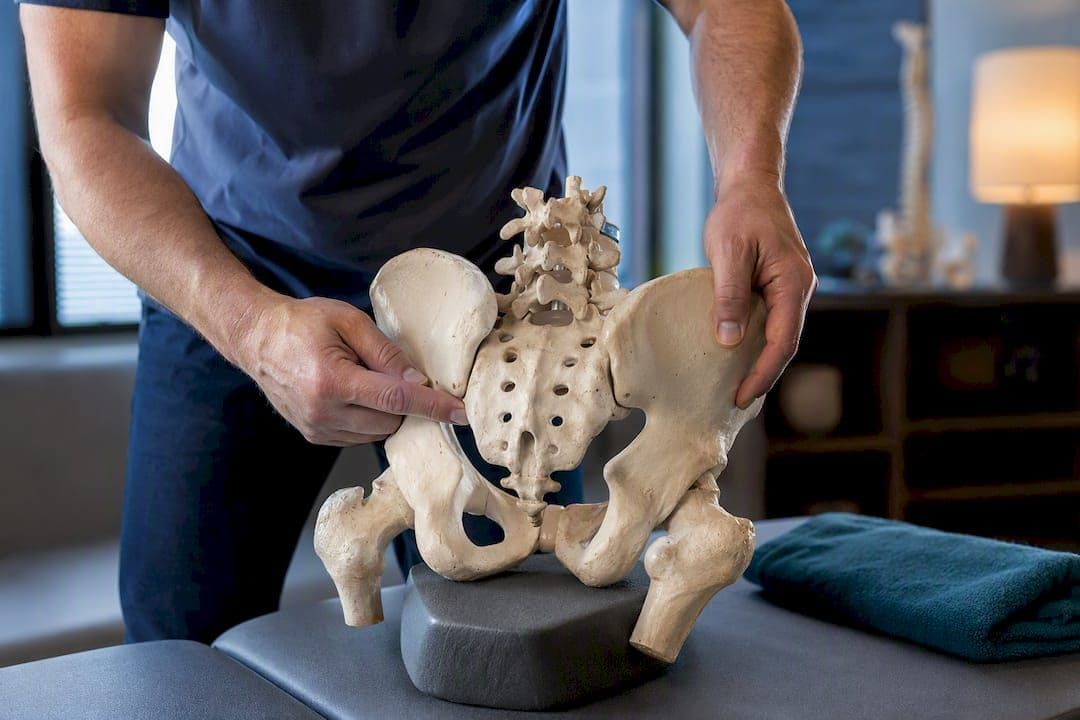
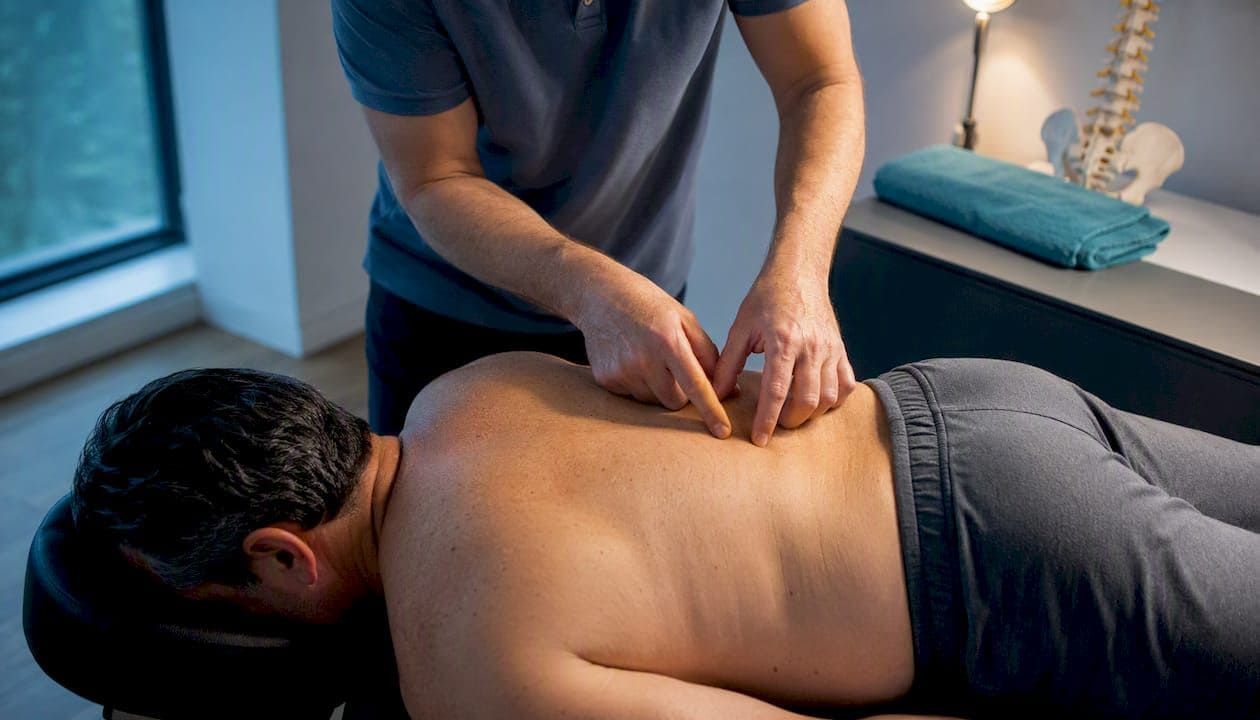
A typical evaluation looks at your medical history, watches how your neck and shoulders move, and uses targeted manual tests to isolate which joints or muscles are actually driving the pain. From there, care commonly includes:
- Manual therapy and spinal alignment techniques to restore normal joint motion.
- Active rehab exercises that build strength and control rather than just passive stretching.
- Direct education on sleep posture and pillow setup specific to your neck, not generic advice.
Clinic care tends to help most when pain has lasted more than a week or two, keeps recurring in a pattern, or followed a specific incident like whiplash. Straightforward, one-off stiffness after a rough night usually responds fine to the home steps above. For related tightness that often accompanies neck pain, active release technique for shoulder tightness explains one hands-on approach clinics use for the shoulder and upper back muscles that connect directly into the neck.
Does Your Bedroom Setup Affect Neck Pain?
The pillow gets all the attention, but the room around it matters too. Bed height affects how you get in and out of bed, and a bed that's too low or too high can force awkward neck and back positions during the transition, which adds up over months of repetition.
Headboard position matters if you read, watch TV, or scroll your phone propped up in bed. Sitting semi-upright without real back support forces your neck to jut forward to see a screen at the foot of the bed, which is tech neck's nighttime cousin. If you read in bed regularly, a wedge pillow that supports your whole upper back, not just your head, keeps your neck in a far more neutral line.
Room temperature plays a role too, indirectly. A room that's too cold can make you curl into a tighter, more flexed sleep position seeking warmth, which often means more neck flexion than you'd choose consciously. A humidifier or better bedding might solve a problem you were blaming on your pillow.
Finally, check your mattress's edge and your bed's width. If you're sleeping near the edge because a partner or pet takes up most of the space, you're more likely to end up in an awkward, unsupported position during the night just to avoid falling off. Sometimes the fix isn't a new pillow at all. It's simply reclaiming more of the bed.
A Realistic Timeline for Getting Better
Most people see real improvement within a few nights of making one deliberate change, not a complete overhaul, just one. Test a new pillow height for three or four nights before judging it, and keep a quick note of how you feel each morning. If a week goes by with no change, that's your signal to loop in a professional rather than keep guessing.
When Home Fixes Aren't Enough, Essential ChiroCare Can Help
If you've tried the pillow swap, the morning stretches, and a week of patience, and the stiffness keeps coming back, that's usually your cue that something structural needs a closer look, not another new pillow. Specialized care focuses on root-cause evaluation instead of another round of guesswork, with experienced doctors providing treatment for everyday neck and back pain.
Persistent neck pain, especially after an auto accident, a sports injury, or months of unresolved stiffness, benefits from a hands-on assessment that actually finds what's driving it. Essential ChiroCare's chiropractic care and adjustments start with a full history and movement exam, then build a plan around manual therapy, spinal alignment, and posture correction specific to your sleep setup and daily habits. Patients recovering from whiplash or auto accident related injuries often need this kind of targeted, sequenced care rather than another week of home remedies. If your neck pain has lasted more than a couple of weeks or followed a specific injury, booking a first visit is the practical next step. Appointments can be scheduled online through clinics in several locations.
Where to Learn More About Neck Pain and Sleep
- WebMD's guide to stiff neck remedies covers prevalence and safe home care options.
- Harvard Health's piece on neck pain and sleep explains the link between poor sleep quality and chronic pain risk.
- Cleveland Clinic's stiff neck overview details causes, typical recovery timelines, and red-flag symptoms.
- Sleep Foundation's sleeping position guide breaks down which positions protect cervical alignment.
- HSS's pain specialist guidance on sleeping with neck pain offers clinical perspective on neutral spine positioning.
This article is general information, not a substitute for advice from a qualified doctor. Consult a qualified healthcare professional about your own circumstances before acting on anything here.
Sources
FAQ
How long does neck pain last from bad sleep?
Most sleep-related neck stiffness improves within a few days using ice or heat, gentle movement, and a better pillow setup. If it hasn't improved within about a week, or it's getting worse, see a clinician.
What are the common symptoms of neck pain from sleeping?
Typical symptoms include stiffness and reduced range of motion, a dull ache that worsens with certain movements, and sometimes tightness that radiates into the shoulder or upper back. Sharp pain, numbness, or weakness are not typical and warrant a closer look.
How do you fix a stiff neck fast?
Apply ice if the pain is fresh or heat if it's been more than 48 hours, take an OTC anti-inflammatory if needed, and move gently with chin tucks and shoulder rolls rather than staying still. Fixing tonight's pillow setup prevents the same stiffness from returning tomorrow.
What is the best exercise to help with neck pain?
Chin tucks are widely recommended as a first move because they gently realign the neck without forcing range of motion. Pair them with shoulder rolls and a levator scapulae stretch, done slowly and only within a pain-free range.
Can a chiropractor help with neck pain from sleeping?
Yes, particularly when pain is recurring or followed an injury rather than a single bad night. Essential ChiroCare's [physical rehab](https://essentialchirocare.com/physical-rehab) and chiropractic services target the underlying joint and muscle issues that keep triggering morning stiffness, rather than just treating each flare-up separately.
Recommended