
6 Safest Degenerative Disc Disease Exercises with McKenzie Cues
The safest starting point combines short daily walks, gentle spinal mobility work, and core stabilization moves like the bird-dog and dead bug. These build support around the disc without loading it. Watch for centralization with extension exercises, a sign the exercise is working, and stop immediately if leg pain worsens, spreads, or comes with numbness, weakness, or bladder changes, which calls for a clinician right away.
TL;DR:
- Walking is the most effective low-impact activity for disc nutrition because rhythmic loading helps pump fluid through the disc, unlike stretching alone.
- Core stabilization exercises like bird-dog and dead bug train the deep stabilizers without placing excessive load on the spine, reducing injury risk.
- Stop any exercise immediately if leg pain spreads, worsens, or is accompanied by numbness or bladder changes, and seek clinical evaluation.
- Gradually increase activity over six weeks, starting with mobility and short walks, then adding core exercises and light resistance if symptoms stay stable.
- Red flags such as persistent or worsening pain, weakness, or bladder control issues require prompt professional assessment rather than continued home treatment.

Table of Contents
- Quick Shortlist: 6 Safest Degenerative Disc Disease Exercises to Try First
- How to Do Each Exercise: Mobility, Core, Hips, Extension, and Walking
- How to Build a Safe Exercise Program Without Overdoing It
- When Home Exercise Isn't Enough: The Clinical Perspective
- What Realistic Progress Actually Looks Like
- How Essential ChiroCare Supports Your Exercise Program
- What Success Actually Looks Like Over Time
- Sources
- FAQ
Quick Shortlist: 6 Safest Degenerative Disc Disease Exercises to Try First
If you only have ten minutes, start here. These six moves show up across nearly every credible rehab protocol for spinal disc issues, and they share one thing in common: none of them load the spine in a compromised position.
- Walking: Begin with short periods of walking on flat ground, gradually increasing duration most days as tolerated.
- Pelvic tilts: Lie on your back, flatten your lower back into the floor, hold briefly, release.
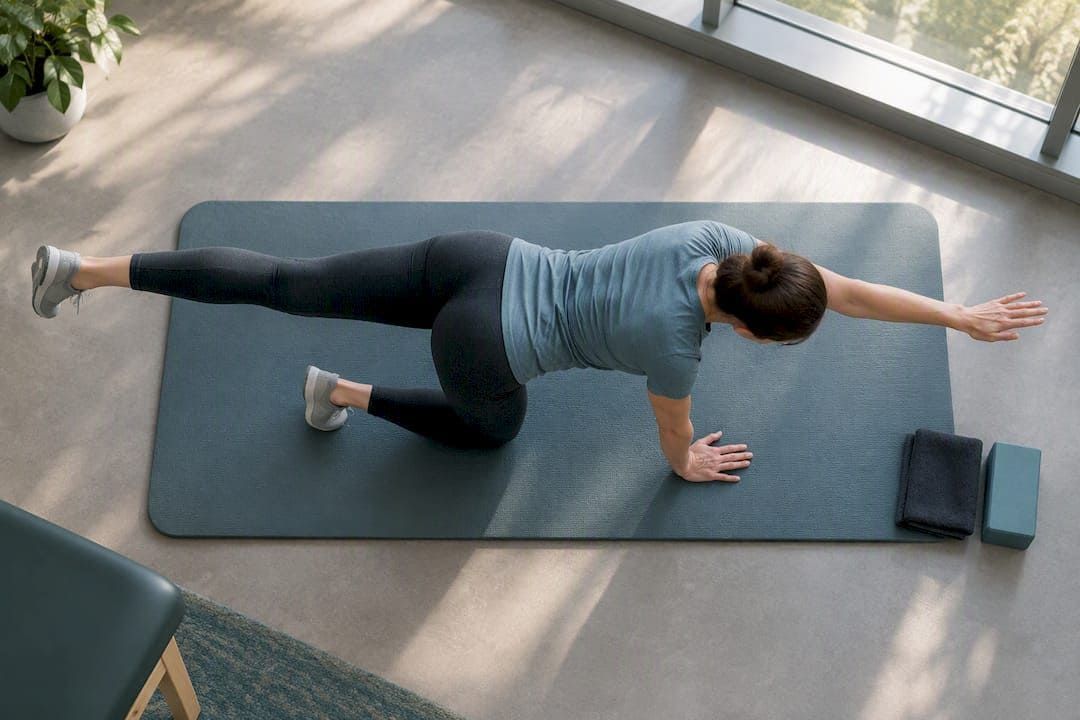
- Bird-dog: From hands and knees, extend one arm and the opposite leg while keeping your spine still.
- Dead bug: On your back, lower opposite arm and leg toward the floor while your core stays braced.
- Cat-cow: Alternate arching and rounding your spine on hands and knees to restore gentle mobility.
- Hamstring stretch or knee-to-chest: Loosen the posterior chain, which takes tension off the lower back.
Walking alone deserves special mention. A staged rehab protocol built around movement, not static stretching, points to daily walking as one of the more effective habits for disc nutrition, largely because rhythmic loading pumps fluid through the disc in a way that stretching alone doesn't replicate.
How to Do Each Exercise: Mobility, Core, Hips, Extension, and Walking
Good form matters more than volume here. Rushing reps on a disc that's already irritated tends to backfire, so slow down and treat every rep as a form check.
1. Cat-Cow (Mobility) Start on hands and knees, wrists under shoulders, knees under hips. Inhale as you drop your belly and lift your chest (cow), exhale as you round your spine toward the ceiling (cat). Move slowly, keep your neck relaxed, and never force the end range. Do 8 to 10 slow cycles, once or twice daily. Regression: reduce the range of motion. Progression: hold each end position for two seconds.
2. Pelvic Tilts (Core Activation) Lie on your back, knees bent, feet flat. Flatten your lower back against the floor by gently tightening your abdominal muscles, hold for 5 seconds, release. Breathe normally, don't hold your breath, and keep the movement small. Aim for multiple sets most days of the week.
3. Bird-Dog (Stability) On hands and knees, extend your right arm forward and left leg back, keeping your hips level and spine neutral. Hold 3 to 5 seconds, return, switch sides. The Harvard Health guide to back-strengthening exercises recommends this kind of targeted strengthening performed regularly, since it trains the deep stabilizers that support the spine without adding compressive load. Regression: extend just the arm or just the leg. Progression: add a light ankle weight once you can hold the position without wobbling.
4. Dead Bug (Core Control) Lie on your back, knees bent at 90 degrees, arms pointed at the ceiling. Slowly lower your right arm and left leg toward the floor while keeping your lower back pressed into the mat, then return and switch. This teaches your core to resist movement instead of creating it, which is exactly the skill that protects a degenerating disc during daily activity.
5. Hamstring Stretch and Knee-to-Chest (Mobility) For the hamstring stretch, lie on your back and loop a strap or towel around your foot, straightening the leg gently. For knee-to-chest, pull one knee toward your chest and hold. The Mayo Clinic's exercise guidance for back pain suggests starting with a handful of repetitions and increasing gradually, stopping if pain worsens or you notice any numbness or tingling.
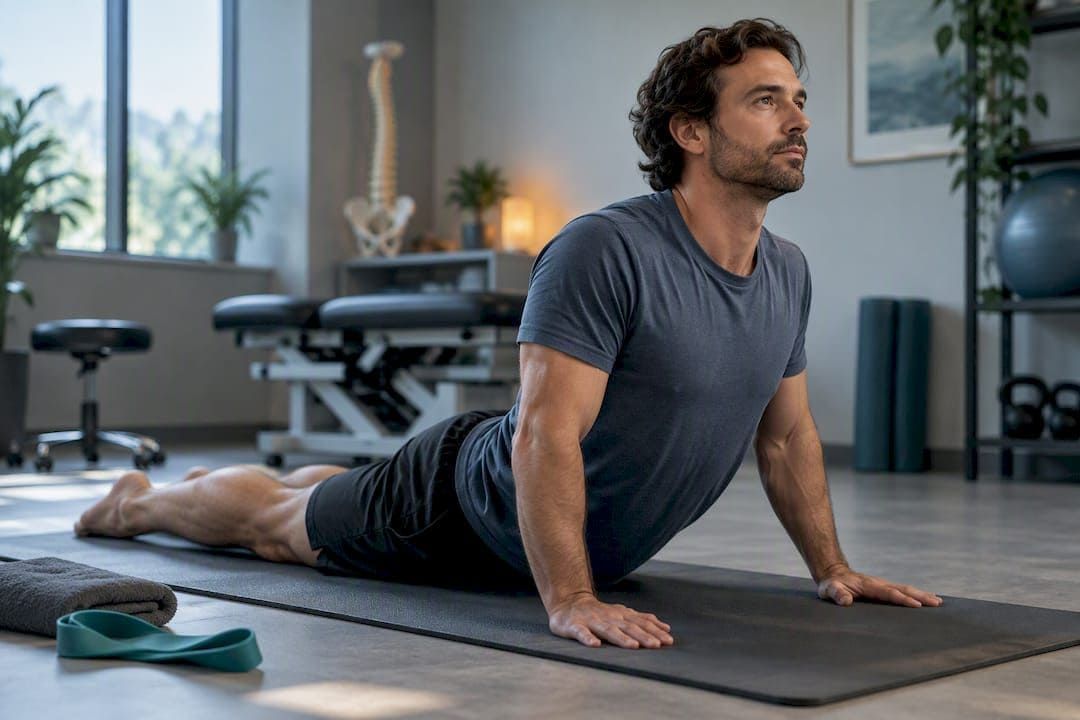
6. McKenzie Extension (Centralization Work) Lie face down, then prop up onto your forearms or press up onto your hands while keeping your hips on the floor, arching your lower back. The goal isn't range of motion, it's watching where the pain goes. Centralization, meaning leg or buttock pain that moves back toward the center of your spine, is a good sign and means the exercise is helping. If pain spreads further down your leg instead, that's peripheralization, and it means you should stop that exercise and check in with a clinician.
7. Walking (Aerobic Base) Start at 10 to 15 minutes on flat, even ground. Patient-facing exercise guides consistently list walking as one of the most practical, low-risk options for people managing disc-related back pain, largely because it's easy to control and doesn't require special equipment.
Pro Tip: Exhale during the effort phase of any core exercise, like when you're extending your leg in bird-dog. Holding your breath spikes pressure inside your abdomen and spine, which works against the stability you're trying to build.
How to Build a Safe Exercise Program Without Overdoing It
A reasonable six-week arc looks like this: weeks one and two focus on daily mobility work and short walks, nothing intense. Weeks three and four add core sets three times a week once mobility feels comfortable. By weeks five and six, if symptoms are stable, light resistance work can enter the picture.
Track two things after every session: your pain level on a 0 to 10 scale, and how far or long you walked without symptoms flaring. If the number is dropping or holding steady while your walking time climbs, the program is working.
Red flags that mean stop and call a clinician:
- Pain that spreads further down the leg instead of centralizing toward the spine
- New numbness, tingling, or weakness in the leg or foot
- Any change in bladder or bowel control
- Pain that gets progressively worse for more than 48 to 72 hours despite rest and modified activity
A useful benchmark from clinical guidance: strengthening and stretching routines aimed at the back, abdominal, and hip muscles are meant to be done at least twice a week to meaningfully lower the odds of recurring pain. Anything less tends to produce inconsistent results.
When Home Exercise Isn't Enough: The Clinical Perspective
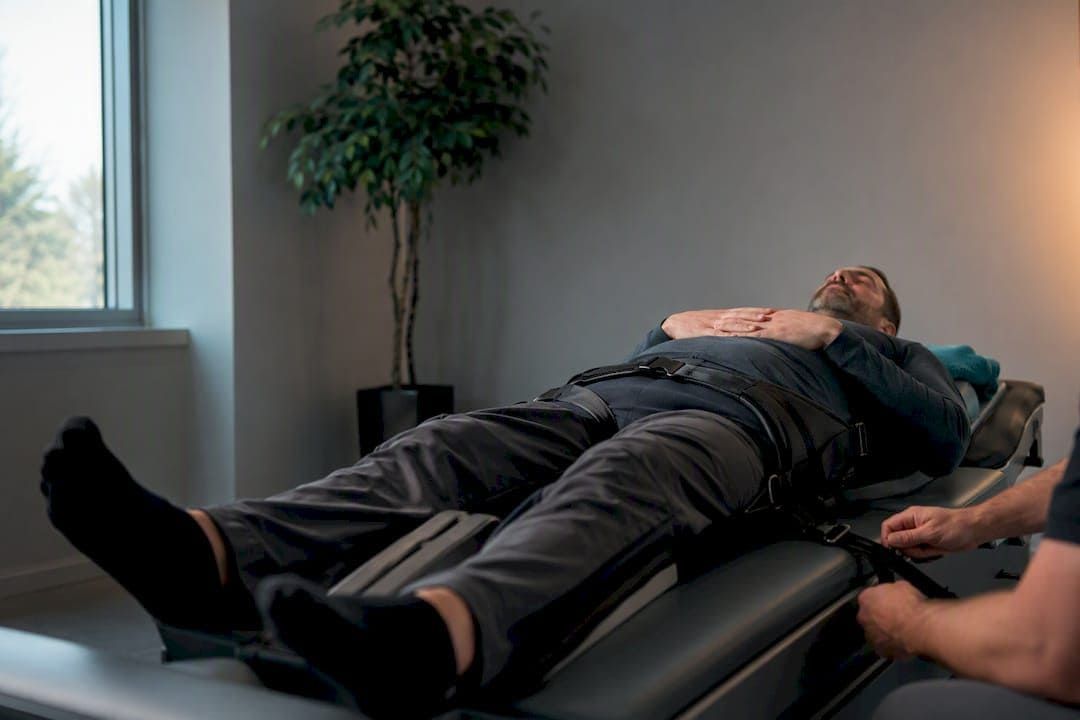
Home programs work well for a lot of people, but not everyone responds the same way. Clinicians typically move a patient toward supervised resistance training or manual therapy when home exercises plateau, when centralization stalls, or when posture and gait faults keep undoing progress between sessions. Common in-clinic adjuncts include manual therapy, spinal decompression, and posture or gait retraining aimed at correcting the mechanics that home exercise alone can't always fix.
Bring specifics to your visit: a short activity log, your pain scores before and after exercise, and notes on which movements helped or made things worse. That detail speeds up how quickly a clinician can adjust your plan.
What Realistic Progress Actually Looks Like
Many people notice more stable symptoms within four to six weeks of consistent walking and core work, not overnight relief. The better goal is functional, not a pain score of zero: longer walks, fewer flare-ups, less dread around bending or lifting. Sleep, stress, and even weather can nudge symptoms up or down day to day, and that variability is normal, not a sign the program has failed.

How Essential ChiroCare Supports Your Exercise Program
Home exercise handles a lot of the work, but some cases need more support than a self-guided routine can offer. That's especially true when centralization stalls, when pain keeps returning despite consistent effort, or when any of the red flags above show up. Essentialchirocare builds on the foundation covered in this guide with personalized exercise progressions and manual muscle therapy designed to pick up where a home program plateaus.
For patients dealing with more stubborn disc-related pain, spinal decompression therapy is often paired with hands-on rehab to reduce pressure on the affected segment while strength work continues. If you've been doing the exercises above for a few weeks without the progress you'd expect, or if you're seeing any red flags, it's worth getting a professional look at your spine rather than pushing through on your own. Book an evaluation through Essentialchirocare's chiropractic care page and get a plan built around your specific disc levels and symptoms.
What Success Actually Looks Like Over Time
Most people expect a straight line from pain to relief. It rarely works that way with a degenerating disc, and the exercise programs that hold up over time are the ones built around that reality instead of fighting it.
The biggest misconception I see is patients treating a good week as proof they can skip the boring maintenance work, the daily walk, the pelvic tilts, the bird-dogs, once symptoms calm down. That's backwards. The exercises that got you stable are the same ones that keep you stable. Disc tissue doesn't heal the way a pulled muscle does, so consistency matters more than intensity for the long haul.
The second misconception is chasing zero pain as the goal. A disc with structural wear will occasionally remind you it's there, especially after a bad night's sleep or a stressful week. That's not regression. The better measuring stick is whether you can walk farther, sit longer, and bounce back faster from a flare than you could two months ago. Progress in this condition looks like resilience, not silence.
This article is general information, not a substitute for advice from a qualified doctor. Consult a qualified healthcare professional about your own circumstances before acting on anything here.
Sources
- Mechanical Diagnosis and Therapy (McKenzie) — NCBI Bookshelf
- Stretching and strengthening exercises to relieve and prevent lower-back pain — Harvard Health
- Back pain: Exercises to relieve it — Mayo Clinic
- 5 Exercises for Degenerative Disc Disease — WebMD
- Degenerative Disc Disease Exercises — Free protocol archive
FAQ
What Are the Do's and Don'ts for Degenerative Disc Disease?
Do prioritize low-impact movement like walking, core stabilization, and gentle mobility work, and do stop any exercise that causes pain to spread down the leg. Don't jump into heavy resistance training or high-impact activity before your core can control a neutral spine, and don't ignore new numbness, weakness, or bladder changes.
How Can I Recover From Disc Degeneration?
There's no full reversal of disc wear, but symptom stability and function improve for many people through consistent walking, core stabilization exercises like bird-dog and dead bug, and gentle extension work that promotes centralization. A staged protocol moving from mobility to core activation to functional strengthening tends to produce the most durable results.
What Foods Should I Avoid if I Have Degenerative Disc Disease?
There's no single food list clinically proven to worsen disc degeneration, but diets heavy in processed foods and added sugar are commonly linked to increased inflammation throughout the body, which can make pain feel worse. Maintaining a healthy weight also reduces the mechanical load on lower spine discs.
What Are the Symptoms of Degenerative Disc Disease at L5-S1?
L5-S1 degeneration often causes lower back pain that can radiate into the buttock or leg, sometimes with tingling or numbness following the path of the sciatic nerve. If that leg pain worsens or you notice weakness or bladder changes, that's a signal to get evaluated rather than continuing home exercises alone, and Essentialchirocare's sciatica treatment is one option for that kind of assessment.