
4 Week Clinician Backed Spinal Stenosis Exercises to Improve Walking

Essential ChiroCare Blogger • October 19, 2026

4 Week Clinician Backed Spinal Stenosis Exercises to Improve Walking

Yes, specific, low-impact exercises reduce spinal stenosis symptoms for most people and improve how far and how comfortably you can walk. The best approach combines gentle flexion-based mobility work, supported core strength, balance training, and supervised low-impact cardio. These exercises won't enlarge the spinal canal itself, so the goal is realistic: less pain, better function, longer walks. Stop immediately and seek urgent care if you develop new bladder or bowel changes, numbness in the groin area, or rapidly worsening leg weakness.

TL;DR:

  • Supervised, gradual exercise programs focusing on flexion, core strength, balance, and low-impact cardio can improve symptoms and walking distance but do not alter spinal anatomy.
  • Key mobility exercises include pelvic tilts, knee-to-chest stretches, and lower-trunk rotations, which are safe and directly target nerve pressure relief.
  • Avoid forceful lumbar extension, heavy lifting, high-impact activities, and aggressive twisting, especially if symptoms worsen or new bladder or bowel issues arise.
  • Progression should be symptom-controlled, starting with 5-10 minute daily routines and increasing intensity over weeks, always monitoring for delayed pain or weakness.
  • A personalized plan from a healthcare professional is essential, especially for those with balance issues, significant weakness, or complex medical backgrounds.
exercises for spinal stenosis

Table of Contents

Why Spinal Stenosis Exercises Work

Bending forward, technically called lumbar flexion, tends to open up the space inside the spinal canal and take pressure off compressed nerves. That's the mechanical reason pelvic tilts and knee-to-chest stretches show up in nearly every credible rehab protocol for this condition. Building strength in the core and hips gives the spine better support during daily movement, and that support matters more than most patients expect, since a weak trunk forces the lower back to absorb load it wasn't built to handle alone.

A systematic review analyzing intervention components across multiple clinical trials found that supervision was very common in successful exercise programs, and cycling appeared more often in programs that worked than in ones that didn't. The analysis of exercise treatments for lumbar spinal stenosis also found that flexion-based movement, aerobic conditioning, stretching, and trunk-strength work were common threads. Balance training, despite its practical importance for people with gait changes, was rarely included.

Here's the honest limitation: these programs improve symptoms and walking distance, but the underlying anatomy of the canal doesn't change. Trials vary in design and outcome measures, so expect meaningful but not miraculous results, and expect gradual, week-by-week gains rather than instant relief.

What Are the Best Exercises for Spinal Stenosis?

A safe routine moves through four categories: mobility, strength and core control, balance, and cardio. None of these require a gym membership or special equipment beyond a mat and maybe a stability ball.

Mobility exercises to start with

These flexion-based stretches are usually the first thing a physical therapist teaches, and for good reason. They're low-risk and directly target the mechanism that eases nerve compression.

  1. Pelvic tilts. Lie on your back with knees bent, flatten your lower back against the floor, and hold for about 10 seconds. Repeat for 5 to 10 reps.
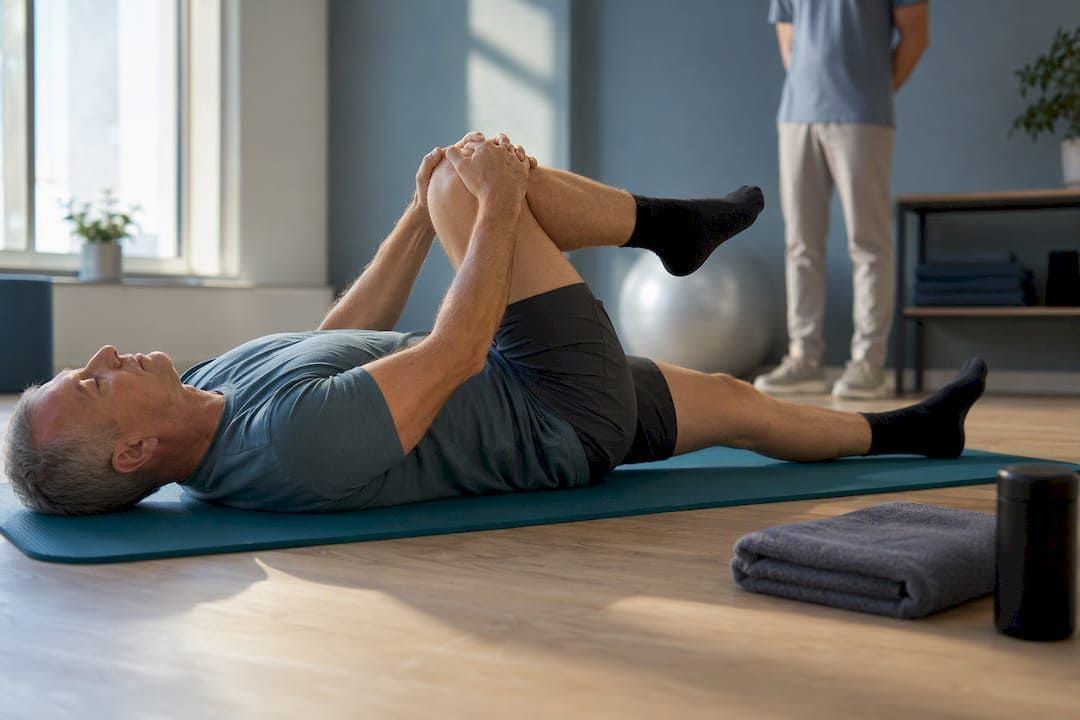
  2. Knee-to-chest stretch. Pull one knee toward your chest, hold for roughly 30 seconds, then switch legs. Progress to both knees together once single-leg feels easy.
  3. Lower-trunk rotations. Knees bent, feet flat, gently rock your knees side to side within a comfortable range to loosen the lower spine.

These specific holds and rep ranges come from published rehabilitation protocols for lumbar spinal stenosis, though your own plan should flex around what your body tolerates that day.

Core and hip strength

  • Supported hip bridges: lie on your back, feet flat, and lift your hips a few inches, squeezing the glutes without arching the lower back.
  • Clamshells: lying on your side with knees bent, open your top knee like a clamshell to target the outer hip.
  • Bird dog and dead bug: these build core control without spinal loading, but only when the form holds up.
  • Supported planks: start on your forearms and knees rather than full extension, keeping the pelvis level.

Planks, bird dogs, and bridges are genuinely useful, but they turn risky the moment fatigue sets in. When your lower back starts arching or your pelvis twists because your muscles are tired, you've crossed from productive to counterproductive. Stop the set before that happens, not after.

Balance and functional movement

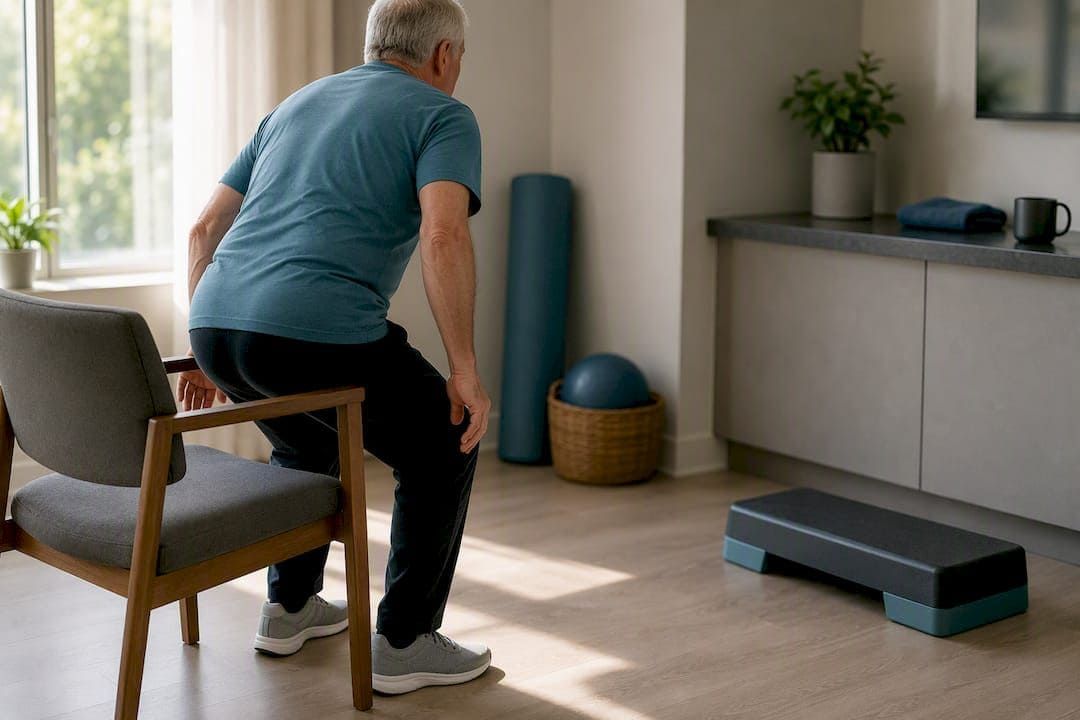
Sit-to-stand transfers, slow step-ups on a low step, and side-stepping along a countertop all train the coordination that stenosis tends to erode. This category gets skipped constantly, which is a mistake given how many people with stenosis develop gait and balance changes that raise fall risk.

Low-impact cardio

Recumbent cycling, aquatic exercise, supported treadmill walking, or a low-resistance elliptical all let you build aerobic fitness while keeping the spine in a neutral or slightly flexed position. A spine surgeon's review of stenosis exercise recommends starting supported elliptical or cycling sessions at just 5 to 10 minutes and building from there based on how your legs respond, not on a fixed schedule.

Pro Tip: Track your symptoms the day after a session, not just during it. Stenosis pain often shows up delayed. If your legs feel worse the next morning, that's your cue to dial back volume before you dial up anything else.

Movements to Avoid and Warning Signs to Watch

Certain movements reliably aggravate leg symptoms in people with spinal stenosis. Skip or heavily modify these:

  • Forceful lumbar extension or deep backbends like cobra pose
  • Heavy lifting, especially overhead or with a rounded back
  • High-impact running, jumping, or plyometrics
  • Rapid or aggressive twisting motions
  • End-range stretching pushed past mild discomfort

These extension-heavy and high-impact movements are flagged specifically in clinical guidance on stenosis exercise because they tend to close down the canal space rather than open it.

Some symptoms cross the line from "modify your workout" to "get evaluated now." Medical guidance on stenosis exercise is direct on this point: new or worsening bowel or bladder control problems, numbness around the groin, rapidly progressing leg weakness, or a sudden severe change in your ability to walk all warrant urgent medical assessment, not a modified stretch routine.

Short of those red flags, the modification strategy is simple: position before load. Restore small-range mobility first, then add light core work, then build duration. If a movement in a pool feels fine but the same movement on land doesn't, stick with the pool version longer.

spinal stenosis physical therapy exercises

How to Build a 4-Week Spinal Stenosis Exercise Routine

A gradual, symptom-controlled progression beats an aggressive one every time with this condition. Here's a simple template to adapt with a clinician's input.

  1. Week 1: Mobility exercises and supported core work for 5 to 10 minutes daily, plus 5 minutes of recumbent cycling or pool walking.
  2. Week 2 to 3: Add strength sets (bridges, clamshells, bird dog) and increase cardio duration in small increments, maybe 2 to 3 minutes per session.
  3. Week 4: Introduce functional tasks like sit-to-stands and step-ups, and extend aerobic bouts as your walking tolerance allows.

The rule for advancing: symptoms need to stay stable both the day of exercise and the day after, and your walking tolerance should be trending up, not flat. If symptoms increase, regress to the prior week's volume rather than pushing through. Anyone with significant weakness, poor balance, or a complex medical history should have a supervised program design this progression rather than guessing at it alone.

When Should You See a Clinician for Spinal Stenosis?

Get a professional assessment before starting or significantly changing your routine if you notice arm or leg weakness, balance trouble, significant radiating pain, or symptoms that are getting worse rather than better. A clinician needs to rule out other causes, like a fracture or vascular claudication, that can mimic stenosis symptoms.

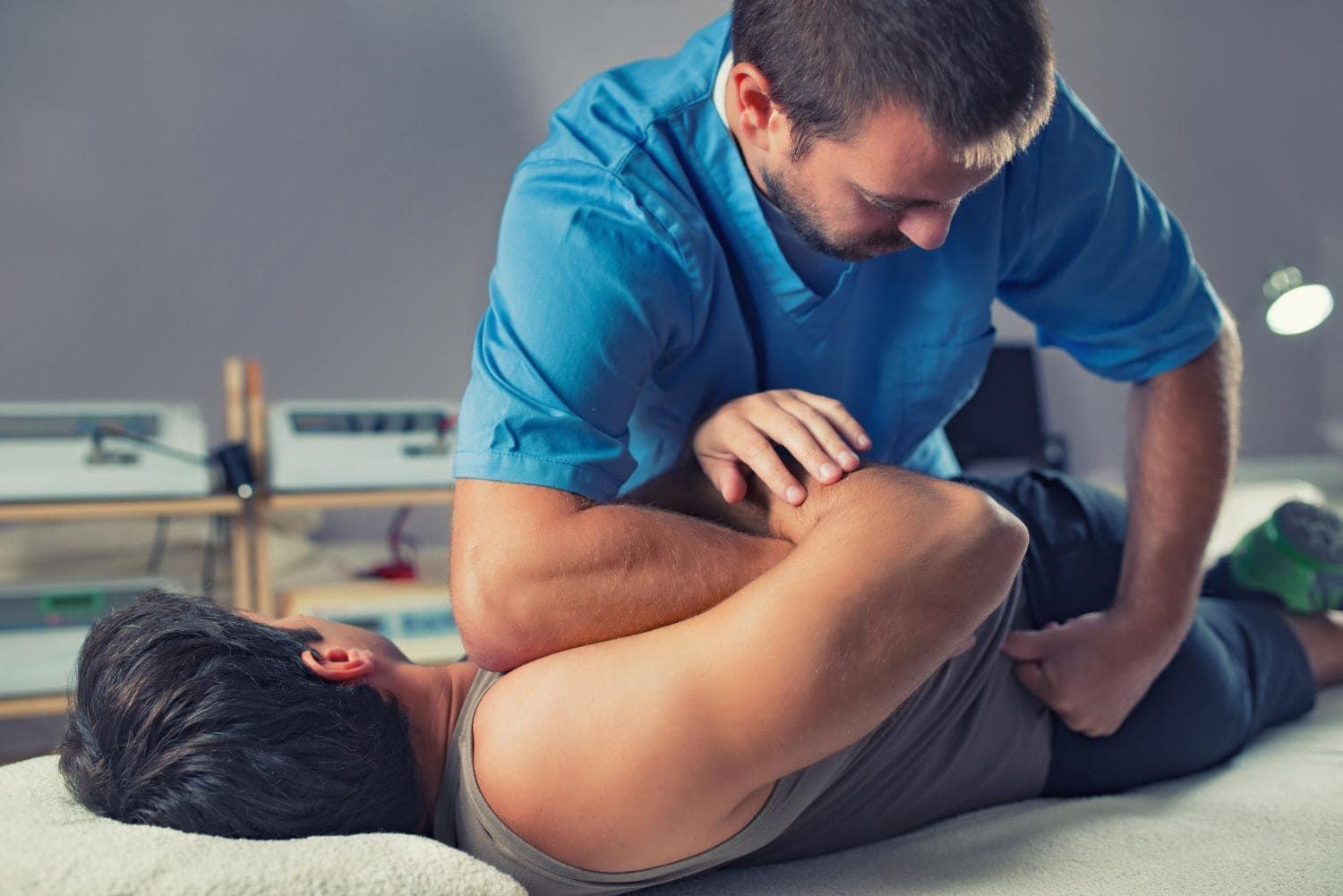
Supervised, individualized programs tend to outperform generic self-directed exercise, at least in the short term. Some comparative trials of nonsurgical stenosis treatments found manual therapy paired with individualized exercise produced better results at two months than group exercise or standard medical care, though the gap often narrows over time. A good clinician also screens fall risk, offers aquatic or assistive-device options to unload the spine, and coordinates imaging or referrals if something doesn't add up. Bring a symptom log and your specific mobility goals to that first visit. If you're unsure whether chiropractic or physical therapy care fits your situation better, that's worth asking about directly.

What Most People Get Wrong About Stenosis Exercise

The biggest mistake is treating symptom response as an afterthought instead of the main guide. Walking distance, next-day leg pain, and tingling tell you more than any generic exercise list ever will. Balance work gets skipped constantly, even though gait and fall risk are exactly what stenosis tends to undermine. If progress stalls or symptoms creep upward, that's the signal to bring in a supervised program rather than pushing harder solo.

Get an Individualized Plan for Spinal Stenosis

Generic exercise lists only go so far. What actually moves the needle is a plan built around your specific walking tolerance, balance risk, and symptom pattern, which is exactly what a clinical assessment gives you that a blog post cannot. Essentialchirocare's physical rehab services are built around that kind of individualized progression, using manual therapy and structured exercise plans rather than a one-size-fits-all sheet of stretches.

If conservative exercise alone hasn't moved your symptoms enough, spinal decompression is worth discussing as an adjunct option during your visit. Clinics in various locations offer this kind of assessment. Schedule a chiropractic care evaluation to get a fall-risk screen and a walking-tolerance baseline before you build out the rest of your routine.

This article is general information, not a substitute for advice from a qualified doctor. Consult a qualified healthcare professional about your own circumstances before acting on anything here.

Sources

FAQ

  • Can Spinal Stenosis Improve With Exercise?

    Yes. Targeted mobility, strength, and supervised aerobic exercise commonly reduce leg pain and improve walking distance, even though the exercises don't change the size of the spinal canal itself. Realistic expectations focus on function and comfort, not anatomical reversal.

  • What Is the Best Sleep Position for Spinal Stenosis?

    Sleeping on your side with a pillow between your knees, or on your back with a pillow under your knees, keeps the spine in a slightly flexed position that many people with stenosis find more comfortable. This mirrors the same flexion principle behind exercises like knee-to-chest stretches.

  • What Foods Should You Avoid With Spinal Stenosis?

    There's no specific food list tied directly to stenosis symptoms, but general anti-inflammatory eating patterns, limiting processed foods and excess sugar, may support overall pain management and weight control, which reduces spinal load. Talk to your clinician if you're managing related conditions like diabetes or osteoporosis alongside stenosis.

  • What Exercises Should You Avoid With Spinal Stenosis?

    Avoid forceful lumbar extension, deep backbends like cobra pose, high-impact running or jumping, heavy lifting, and aggressive twisting. These movements tend to close down canal space and worsen leg symptoms rather than relieve them, according to spine-surgeon exercise guidance.

  • How Often Should You Do Spinal Stenosis Exercises?

    Most protocols start with short daily sessions of 5 to 10 minutes for mobility and core work, plus brief cardio bouts, building gradually over several weeks. Frequency and duration should adjust based on how your symptoms respond the day of and the day after each session.

Recommended

chiropractic care in Tampa
By Essential ChiroCare Blogger • October 18, 2026
Learn how a chiropractor in Tampa can help ease post-hurricane cleanup strain, support mobility, and promote a safer recovery after demanding physical work.

car accident chiropractor in Tampa
By Essential ChiroCare Blogger • October 17, 2026
Learn when emergency care is needed after a crash and how a car accident chiropractor in Tampa can support recovery, pain relief, and mobility.
degenerative disc disease exercises
By Essential ChiroCare Blogger • October 16, 2026
Begin a safety first home program for degenerative disc disease: six low-risk exercises, McKenzie extension cues to watch for centralization, and clear...

postpartum back pain exercises
By Essential ChiroCare Blogger • October 15, 2026
Breath first, diastasis safe exercises and simple daily ergonomics to ease postpartum low back pain. Start with 10 minutes of gentle core and glute work.
how much does spinal decompression cost
By Essential ChiroCare Blogger • October 14, 2026
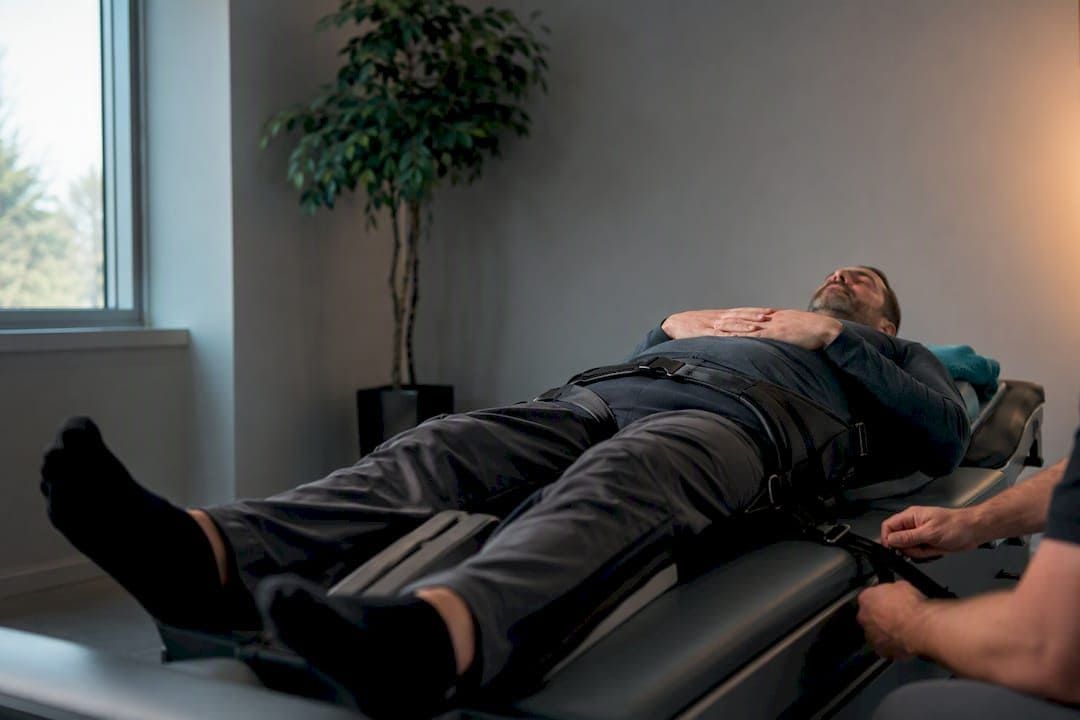
Typical U.S. prices run $30–$250 per session or $500–$7,500 per course. See insurer realities, clinic transparency tips, and four practical ways to lower...
chin tuck exercise benefits
By Essential ChiroCare Blogger • October 13, 2026
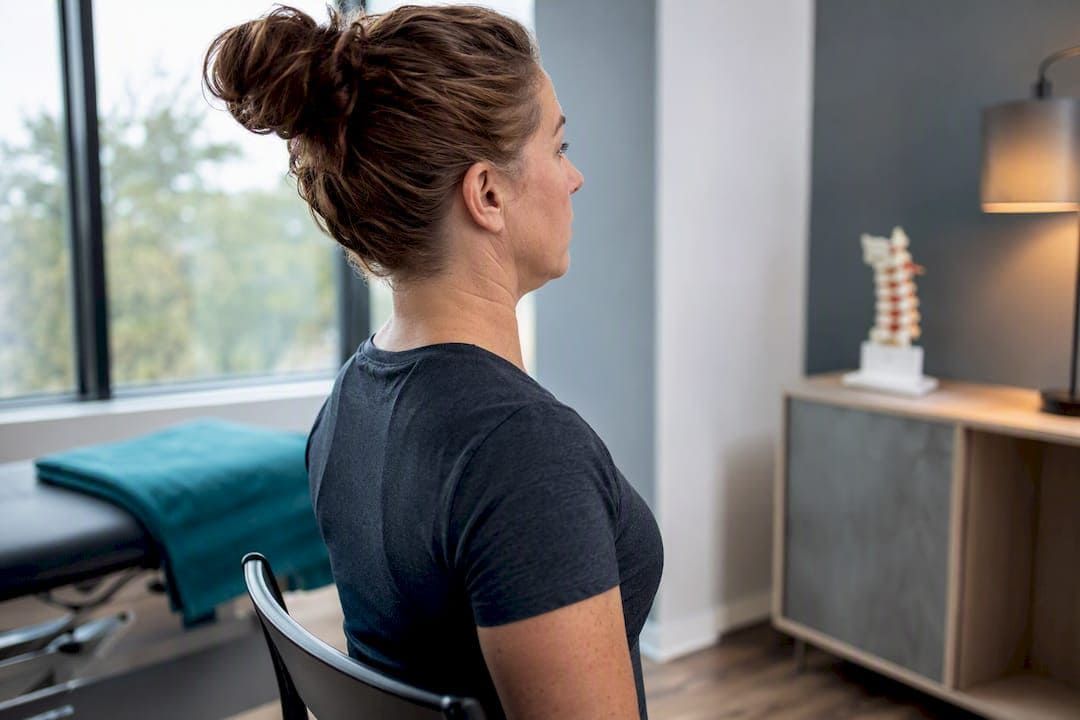
Clinician backed chin tuck primer: precise step-by-step technique, randomized trial evidence they outperformed stretching, and when to seek clinical care....

neck pain after sleeping
By Essential ChiroCare Blogger • October 12, 2026
Fix morning neck pain tonight with three simple changes: swap the pillow, change sleep position, and do gentle morning movements. Learn red flags and when...

back pain chiropractor Tampa
By Essential ChiroCare Blogger • October 11, 2026
Lingering back pain can disrupt work and sleep. Learn when self-care may help and when to see a chiropractor in Tampa for personalized relief.
personalized chiropractic care Tampa
By Essential ChiroCare Blogger • October 10, 2026
Learn what sets the best chiropractor in Tampa apart, from personalized care and injury recovery to rehabilitation and wellness-focused treatment plans.

runner’s knee exercises
By Essential ChiroCare Blogger • October 9, 2026
Evidence backed exercises to ease runner's knee. Start a symptom guided 4–6 week plan with clinician recommended 3 sets of 30+ reps and clear movement red...
Show More