How to Monitor Pain Signals for Better Relief
How to Monitor Pain Signals for Better Relief
TL;DR:
- Pain signal monitoring involves recording and interpreting pain intensity, quality, timing, and context to guide effective treatment decisions. Using tools like the Numeric Rating Scale and pain diaries, along with emerging wearable and AI technologies, transforms patients into active participants in their recovery. Consistent, context-rich data collection improves clinical outcomes by revealing patterns and triggers beyond subjective reports.
Pain signal monitoring is the systematic practice of recording and interpreting your pain intensity, quality, timing, and context to guide smarter treatment decisions. Clinicians call this practice pain signal assessment, and it forms the foundation of any effective pain management plan. Tools like the Numeric Rating Scale (NRS) and structured pain diaries have been the standard for decades, while emerging technologies such as wearable physiological sensors and AI-driven facial micromovement analysis are beginning to offer objective data to complement what you report. If you are living with acute or chronic pain, learning how to monitor pain signals transforms you from a passive sufferer into an active participant in your own recovery.

How to monitor pain signals at home: tools and methods
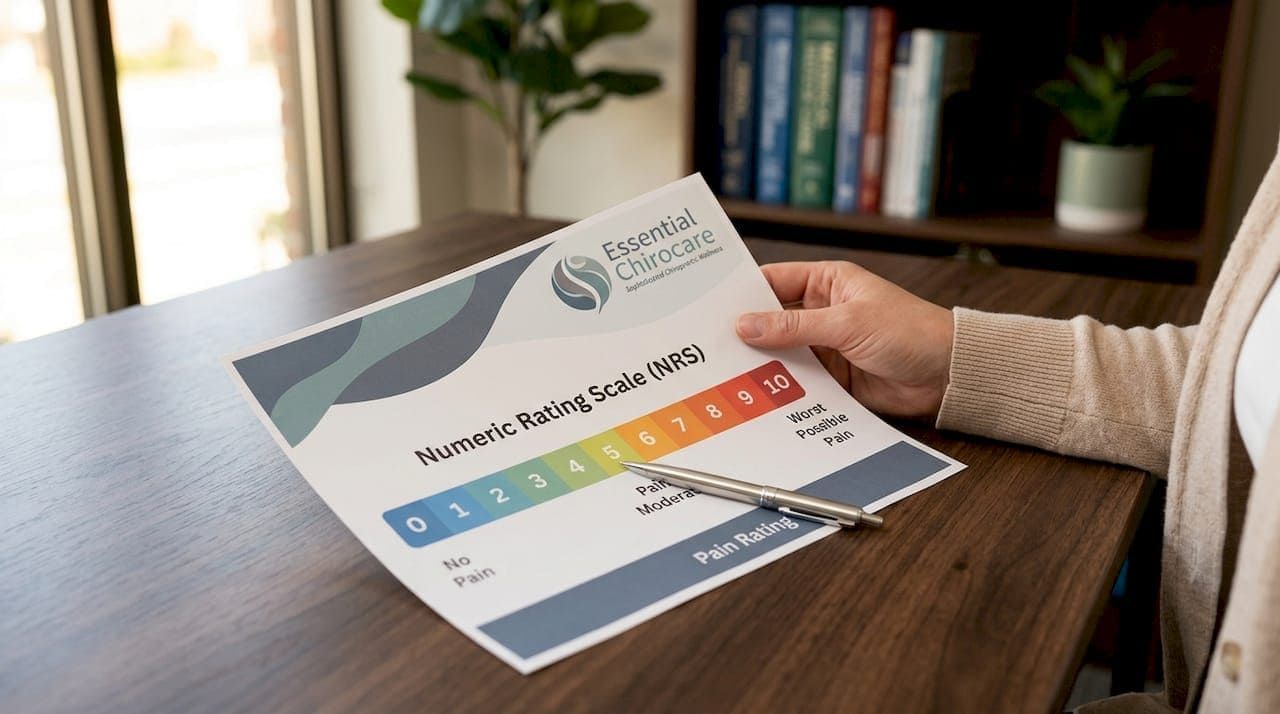
The NRS is the most widely used starting point for tracking pain levels. You rate your pain on a scale from 0 to 10, where 0 means no pain and 10 means the worst imaginable pain. The real power of the NRS comes from using it three times daily: record your current, lowest, and worst pain within a consistent 24-hour window. That composite score reveals trends your clinician can act on, rather than a single snapshot that may not reflect your typical experience.
A pain diary takes monitoring one layer deeper. According to pain management research, an effective diary captures pain intensity, exact location, quality descriptors (burning, stabbing, aching), time of day, triggers, medication dosage and effect, and how pain affects your daily activities. Keeping this record for at least two weeks gives your provider a meaningful dataset for adjusting your treatment plan.
Here is a comparison of the most common pain assessment tools and their primary purposes:
| Tool | Best used for | Key limitation |
|---|---|---|
| Numeric Rating Scale (NRS) | Tracking intensity trends daily | Does not capture quality or context |
| Visual Analog Scale (VAS) | Research and clinical settings | Less practical for home use |
| Pain diary | Comprehensive pattern tracking | Requires consistent daily effort |
| Body diagram | Mapping pain location and spread | Static snapshot only |
| Functional impact log | Measuring how pain limits activity | Subjective and variable |
When choosing between paper and digital methods, consider your daily routine. Paper diaries work well for people who prefer writing at a fixed time each morning. Apps like Manage My Pain or a simple notes app on your phone capture entries in real time, which reduces recall errors.
Pro Tip: Combine both methods. Use a paper diary at your bedside for morning and evening entries, and log unexpected pain spikes on your phone the moment they occur. This hybrid approach captures the full picture without relying on memory.
How to interpret your pain data for better clinical outcomes
Raw numbers alone do not tell a complete story. Meaningful interpretation of your pain data requires combining intensity scores with pain quality, timing, and triggers. For example, a score of 7 at 6 a.m. after poor sleep means something very different from a 7 at 3 p.m. after sitting at a desk for four hours. Pairing self-reported pain with contextual information like activity, medication use, and functional impact is what allows clinicians to tailor treatment rather than guess.
Medication response is one of the most underused data points in home monitoring. Note not just whether you took medication, but how much relief it provided and how long that relief lasted. A pattern of diminishing returns over two weeks tells your doctor something a single office visit cannot.
Before any appointment, prepare a one-page summary of your data. Highlight your average pain score, your three worst days, your three best days, and any consistent triggers you identified. Clinicians who receive this kind of organized summary can identify causes and guide treatment far more efficiently than those working from verbal recall alone.
Pro Tip: Look for changes that persist across three or more consecutive days rather than reacting to a single bad day. A sustained shift in your average score is the signal worth reporting.
Common interpretation pitfalls to avoid:
- Focusing only on your worst pain day and ignoring the overall trend
- Treating a single high score as a crisis without checking for obvious triggers like stress or poor sleep
- Forgetting to note when pain improved and what you were doing differently
- Skipping entries on good days, which removes half of the data your clinician needs
- Comparing your scores to someone else's instead of tracking your own baseline
What are the latest advancements in objective pain monitoring?
Self-reported scales are reliable, but they have one unavoidable limitation: they depend on your ability and willingness to report accurately. Two emerging technologies are beginning to close that gap.
- Wearable physiological sensors. Devices that measure heart activity, breathing, sweat response , blood flow, and skin temperature can capture real-time stress and discomfort signals continuously. These sensors integrate multiple parameters into a single platform, offering an objective layer of data that does not rely on verbal reporting.
- AI-driven facial micromovement analysis. In controlled studies, facial micromovement spikes around the eyes , tracked via webcam and paired with heart-rate variability readings, correlated directly with changes in pain intensity. This approach is particularly valuable for patients who struggle to verbalize their pain, such as those with cognitive impairments or severe acute episodes.
- Multi-parameter fusion. Research confirms that combining facial analysis with heart rate variability produces more reliable pain detection than any single measurement alone. This is the direction clinical pain monitoring is heading.
"Facial expression alone may not directly correlate with pain for all individuals. Multi-parameter approaches are needed, especially where verbal reports are limited." — MedicalXpress, 2026
These technologies are not yet standard in home settings. Most wearable pain sensors remain in research or clinical trial phases, and AI facial analysis requires controlled lighting and camera positioning. However, consumer-grade wearables like the Apple Watch and Garmin devices already capture heart-rate variability data that some pain apps can interpret. The gap between lab and living room is closing faster than most patients realize.
Step-by-step guide to starting your pain monitoring routine
Getting started requires minimal equipment. Here is what you need:
| Item | Purpose | Cost estimate |
|---|---|---|
| Pain diary template or notebook | Daily entry logging | Free to $10 |
| NRS reference card | Consistent scale use | Free (printable) |
| Smartphone with notes app | Real-time spike logging | Already owned |
| Body diagram printout | Location mapping | Free (printable) |
| Optional: wearable device | Physiological data capture | $50 to $400+ |
Follow this daily routine to build a reliable dataset:
- Set a fixed recording time. Morning and evening work best. Using a fixed daily cutoff such as midnight to midnight keeps your 24-hour window consistent and makes your scores comparable across days.
- Record three NRS scores. Log your current pain, your lowest pain since your last entry, and your worst pain since your last entry.
- Describe the pain. Use one or two quality descriptors: burning, throbbing, sharp, dull, or aching. Note the exact location on a body diagram.
- Log triggers and context. Record what you were doing before the pain increased, your sleep quality, stress level, and any physical activity.
- Document medication and its effect. Write the name, dose, time taken, and your pain score one hour later.
- Note functional impact. Rate how much pain limited your ability to work, move, or sleep on a simple 0 to 3 scale.
If you miss an entry, do not skip the next one to compensate. Simply resume your routine. Inconsistent timing is a common challenge, and setting a phone alarm labeled "pain log" removes the cognitive burden of remembering. For deeper guidance on validated pain measurement scales and their clinical applications, Essentialchirocare's pain management guide covers the full spectrum.
Pro Tip: At your next appointment, hand your provider a printed one-week summary rather than describing your pain verbally. Clinicians retain structured data far better than narrative descriptions, and your visit becomes more productive in half the time.
Common mistakes when monitoring pain signals
Even motivated patients make errors that reduce the value of their data. Recognizing these mistakes early saves weeks of unreliable records.
- Recording only intensity. A score of 6 without location, quality, or trigger information is nearly useless for treatment decisions. Context is what separates useful data from noise.
- Inconsistent timing. Measuring pain at random times each day means your scores reflect different points in your pain cycle. Consistency in timing and wording is what makes subjective scales reliable over time.
- Assuming facial expressions tell the full story. Research shows facial expression alone does not directly correlate with pain intensity for all people. Relying on how you look rather than how you feel produces inaccurate self-assessments.
- Ignoring good days. Skipping entries when pain is low removes critical data. Good days reveal factors associated with pain reduction, such as better sleep, lower stress, or specific activities, that your clinician can use to replicate those conditions.
- Rounding scores to avoid seeming dramatic. Underreporting pain to appear stoic distorts your data and leads to undertreated pain. Record what you actually feel, not what you think sounds acceptable.
For a broader look at how proactive documentation strategies support long-term pain management, Essentialchirocare's wellness resource covers practical approaches worth reviewing.
Key takeaways
Consistent, context-rich pain monitoring is the single most effective way to improve both treatment decisions and your own understanding of what drives your pain.
| Point | Details |
|---|---|
| Use composite NRS scores | Record current, lowest, and worst pain daily within a fixed 24-hour window for reliable trends. |
| Context transforms raw scores | Always pair intensity ratings with location, quality, triggers, and functional impact for clinical value. |
| Good days matter as much as bad ones | Recording low-pain days reveals what reduces your pain, giving clinicians replicable conditions to build on. |
| Emerging tech adds objectivity | Wearable sensors and AI facial analysis supplement self-reports, especially when verbal communication is difficult. |
| Prepare summaries for appointments | A one-page data summary makes clinical visits more productive and treatment adjustments more precise. |
Why consistent monitoring changed how I think about pain management
Most people treat pain monitoring as something they do for their doctor. That framing gets it backwards. The real beneficiary of a well-kept pain diary is you. When you track your pain with discipline over two or three weeks, patterns emerge that you would never notice from memory alone. You start to see that your worst flare-ups follow two consecutive nights of poor sleep, or that your pain drops by two points on days you walk for 20 minutes. That knowledge is power you carry into every appointment.
What I have observed, working alongside clinicians who treat chronic pain, is that patients who arrive with organized data get meaningfully different care. Their providers spend less time reconstructing history and more time problem-solving. The treatment adjustments are faster and more targeted. The patients who say "I just describe it when I get there" tend to cycle through the same conversations without forward momentum.
The emerging technologies are genuinely exciting, but I would caution against waiting for the perfect objective tool before starting. A paper diary and a consistent NRS routine will outperform a sophisticated wearable you use inconsistently. The discipline matters more than the device. Start simple, stay consistent, and let the data do the work. When you are ready to bring that data to a provider who knows how to act on it, the results tend to speak for themselves.
How Essentialchirocare supports your pain management journey
Tracking your pain signals is only half of the equation. Acting on what your data reveals is where real relief begins. At Essentialchirocare, the clinical team across Tampa, Brandon, Sarasota, Lakeland, and Pinellas Park uses your pain history and functional data to build personalized treatment plans that address the root cause of your discomfort. Whether you are managing back pain, sciatica, joint issues, or recovery from a sports or auto injury, expert chiropractic care at Essentialchirocare integrates your self-monitored pain data with hands-on assessment for targeted, lasting results. Schedule your evaluation online and bring your pain diary. The more your provider knows, the more precisely they can help.
FAQ
What is the best scale for tracking pain levels at home?
The Numeric Rating Scale (NRS) is the most practical tool for home use. Recording current, lowest, and worst pain on a 0 to 10 scale within a consistent 24-hour window produces a composite score that reliably tracks trends over time.
How long should I keep a pain diary before seeing a doctor?
A minimum of two weeks provides enough data for meaningful pattern analysis. Entries covering intensity, location, quality, triggers, medication response, and functional impact give your clinician a dataset strong enough to guide treatment adjustments.
Can wearable devices replace self-reported pain scores?
Not yet. Wearable sensors measuring heart activity, breathing, and sweat response capture objective physiological signals related to pain, but they supplement rather than replace self-reported scales. Multi-parameter approaches combining both methods produce the most reliable results.
Why do good days matter in pain monitoring?
Good days reveal the conditions associated with lower pain, such as better sleep, reduced stress, or specific activities. Recording them allows clinicians to identify and replicate those factors as part of your treatment strategy.
How do I share my pain monitoring data with my provider effectively?
Prepare a one-page summary highlighting your average score, your three worst days, your three best days, and any consistent triggers. Structured summaries help clinicians retain and act on your data far more efficiently than verbal descriptions during a short appointment.
Recommended