How to Identify Pain Triggers and Reduce Flare-Ups
How to Identify Pain Triggers and Reduce Flare-Ups
Start tracking today. A simple pain diary that logs your pain level, activity, sleep, mood, and medications is the fastest, most reliable way to identify repeatable triggers. According to the International Association for the Study of Pain, key variables to document include pain intensity on a 1–10 scale, location, type, time of day, activity, sleep, diet, hydration, weather, mood, and medication response. Most people only record pain intensity and miss the patterns that actually matter.
Quick next steps:
- Pick a format today: a notes app, a dedicated pain tracker like Manage My Pain or PainScale, or a printed one-page sheet.
- Log consistently for several weeks before drawing conclusions.
- Review weekly for repeated associations between variables and flare-ups.
- Bring your diary to your next clinical appointment.
Stop self-testing and contact a clinician immediately if you notice: new focal weakness or sudden numbness, rapidly worsening pain that does not respond to rest, shortness of breath alongside pain, signs of infection (fever, redness, swelling), or any loss of bladder or bowel control. These are not tracking problems. They require prompt medical evaluation.

Table of Contents
- What are pain triggers and why do some take days to show up?
- What commonly triggers pain flare-ups?
- Why does tracking your pain actually work?
- How to track your pain: a step-by-step workflow
- Which tools make pain tracking easier?
- How to analyze your diary and spot real patterns
- How to safely test a suspected trigger
- When should you stop tracking alone and see a clinician?
- Key Takeaways
- The part most guides skip about pain diaries
- Essentialchirocare turns your diary data into a real treatment plan
- Useful sources and resources
What are pain triggers and why do some take days to show up?
A pain trigger is any physical, emotional, or environmental factor that increases your pain intensity or frequency. That definition sounds simple, but the tricky part is timing. Some triggers are immediate: you twist awkwardly lifting a box and feel it within seconds. Others are delayed or cumulative, and that lag is where most people lose the thread.
Poor sleep is a classic example of a delayed trigger. One bad night may not cause a flare, but three consecutive nights of broken sleep can push your nervous system into a sensitized state where pain arrives 24–72 hours later. Chronic pain persisting beyond 3–6 months can involve centralized mechanisms that lower your pain threshold overall, meaning stimuli that would not normally hurt start to register as painful. That is called allodynia, and it makes trigger identification harder because the gap between cause and effect widens.
Triggers are also personal and often multiple. What reliably flares your lower back may have no effect on someone else with the same diagnosis. And two triggers together (poor sleep plus a stressful workday) can produce a flare that neither one would cause alone.
Common trigger types at a glance:
- Immediate: acute mechanical stress, sudden posture change, impact
- Delayed (hours to days): poor sleep, dietary choices, emotional stress, overexertion
- Cumulative: repeated small stressors that compound over days or weeks
What commonly triggers pain flare-ups?
Knowing what to watch for is half the battle. These are the triggers that show up most consistently across people with chronic or fluctuating pain, along with the timing quirks that make each one easy to miss.
- Stress and anxiety: Psychological stress raises cortisol and muscle tension, often producing a flare 12–24 hours after the stressful event, not during it. Identifying emotional triggers alongside physical ones matters more than most people expect.
- Poor sleep: Even one night under five hours can amplify pain sensitivity the next day. Chronic sleep disruption compounds quickly.
- Weather and barometric pressure changes: Dropping barometric pressure before a storm is a well-reported trigger for joint and nerve pain. You cannot control it, but you can anticipate it and schedule lighter activity on those days.
- Certain foods and alcohol: Inflammatory foods (processed sugars, refined oils, alcohol) tend to produce delayed flares 24–48 hours later, which is why they are so easy to overlook.
- Overexertion and the boom-bust cycle: Doing too much on a good day and paying for it the next two days. Activity pacing is the direct antidote to this pattern.
- Posture and repetitive tasks: Sustained positions (desk work, driving, phone use) load specific tissues over hours. The pain often arrives after you stop, not during.
- Medication timing and withdrawal: Missing a dose or taking pain medication inconsistently can create rebound pain cycles that look like new flares.
- Mood and emotional state: Depression and anxiety are not just consequences of chronic pain. They are also triggers. Mood shifts often precede flares by hours to days.
Pro Tip: Many triggers are delayed by 24–72 hours. When a flare hits, your first instinct is to blame what you did that morning. Check what you did yesterday, or the day before.
Weather and hormonal cycles fall into the harder-to-control category. Activity levels, sleep habits, posture, and medication timing are all modifiable with the right plan.
Why does tracking your pain actually work?
Memory is a poor pain historian. People consistently underreport good days and overweight recent bad ones, which distorts any mental picture of what is actually driving their pain. A written log removes that bias. You end up with objective data instead of impressions, and patterns that would be invisible to memory become obvious on paper.
Clinicians use diary data in specific, practical ways. A physical therapist reviewing two weeks of logs can see whether your worst days cluster after high-activity days, which tells them whether pacing adjustments are the priority. A chiropractor can time manual therapy sessions around your typical flare windows. A prescribing physician can correlate medication timing with symptom changes. Structured assessment improves clinical outcomes for chronic pain, and a diary is the patient's contribution to that structure.
Tracking also catches pre-flare signatures: subtle mood shifts, increased muscle tension, or sleep disruption that appear hours to days before a full flare. Catching those early signs opens a window for small interventions (a rest day, a gentle walk, a relaxation practice) that can prevent escalation entirely.
How to track your pain: a step-by-step workflow
Step 1: Choose your format and set a baseline week
Pick one format and stick with it. Options include a dedicated app (Manage My Pain, PainScale, or Pathways), a notes app with a consistent template, or a printed one-page diary sheet. The best format is whichever one you will actually use every day. Your first week is baseline: log everything without trying to change anything yet.
Step 2: Log these fields daily
Tracking more than pain intensity is what separates useful diaries from useless ones. Record:
- Date and time of entry
- Pain intensity (1–10)
- Pain location and type (sharp, aching, burning, throbbing)
- Main activity in the 4 hours before onset
- Sleep hours and quality from the previous night
- Meals, alcohol, and hydration
- Medications taken and exact timing
- Mood and stress rating (1–10)
- Weather or notable environmental changes
Step 3: Log flares as events
When a flare hits, capture the preceding 72 hours in detail: what you ate, how you slept, your activity level, any unusual stressors, and any changes in medication timing. This 72-hour window is where most delayed triggers hide.
Consistency tips:
- Set a phone reminder for the same time each day (bedtime works well for most people).
- Pair logging with an existing habit, like brushing your teeth.
- Keep entries short. A numeric rating plus one sentence of context is enough.
Pro Tip: Use a mix of numeric fields (pain 1–10, sleep 1–10, stress 1–10) and one free-text line for anything that does not fit a number. That single sentence often contains the most useful clinical information.
Which tools make pain tracking easier?
Apps, paper, and wearables compared
| Format | What it captures | Best for | Limitation |
|---|---|---|---|
| Pain tracking app | Pain, mood, sleep, meds, weather (auto) | Consistent daily logging, trend graphs | Requires smartphone; privacy varies by app |
| Paper one-page diary | All variables you choose to write | No tech, full privacy, easy to share with clinician | No automatic trend analysis |
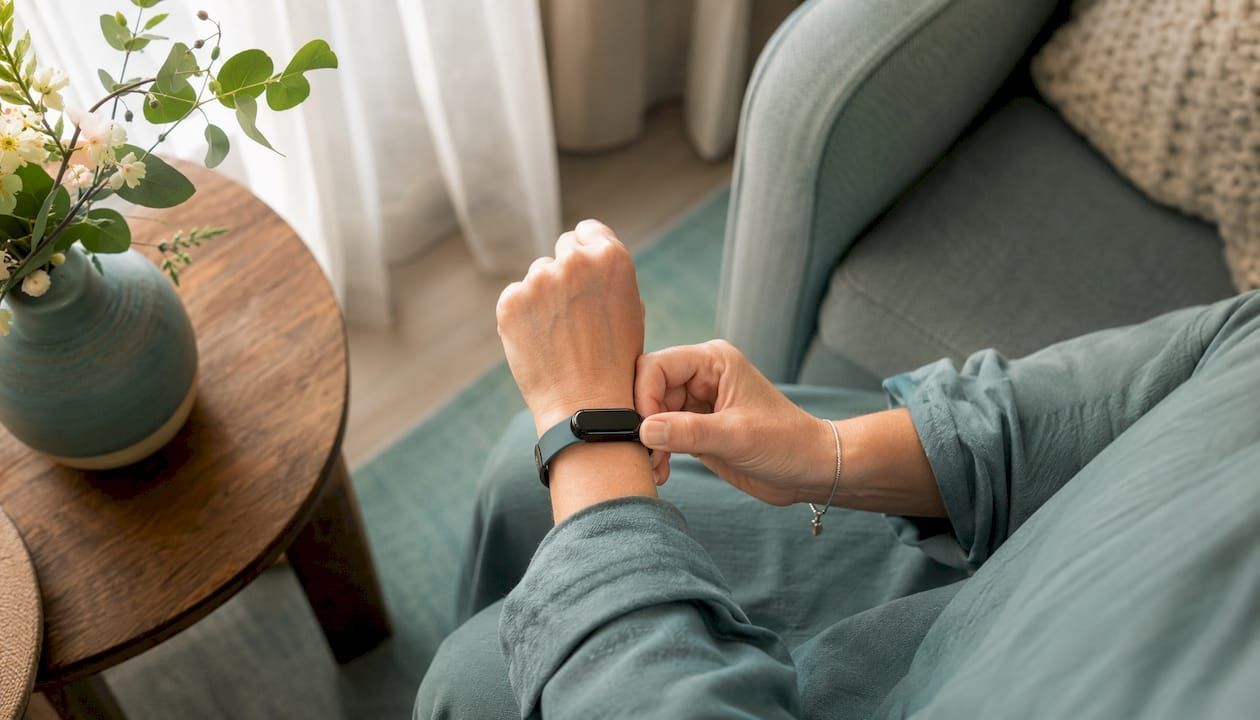
| Wearable (e.g., Fitbit, Garmin) | Sleep, activity, heart rate variability | Objective sleep and activity data | Does not capture pain, mood, or diet |
Apps like Manage My Pain and PainScale automatically pull weather data and generate visual trend reports, which saves time during analysis. Paper diaries have one underrated advantage: clinicians can read them at a glance without needing to export anything. Wearables add objective sleep and activity data that self-report alone cannot match, but they work best as a supplement to a diary rather than a replacement.
A simple one-page diary template you can copy:
 Date: ___________  Time: ___________
Pain level (1–10): ___  Location: _______________
Pain type (circle): Sharp / Aching / Burning / Throbbing / Other
Activity in last 4 hours: _______________________________
Sleep last night (hours): ___  Quality (1–10): ___
Meals today: ___________________________________________
Alcohol (yes/no): ___  Water intake: ___________________
Medications and timing: _________________________________
Mood (1–10): ___  Stress (1–10): ___
Weather/environment notes: ______________________________
One free-text note: _____________________________________
Print one sheet per day, or copy this layout into any notes app.
How to analyze your diary and spot real patterns
Gathering data is step one. Making sense of it is where most people stall. Here is a repeatable process.
- Gather 2–8 weeks of logs. Fewer than two weeks produces too much noise. Eight weeks gives you enough data to see seasonal and hormonal patterns.
- Sort by suspected trigger. Pick one variable (say, nights with fewer than six hours of sleep) and list every instance.
- Count flare occurrences within 72 hours of that variable. If poor sleep preceded a flare seven out of nine times, that is a meaningful association. If it preceded a flare three out of nine times, it is probably not the primary driver.
- Check for time lags. Note whether flares follow the trigger by hours or days. Consistent lags point to delayed triggers.
- Cluster by activity, food, and stress separately. Analyze one variable at a time before combining them.
Three cautions worth taking seriously. First, confirmation bias: if you already suspect stress is your trigger, you will notice stress-flare pairs and overlook the times stress did not produce a flare. Count both. Second, seasonal confounders: winter cold, holiday stress, and reduced activity often arrive together, making it hard to isolate one cause. Third, small-sample noise: a pattern that appears twice is a hypothesis, not a conclusion. When your pattern strength is low after eight weeks, continue logging or bring your diary to a clinician for guided interpretation.
How to safely test a suspected trigger
Once you have a strong suspected trigger, test it deliberately rather than waiting for coincidence to confirm it. The safe testing sequence follows four steps:
- Document your baseline. Record pain levels for one week with no changes.
- Remove or reduce the suspected trigger alone. Change only one variable. Keep everything else as constant as possible.
- Observe for a predefined window. Food and alcohol triggers typically show within 1–2 weeks. Sleep and hormonal cycle triggers may need 3–4 weeks. Stress-related triggers can take longer because life rarely cooperates with controlled conditions.
- Reintroduce the trigger while continuing the diary. If pain returns after reintroduction, you have a confirmed association.
For activity-related triggers, use graded exposure rather than elimination:
- Reduce intensity or duration by 20–30%, not to zero.
- Hold that reduced level for one week and monitor for delayed flares.
- Increase in small increments (10% per week) and watch for the 48–72 hour lag.
- This approach prevents the boom-bust cycle and builds tolerance over time.
Safety rules that are non-negotiable:
- Never stop a prescribed medication to test whether it is a trigger. Talk to your prescribing clinician first.
- Stop any test immediately if red flags appear (new weakness, numbness, severe pain increase).
- Do not test multiple variables at once. You will not be able to tell which change caused which result.
When should you stop tracking alone and see a clinician?
Some patterns in a diary are not tracking problems. They are clinical signals.
Seek prompt medical attention if your diary shows:
- New focal weakness or progressive numbness in a limb
- Sudden severe pain with no clear mechanical cause
- Pain accompanied by fever, unexplained weight loss, or night sweats
- Bladder or bowel changes alongside back or pelvic pain
- Rapidly escalating pain that does not respond to rest or usual management
Beyond red flags, there is a practical threshold: if eight weeks of careful logging has not revealed a clear pattern, or if your pain is worsening despite your best efforts, a clinician can do what a diary alone cannot. Pain assessment must be multidimensional, distinguishing nociceptive, neuropathic, and centralized drivers, and that requires clinical examination alongside your data.
What to bring to a clinic visit: 2–8 weeks of diary entries, your current medication list with timing, photos or short videos of posture or movements that provoke pain, and any wearable data you have collected. A clinician who can see your logs can time manual therapy sessions around your flare patterns, adjust pacing recommendations to your actual activity data, and decide whether specialist referral is warranted. Primary care handles most initial evaluations; a pain specialist or physiatrist is appropriate when centralized pain or complex multi-system involvement is suspected.
Key Takeaways
Consistent daily tracking for multiple weeks is an effective way to move from guessing about your pain to understanding it well enough to act.
| Point | Details |
|---|---|
| Start a diary today | Log pain level, activity, sleep, mood, meds, and weather every day from day one. |
| Track for several weeks | Tracking for too short a time period produces too much noise to spot reliable patterns. |
| Test one variable at a time | Change only one suspected trigger per test window to get a clear result. |
| Know the red flags | New weakness, numbness, fever, or rapidly worsening pain requires prompt clinical evaluation, not more tracking. |
| Essentialchirocare can help | Bring 2–8 weeks of diary data to an Essentialchirocare appointment to turn your logs into a targeted treatment plan. |
The part most guides skip about pain diaries
There is a gap between what tracking promises and what it actually delivers on its own. Diaries are genuinely useful, but they are most powerful when a clinician reads them alongside you rather than after you have already drawn your own conclusions.
Here is what changes in a clinical setting. When a patient brings in two weeks of logs, the first thing worth looking at is not the worst pain day. It is the day before the worst pain day. That is usually where the real information lives: the extra hour of yard work, the skipped medication dose, the night that ended at 1 AM. Patients rarely flag those entries as significant because they do not feel like events. But they are.
The second thing a diary reveals is what the patient is not tracking. Someone who logs pain and activity but omits medication timing is missing a variable that can explain half the variance in their pain levels. Someone who tracks everything but rounds their sleep to the nearest hour is losing precision that matters. Clinicians most value consistent timestamps, exact medication timing, and short contextual notes because those three elements allow direct correlation between interventions and symptom changes.
The conventional wisdom says "track your pain." The more useful instruction is: track your pain the way a clinician would want to read it. Specific, timestamped, and honest about the days you overdid it.
Essentialchirocare turns your diary data into a real treatment plan
Tracking tells you what is happening. Knowing what to do about it is a different skill, and that is where clinical expertise earns its place.
Essentialchirocare's clinicians in Tampa, Brandon, Sarasota, Lakeland, and Pinellas Park work directly with patient diary data to build pacing plans, identify mechanical versus centralized pain drivers, and prioritize treatment targets. A first appointment typically covers your diary findings alongside a physical assessment, and from there the team can recommend manual therapy, physical rehabilitation, spinal decompression, or a structured activity pacing plan depending on what your logs and exam reveal.
What to bring:
- 2–8 weeks of diary entries (paper or app export)
- Your current medication list with timing
- Photos or short videos of movements that provoke pain
- Any wearable sleep or activity data
Book an appointment at Essentialchirocare's chiropractic care page to get a clinical read on your diary and a plan that goes beyond guesswork.
Useful sources and resources
The following sources informed this article and are worth bookmarking for further reading:
- International Association for the Study of Pain (IASP): The global authority on pain definitions, assessment standards, and clinical guidelines.
- Pain Assessment, StatPearls / NCBI Bookshelf: Peer-reviewed clinical overview of pain types, centralized pain mechanisms, and structured assessment tools.
- Activity Pacing Evidence, PMC: Research on pacing strategies and the boom-bust cycle in chronic pain management.
- Pain Flares and Warning Signs, TAPMI: Patient-facing resource on pre-flare signatures, flare management, and trigger tracking.
- Self-Observation of Pain Triggers, Providence: A printable structured form for mindful self-observation of pain triggers — suitable as a starting diary template.
- Essentialchirocare appointment page: Book a clinical review of your diary data with an Essentialchirocare clinician in West Central Florida.
This article is general health information, not medical advice. If you have new, worsening, or unexplained symptoms, consult a qualified clinician or your primary care provider before making changes to your pain management routine.
Recommended