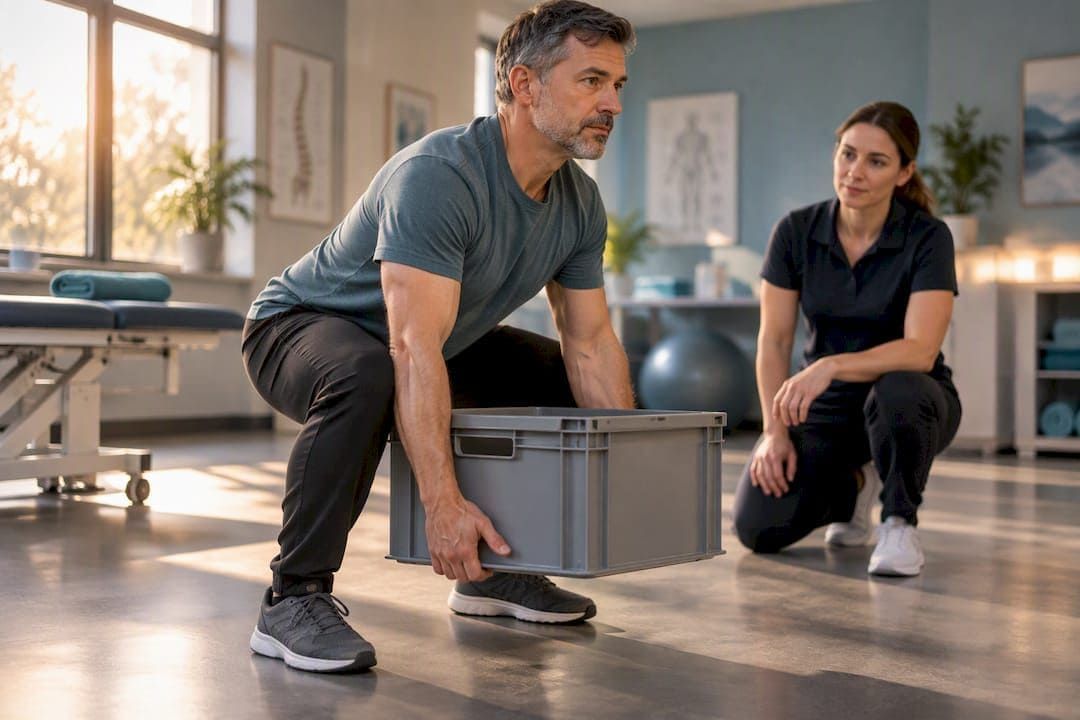
How to Decompress Your Spine at Home Safely
TL;DR:
- Home spinal decompression uses body weight and simple household items to safely reduce pressure on the spine.
- Consistent daily exercises like the Cat-Cow stretch, Child's Pose, and 90/90 positions help relieve back pain and support spinal health.
Spinal decompression is the process of gently relieving pressure on your spine using targeted stretches and movements you can do at home. Clinically, the term refers to any technique that creates traction or unloading forces along the vertebral column, reducing compression on discs and nerve roots. Adults dealing with lower back pain, sciatica, or general spine tension can apply these methods safely without special equipment. Essentialchirocare endorses evidence-informed home routines, including the McKenzie method and body-weight traction techniques, as a first line of self-care between professional visits. This guide covers what to do, how to do it safely, and when to stop.

How to decompress your spine at home: what you need to get started
The good news is that effective spinal decompression at home requires almost nothing. Your body weight does most of the work, and the most useful "equipment" is already in your house.
Common household items that work:
- A sturdy chair or countertop for supported traction
- A door frame for gentle hanging or lateral stretches
- A yoga mat or folded blanket as a padded surface
- A firm pillow to support the lumbar curve during floor exercises
Optional upgrades exist for people who want more controlled traction. A pull-up bar mounted in a doorway allows dead hangs, which achieve approximately 3mm of spinal separation per session. That separation is temporary, but it reliably reduces disc pressure in the short term. Inversion tables offer a more controlled angle but are not necessary for most people starting out.
| Method | Equipment needed | Difficulty | Primary benefit |
|---|---|---|---|
| Cat-Cow stretch | Yoga mat | Beginner | Lumbar mobility |
| Child's Pose | Yoga mat | Beginner | Thoracic and lumbar relief |
| 90/90 decompression | Chair or wall | Beginner | Hip flexor and disc unloading |
| Counter traction | Countertop | Intermediate | Lumbar traction |
| Dead hang | Pull-up bar | Intermediate | Full spine unloading |
| Inversion table | Inversion table | Advanced | Controlled angle traction |
Body-weight exercises are the safest starting point. They require no investment, carry minimal injury risk when done correctly, and can be performed daily for general relief without clinical supervision.
What are safe and effective spinal decompression exercises you can do at home?
The three most reliable body-weight exercises for spine relief are the Cat-Cow stretch, Child's Pose, and the 90/90 decompression position. Each targets a different aspect of spinal loading.
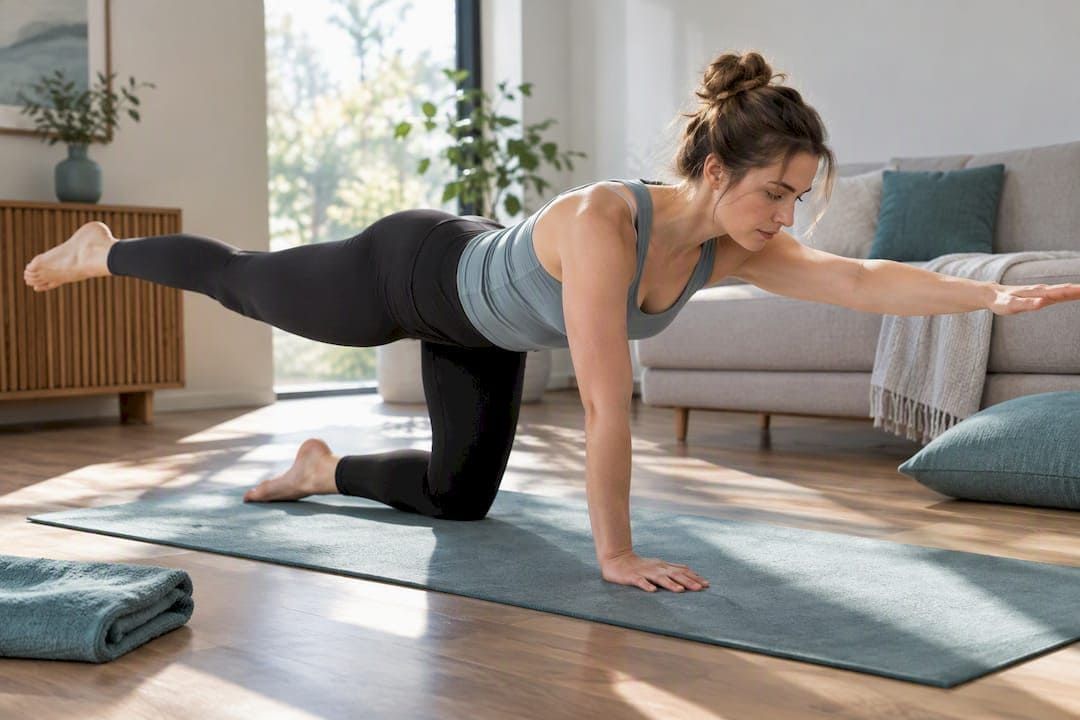
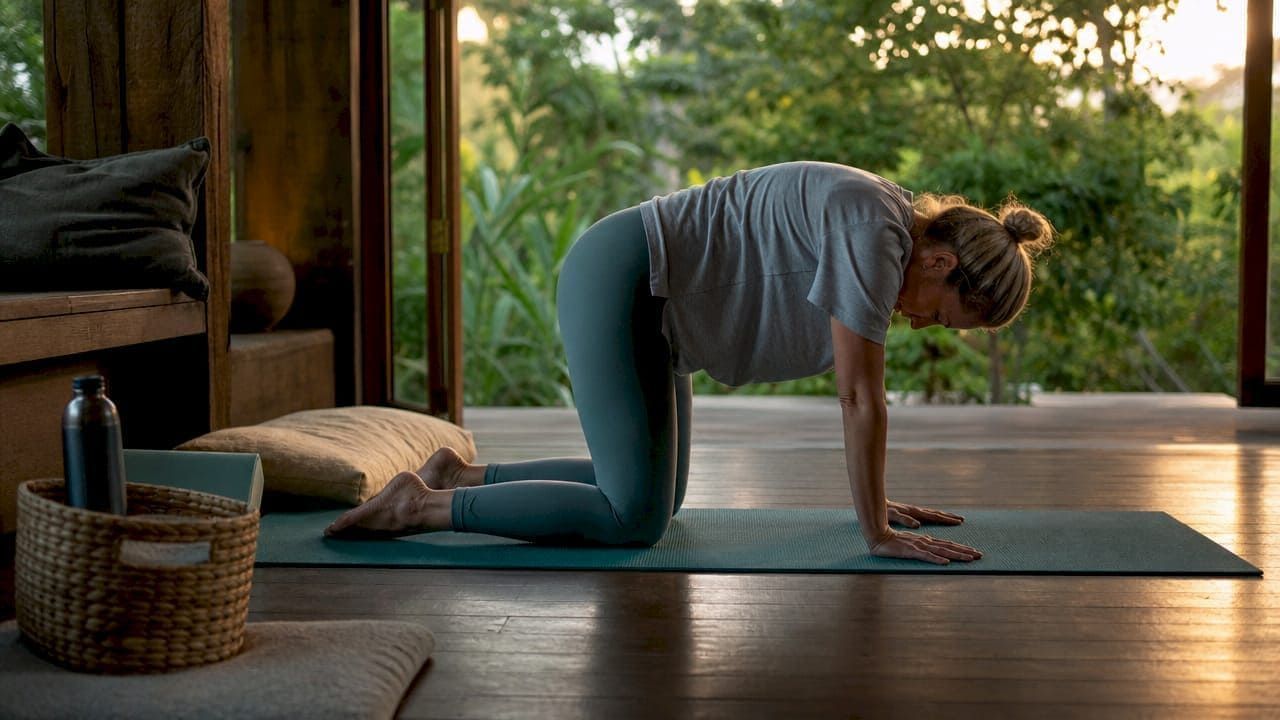
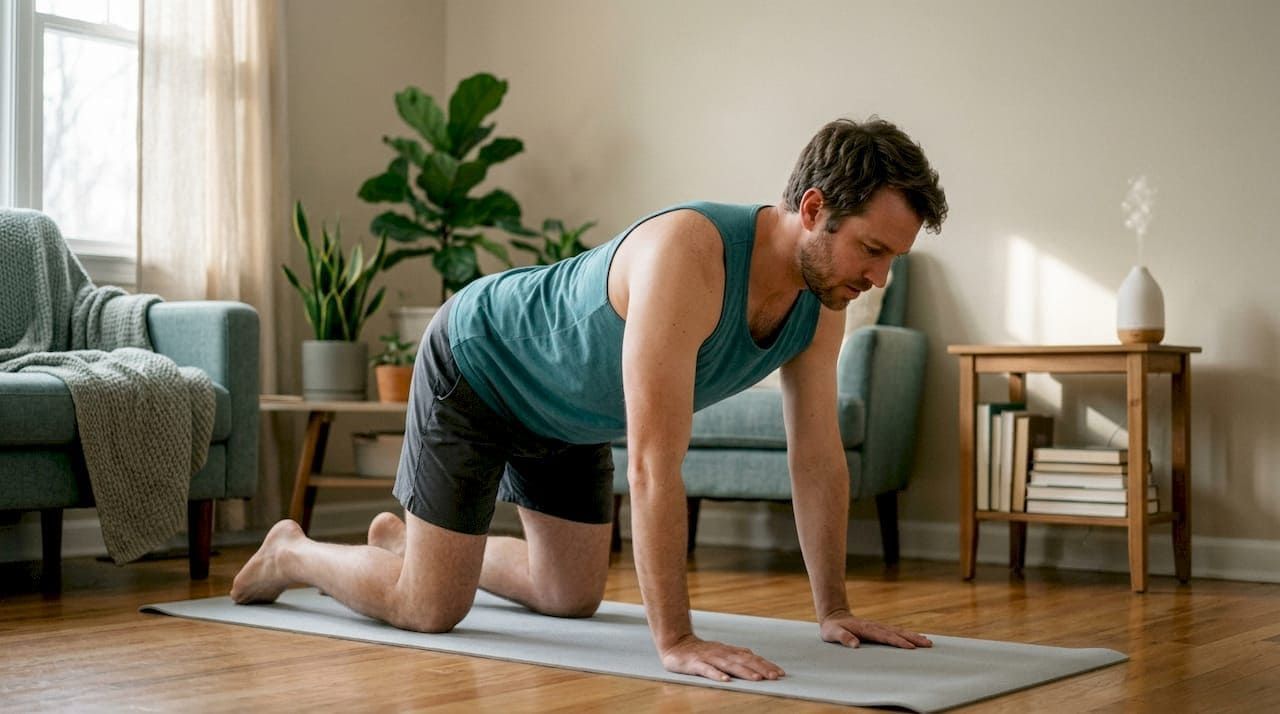
1. Cat-Cow stretch
Start on all fours with your wrists under your shoulders and knees under your hips. Inhale and drop your belly toward the floor, lifting your chest and tailbone (Cow). Exhale and round your spine toward the ceiling, tucking your chin and pelvis (Cat). Move slowly and deliberately between positions. Perform 10–15 repetitions per set, pausing one to two seconds at each end range.
2. Child's Pose
Kneel on your mat and sit your hips back toward your heels. Extend your arms forward on the floor and let your forehead rest down. Hold for 30–60 seconds per repetition. This position gently stretches the lumbar spine into flexion and decompresses the posterior disc space. Breathe slowly and let gravity do the work rather than forcing the stretch.
3. 90/90 decompression
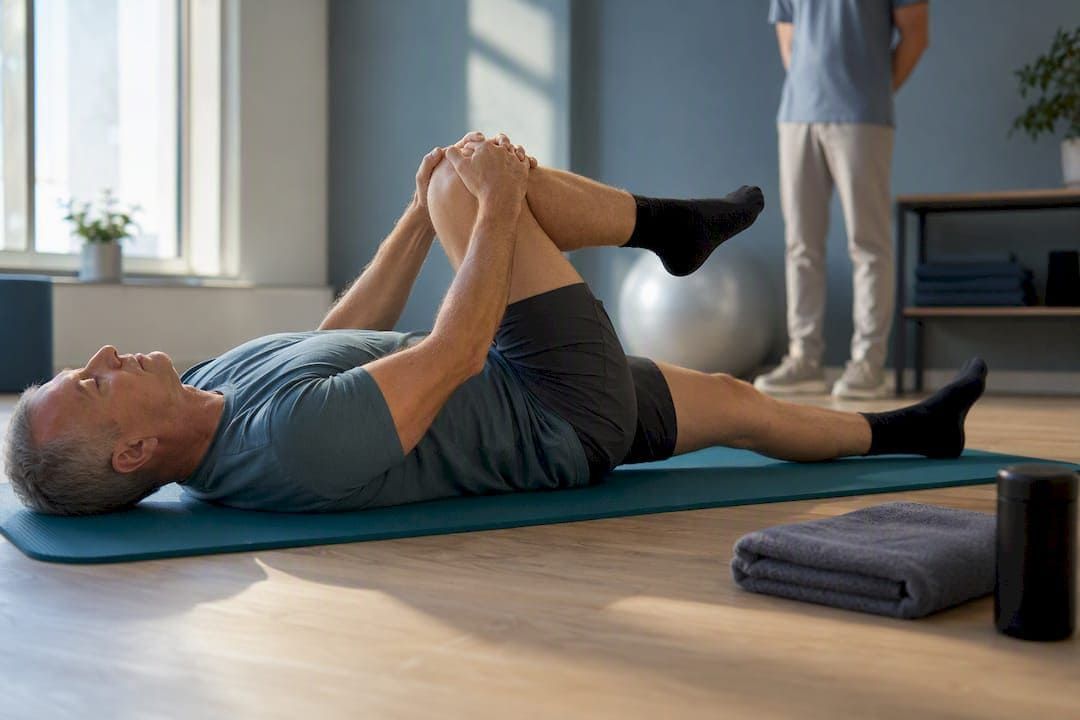
Lie on your back and place both legs on a chair or against a wall so your hips and knees form 90-degree angles. Stay in this position for two to five minutes. The position removes the lumbar curve and allows the discs to rehydrate under reduced load. It is one of the most underused spine stretches for home use, yet physical therapists recommend it regularly for disc-related pain.
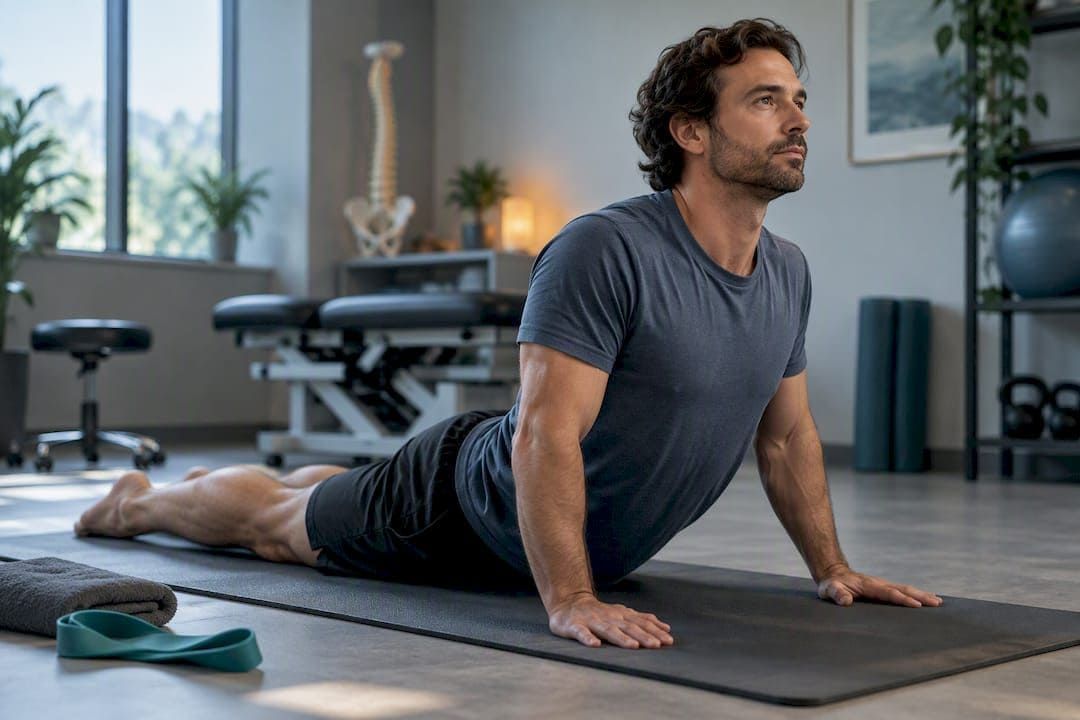
4. McKenzie prone press-up
Lie face down with your palms flat on the floor near your shoulders. Press your upper body up while keeping your pelvis on the floor, moving into lumbar extension. McKenzie prone press-ups work best for people whose pain centralizes with extension. Stop immediately if pain moves into your leg.
The McKenzie method organizes these exercises around a concept called directional preference. Directional preference means your spine responds better to either flexion or extension movements. Finding your preference makes your routine far more effective than following a generic list.
Pro Tip: Breathe out during the effort phase of each exercise. Exhaling reduces intra-abdominal pressure and allows the spine to decompress more fully.
How to use traction and hanging techniques to decompress your spine safely at home
Traction techniques go one step further than stretching by applying a sustained pulling force along the spine. They are safe for most adults when done gradually and with attention to pain signals.
Counter traction
Stand facing a countertop at hip height. Place both hands on the edge, bend your knees slightly, and let your body weight sink downward while your arms support you. Hold for 20–30 seconds. This DIY spine decompression method gently separates the lumbar vertebrae without requiring any equipment beyond your kitchen counter.
Doorway hang
Grip a door frame or pull-up bar with both hands at shoulder width. Let your feet stay lightly on the floor or lift them slightly. Hold for 10–20 seconds and release. Build up to 30-second holds over several sessions. Dead hangs are one of the best ways to relieve back pressure across the full spine, from the lumbar region up through the thoracic vertebrae.
Safety rules for traction techniques:
- Start with supported hangs where your feet remain on the floor
- Stop immediately if pain moves into your arm or leg
- Never force a hang through sharp or shooting pain
- Limit sessions to two to three minutes total until you know how your body responds
- Avoid traction if you have osteoporosis, a recent fracture, or undiagnosed nerve symptoms
Inversion tables offer a more controlled version of traction by tilting your body at a set angle. They are useful for people who cannot grip a bar comfortably. The angle can be adjusted from 20 degrees up to full inversion, and most people find relief at 30–45 degrees without going fully upside down.
Pro Tip: If a full hang feels too intense, loop a resistance band around the bar and stand in it. The band supports part of your body weight and lets you control the amount of traction applied.
How to monitor and interpret your pain signals during spinal decompression exercises
Reading your pain correctly is the most important skill in any home spine relief routine. The clinical concept that guides this is called centralization.
Pain centralization means your pain moves closer to the center of your spine during or after an exercise. This is a positive sign. It tells you the movement is reducing pressure on the nerve and the exercise is working. Peripheralization is the opposite: pain moves further away from your spine, into your buttock, thigh, or foot. Peripheralization means stop.
The rule is simple: if an exercise moves pain toward your spine, keep doing it. If it moves pain away from your spine and into your limbs, stop the exercise immediately and try the opposite movement direction. Pain that spreads further down your leg during a stretch is your nervous system signaling aggravation, not progress.
Pain moving into your leg during a spinal decompression exercise is a clear signal to stop that movement. Switching from a flexion-based exercise like Child's Pose to an extension-based one like the McKenzie press-up often reverses this pattern. The goal is always to find the direction that centralizes your symptoms.
Gradual progression protects you from overloading irritated tissue. Start with one or two exercises per session and add more only after three to five days of no worsening. If your baseline pain level increases after a session, reduce the intensity or duration rather than pushing through. Monitoring your pain signals carefully is not optional. It is the mechanism that tells you whether your routine is helping or making things worse.

What are the best practices to maintain spine health and maximize decompression benefits at home?
Consistency matters more than intensity when it comes to spinal decompression. A 10–15 minute daily routine produces better results than an occasional long session. Short, frequent sessions keep the discs hydrated and the surrounding muscles relaxed.
Daily habits that protect your spine:
- Change position or stand up at least every 30 minutes during prolonged sitting. Position changes every 30 minutes significantly reduce spinal load and prevent the buildup of compressive forces.
- Walk for 10–15 minutes daily. Walking creates rhythmic spinal loading and unloading that promotes disc nutrition.
- Apply ice for the first 48–72 hours of acute pain. After that window, switch to heat to promote blood flow and muscle relaxation. You can also alternate ice and heat based on which provides more relief.
- Avoid prolonged bed rest. Staying still for more than a day or two slows recovery and increases stiffness.
- Add a brief standing back extension every time you get up from a chair. Stand tall, place your hands on your lower back, and gently arch backward five times. This counteracts the flexion load from sitting.
Posture during the day affects how much benefit you get from your decompression routine. Sitting with a lumbar support, keeping screens at eye level, and avoiding forward head posture all reduce the compression your spine accumulates between sessions. Think of your spinal decompression exercises as maintenance work. The habits you build around them determine how long the relief lasts.
Key Takeaways
Spinal decompression at home works best when you match the exercise direction to your pain response, stay consistent with short daily sessions, and stop any movement that pushes pain further into your limbs.
| Point | Details |
|---|---|
| Start with body weight | Cat-Cow, Child's Pose, and 90/90 decompression require no equipment and suit beginners. |
| Use directional preference | Find whether flexion or extension centralizes your pain, then build your routine around that direction. |
| Monitor centralization | Pain moving toward your spine means the exercise is working; pain moving into your leg means stop immediately. |
| Keep sessions short and daily | A 10–15 minute daily routine outperforms occasional long sessions for lasting disc relief. |
| Complement with movement breaks | Standing or walking every 30 minutes reduces spinal compression between decompression sessions. |
What I've learned about home spinal decompression after years of watching patients try it
Most people approach home spine relief the wrong way. They find a list of exercises online, do all of them at once, and then wonder why their pain is worse the next morning. The problem is not the exercises. The problem is the assumption that more is better.
The single most useful concept I have seen change outcomes for people is directional preference. Once you know whether your spine responds to flexion or extension, you can cut your routine in half and get better results. Trying every exercise on every list is not a strategy. It is guesswork with your nervous system.
The other mistake I see constantly is treating decompression as a cure. Spinal decompression provides temporary relief that creates a window for movement and strengthening. That window is valuable. But if you use it only to rest, the compression returns. The people who get lasting results use that relief window to walk, to move, and to build the muscle support their spine needs.
One more thing worth saying plainly: if your pain is worsening week over week, or if you have new numbness or weakness in your legs, home exercises are not enough. That is the point where a professional assessment stops being optional. Home routines are a powerful tool. They are not a substitute for a clinical diagnosis when something more serious is happening.
Professional spinal care that goes beyond what home routines can do
Home decompression routines are a strong starting point, but they address symptoms rather than the underlying mechanics driving your pain.
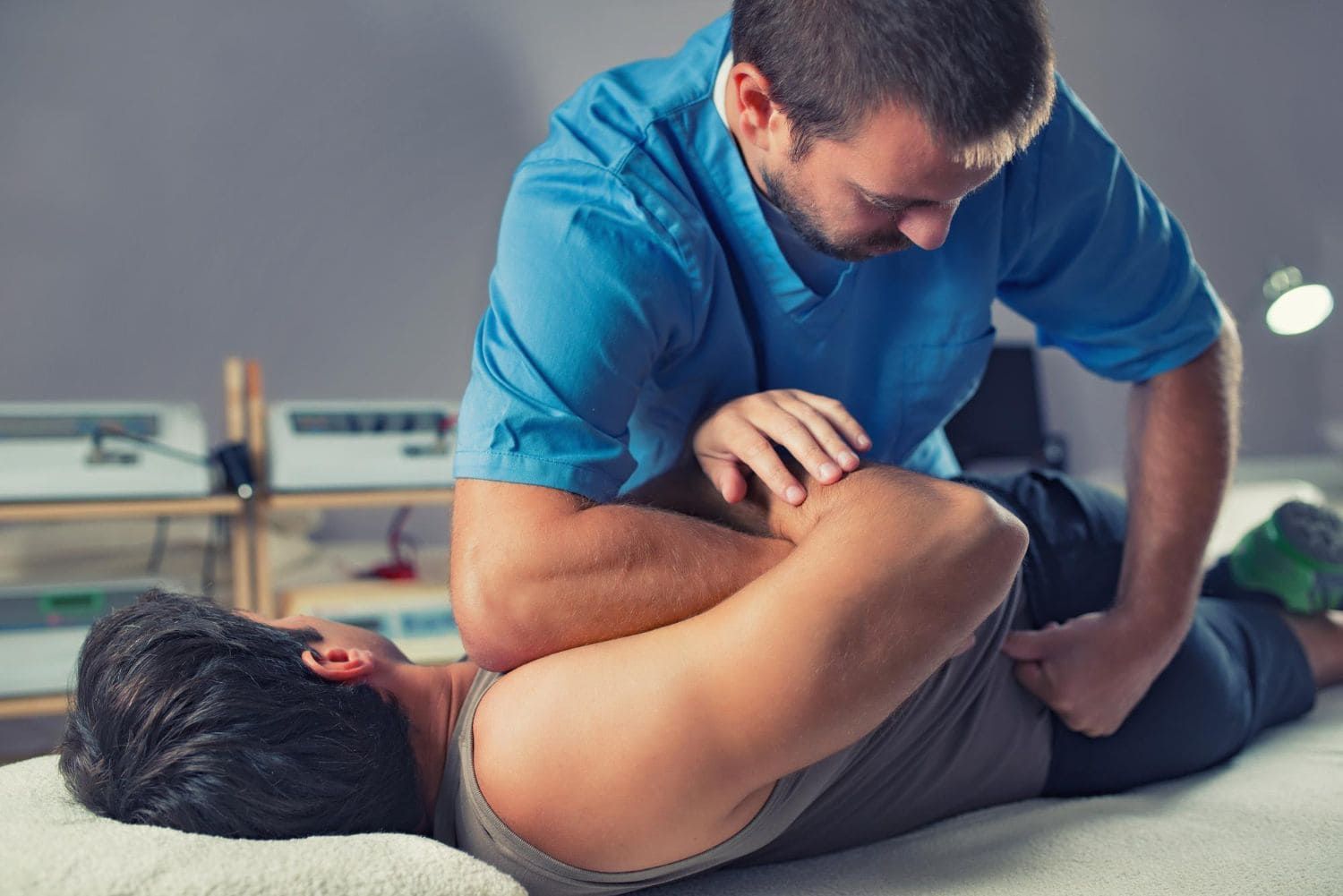
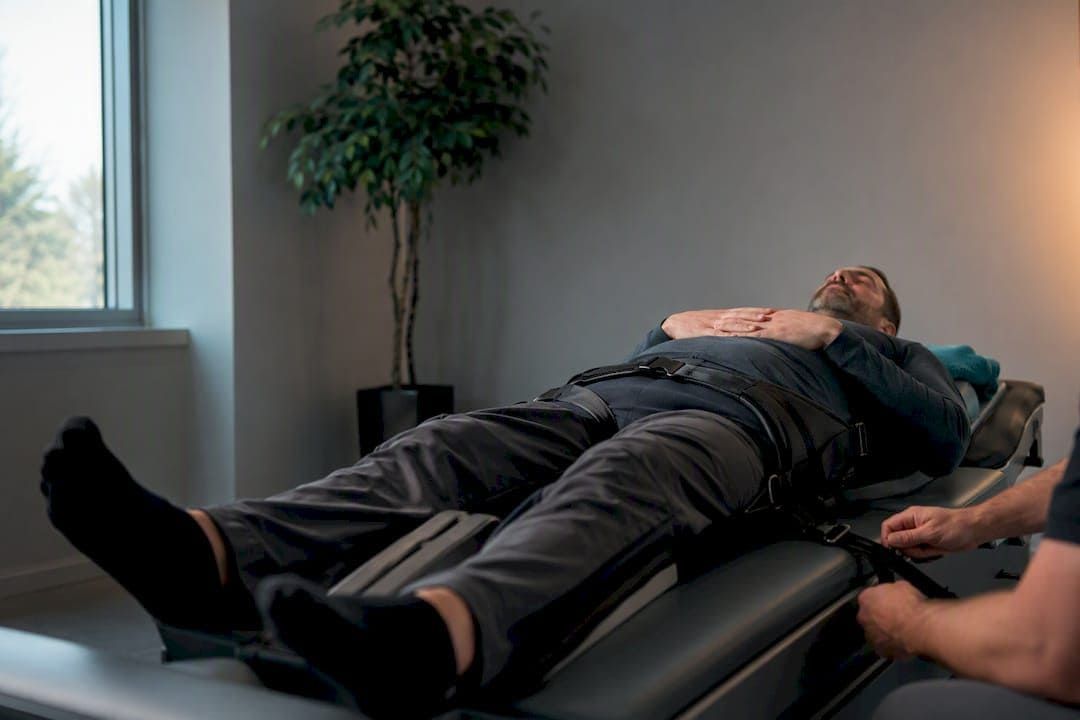
Essentialchirocare offers chiropractic care across Tampa, Brandon, Sarasota, Lakeland, and Pinellas Park, with personalized treatment plans that combine clinical spinal decompression, manual therapy, and physical rehabilitation. The clinic's doctors bring sports medicine backgrounds to every case, which means your plan is built around your specific movement patterns and pain profile, not a generic protocol. If your home routine has plateaued or your symptoms are not improving, a professional assessment at Essentialchirocare gives you a clear picture of what is actually happening in your spine and what will move you forward.
FAQ
What does spinal decompression actually do?
Spinal decompression reduces compressive forces on the discs and nerve roots by creating gentle traction or unloading along the spine. It provides temporary relief that allows movement and reduces muscle guarding.
How often should I do spinal decompression exercises at home?
A daily routine of 10–15 minutes is the standard recommendation for general relief. Clinical protocols like the McKenzie method may suggest performing specific sets multiple times throughout the day.
How do I know if a home decompression exercise is working?
Pain moving toward the center of your spine during or after an exercise is the key indicator of effectiveness. If pain moves further into your leg or buttock, stop the exercise immediately and try the opposite direction.
Can I use a pull-up bar for spinal decompression?
Yes. Dead hangs from a pull-up bar create traction that can achieve approximately 3mm of spinal separation. Start with supported hangs where your feet stay on the floor and build up gradually.
When should I see a professional instead of treating at home?
See a professional if your pain worsens over one to two weeks of home care, if you develop new numbness or weakness in your legs, or if pain is severe and constant. Essentialchirocare provides clinical spinal decompression and physical rehab for cases that go beyond what home routines can resolve.