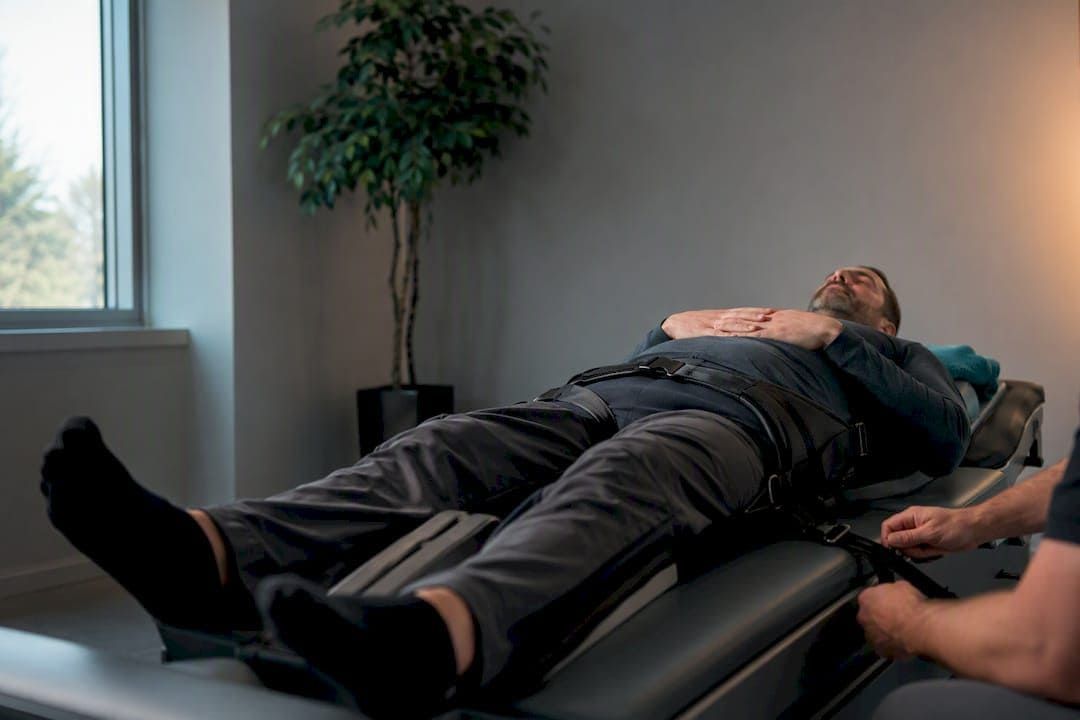



Whiplash Explained: Symptoms, Treatment, and Recovery

Essential ChiroCare Blogger • June 11, 2026

Whiplash Explained: Symptoms, Treatment, and Recovery

TL;DR:

  • Whiplash is a soft tissue neck injury caused by rapid, forceful head movements often resulting from car accidents or sports collisions. Symptoms can delay 24 to 48 hours and include neck pain, headaches, dizziness, and cognitive issues, requiring early assessment to prevent chronic problems. Recovery typically takes two to three months with active movement, appropriate therapy, and avoiding unnecessary immobilization or passive treatments.

If you've recently been in a car accident or taken a hard hit playing sports, and your neck started aching the next morning, you're not imagining things. Whiplash explained simply is this: a soft tissue neck injury caused by sudden, forceful back-and-forth movement of the head. Clinically, it's classified under whiplash-associated disorders (WAD). It's one of the most common injury types seen after rear-end collisions, yet most people either underestimate it or don't recognize the symptoms until days later. This guide covers how whiplash occurs, what symptoms to expect and when, how it's diagnosed, and what treatment actually works.

whiplash recovery timeline

Table of Contents

Key takeaways

Point Details
Symptoms are often delayed Pain and stiffness may not appear for 24 to 48 hours after the injury.
Not just neck pain Whiplash can cause headaches, dizziness, arm numbness, and cognitive issues.
Avoid wearing a neck collar Immobilization typically slows recovery; gentle movement works better.
Most cases resolve within months With proper care, symptoms usually improve within 2 to 3 months.
Early professional care matters Seeking assessment quickly leads to better outcomes and fewer chronic complications.

Whiplash explained: what it is and how it happens

Whiplash-associated disorders are defined as bony or soft-tissue injuries resulting from acceleration-deceleration forces that drive the neck through a rapid range of motion it was not designed to handle. The term "whiplash" describes the mechanism: your head snaps forward and backward, or side to side, faster than your neck muscles can react.

Understanding the injury mechanism matters because it explains why even low-speed collisions can cause significant damage. When a car stops suddenly, your body is restrained by the seatbelt but your head continues moving. The cervical spine stretches and compresses in milliseconds. Inertial differential motion causes neck tissues to extend or compress quickly beyond tolerance, straining ligaments, muscles, and sometimes the discs between vertebrae.

Common causes of whiplash

  • Rear-end car accidents: The most frequent cause, even at speeds under 15 mph
  • Sports collisions: Contact sports like football, hockey, and rugby create similar force dynamics
  • Falls: Slipping and hitting your head or having your head jerked by a fall
  • Physical assault: Any sudden blow to the head that snaps the neck

Symptoms beyond the obvious

Most people expect neck pain. What surprises them is the full range of what whiplash produces. Here's a comparison of common versus less-recognized symptoms:

Common symptoms Less-recognized symptoms
Neck pain and stiffness Dizziness or balance problems
Headaches at the base of skull Blurred vision
Shoulder and upper back pain Ringing in the ears (tinnitus)
Arm pain or tingling Difficulty concentrating or memory issues
Fatigue Irritability or mood changes

The cognitive and emotional symptoms listed in that second column are frequently dismissed, both by patients and sometimes by non-specialist providers. They are real, documented features of whiplash-associated disorders.

Symptom timing and what the delay means for you

Here is the fact that catches most people off guard: your neck might feel fine right after the accident. You walk away, feel shaken but okay, and decide not to seek care. Then you wake up the next morning barely able to turn your head. Symptoms often delay 24 to 48 hours before pain or stiffness appears, which is entirely normal and not a sign that your injury is minor.

The reason for this delay is physiological. Adrenaline-induced pain suppression can mask symptoms for hours after an injury, making the immediate absence of pain unreliable as a guide to severity. Your body prioritizes survival mode in the immediate aftermath of trauma. Once that stress response fades, inflammation sets in and pain signals reach full volume.

How to recognize when symptoms need urgent attention

Most whiplash symptoms are uncomfortable but not dangerous. A few, however, require same-day medical evaluation:

  1. Severe, spreading arm weakness or numbness that gets worse rapidly
  2. Loss of bladder or bowel control
  3. Difficulty swallowing or speaking
  4. Significant dizziness or fainting
  5. Sudden severe headache unlike anything you've had before

These could indicate nerve root compression, disc herniation, or vascular injury, all of which require immediate imaging and specialist assessment.

For typical presentations, a clinical evaluation within 24 to 72 hours is appropriate. Waiting two weeks to "see if it gets better" is not ideal because early intervention shapes how well you recover.

Pro Tip: Take photos or write notes about your symptoms the day after an accident, even if they seem minor. A written timeline helps your provider assess severity and helps you track improvement or worsening over time.

How providers diagnose and grade whiplash

Diagnosis starts with ruling out what whiplash is not. A provider will check for fractures, significant disc herniation, spinal cord injury, and vascular damage before settling on a soft-tissue injury classification. This is why getting evaluated matters even when you think you'll be fine.

Imaging follows clinical assessment. X-rays check for bony injury and instability. MRI shows soft tissue structures including discs and ligaments. CT scans are used when fracture detail is needed. Many mild to moderate cases show no abnormality on imaging, which can frustrate patients. Normal imaging does not mean no injury. It means the injury is in structures that imaging doesn't always capture well.

The WAD grading scale

Providers often use the Whiplash-Associated Disorder grading scale to classify severity:

Grade Description
Grade 0 No neck pain, no physical signs
Grade 1 Neck pain or stiffness, no physical signs
Grade 2 Neck symptoms plus musculoskeletal signs
Grade 3 Neck symptoms plus neurological signs
Grade 4 Neck symptoms with fracture or dislocation

Grades 1 and 2 cover the majority of whiplash cases. Grade 3 and above require more aggressive medical management and specialist referral.

whiplash associated disorders

Treatment and recovery: what works

The good news: whiplash typically heals on its own, and most people see meaningful improvement within the first few weeks. The goal of treatment is to manage pain, reduce inflammation, maintain mobility, and prevent the injury from becoming chronic.

At-home care in the first week

  • Apply cold therapy for the first 7 to 10 days after injury, using a cloth barrier between ice and skin, for 15 to 20 minutes at a time
  • Switch to heat after 10 days to relax muscle tension, again using a protective barrier
  • Take over-the-counter anti-inflammatories as directed by your provider
  • Keep moving gently. Slow, deliberate range-of-motion exercises prevent stiffness from compounding

Physical therapy and manual care

Physical therapy is a cornerstone of whiplash treatment for grades 2 and above. A therapist guides you through progressive exercises that rebuild strength and flexibility in the cervical spine without overloading healing tissue. For information on resuming movement safely , the role of structured physical therapy is covered in detail with practical protocols.

Manual therapy offers faster short-term pain relief in acute whiplash, with improved pain scores within the first five days compared to standard care alone. However, it does not appear to speed long-term recovery beyond 12 weeks. This means it's most valuable as part of a broader plan that includes exercise and patient education, not as a standalone treatment. You can explore evidence and timelines for chiropractic care if you want the research-grounded breakdown.

Recovery timeline benchmarks

Most improvement happens in the first weeks, with the majority of uncomplicated cases resolving within 2 to 3 months. Here's how a typical recovery arc looks:

  • Weeks 1 to 2: Pain and stiffness at their worst; cold therapy and gentle movement are priorities
  • Weeks 3 to 6: Gradual reduction in pain; increasing movement and starting formal rehab
  • At 6 weeks: Reassessment recommended if no meaningful improvement has occurred
  • Months 2 to 3: Most patients reach functional recovery
  • Beyond 3 months: Persistent symptoms suggest chronic whiplash and require a different management approach

For severe cases, advanced interventions like transcutaneous electrical nerve stimulation (TENS), nerve ablation, or surgery may be considered, though these are relatively rare.

Pro Tip: If you're still in significant pain at the six-week mark, request a formal reassessment rather than continuing the same plan. Persistent symptoms sometimes indicate an underlying structural issue that needs a different approach.

Daily management tips to support your recovery

Recovery from whiplash is not passive. What you do between appointments matters as much as the treatment itself.

  • Keep moving: Early active recovery improves outcomes. Staying in bed or restricting all movement promotes deconditioning and makes pain worse over time
  • Skip the collar: Neck collars are generally not recommended because they limit the gentle movement your neck needs to heal. Use one only if a provider specifically prescribes it for a short period
  • Fix your workstation: Screen height, chair support, and keyboard position all affect how much strain your recovering neck carries through the day
  • Sleep position matters: A supportive pillow that keeps your neck in neutral alignment reduces overnight stiffness significantly
  • Return to normal activities early: Getting back to work and daily routines, modified as needed, speeds psychological and physical recovery
  • Watch for warning signs: Worsening neurological symptoms, new weakness, or spreading pain are signals to call your provider, not wait

For Tampa Bay area residents, whiplash management after accidents offers region-specific guidance on at-home protocols and local care options.

My take on whiplash recovery

I've worked with a lot of people who minimized their whiplash right after a car accident because they felt fine at the scene. By the time they came in, they'd spent a week in pain, convinced themselves it would pass, and were now dealing with muscle guarding and posture adaptations that had layered new problems on top of the original injury.

The part that frustrates me most is the "it's just whiplash" mindset. There is no such thing as a minor neck injury when left unaddressed. The cervical spine controls everything from arm sensation to balance. When it's injured, the effects ripple outward in ways people don't connect back to the original event.

What I've seen work, consistently, is this: get evaluated early, stay active within your pain tolerance, and don't rely entirely on passive treatments like heat packs and rest. Manual therapy and chiropractic adjustments can give you meaningful short-term relief, but the patients who fully recover are the ones who do their exercises, fix their ergonomics, and stay engaged in the process. Recovery is something you participate in, not something that happens to you.

If your symptoms are still hanging around at six weeks, that's the time to push for a more thorough evaluation. Chronic whiplash is real, but it's far less likely when you've had consistent, structured care from early on.

Get professional support for your recovery

Dealing with neck pain after an accident is stressful enough without trying to figure out the right next step on your own. At Essentialchirocare, the team specializes in exactly this type of injury across West Central Florida locations including Tampa, Brandon, Sarasota, Lakeland, and Pinellas Park.

Whether you need a thorough evaluation, hands-on chiropractic care for pain relief , or a structured rehabilitation program, Essentialchirocare builds personalized treatment plans designed around your specific symptoms and recovery goals. The concierge care model for accident recovery means you're not shuffled through a generic protocol. You get a plan that fits your injury, your timeline, and your life. Schedule an appointment online or call your nearest location to get started.

FAQ

  • What exactly is whiplash?

    Whiplash is a soft tissue neck injury caused by rapid acceleration-deceleration forces that hyperextend or hypercompress the cervical spine. It falls under the clinical classification of whiplash-associated disorders (WAD).

  • Why does whiplash pain start the day after an accident?

    Adrenaline released during trauma suppresses pain signals for hours after an injury. Once the stress response clears, inflammation sets in and symptoms like neck pain and stiffness typically emerge within 24 to 48 hours.

  • How long does whiplash take to heal?

    Most uncomplicated cases improve significantly within 2 to 3 months, with the most noticeable recovery happening in the first few weeks. Persistent symptoms beyond three months indicate chronic whiplash and need a different treatment approach.

  • Is wearing a neck collar helpful for whiplash?

    No. Neck collars are generally not recommended because they restrict the gentle movement that promotes healing. Unless a provider specifically prescribes one for a structural reason, staying mobile within your comfort range produces better outcomes.

  • When should I see a doctor after a whiplash injury?

    See a provider within 24 to 72 hours of any accident that jolts your head, even if you feel okay immediately afterward. Seek same-day emergency care if you develop sudden arm weakness, difficulty swallowing, severe headache, or loss of bladder control.

Recommended

what is therapeutic massage
By Essential ChiroCare Blogger June 10, 2026
Discover what therapeutic massage is and how it can provide effective pain relief and promote healing. Transform your recovery today!
chiropractic treatment plan
By Essential ChiroCare Blogger June 9, 2026
Unlock your wellness with our guide to integrating chiropractic care. Discover how to enhance your health routine and find relief effectively!
what is integrative care
By Essential ChiroCare Blogger June 8, 2026
Discover what integrative care really is—an approach blending conventional and complementary therapies for holistic health and better outcomes.
spine care chiropractor Lakeland
By Essential ChiroCare Blogger June 7, 2026
Avoid aches during hot Florida months with posture tips and support from a spine care chiropractor in Lakeland to help keep your summer moving right.
chiropractic lifestyle change process
By Essential ChiroCare Blogger June 6, 2026
Discover the chiropractic lifestyle change process and learn essential habits for lasting wellness. Transform your health journey today!
physical medicine and rehabilitation
By Essential ChiroCare Blogger June 5, 2026
Discover what is physical medicine and how it can transform your recovery. Learn about this vital specialty and its diverse treatment options today!
how to identify sciatica
By Essential ChiroCare Blogger June 4, 2026
Discover how to identify sciatica and differentiate it from general back pain. Get insights on symptoms to seek the right treatment!
holistic chiropractor Brandon FL
By Essential ChiroCare Blogger June 3, 2026
Learn how a holistic chiropractor in Tampa supports full-body wellness with care that fits Brandon’s hot, humid summers and daily movement needs.
what is active rehabilitation
By Essential ChiroCare Blogger June 2, 2026
Discover what active rehabilitation is and how it transforms your recovery. Embrace evidence-based movement for faster healing today!
how stress affects the spine
By Essential ChiroCare Blogger June 1, 2026
Discover how stress affects the spine and learn effective strategies to alleviate pain and improve your spinal health. Take control today!
Show More