Safe Walking Guide After Accident: Rebuild Mobility

Essential ChiroCare Blogger • July 17, 2026

Safe Walking Guide After Accident: Rebuild Mobility

TL;DR:

  • Safe walking after an accident involves a gradual process focused on rebuilding strength and joint mobility under professional guidance. Patients must obtain medical clearance, use proper technique, and start with short, frequent walks in low-traffic areas to prevent setbacks and develop confidence. Consistent, attentive practice, including psychological readiness, is essential for successful outdoor reintegration and full recovery.

Safe walking after an accident is a controlled, gradual process designed to rebuild strength, restore joint mobility, and prevent secondary complications. Most patients can return to functional walking with the right preparation, technique, and pacing. This safe walking guide after accident covers everything you need: physical prerequisites, step-by-step technique, outdoor reintegration, and troubleshooting the setbacks that derail most recoveries. The American Physical Therapy Association supports early, guided movement as a core principle of modern rehabilitation. Getting started correctly matters more than getting started fast.

safe walking guide after accident

What you need before starting to walk safely after an accident

Physical clearance from a licensed healthcare provider is the non-negotiable first step. Your provider will assess weight-bearing capacity, wound status, and cardiovascular readiness before you take a single lap around the room. Skipping this step is the most common reason patients re-injure themselves in the first two weeks.

Active recovery protocols have replaced total bed rest as the clinical standard. Gentle, controlled movement stimulates circulation, prevents muscle loss, and supports tissue repair. The goal is movement without sharp pain, not movement despite it.

Before your first session, gather the right equipment:

  • Footwear: Supportive, non-slip shoes with a low heel and firm sole
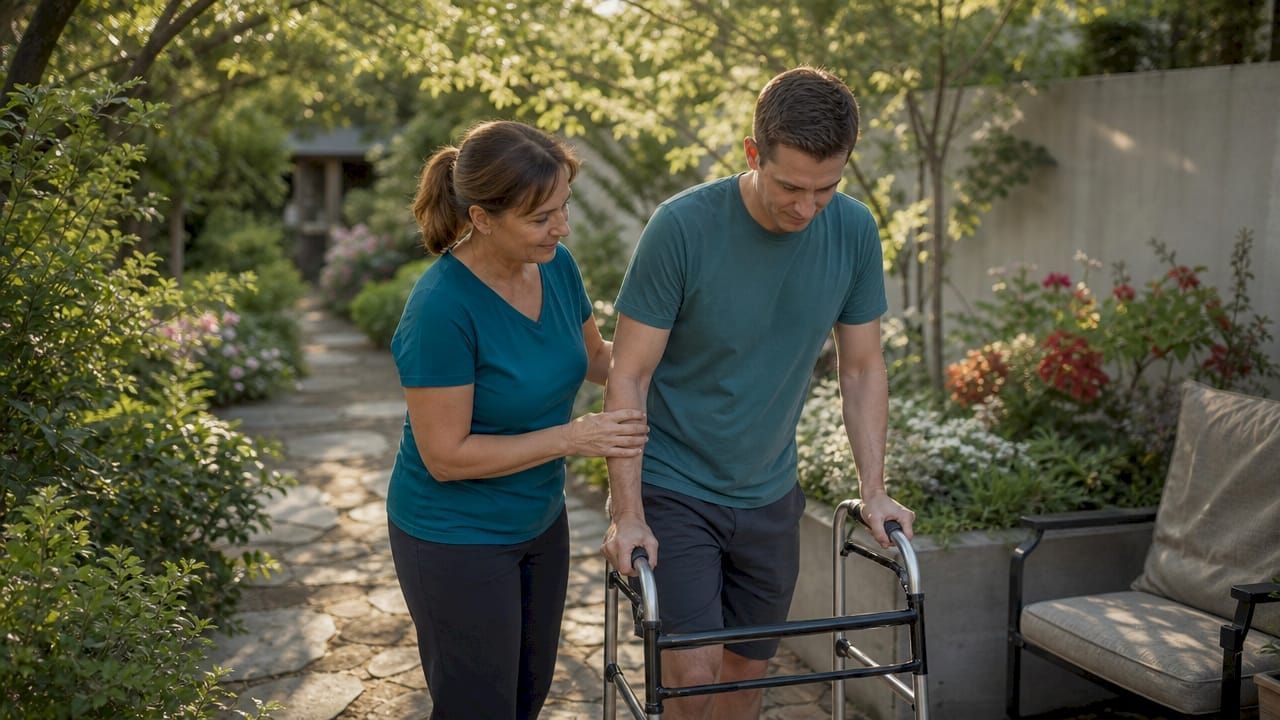
  • Assistive devices: A cane, walker, or crutches if prescribed by your provider
  • Clothing: Comfortable, non-restrictive layers; reflective strips if you plan to walk near roads
  • Environment: A clear, flat, low-traffic area free of rugs, cords, or uneven surfaces

 Pelvic floor muscle strength is critical for balance and safe walking after lower-body injuries. Targeted physiotherapy improves core stability and reduces fall risk before you even leave the room. Many patients overlook this entirely and wonder why their balance feels unreliable.

 Orthostatic hypotension after standing can cause dizziness and falls. The fix is simple: pause and count to ten after standing before taking your first step. That ten-second pause lets your blood pressure stabilize and dramatically reduces the risk of a fall in the first moments of movement.

Pro Tip: Place a sturdy chair near your starting point for the first several sessions. If dizziness hits, you have an immediate, safe place to sit without scrambling.

Readiness factor What to check
Medical clearance Written or verbal approval from your doctor or physical therapist
Pain level Dull ache is acceptable; sharp or shooting pain is a stop signal
Assistive device fit Walker or cane adjusted to wrist height when arms hang at sides
Environment Flat, dry, uncluttered surface with no trip hazards
Footwear Closed-toe, non-slip sole, no loose laces

Step-by-step techniques for walking safely after an accident

Proper technique prevents the compensatory movement patterns that cause secondary injuries. Most patients develop a limp or a forward lean within the first few days. Those habits become harder to correct the longer they persist.

Follow this sequence for every session, especially in the early phase:

  1. Sit-to-stand: Slide to the edge of the chair. Lean forward so your weight shifts over your feet. Push up with both hands flat on the chair seat. Do not pull up using your arms or a walker. Pulling up with arms strains shoulders and injury sites.
  2. Stabilize before moving: Stand fully upright, count to ten, and confirm you feel steady. This pause addresses orthostatic hypotension and gives your nervous system a moment to calibrate.
  3. Place your assistive device first: Move the cane or walker forward one step, then step with your weaker leg, then bring your stronger leg forward. Never lead with the stronger leg.
  4. Walk at a conversational pace: You should be able to speak a full sentence without gasping. If you cannot, slow down.
  5. Keep sessions short and frequent: Short, frequent walks around the house are preferred over long distances in the early days post-injury. Frequency builds muscle memory and circulation without overtaxing healing tissue.
  6. Progress gradually: Work toward 30–45 minutes per session, 5 days a week as your recovery advances. That duration and frequency reduces stiffness and improves mood without overloading the body.
  7. Sit down safely: Reverse the sit-to-stand process. Back up until you feel the chair against your legs, reach back for the armrests, and lower yourself slowly.

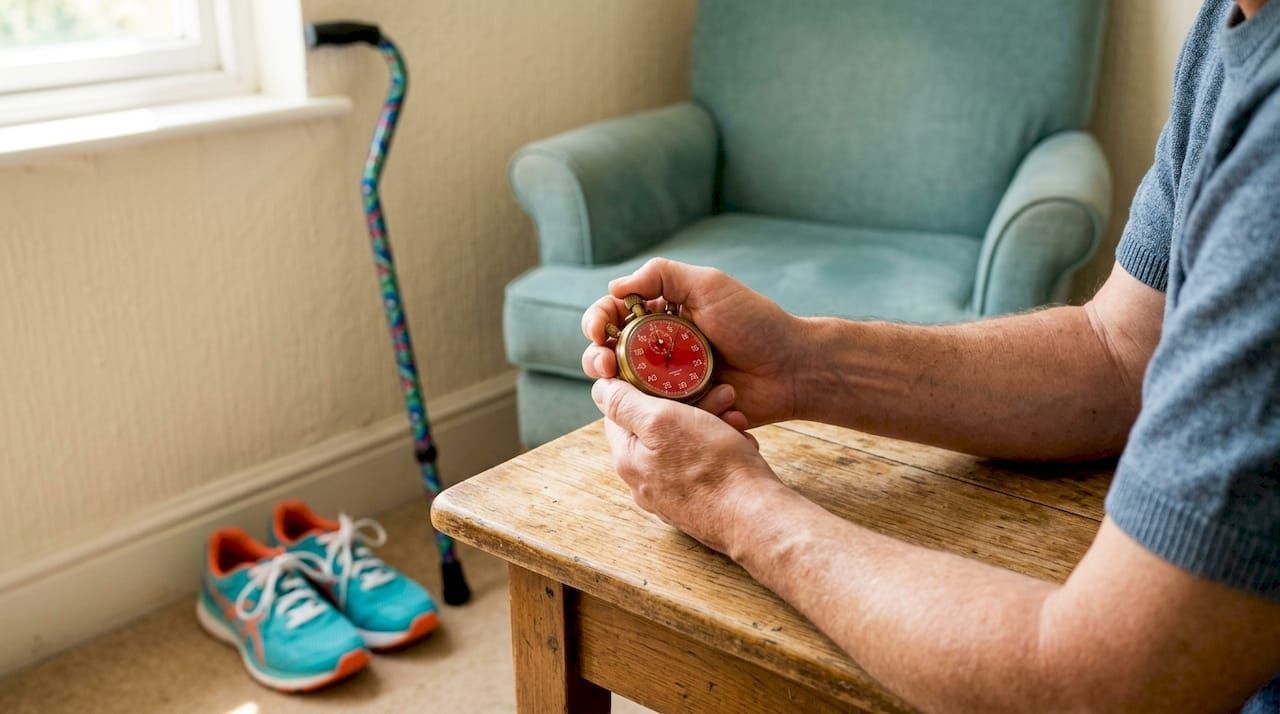
Pro Tip: Set a timer for your sessions rather than tracking distance. Time is easier to manage than steps when fatigue is unpredictable, and it prevents you from pushing past your limit chasing a distance goal.

Common mistakes to avoid include looking down at your feet instead of ahead, gripping a walker so tightly your knuckles whiten, and skipping the post-stand pause because it feels unnecessary. Each of these mistakes increases fall risk or creates muscle tension that slows recovery.

How to walk safely outdoors after an accident

Outdoor walking reintegration follows a specific progression. Jumping from hallway laps to a busy sidewalk is a recipe for a setback, both physically and psychologically.

Start in low-traffic, familiar areas. Parks, residential streets, and quiet parking lots give you space to focus on your gait without managing traffic. Patients who begin in low-traffic areas before returning to busy intersections report fewer anxiety-related stumbles and greater confidence in their stride.

When you are ready for streets and crosswalks, apply these rules:

  • Use marked crosswalks and pedestrian signals every time, without exception
  • Make direct eye contact with drivers before stepping into any intersection
  • Wear reflective clothing at dawn, dusk, or night to stay visible
  • Leave your phone in your pocket and remove headphones while crossing
  • Walk facing oncoming traffic on roads without sidewalks

"Rebuilding confidence outdoors is as much a mental process as a physical one. Give yourself permission to take the long route around a busy corner until you feel ready. There is no recovery timeline that requires you to rush back into traffic."

Anxiety about walking outdoors after an accident is common and legitimate. Many patients experience hypervigilance near roads, especially after vehicle-related accidents. Gradual exposure works better than forcing yourself through discomfort. Start with a five-minute outdoor walk, then ten, then fifteen. Each successful session builds the evidence your nervous system needs to feel safe again.

safe walking guide after accident

Troubleshooting common challenges during recovery walking

Muscle weakness and stiffness are the most predictable obstacles in the first two weeks. Both respond well to balance and coordination exercises that target standing stability and walking rhythm. A physical therapist can prescribe specific drills based on your injury type and current gait pattern.

Recognize these warning signs and stop walking immediately if they appear:

  • Sharp or sudden pain at the injury site
  • Numbness or tingling in the legs or feet
  • Severe shortness of breath or chest tightness
  • Sudden loss of balance or a near-fall
  • Significant swelling that was not present before the session

Fatigue is normal. Exhaustion that lasts more than an hour after a session is a signal you pushed too far. Reduce session length by half the next day and rebuild from there.

Psychological challenges are just as real as physical ones. Anxiety, fear of re-injury, and frustration with slow progress affect a large portion of accident survivors. Acknowledging these feelings as part of recovery rather than signs of weakness changes how you manage them. Short-term counseling or peer support groups help many patients stay consistent with their post-accident mobility routines when motivation drops.

For patients with varying injury severities, modify session length and terrain accordingly. A patient recovering from a mild soft-tissue injury may progress to outdoor walks within a week. A patient recovering from a fracture or surgical repair may spend three to four weeks on indoor, flat-surface walking before attempting uneven ground. Your provider sets the timeline. Your job is to execute it consistently.

Pro Tip: Keep a simple walking log. Write down session length, pain level on a 1–10 scale, and how you felt afterward. Patterns in that log tell you and your provider exactly when to progress and when to pull back.

Key takeaways

Safe walking after an accident requires medical clearance, proper technique, gradual progression, and consistent attention to both physical and psychological readiness.

Point Details
Get medical clearance first Never begin a walking program without provider approval based on your specific injury.
Use proper sit-to-stand form Push up with hands on the chair seat; never pull up with arms or a walker.
Start short and frequent Brief, repeated walks build strength and circulation better than one long session.
Progress to 30–45 minutes Work toward 30–45 minute sessions, 5 days a week, at a conversational pace as recovery advances.
Address outdoor anxiety gradually Use low-traffic areas first and increase exposure in small, manageable steps.

What I have learned watching patients walk again

The patients who recover fastest are rarely the ones who push hardest. They are the ones who show up consistently, follow the technique exactly, and resist the urge to skip the boring parts like the ten-second post-stand pause or the short indoor laps that feel pointless after day three.

I have watched patients who were convinced they would never walk normally again leave a clinic walking steadily after six weeks of disciplined, unglamorous work. The turning point is almost always the same: they stop measuring progress by how far they walked and start measuring it by how well they walked. Form before distance. Consistency before intensity.

The psychological piece gets underestimated constantly. Patients who feel anxious about walking outdoors often interpret that anxiety as a physical limitation. It is not. It is a normal nervous system response to a traumatic event. Treating it as such, with patience and gradual exposure rather than frustration, changes everything.

If you are in the early days of recovery and the hallway feels like a marathon, that is exactly where you are supposed to be. The active rehabilitation approach works because it meets you where you are, not where you think you should be.

Essentialchirocare's approach to post-accident walking recovery

Recovering your ability to walk confidently after an accident takes more than willpower. It takes a structured plan built around your specific injury, your current strength, and your recovery timeline.

Essentialchirocare's physical rehabilitation services are designed to restore strength and mobility after accidents through personalized treatment plans. The clinic's chiropractic care addresses the spinal and joint alignment issues that make safe walking harder than it needs to be. With locations across Tampa, Brandon, Sarasota, Lakeland, and Pinellas Park, Essentialchirocare connects patients in West Central Florida with experienced providers who specialize in post-accident recovery. Schedule a consultation and get a plan built around your recovery, not a generic protocol.

FAQ

  • What is the first step in walking safely after an accident?

    Get written or verbal clearance from your healthcare provider before attempting any walking program. Your provider will assess weight-bearing capacity and identify any conditions, such as orthostatic hypotension, that require management before you start.

  • How long should my walking sessions be at the start of recovery?

    Start with short, frequent walks around the house rather than focusing on distance or duration. As recovery progresses, work toward 30–45 minute sessions, 5 days a week, at a pace where you can hold a conversation.

  • When should I stop walking and call my provider?

    Stop immediately if you experience sharp pain at the injury site, numbness or tingling in the legs, sudden loss of balance, or significant new swelling. These are signs of overexertion or a complication that needs professional evaluation.

  • How do I manage fear of walking outdoors after an accident?

    Begin in low-traffic, familiar areas like parks or residential streets and increase exposure gradually. Each successful outdoor session builds confidence. If anxiety significantly limits your progress, short-term counseling alongside your physical rehabilitation is a proven approach.

  • Does chiropractic care help with walking recovery after an accident?

    Chiropractic care addresses spinal and joint misalignments that affect gait, balance, and pain levels during walking recovery. Combined with physical rehabilitation, it supports faster restoration of functional mobility after accidents.

Recommended

chiropractic family wellness
By Essential ChiroCare Blogger July 16, 2026
Discover the role of chiropractic in family wellness, enhancing immune function and overall health for every family member. Learn more today!
when to see a doctor after an accident
By Essential ChiroCare Blogger July 15, 2026
Discover why early treatment after an accident matters for your recovery and legal protection. Act fast to safeguard your health and rights.
mobility in athletic health
By Essential ChiroCare Blogger July 14, 2026
Discover the crucial role of mobility in athletic health. Improve performance, reduce injury risk, and recover faster with our 2026 guide.
chiropractor for back pain Sarasota
By Essential ChiroCare Blogger July 13, 2026
Find safe relief for seasonal aches with a back adjustment chiropractor in Sarasota, plus posture, hydration, and recovery tips for summer activities.
pregnancy back pain relief
By Essential ChiroCare Blogger July 12, 2026
Discover safe stretches and sleep tips for prenatal back pain, plus when a prenatal chiropractor in Tampa may help you feel better fast.
benefits of physical rehabilitation
By Essential ChiroCare Blogger July 11, 2026
Discover why physical rehabilitation matters for pain recovery. Learn how active rehab can restore strength and improve daily life.
chiropractic care tips
By Essential ChiroCare Blogger July 10, 2026
Discover effective ways to support chiropractic care for better recovery and lasting results. Enhance your healing with these 10 essential tips!
health benefits of chiropractic care
By Essential ChiroCare Blogger July 9, 2026
Discover the health benefits of chiropractic care, from pain relief to enhanced mobility. Unlock better sleep and faster recovery today!
rehabilitation vs rest for pain recovery
By Essential ChiroCare Blogger July 8, 2026
Discover the key differences and benefits of rehabilitation vs. rest: explained. Learn how to optimize your pain recovery process effectively!
holistic wellness benefits
By Essential ChiroCare Blogger July 7, 2026
Discover why holistic wellness matters for your health. Explore how integrating physical, mental, and emotional well-being leads to better outcomes.
Show More