Symptoms of Poor Mobility: Early Signs and What to Do
Symptoms of Poor Mobility: Early Signs and What to Do
Symptoms of poor mobility include unsteady walking, slow gait speed, trouble rising from a chair without using your arms, frequent stumbling, and noticeably less stamina for everyday tasks. If any of these show up alongside a fall, sudden weakness, or new severe pain, treat that as urgent and call a doctor or 911 the same day. For everything else, the fix starts with naming exactly what you're seeing, because "getting older" is not a diagnosis and most causes behind these signs are at least partly treatable.
Watch for these first:
- Walking slower than you used to, or than others your age
- Needing to push off with your hands or arms to stand up from a chair
- Holding onto walls, furniture, or another person while walking
- Tripping, stumbling, or catching yourself more often than before
- Getting winded or fatigued after distances that used to feel easy
A significant portion of adults over 65 experience some loss of mobility, and many American adults report a mobility limitation that affects walking or climbing stairs, according to Harvard Health. That is a large group of people, and most of them never got a clear name for what was happening to their bodies until something went wrong.
Call for emergency help immediately if you see sudden inability to walk or bear weight, loss of consciousness, sudden one-sided weakness, slurred speech, or a new, severe, unexplained pain. These are not "wait and see" symptoms. They're the body sending a signal that something acute is happening, and minutes matter.

Key Takeaways
Poor mobility usually starts as a quiet, treatable slowdown long before it becomes a fall, and catching it early through simple timed self-checks is the single best way to prevent decline.
| Point | Details |
|---|---|
| Safety comes first | Call 911 or seek emergency care for sudden weakness, loss of consciousness, or inability to walk. |
| Watch the quiet signs | Slower walking, needing hands to stand from a chair, and holding onto furniture are early red flags. |
| Test, don't guess | Time a sit-to-stand or a short walk monthly to track real change instead of relying on how someone "feels." |
| Get help before the fall | Routine slowing deserves a scheduled visit; repeated falls or rapid decline need urgent evaluation. |
| Strength and balance work best | Regular strength and balance training remains the most effective way to slow or reverse mobility decline. |
| Essentialchirocare's role | Its physical rehab and chiropractic programs use the same functional tests described here to build and track a personalized plan. |
Table of Contents
- Simple Home Checks to See if You or Someone You Care for Has Poor Mobility
- What the Full Range of Mobility Symptoms Usually Means
- What's Actually Causing the Mobility Problem
- When to Seek Professional Care for Mobility Symptoms
- How Clinicians Assess Mobility: Tests and What the Numbers Mean
- How to Prevent Further Decline and Manage Poor Mobility Now
- When and How Assistive Devices and Home Changes Help
- Treatment Approaches and What to Expect From Rehab
- Why Preclinical Signs Deserve More Attention Than Falls
- Differences in Symptoms of Poor Mobility Across Age Groups
- Early Signs vs. Advanced Symptoms of Poor Mobility
- Symptoms of Poor Mobility for Older Adults and Caregivers: My Take
- If You Need Help Restoring Mobility, Here's Where to Start
- Sources
Simple Home Checks to See if You or Someone You Care for Has Poor Mobility
You don't need clinical equipment to get a rough read on mobility. Clinicians use versions of these same checks, just formalized with a stopwatch. Try them in a space with a stable chair, clear floor, and a wall or countertop nearby for support.
- Sit-to-stand test. Sit in a firm chair with arms crossed over the chest, then stand up fully and sit back down five times as quickly and safely as possible. Struggling to complete this without using hands, or taking noticeably longer than a similar-aged person, points to leg weakness.
- Timed short walk. Mark a straight 10-foot path and time how long it takes to walk it at a normal, comfortable pace. A pace slower than about 0.8 meters per second (roughly 13 seconds to cover that distance) is a threshold clinicians flag for further evaluation.
- Step and curb check. Step up onto a low curb or a single stair step. Hesitation, needing a handrail, or leading consistently with the same leg both suggest reduced strength or balance confidence.
- Stair test. If stairs are part of daily life, notice whether going up or down requires two hands on the rail, frequent pauses, or a sideways shuffling gait instead of a normal stride.
- Dual-task check. Ask the person to talk, count backward from 20, or carry a light object while walking. A noticeable slowdown or stopping to talk suggests the brain is working harder to manage balance, a pattern linked to higher fall risk.
A "fail" on any of these looks like this in plain terms: using hands to push up from a chair, needing to hold something to walk in a straight line, or stopping mid-conversation because walking suddenly demands full attention. Any one of those is a reasonable trigger to book a visit with a primary care doctor or physical therapist.
Do these checks with a caregiver or sturdy support nearby, never alone on a first attempt. Stop immediately if the person feels dizzy, short of breath, or develops pain. The CDC's STEADI initiative uses three even simpler screening questions, feeling unsteady, worrying about falling, or having fallen in the past year, and recommends further assessment if the answer to any of them is yes.
What the Full Range of Mobility Symptoms Usually Means
Some signs of decreased mobility are dramatic and unmistakable. Others are so gradual that families chalk them up to "just getting older" for years before anyone names them. Both categories matter, and each tends to point toward a different underlying problem.
- Slow gait or shuffling steps often signals muscle weakness, Parkinsonism, or fear-driven overcaution after a near-fall.
- Reduced step height (a shuffle rather than a lift) frequently points to neurological issues or joint stiffness in the hips and knees.
- Trouble rising from chairs without using arms usually reflects weakness in the hip and thigh muscles, a classic sign of sarcopenia.
- Needing to hold onto furniture or people while walking suggests a balance or vestibular problem, sometimes combined with vision loss.
- Frequent stumbling or near-falls can stem from muscle weakness, peripheral neuropathy, or poor depth perception.
- Increased fatigue with normal activity often points to a cardiovascular or pulmonary limitation rather than a joint or muscle issue.
- Reduced walking distance compared to a year ago is one of the clearest markers of preclinical decline, even before someone reports actual difficulty.
- New stiffness, especially in the morning is a hallmark of osteoarthritis or inflammatory joint disease.
- Stooped or forward-leaning posture can come from spinal changes, muscle imbalance, or fear-based guarding after a fall.
A sudden change deserves urgent evaluation, not a wait-and-see approach. Dragging one foot, a new inability to lift a foot at the ankle, or any gait change paired with confusion or slurred speech can indicate a stroke or acute neurological event, and these need same-day medical attention.
What's Actually Causing the Mobility Problem
Symptoms point to a cause, and most of the causes behind reduced mobility are more treatable than people assume. Sorting through them is the difference between managing a symptom forever and fixing what's actually driving it.
- Muscle weakness and sarcopenia. Age-related muscle loss accelerates without regular strength work, and it's one of the most reversible causes on this list.
- Osteoarthritis and joint problems. Stiffness, swelling, and pain in weight-bearing joints limit both the willingness and the ability to move normally.
- Neurological conditions. Stroke, Parkinsonism, and peripheral neuropathy each change gait pattern in distinct, recognizable ways.
- Vestibular and vision deficits. Inner-ear balance disorders and declining eyesight both increase stumbling and the instinct to hold onto things.
- Cardiopulmonary limits. Heart or lung disease can make walking feel exhausting long before joints or muscles are the actual problem.
- Medications and polypharmacy. Sedatives, blood pressure drugs, and combinations of multiple prescriptions commonly cause dizziness or slowed reaction time.
- Acute injuries. A fall, fracture, or soft-tissue injury can trigger a mobility decline that outlasts the healing of the injury itself if rehab doesn't happen.
- Obesity and deconditioning. Extra weight and inactivity feed each other in a cycle that gets harder to break the longer it continues.
Some of these causes are progressive, like advanced Parkinsonism, and some are highly treatable, like a vitamin D deficiency or a medication side effect. That's exactly why a targeted evaluation matters more than guessing. Clinicians check active versus passive range of motion specifically to tell whether a limitation comes from muscle or nerve weakness or from a structural joint restriction, according to the Merck Manual, because those two categories get treated completely differently.
Nutrition plays a bigger role here than most people expect. Low vitamin D and inadequate protein intake both directly weaken muscle function, and poorly controlled chronic disease, diabetes especially, damages nerves and circulation in ways that show up first as gait changes.
When to Seek Professional Care for Mobility Symptoms
Not every mobility symptom needs an ambulance, and not every one can wait for the next annual physical. Sorting signals into three buckets makes the decision easier.
Emergency, call 911 or go to the ER now: sudden inability to walk or stand, loss of consciousness, sudden one-sided weakness or facial drooping, or a new and severe injury from a fall.
Urgent, get seen within days: repeated falls in the past few months, a rapid decline in walking ability over just a few weeks, new confusion combined with gait changes, or a fall that resulted in a head injury even without loss of consciousness.
Routine, schedule a visit soon: gradual slowing over months, increasing fatigue with normal activity, stiffness that limits daily tasks, or a general sense that walking distance and confidence have dropped.
Before the appointment, a little prep goes a long way. Keep a short symptom log noting when things feel worse, bring a complete medication list, write down any falls from the past six months including where and how they happened, and if it's safe, record a short video of the person walking or rising from a chair. Clinicians often catch things on video that are hard to describe in words.
Primary care is a reasonable first stop for most people, and it can refer out from there. Physical therapists specialize in movement-based evaluation, geriatricians focus on the whole picture of aging health, orthopedists handle joint-specific problems, and neurologists step in when a stroke, Parkinsonism, or nerve issue is suspected. A physical rehabilitation evaluation is often the fastest way to get a functional read on what's actually limiting movement, independent of which specialist eventually gets involved.
How Clinicians Assess Mobility: Tests and What the Numbers Mean
Clinicians rely on a handful of standardized, timed tests because they turn something as fuzzy as "seems less steady" into a number that can be tracked over months and compared against known risk thresholds.
| Test | What It Measures | Threshold That Signals Concern |
|---|---|---|
| Timed Up and Go (TUG) | Time to rise from a chair, walk 10 feet, turn, and sit back down | 12 seconds or longer is linked to higher fall risk |
| Usual gait speed | Walking speed over a set short distance at a normal pace | Below about 0.8 meters per second suggests functional limitation |
| 30-second sit-to-stand | Number of full stands completed from a chair in 30 seconds | Fewer repetitions than age-based norms suggests leg weakness |
| Four Square Step Test | Time to step over low obstacles in four directions | Slower completion times correlate with fall risk |
| Timed Up and Go, cognitive version | TUG performed while counting backward or naming words | A marked slowdown compared to standard TUG suggests dual-task difficulty |
These specific tests and their thresholds come from geriatric physical therapy guidelines outlined in the Annual Mobility Assessment Manual. A TUG time of 12 seconds might sound arbitrary, but it's been tied repeatedly to a meaningfully higher chance of a fall in the following year.
Timed tests only tell part of the story, though. Watching how someone moves, whether they turn in one smooth motion or several choppy steps, whether they lean heavily on one side, whether their arms swing normally, can catch problems that a stopwatch misses entirely. Research on process-oriented observation found that examining movement quality detects early risk that purely time-based measures overlook, according to a study on mobility assessment methods. A therapist watching a patient walk across a room is running an assessment just as real as any stopwatch test.

How to Prevent Further Decline and Manage Poor Mobility Now
The single most effective lever against declining mobility isn't a supplement or a device. It's regular, structured movement, and the research on this is about as consistent as health research gets.
Strength training two to three times a week, focused on the legs, hips, and core, is the most direct countermeasure to sarcopenia. Balance drills , standing on one foot near a counter, heel-to-toe walking, or gentle tai chi, retrain the systems that prevent falls. Flexibility and range-of-motion work keeps joints from stiffening further, and daily stretching costs nothing but ten minutes. Aerobic activity , even a 15-minute walk, protects the cardiovascular capacity that underlies stamina. For someone with limited ability, chair-based versions of all four categories exist and still produce real benefit; the goal is consistency, not intensity.
Nutrition backs up the exercise. Adequate protein intake supports muscle maintenance, vitamin D supports both bone and muscle function, and managing weight reduces joint load. Chronic disease control, especially blood sugar and blood pressure, protects the nerves and blood vessels that mobility depends on. Poor sleep also quietly undermines all of this, since muscle repair and balance-related reaction time both suffer when sleep is consistently short.
Medication review deserves its own conversation. Polypharmacy, taking multiple prescriptions that interact or compound side effects like dizziness, is a modifiable cause of mobility decline that gets overlooked constantly. A pharmacist or primary care doctor can review the full list at least once a year. Vision and hearing checks matter here too, since both directly affect balance and the confidence to move.
Pro Tip: Practice getting up from the floor safely with a physical therapist before you ever need to do it after a fall. It sounds unnecessary until the day it isn't, and rehearsing the movement builds both the physical strength and the confidence to recover from a fall instead of being stranded by one.
When and How Assistive Devices and Home Changes Help
Assistive devices are not a sign of giving up on mobility. They're a tool for preserving it, the same way glasses preserve vision rather than admitting defeat.
- A single-point cane helps with mild balance issues or one-sided weakness where extra stability is needed on one side.
- A four-wheeled walker with a seat suits people who need more support and benefit from resting mid-walk.
- A standard (non-wheeled) walker offers maximum stability for those with more significant balance deficits.
- A raised toilet seat reduces the strain of a low sit-to-stand transfer, which is one of the hardest daily movements for weak legs.
- Grab bars in the bathroom cut fall risk in one of the highest-risk rooms in any home.
Home safety upgrades don't need to be expensive. Clear walkways of loose rugs and cords, add non-slip mats in the bathroom and kitchen, install secure rails on every staircase, and improve lighting in hallways and stairwells, especially with motion-sensor night lights. The CDC's fall prevention resources offer a more detailed home-safety checklist worth working through room by room.
Getting properly fitted for a cane or walker matters more than people realize. The wrong height forces awkward posture and actually increases fall risk instead of reducing it. A physical therapist can fit the device correctly and teach the specific technique for using it on stairs, curbs, and uneven ground.
Treatment Approaches and What to Expect From Rehab
Most mobility problems respond to some combination of these approaches, and knowing what each one is actually good at helps set realistic expectations.
- Physical therapy targets strength, balance, and gait retraining, and most people notice measurable improvement within four to six weeks of consistent sessions.
- Occupational therapy focuses on adapting daily tasks and home environments to match current ability, useful alongside PT rather than instead of it.
- Chiropractic and manual therapy address joint restriction and soft-tissue tightness that can limit range of motion and contribute to a guarded, stiff gait.
- Medication adjustments can resolve mobility problems caused by drug side effects or interactions, sometimes within days of a change.
- Injections or surgery become relevant for structural joint damage that conservative care hasn't resolved, typically after other options are exhausted.
Multi-disciplinary care, combining physical therapy, medical management, and the right assistive device, tends to work best when a decline has multiple causes stacked on top of each other, which is common in older adults. Realistic goals look like fewer falls, easier daily tasks, and measurable gait speed improvement rather than a full return to a 30-year-old body. Retesting with the same simple checks used earlier, the timed walk, the sit-to-stand count, gives an honest read on whether a treatment plan is actually working. If joint restriction and stiffness are part of the picture, a review of how chiropractic care fits into injury rehab explains where manual therapy sits alongside the physical therapy side of the plan.
Why Preclinical Signs Deserve More Attention Than Falls
The biggest miss in how mobility problems get caught isn't a lack of tests. It's timing. By the time someone reports "difficulty walking," they've often been quietly compensating for months, taking longer to get somewhere, holding a counter a little more, sitting down more often, without ever calling it a problem.
That stage has a name: preclinical mobility limitation. It describes exactly this window, where someone hasn't reported explicit difficulty but is already modifying how they move, taking longer, using furniture for support, needing more rest between tasks, according to the Annual Mobility Assessment Manual. This is the best window for intervention, because strength and balance respond far better to training before a fall happens than after.
Fear compounds the problem once a fall does happen. A person who falls once often restricts activity out of fear of falling again, and that restriction causes the exact muscle atrophy and balance loss that makes a second fall more likely, according to a caregiver-focused guide from Health in Aging. Breaking that cycle usually requires someone else, a caregiver, a therapist, a doctor, to actively encourage supervised movement instead of letting the person default to sitting more.
The window that matters most isn't the fall. It's the six months before it, when someone starts holding the counter a little longer, taking the stairs a little slower, and nobody names it yet. That's the moment to act, not after the emergency room visit.
Pro Tip: If you're caring for someone else, don't wait for them to complain about difficulty. Watch for the workarounds instead, the extra pause before standing, the hand reaching for the wall. Those quiet adaptations show up long before anyone says the words "I'm having trouble."
Differences in Symptoms of Poor Mobility Across Age Groups
Mobility symptoms don't look the same at every stage of life, and assuming they do leads to missed problems in both directions.
In adults in their 40s and 50s, early mobility symptoms tend to show up as stiffness after sitting, a nagging joint ache during exercise, or mild fatigue that gets blamed on a busy schedule. These are often early osteoarthritis or the first signs of deconditioning, and they respond well to targeted strength and flexibility work at this stage.
In the 60s and 70s, the pattern shifts toward measurable slowing, a longer time to cross a room, more caution on stairs, occasional stumbles that didn't used to happen. This is the preclinical window described above, and it's the range where a five-minute self-check makes the biggest difference in catching something before it becomes a fall.
Past 80, symptoms often present more abruptly and carry higher stakes. A single fall is more likely to cause a fracture, and recovery from any setback takes longer. Multiple contributing causes, medication effects, vision changes, joint disease, weak muscles, frequently stack together rather than appearing one at a time, which is why evaluation at this age often benefits from a geriatrician's broader view rather than a single-issue specialist.
Early Signs vs. Advanced Symptoms of Poor Mobility
Early signs are subtle enough to miss entirely if no one is looking for them: slightly slower walking pace, a little more fatigue after routine errands, brief hesitation before standing up, or quietly avoiding a set of stairs that used to be no big deal. None of these stop daily life. They just make it cost a bit more effort.
Advanced symptoms are the ones that force a change in how someone lives: needing a walker or cane for any distance, requiring help to get out of bed or off the toilet, falling multiple times in a year, or no longer leaving the house because walking outside feels too risky. By this stage, muscle loss and deconditioning have usually progressed far enough that recovery takes real, sustained rehab rather than a few weeks of exercise.
The gap between those two stages is where the most good gets done. Catching the early signs, the pause before standing, the avoided staircase, and acting on them with strength work, a medication review, or a PT evaluation, can prevent someone from ever reaching the advanced stage at all.
Symptoms of Poor Mobility for Older Adults and Caregivers: My Take
Here's what gets underweighted in most advice about mobility: everyone talks about preventing falls, and almost nobody talks about preventing the six months of quiet decline that happens before the fall. Falls get attention because they're dramatic and they generate a hospital visit. The slow slide that precedes them, the extra pause before standing, the shortened walking distance, the abandoned evening walk, gets waved off as normal aging almost every time.
That's backwards. The preclinical window is the best chance anyone gets to intervene cheaply, with exercise and a medication review instead of a hip replacement and months of rehab. The conventional advice to "watch for falls" is true but late. By the time a fall happens, you're already managing damage instead of preventing it.
If I had to pick one priority for a reader of this article, it wouldn't be memorizing every symptom on the list above. It would be this: pick one of the self-checks, the timed walk or the sit-to-stand test, and actually do it this month, then do it again in three months. A number you track beats a feeling you're not sure about. Most families wait for a crisis to start paying attention to mobility. The ones who do better are the ones who started watching before there was anything dramatic to see.
If You Need Help Restoring Mobility, Here's Where to Start
Everything in this article points to the same conclusion: mobility problems respond best to specific, targeted care, not guesswork. Essentialchirocare's clinics across West Central Florida build treatment plans around exactly the functional problems this article covers, weak legs, stiff joints, poor balance, using physical rehab programs designed to rebuild strength and steadiness rather than just manage pain.
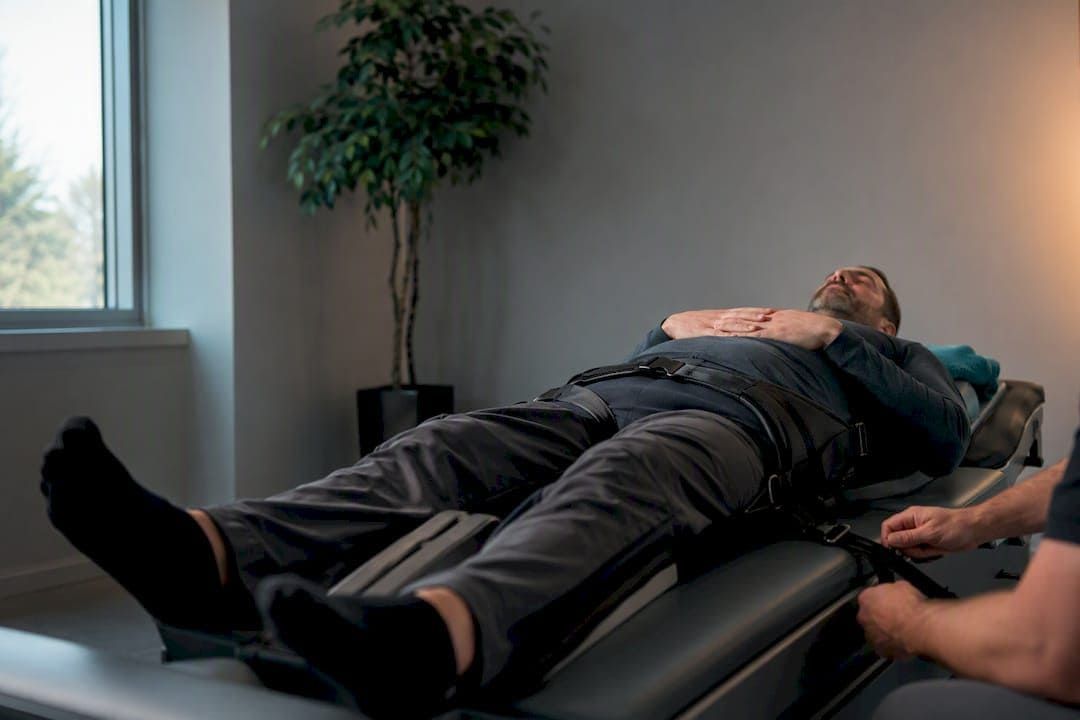
A first visit typically starts with a functional evaluation similar to the self-checks and clinician tests described above, gait observation, a sit-to-stand assessment, and a review of any recent falls or medication changes. From there, chiropractic adjustments and manual therapy address joint restriction and stiffness, while spinal decompression and personalized rehab plans target the specific cause behind reduced movement rather than a generic exercise sheet. Progress gets measured the same way it's described in this article, tracking gait speed and sit-to-stand performance over time, so improvement is something you can see in numbers, not just guess at.
If any of the symptoms covered here sound familiar, whether it's your own stiffness or a parent's slower steps, the next step is a straightforward one: schedule a chiropractic care assessment at the nearest Essentialchirocare location and get a clear read on what's actually driving the change.
Sources
Bringing a printed symptom log or a short video of a walk to any of these appointments makes the conversation with a clinician far more productive than trying to describe the problem from memory.
Frequently Asked Questions
What are the earliest symptoms of poor mobility?
The earliest signs are usually subtle: walking a bit slower than before, needing a hand to push up from a chair, or feeling more tired after routine walks. These often appear months before someone would describe having "real" difficulty.
How do I know if my mobility problem is serious?
If you've had a fall, need to hold onto furniture to walk, or notice a rapid change over just a few weeks, treat it as serious and get evaluated soon. Sudden weakness or inability to walk is an emergency.
Can poor mobility be reversed?
Many causes, muscle weakness, medication side effects, low vitamin D, respond well to targeted treatment. Progressive neurological conditions can be managed to slow decline even when they can't be fully reversed.
What exercises help with poor mobility?
Strength training for the legs and core, balance drills like standing on one foot, flexibility work, and regular aerobic activity like walking all support mobility. A [physical rehabilitation program](https://essentialchirocare.com/blog/understanding-physical-rehabilitation-your-recovery-guide) can tailor these to individual ability.
When should a caregiver push for a doctor's visit over waiting?
Push for a visit whenever self-checks reveal a "fail," such as needing hands to stand from a chair or a walking speed under about 0.8 meters per second, or whenever there's been more than one fall in recent months.
This article is general information, not a substitute for advice from a qualified doctor. Consult a qualified healthcare professional about your own circumstances before acting on anything here.
Recommended