Pain Between Shoulder Blades: Causes, Red Flags, and Fast Relief
Pain Between Shoulder Blades: Causes, Red Flags, and Fast Relief
Most pain between the shoulder blades comes from muscle strain, poor posture, or thoracic spine irritation, and it usually responds well to self-care within days to a few weeks. Some cases signal something more serious. Get evaluated right away if you notice any of the following:
- Chest pressure, tightness, or squeezing along with the back pain
- Shortness of breath or trouble catching your breath
- Sweating, dizziness, or a sense that something is seriously wrong
- Pain that radiates into your jaw, neck, or down your arm
- Pain that started after a fall, car accident, or other trauma
Sudden, severe, or symptom-heavy pain between the shoulder blades is not something to wait out. Cleveland Clinic notes that chest pressure, breathing trouble, dizziness, sweating, or pain radiating to the neck or jaw warrants immediate evaluation, either at an emergency room or by calling 911.
If none of those apply, a visit to your primary care doctor, an urgent care clinic, or a physical therapist within the next few days is a reasonable next step.

Key Takeaways
Most pain between the shoulder blades stems from muscle strain or posture and improves with targeted stretching and strengthening, but chest pressure, breathing trouble, or radiating pain requires immediate medical evaluation.
| Point | Details |
|---|---|
| Identify red flags first | Chest pressure, shortness of breath, dizziness, or pain radiating to the jaw or arm needs urgent care. |
| Know the common causes | Muscle strain, poor posture, thoracic joint dysfunction, and visceral referral are the main culprits. |
| Use targeted exercises | Scapular retraction, thoracic extension, pec minor stretches, and serratus activation address the root causes. |
| Watch for nerve signs | Burning, shooting pain with numbness or weakness points to a pinched nerve, not simple muscle strain. |
| Get evaluated when needed | Essentialchirocare combines chiropractic adjustments and physical rehab to treat persistent or trauma-related pain. |
Table of Contents
- What Causes Pain Between the Shoulder Blades
- How This Pain Usually Feels, and When to Worry
- Fast Relief: Self-Care, Stretches, and Strengthening
- When to See a Doctor and How Diagnosis Works
- Preventing Pain Between Your Shoulder Blades
- Ruling Out Cardiac or Lung-Related Causes
- Recognizing Nerve-Related Shoulder Blade Pain
- A Practical Approach That Actually Works
- How Essential ChiroCare Can Help You Find Relief
- Frequently Asked Questions
- Sources
What Causes Pain Between the Shoulder Blades
The interscapular region sits at a crossroads of muscle, bone, and nerve tissue, which is part of why pinpointing a cause takes a bit of detective work. Here's what's typically behind it:
- Muscle strain and trigger points. Overworked rhomboids or mid-trapezius muscles tighten into painful knots, often from lifting, reaching overhead, or sleeping in an awkward position.
- Poor posture and rounded shoulders. Hours hunched over a laptop or phone shortens the chest muscles and overstretches the upper back, creating a constant low-grade ache.
- Thoracic spine joint dysfunction. The small joints connecting your ribs to your spine can get stiff or irritated, producing a sharp, localized pain that worsens with certain movements.
- Cervical radiculopathy. A pinched nerve in the neck can refer pain straight down between the shoulder blades, sometimes with tingling in the arm.
- Rib joint irritation. The costovertebral joints where ribs meet the spine can flare from a cough, awkward twist, or repetitive strain.
- Degenerative changes like osteoarthritis. Wear and tear on the thoracic spine's joints, more common in older adults, tends to bring stiffness alongside the pain.
- Visceral referral. The esophagus, heart, lungs, kidneys, or spleen can all send pain signals that show up in the upper back rather than where the organ actually sits.
Upper back pain can come from the spine, the surrounding muscles, the shoulder blades themselves, or from internal organs, according to Cleveland Clinic, which is exactly why a new ache back there deserves a closer look rather than a shrug.
For most adults with new-onset pain and no red flags, muscle strain and posture-related tightness between the shoulders are the far more likely culprits than anything visceral. Desk jobs, phone scrolling, and repetitive lifting at work are the most common drivers, simply because they load the same tissues the same way, day after day, without much recovery time in between.
How This Pain Usually Feels, and When to Worry
Garden-variety musculoskeletal pain has a fairly predictable personality. Knowing its usual behavior makes it easier to spot when something's off.
Typical, non-urgent symptoms include:
- A dull, aching, or tight sensation localized between the shoulder blades
- Soreness that gets worse with certain postures or movements and eases with rest or stretching
- Pain you can reproduce by pressing on a specific spot or moving your arm a certain way
- Stiffness that's worst first thing in the morning or after sitting a long time
Red flags that call for prompt medical attention:
- Sudden, severe pain that comes on without an obvious cause
- Chest pressure, tightness, or pain that spreads to the jaw or arm
- Shortness of breath, fainting, or heavy sweating
- New numbness, weakness, or loss of coordination in an arm or leg
- Fever, unexplained weight loss, or pain that wakes you from sleep
If you're dealing with chest symptoms or breathing trouble, go to the emergency room. Neurologic changes or pain after trauma warrant an urgent care visit or a same-week call to your doctor. Everything else, a physical therapist or chiropractor is often the right first stop.
Fast Relief: Self-Care, Stretches, and Strengthening
Quick relief starts with calming the tissue down, then rebuilding the strength and mobility that keep the pain from coming back. Medical News Today notes that most cases respond well to stretching, mobility work, and targeted strengthening.
For the first 24 to 48 hours, heat generally works better than ice for muscular tightness because it increases blood flow to the area. Save ice for sharp, acute injuries with visible swelling. Over-the-counter options like ibuprofen or acetaminophen can take the edge off, and modifying (not eliminating) your activity keeps you moving without aggravating the tissue further.
Once the acute soreness settles, these five moves target the exact muscles that cause most interscapular pain:
- Scapular retraction. Sit or stand tall, squeeze your shoulder blades together and down as if pinching a pencil between them, hold 5 seconds, release. Do 2 sets of 15.
- Thoracic extension over a chair or foam roller. Place the roller across your mid back, support your head with your hands, and gently arch backward over it. Do 10 slow reps to restore the extension most desk workers lose.
- Pec minor stretch in a doorway. Place your forearm on the doorframe at shoulder height and lean gently forward until you feel a stretch across the front of your chest. Hold 30 seconds, repeat 3 times per side.
- Serratus anterior activation (wall slides). Stand against a wall, arms in a goalpost position, and slide them overhead while keeping contact with the wall. Do 2 sets of 10.
- Prone Y-T-W raises. Lying face down, lift your arms into a Y, then a T, then a W shape, squeezing your shoulder blades each time. Do 1 set of 8 per position, using light or no weight at first.
Stop any exercise that produces sharp, shooting, or worsening pain, that's your body telling you to regress the movement or check in with a professional. If a stretch feels easy after a week, add light resistance or more reps before moving to the next progression.
Pro Tip: Set a phone timer for every 45 minutes and simply stand up, roll your shoulders back, and take five deep breaths. That one habit does more for interscapular pain than any single stretch, because it interrupts the sustained postural load that causes the problem in the first place.
Small ergonomic fixes matter too: raise your monitor so the top of the screen sits at eye level, and choose a chair that actually supports your mid and upper back instead of letting you slump forward.
When to See a Doctor and How Diagnosis Works
If self-care hasn't helped within one to two weeks, or if you have any red-flag symptoms, it's time to get evaluated. Here's who handles what:
- Primary care doctor: a good first call for persistent, non-urgent pain or to rule out visceral causes.
- Urgent care: appropriate for moderate pain after an injury without red flags.
- Emergency room: for chest pressure, breathing difficulty, fainting, or sudden severe pain.
- Physical therapist or chiropractor: ideal once serious causes are ruled out, for hands-on treatment and a structured exercise plan. Our guide on choosing between physical therapy and chiropractic care breaks down which fits your situation.
A typical exam includes a posture assessment, range-of-motion testing, palpation to find the exact painful structure, and neurologic checks if there's any numbness or weakness. Imaging like X-rays or MRI generally comes into play only when pain persists past several weeks, follows trauma, or comes with neurologic symptoms, clinical guidelines on thoracic spine conditions outline this stepped approach.
Most people who commit to a consistent stretching and strengthening routine see real improvement within three to eight weeks, according to posture-correction research from the Calisthenics Association.
Preventing Pain Between Your Shoulder Blades
Once the current flare-up settles, the goal shifts to keeping it from coming back. A few consistent habits do most of the work:
- Check your posture hourly, especially during long stretches at a desk
- Keep your monitor at eye level and your chair supporting your upper back
- Balance "pulling" exercises (rows, pull-aparts) with "pushing" ones (push-ups, presses) since most people over-train the front of the body and neglect the back
- Take a movement break every 30 to 60 minutes
- Manage stress, since tension habitually collects in the upper traps and rhomboids
- Sleep on your back or side with a supportive pillow rather than face down
A five to ten minute daily routine of thoracic extension and scapular strengthening work, done consistently, keeps most recurrences at bay. Our posture guide for better shoulder health walks through a fuller routine.
Ruling Out Cardiac or Lung-Related Causes
Cardiac pain rarely stays confined to one small spot between the shoulder blades. Heart-related pain typically presents as pressure, tightness, or squeezing in the chest that spreads to the back, along with shortness of breath, sweating, nausea, or pain radiating into the jaw or left arm. It tends to build with exertion and ease with rest, or it may come on suddenly and intensely with no clear trigger.
Lung-related pain, from conditions like pleurisy or a pulmonary embolism, usually gets sharper when you take a deep breath or cough. It's often paired with breathlessness or a rapid heart rate, symptoms that mechanical, muscle-based back pain simply doesn't produce.
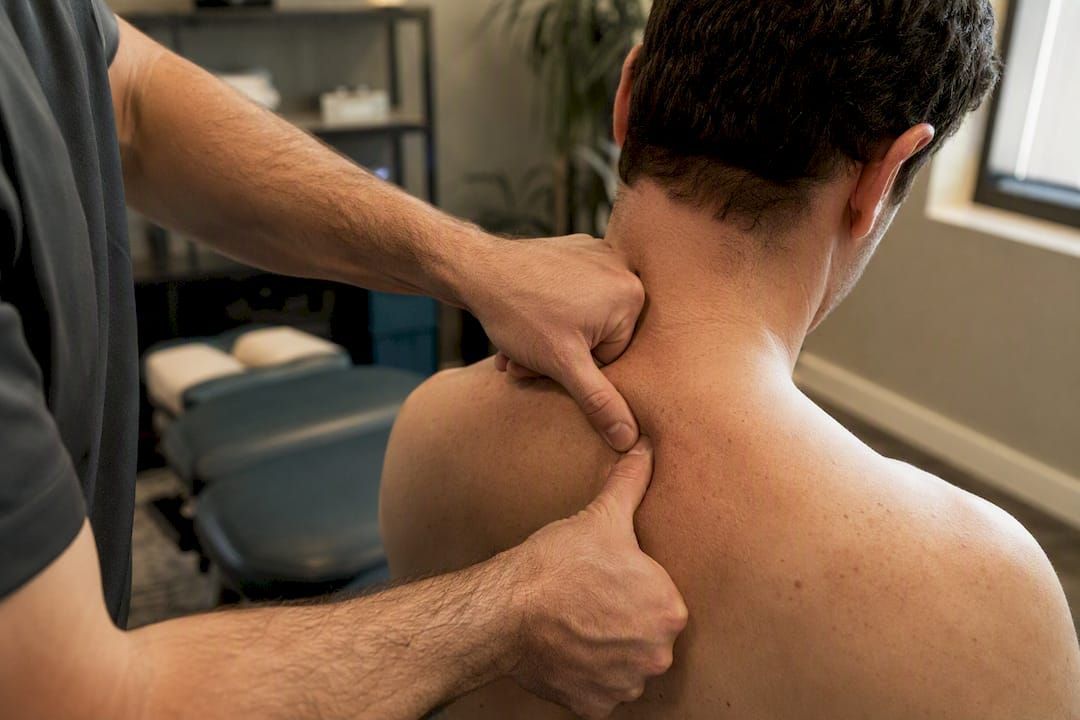
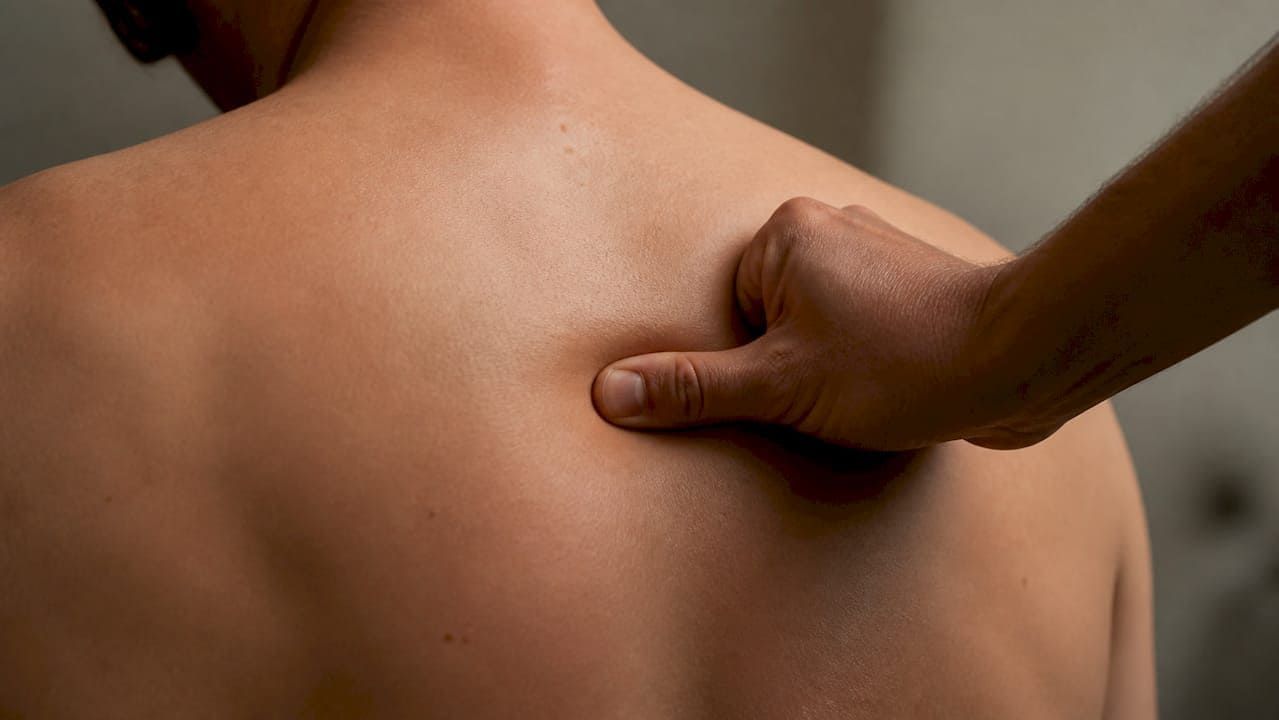
Musculoskeletal pain, by contrast, almost always has a movement or position link. It gets worse when you twist, reach overhead, or press on the sore spot, and it doesn't shift with breathing rate or physical exertion in the same pattern. If pressing directly on a spot between your shoulder blades reproduces the pain exactly, that's a strong sign the problem is muscular or joint-related rather than coming from your heart or lungs.
The overlap is real enough that self-diagnosis is risky. Cleveland Clinic's guidance is blunt on this point: chest pressure, breathing difficulty, or radiating pain deserves an ER visit, not a wait-and-see approach at home. When in doubt, get checked. The cost of an unnecessary ER trip is far lower than the cost of missing a cardiac event.
Recognizing Nerve-Related Shoulder Blade Pain
Nerve pain has a distinct signature that separates it from muscle strain. Instead of a dull ache, people describe burning, electric, or shooting sensations, sometimes with tingling or numbness that travels down the arm or into the fingers.
Cervical radiculopathy, a pinched nerve in the neck, is the most common source. It happens when a disc or bone spur presses on a nerve root as it exits the spine, and the pain often follows a specific path rather than staying put between the shoulder blades. You might also notice weakness gripping objects, or a "pins and needles" feeling that worsens when you tilt your head toward the affected side.
A few features point specifically to nerve involvement:
- Pain that shoots or radiates rather than staying localized
- Numbness or tingling in the arm, hand, or fingers
- Noticeable weakness in grip strength or arm movement
- Symptoms that worsen with certain neck positions, like looking up or turning toward the painful side
Muscle-based interscapular pain, by comparison, stays put, responds to pressure on the sore spot, and doesn't typically bring numbness or weakness along with it. If you notice any of the nerve-specific signs above, especially progressive weakness, that's a reason to get evaluated rather than push through with stretching alone. A clinician can run specific neurologic tests, like checking reflexes and strength in the arm, to confirm whether a nerve is genuinely involved.
A Practical Approach That Actually Works
The mistake I see most often is treating every ache between the shoulder blades the same way, either panicking over normal muscle tightness or ignoring symptoms that need attention. The right approach rules out red flags first, then trials conservative care like stretching, posture correction, and manual therapy before escalating. If pain persists past two weeks, comes with neurologic signs, or follows an injury, that's the point to schedule an evaluation rather than keep guessing.
How Essential ChiroCare Can Help You Find Relief
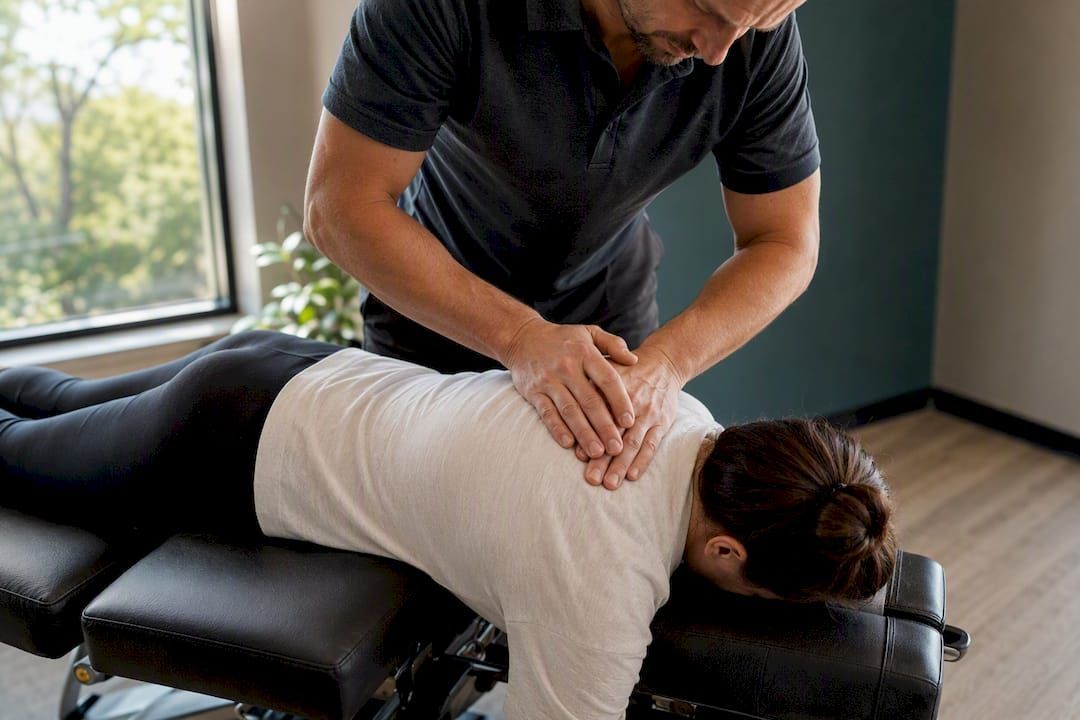
If self-care hasn't moved the needle after a couple of weeks, or your pain started after an accident, Essentialchirocare offers a more direct path than trial-and-error stretching at home. Our chiropractors combine hands-on adjustments, manual therapy, and guided physical rehab to address the actual joint restriction or muscular imbalance driving your pain, not just mask it temporarily.
Our treatment plans typically start with a full posture and movement assessment, the same evaluation steps outlined earlier in this article, then build a personalized combination of chiropractic care and physical rehab around what we find. For patients whose pain traces back to a car accident or other trauma, our concierge care model is built specifically around that recovery timeline. With locations across Tampa, Brandon, Sarasota, Lakeland, and Pinellas Park and online scheduling available, booking an evaluation takes a few minutes. If your pain between the shoulder blades has lasted more than two weeks, schedule a visit and get an actual answer instead of another guess.
Frequently Asked Questions
Is pain between the shoulder blades usually serious?
No, most cases trace back to muscle strain, tight posture, or a stiff thoracic joint, and they improve with self-care. Sudden severe pain, chest pressure, or breathing trouble is the exception that needs urgent evaluation.
Can anxiety or stress cause pain between the shoulder blades?
Yes. Stress commonly causes people to hold tension in the trapezius and rhomboid muscles, which can produce a real, persistent ache between the shoulder blades without any structural injury.
How long does interscapular pain from poor posture take to improve?
Many people notice meaningful improvement within a short period of consistent stretching and strengthening, with fuller correction of rounded shoulders occurring in a matter of weeks.
Should I use heat or ice for pain between my shoulder blades?
Heat generally works better for ongoing muscle tightness because it improves blood flow. Ice is more useful for acute injuries with swelling in the first day or two.
When should I worry that my shoulder blade pain is from my heart?
Worry if the pain comes with chest pressure, shortness of breath, sweating, dizziness, or pain spreading to your jaw or arm. Those symptoms call for emergency evaluation, not a wait-and-see approach.
This article is general information, not a substitute for advice from a qualified doctor. Consult a qualified healthcare professional about your own circumstances before acting on anything here.
Sources
Recommended