
Chiropractic Trigger Point Therapy: What Actually Works

Essential ChiroCare Blogger • September 9, 2026

Chiropractic Trigger Point Therapy: What Actually Works

Yes, chiropractors treat myofascial trigger points, and manual techniques like ischemic compression paired with spinal adjustments make up the standard approach. A single session often produces a measurable, immediate increase in pressure-pain threshold, meaning the spot hurts less when pressed. That relief tends to be temporary on its own. A systematic review of chiropractic trigger point management found moderately strong evidence for short-term pain relief from manual therapy, but only limited evidence that any single technique produces lasting change without repetition.

  • Manual trigger point work plus spinal adjustments is the typical first-line combination.
  • Immediate pressure-pain threshold gains are well documented in clinical trials.
  • Durable relief usually needs multiple visits plus posture and strength changes.
  • Injections and dry needling stay reserved for cases that don't respond to conservative care.

Quick fact: A randomized trial on repeated trigger point massage found that pressure-pain threshold rose after just one session, and climbed further and held steadier across a 12-session course.

chiropractic trigger point therapy

Key Takeaways

Chiropractic trigger point therapy combines manual release techniques with spinal adjustments and rehab, producing immediate relief that becomes durable only with repeated sessions and corrected mechanics.

Point Details
Immediate relief is real Manual pressure techniques raise pressure-pain threshold right after a single session.
Lasting relief needs repetition Cumulative gains build across multiple sessions, often in the 6 to 12 visit range for chronic cases.
Treat the cause, not just the knot Chiropractors pair trigger point work with spinal adjustments to address the mechanical driver.
Home care has real limits Firm pressure for up to 90 seconds helps, but persistent or spreading pain needs professional evaluation.
Invasive options come last Injections and dry needling are reserved for cases that don't respond to conservative care.
Essentialchirocare's model Combines manual therapy, adjustments, rehab, and posture education across multiple Florida clinic locations.

Table of Contents

What Is a Myofascial Trigger Point, Exactly?

A myofascial trigger point is a hyperirritable spot inside a taut band of muscle fiber. Press on it and you'll usually feel a distinct knot, tighter and denser than the tissue around it. Two things separate a trigger point from ordinary muscle soreness: local tenderness right at the spot, and referred pain that shows up somewhere else entirely, like a knot in the upper trapezius sending pain up into the head.

  • Most common sites: neck, shoulders, upper back, and the muscles around the shoulder blade.
  • Functional effects: reduced range of motion, localized weakness, and referred headaches or arm discomfort.
  • Clinicians confirm trigger points through palpation, by reproducing the pain pattern the patient describes, and sometimes with algometry to measure pressure-pain threshold objectively.

Trigger points versus muscle knots is mostly a matter of vocabulary. "Knot" is the term patients use; "trigger point" is the clinical term for a knot that refers pain elsewhere or restricts movement.

How Chiropractors Approach Trigger Points

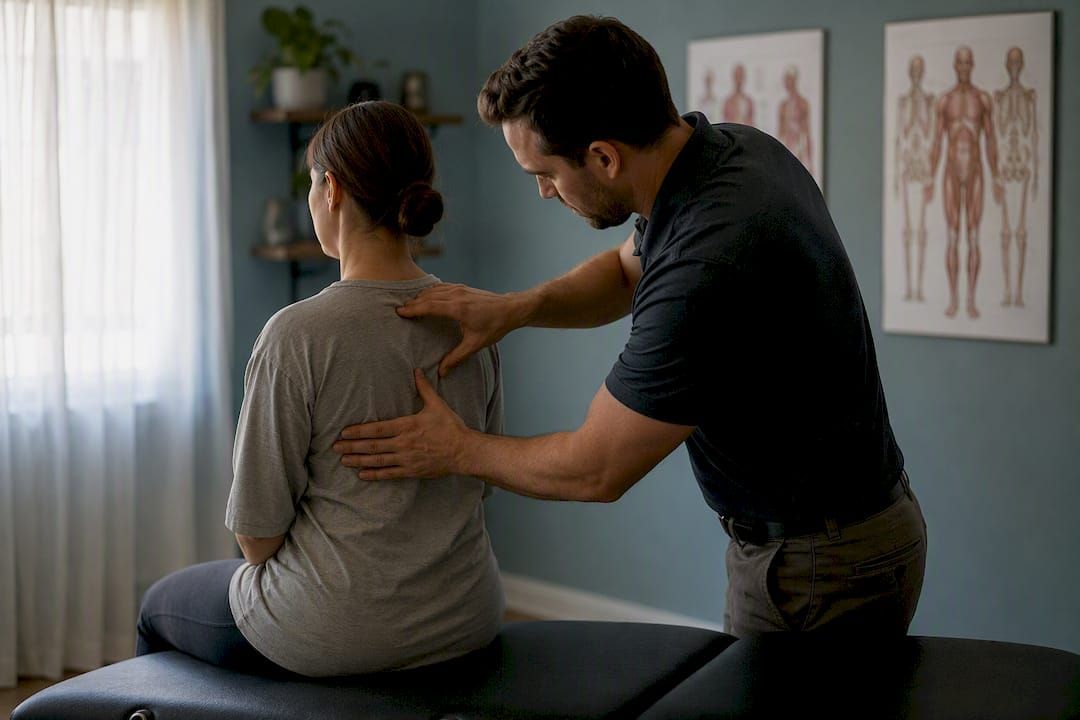
Chiropractic treatment for pain rarely stops at the sore spot itself. A chiropractor treats the trigger point and asks what's causing it to keep firing, whether that's a restricted joint above or below it, a rounded-shoulder posture held for eight hours a day, or a leg-length difference throwing off gait. That framing matters because AAFP guidance on musculoskeletal management has long described trigger points as one part of a mechanical chain, not an isolated event.

A typical assessment-to-plan flow looks like this:

  1. Identify and map the primary trigger points through palpation and symptom pattern.
  2. Rank the mechanical and postural factors likely perpetuating them, including joint restriction and repetitive strain.
  3. Build a staged plan: immediate manual release first, then spinal adjustments to address joint dysfunction, then rehab exercise and ergonomic changes to prevent recurrence.

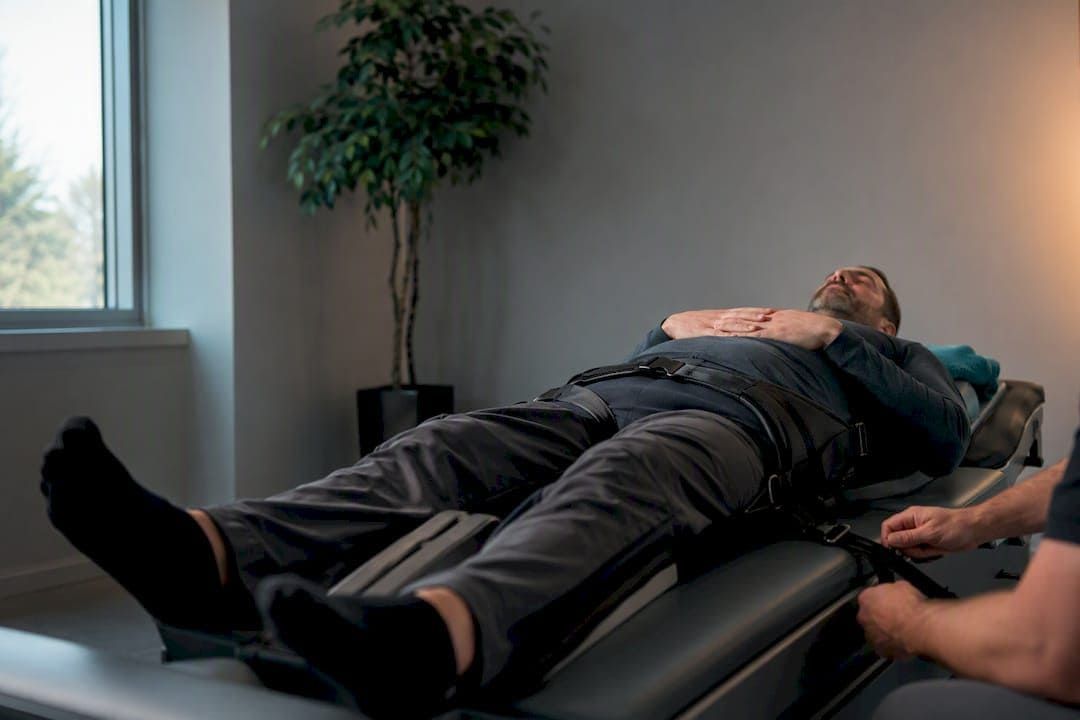
The multimodal piece is what separates chiropractic trigger point therapy from a standalone massage. Manual therapy techniques address the tissue directly, while adjustments target the spinal alignment issues that keep recreating the same knots. Because there's no single standardized protocol for trigger point care, AAFP's clinical guidance points toward individualized, combined approaches rather than a one-size-fits-all technique.

Pro Tip: If a chiropractor only ever presses on the sore spot and never checks your posture, desk setup, or spinal mechanics, ask why. The knot is usually a symptom, not the root cause.

Manual Therapy Techniques and What the Research Backs Up

Chiropractic trigger point massage isn't one technique. It's a toolkit, and the evidence supporting each tool varies quite a bit.

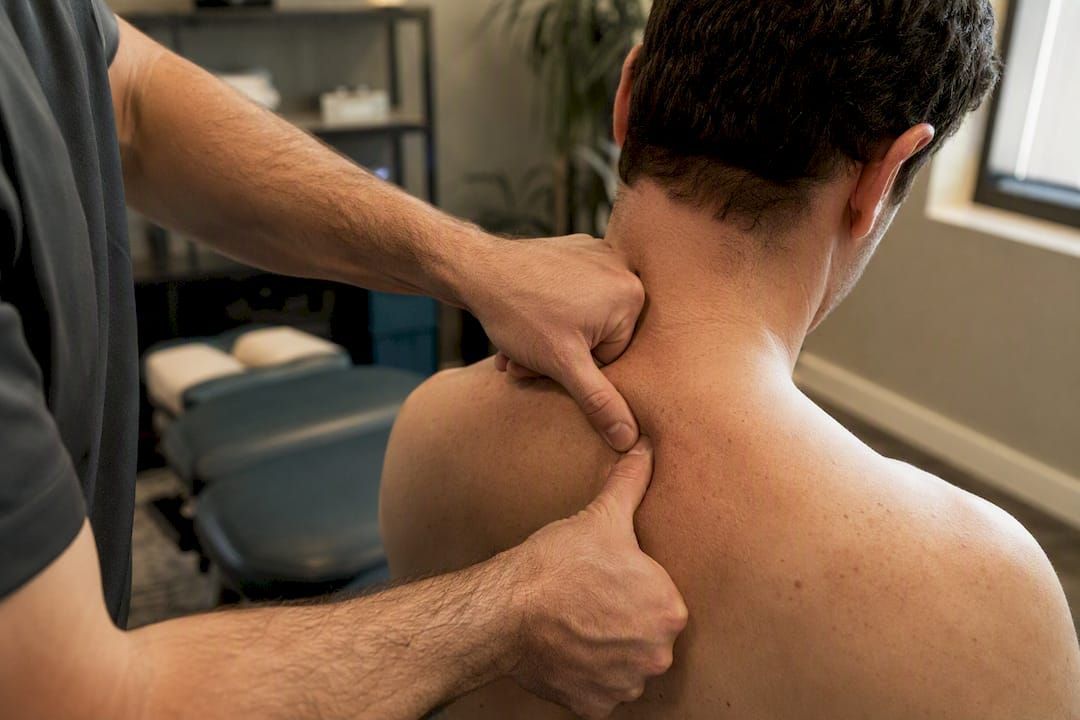
  • Ischemic compression / trigger point pressure release: sustained direct pressure on the knot until the tissue softens and pain eases. The repeated-massage RCT found this kind of pressure work raised pressure-pain threshold immediately after a single session, and produced cumulative, statistically significant gains across a 12-session course.
  • Myofascial release: broader, slower manual work across the fascia and surrounding muscle rather than one isolated point. It's typically used to loosen the tissue around a trigger point before or after direct compression.
  • Spinal adjustments: these target the joint restrictions that keep a trigger point active. Removing a mechanical perpetuating factor is often what separates a knot that stays gone from one that comes right back within a week.
  • Adjunctive modalities: evidence here is mixed. Laser therapy and TENS carry moderate to strong short-term support in systematic review data, while ultrasound's evidence is weak or conflicting depending on the study.

The honest summary, per the systematic review on chiropractic trigger point management: moderately strong evidence exists for short-term relief from manual therapies, and limited evidence exists for lasting relief from any single technique used alone. That's not a knock against manual therapy. It's the reason chiropractors stack techniques instead of betting everything on one.

How Many Sessions Does It Actually Take?

Expect a first visit to change how the spot feels, but not to erase it. The PPT trial found meaningful pressure-pain threshold gains within one session, then further, cumulative gains as sessions repeated.

  1. Initial phase (1 to 4 visits): focused on quick symptom relief and confirming which mechanical factors are driving the pain.
  2. Building phase (roughly 6 to 12 visits): for persistent or chronic cases, this is where cumulative gains in pressure-pain threshold and range of motion typically show up, alongside the start of rehab exercise.
  3. Maintenance phase: spaced-out visits plus home exercise, aimed at keeping perpetuating factors from creeping back in.

Clinicians track progress with a few concrete measures: self-reported pain scores, pressure-pain threshold readings, range of motion, and functional tests like how far a shoulder rotates without pain. Chronic cases, ongoing postural stress, and unaddressed psychosocial factors like high stress or poor sleep tend to stretch the timeline. Readers looking at long-term pain relief strategies will notice the same pattern: consistency beats any single "magic" session.

chiropractic trigger point treatment

Self-Care Between Visits: What Actually Helps

Home care between appointments makes a real difference, provided it's done carefully. Cleveland Clinic guidance recommends applying firm, comfortable pressure directly on the knot for up to 90 seconds, then repeating that for a few minutes at a time, several times a day.

  • Use a massage ball or foam roller rather than fingers alone for larger muscle groups like the upper back.
  • Avoid pressing directly on the spine or over bony landmarks; work the muscle tissue, not the joint.
  • Pair pressure work with gentle stretching, regular posture breaks, and heat or ice depending on what calms your symptoms.
  • Increase pressure and duration gradually rather than pushing hard on day one.

Pro Tip: If a spot gets more painful or numb the day after self-massage, back off. That's a sign you pressed too hard or too long, not a sign to push harder next time.

Stop self-treating and book a visit if the pain spreads, if you notice tingling or numbness radiating down an arm or leg, or if the knot hasn't budged after a few weeks of consistent home care.

When Conservative Care Isn't Enough

Noninvasive therapy is the standard starting point for good reason. AAFP guidance recommends prioritizing massage, physical therapy, and manual manipulation before considering injections, reserving those for cases that don't respond to conservative treatment.

  • Trigger point injections and dry needling show inconsistent results across trials and carry rare but serious risks, including pneumothorax when performed near the chest wall.
  • These procedures should be done only by qualified, trained providers, never as a routine first step.
  • Seek urgent evaluation for neurologic symptoms like numbness or weakness spreading down a limb, systemic symptoms like fever, or pain that's rapidly getting worse rather than better.
  • Escalation to invasive options is a shared decision between patient and provider after conservative care has genuinely been given a fair trial.

Readers weighing that next step can find more detail on trigger point injections and how they compare to ongoing manual care.

How Essential ChiroCare Puts This Into Practice

Essentialchirocare runs this multimodal model across its West Central Florida locations: manual trigger point release, spinal adjustments, rehab exercise, and posture education, layered together rather than offered as isolated services.

  • Clinicians with sports-team backgrounds handle a mix of chronic pain, sports injuries, and post-accident recovery cases.
  • Treatment plans are built around each patient's specific perpetuating factors, not a generic protocol.
  • Patients researching trigger point injections or other procedural options can review clinic-specific guidance before deciding on a path.

The Gap Between the Research and the Waiting Room

Most articles on trigger points either lean entirely on clinical trial data or entirely on anecdote, and both versions mislead readers. The trials are real, and they matter: pressure-pain threshold gains are measurable and repeatable. But a lab measurement of pressure-pain threshold isn't the same as a patient walking out of an appointment feeling fixed, and conflating the two is where a lot of trigger point marketing goes wrong.

The bigger issue is that conventional advice treats a trigger point like a light switch, something a single deep-tissue session flips off. It's closer to a leak that keeps refilling until someone finds where the water's coming from. A knot in your upper trap that returns every two weeks isn't a massage problem. It's usually a joint restriction or a posture habit that never got addressed, which is exactly why multimodal clinical guidance warns against treating trigger points as a single-maneuver fix.

If you take one thing from the research, take this: prioritize finding a provider who checks mechanics, not just the sore spot. Pressure release feels good in the moment. Fixing the joint or posture issue behind it is what keeps the knot from coming back.

Ready to Address Your Trigger Points With a Full Treatment Plan

Essentialchirocare is built around the exact model this article describes: manual trigger point work combined with spinal adjustments, rehab, and posture correction, not a single technique used in isolation. That matters because a masseuse or foam roller can loosen a knot for a day, but only a provider who also checks your spinal mechanics can figure out why it keeps coming back.

With locations across Tampa, Brandon, Sarasota, Lakeland, and Pinellas Park, and clinicians who've worked with sports teams and post-accident patients, Essentialchirocare treats trigger points as one piece of a bigger mechanical picture rather than a spot to press and forget. If a knot in your neck or shoulder keeps returning no matter how often you stretch or roll it out, schedule a chiropractic care assessment and get a plan built around what's actually perpetuating it.

Frequently Asked Questions

  • Is trigger point therapy the same as myofascial release?

    No. Trigger point therapy usually means direct, sustained pressure on a specific knot, while myofascial release works more broadly across the fascia and surrounding muscle. Chiropractors often use both in the same session.

  • Can I do trigger point release on myself instead of seeing a chiropractor?

    Basic self-pressure with a massage ball or foam roller can ease mild, occasional tension. If a knot keeps returning, spreads, or comes with numbness or tingling, that points to a mechanical issue a chiropractor needs to assess directly.

  • When would a chiropractor refer someone for a trigger point injection instead?

    Only after conservative manual therapy and adjustments haven't produced improvement over a reasonable trial period, and typically for a provider with training in the procedure given its rare but serious risks.

This article is general information, not a substitute for advice from a qualified doctor. Consult a qualified healthcare professional about your own circumstances before acting on anything here.

Sources

Recommended

does insurance cover chiropractic care
By Essential ChiroCare Blogger September 8, 2026
Discover how insurance covers chiropractic care in the U.S. Learn about plans, limits, and what to expect before your visit.
pediatric chiropractic care Tampa
By Essential ChiroCare Blogger September 7, 2026
Learn causes of back pain in kids and when a pediatric chiropractor in Tampa can help with gentle, holistic care for comfort and mobility.
knee pain treatment Tampa
By Essential ChiroCare Blogger September 6, 2026
Learn common signs your weekend pick-up games are stressing your knees and when to see a knee pain chiropractor in Tampa for relief and recovery advice.
Medicare chiropractic coverage
By Essential ChiroCare Blogger September 5, 2026
Discover what Medicare chiropractic coverage includes. Learn about the specifics of spinal manipulation benefits and costs.
chiropractic adjustment frequency
By Essential ChiroCare Blogger September 4, 2026
Discover how chiropractic adjustment frequency varies by phase. Learn what to expect and how it promotes healing and overall wellness.
symptoms of poor mobility
By Essential ChiroCare Blogger September 3, 2026
Identify early symptoms of poor mobility and learn effective strategies to enhance your movement and independence. Act now for better health!
ergonomic setup checklist
By Essential ChiroCare Blogger September 2, 2026
Transform your workspace with this quick 10-minute ergonomic setup checklist to alleviate neck, back, and wrist pain effectively.
habits for joint longevity
By Essential ChiroCare Blogger September 1, 2026
Discover effective habits for joint longevity that can preserve your mobility and health into your golden years. Start today!
early signs of disc problems
By Essential ChiroCare Blogger August 31, 2026
Learn the early signs of disc problems, from localized pain to numbness. Recognize symptoms early to seek treatment and prevent serious issues.
functional movement screening
By Essential ChiroCare Blogger August 30, 2026
Learn how a functional movement chiropractor in Pinellas Park uses screening results to target weaknesses, prevent injury, and tailor treatment plans.
Show More