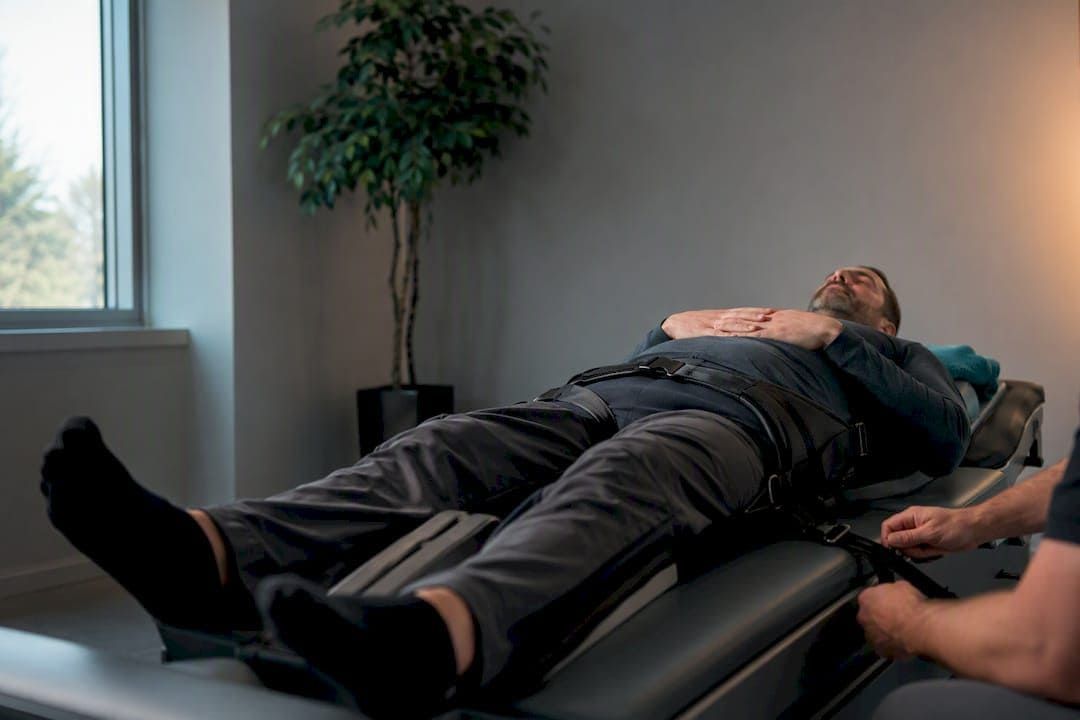



Understand Spinal Alignment for Pain Relief and Wellness
TL;DR:
- Spinal alignment involves the natural curves and proper joint function to support overall health.
- Chiropractic care can provide short-term pain relief and improve mobility for musculoskeletal issues.
- Focusing on functional movement and lifestyle changes is more important than achieving perfect spinal positioning.
Back pain is one of the most misunderstood conditions in everyday life. Most people assume it comes from a slipped disc or a bone out of place, but the reality is far more layered than that. Spinal alignment involves the careful balance of curves, joints, muscles, and nerves working in sync. When that balance shifts, even slightly, you can feel it in ways that seem completely unrelated to your spine. Understanding what spinal alignment actually means puts you in control of your health decisions, especially when you're weighing whether chiropractic care is the right path forward.

Table of Contents
- What is spinal alignment? The basics explained
- How spinal alignment affects pain and daily wellness
- Common methods for improving spinal alignment
- Evidence, controversy, and cost: What research shows
- The uncomfortable truth about spinal alignment and chiropractic care
- How Essential ChiroCare can help you achieve alignment and lasting relief
- Frequently asked questions
Key Takeaways
| Point | Details |
|---|---|
| Spinal alignment basics | Good spinal alignment means your bones, nerves, and muscles work together for optimal movement and comfort. |
| Pain and posture | Poor alignment can lead to pain and everyday difficulties, but evidence shows improvement is possible. |
| Techniques matter | Chiropractors use various evidence-based methods to safely restore alignment, tailored for your needs. |
| Research and results | Chiropractic care provides some benefit for pain and function with proven cost-effectiveness for many. |
What is spinal alignment? The basics explained
Your spine is not designed to be perfectly straight. It has four natural curves: two curving inward (cervical and lumbar) and two curving outward (thoracic and sacral). These curves distribute your body weight evenly, absorb shock, and keep your center of gravity balanced. When those curves are within a healthy range and your vertebrae are stacked correctly, that's what we call good spinal alignment.
Think of it like a well-built arch bridge. Each stone carries just enough load, and the structure holds. Remove one stone or shift it slightly, and the whole system starts compensating. Your muscles, ligaments, and joints do the same thing when your spine is out of balance.
Spinal alignment affects far more than just your back:
- Nerve function: The spinal cord and nerve roots pass through and between vertebrae. Even subtle misalignment can create pressure or irritation on nearby nerves.
- Muscle balance: When joints shift, surrounding muscles often tighten or weaken to compensate, creating chronic tension.
- Movement patterns: Poor alignment changes how you walk, bend, and lift, which places added stress on already strained areas.
- Energy levels: Compensating for misalignment all day is exhausting. Many patients report fatigue alongside their pain.
One common myth worth clearing up: bones do not simply "pop out" of place. The image of a vertebra dramatically sliding out of the spine is not accurate. What actually happens is far more subtle. Small shifts in joint position, reduced motion, or increased muscle tension around a joint are what chiropractors typically address.
This is where terminology gets important. Chiropractors use the term "subluxation" to describe a joint that is not moving or positioned correctly, affecting nerve function. However, subluxation in chiropractic differs from the orthopedic use of the word, and there is no validated detection method. The profession itself is divided on how to define and apply it.
"The spine is a dynamic structure. Alignment is less about perfect positioning and more about optimal, pain-free function."
Understanding this distinction matters because it shapes how you evaluate your own symptoms and the chiropractic techniques explained to you during any consultation. Now that we've set the stage for what alignment means, let's move into the evidence behind chiropractic care and its relationship to spinal health.
How spinal alignment affects pain and daily wellness
Most people don't realize their spinal alignment is off until they've been in pain for weeks. By then, compensations have built on top of compensations. Here are the most common signs that your alignment may need attention:
- Persistent aching in the lower back, mid-back, or neck
- Morning stiffness that takes more than 30 minutes to ease up
- One shoulder or hip sitting noticeably higher than the other
- Numbness or tingling running into your arms or legs
- Reduced flexibility when twisting or bending
- Headaches that seem to start at the base of your skull
For people living and working in West Central Florida, daily habits often make this worse. Long commutes in traffic, desk jobs with poor ergonomics, and hours of looking down at phones all create patterns of forward head posture and rounded shoulders. These habits gradually shift your spinal curves.
Getting out of bed in the morning, sitting through a full workday, or even riding in a car can become genuinely difficult when your spine is not moving the way it should. The pain signals you feel are your body's way of asking for correction, not just masking.
Pro Tip: If your pain improves when you move around but returns after sitting for more than 20 minutes, that's a strong indicator your spine needs improved mobility and not just rest.
Evidence supports chiropractic care as a real option here. Spinal manipulative therapy provides small short-term pain relief and moderate function improvement for back pain. This is meaningful for those dealing with chronic issues that haven't responded to rest or over-the-counter medications.
If you've been struggling with persistent discomfort, learning how to relieve back pain through chiropractic care is a practical starting point. Pairing that with insights from the best chiropractic treatments available today can help you make a smarter, more informed choice.
Common methods for improving spinal alignment
Understanding your symptoms is key, so how do professionals actually help restore proper spinal alignment? Not every patient gets the same treatment, and that's intentional. Chiropractors select techniques based on your age, health history, spine condition, and comfort level.
Here's a comparison of the most widely used approaches:
| Technique | How it works | Best for | Notes |
|---|---|---|---|
| Diversified (HVLA) | High-velocity, low-amplitude manual thrust | Healthy adults with joint restriction | Most common; produces the "pop" sound |
| Instrument-assisted | Handheld tool delivers controlled impulse | Sensitive patients, post-surgery | Gentler; no manual force |
| Mobilization | Slow, passive joint movement | Elderly, stiff joints, early care | Low-force; very comfortable |
| Flexion-distraction | Table-based traction and flexion motion | Disc issues, sciatica | Excellent for decompressing nerve roots |
| Myofascial release | Soft tissue pressure on muscle and fascia | Tight muscles, chronic tension | Often combined with adjustments |
These methodologies cover diversified, instrument-assisted, mobilization, flexion-distraction, and myofascial release, giving practitioners a wide toolkit depending on what your spine actually needs.
Some situations call for gentler approaches. Pregnancy, osteoporosis, advanced age, and acute disc herniations are all cases where instrument-assisted or mobilization techniques are preferred over manual thrusts. High-velocity adjustments are contraindicated when there are unstable vertebrae, fractures, severe osteoporosis, or vascular conditions near the neck.
Pro Tip: Always tell your chiropractor your full medical history, including any past surgeries or medications. What feels like a small detail to you could significantly change the safest and most effective technique for your spine.
When you visit a chiropractor, your first appointment should include a full health history and often imaging before any chiropractic adjustments are performed. Understanding the benefits of chiropractic adjustment beyond just pain relief, including improved range of motion and nerve function, helps set realistic expectations for your care.

Evidence, controversy, and cost: What research shows
After reviewing how alignment is addressed, it's essential to look at what science actually says about effectiveness and value.
Here's a quick look at what the research tells us:
| Area | What research shows | Confidence level |
|---|---|---|
| Pain relief | Small short-term reduction in back pain | Low to moderate |
| Function | Moderate improvement in mobility and daily activity | Moderate |
| Cost-effectiveness | Often favorable compared to usual medical care | Moderate |
| Non-musculoskeletal disease | Subluxation-based claims not supported | Very low |
The Cochrane review is one of the most cited sources in this field. It confirms that SMT provides short-term pain relief and moderate function improvement, though with low certainty. That's honest science: it works for many people, but it's not a cure-all.
The biggest controversy in chiropractic centers on the subluxation model. Some practitioners still use it as a framework for treating conditions far beyond back pain, from asthma to immune function. However, chiropractic subluxation theory lacks empirical support for non-musculoskeletal disease. That's a clear line. Where the evidence stands strong is in musculoskeletal pain, movement, and function.
"Ask your chiropractor what outcomes they're targeting and how they'll measure progress. Evidence-based care has clear goals."
On the cost side, patients often overlook how chiropractic compares financially. SMT shows lower cost with higher outcomes than usual care for certain pain conditions. For anyone paying out of pocket or weighing insurance options, that's a meaningful factor.
For a broader view of what chiropractic care can do for your overall wellbeing, reviewing the health benefits of chiropractic care beyond just pain is a worthwhile starting point.
The uncomfortable truth about spinal alignment and chiropractic care
Here's something most articles won't tell you: chasing "perfect alignment" is often the wrong goal. We see patients who have been in care for years, convinced they need ongoing adjustments to maintain some ideal spinal position. That mindset can actually hold you back.
The spine is designed to move, adapt, and recover. What matters most is not how your vertebrae look on an X-ray but how well you function, how freely you move, and how much pain you're actually in. Functional improvement is the target, not a perfect curve on a chart.
Another myth that slows recovery is believing you'll need lifelong adjustments. Some people do choose ongoing maintenance care, and that's valid. But many patients resolve their primary issues and move on, especially when chiropractic is combined with movement therapy, strengthening exercises, and genuine self-care habits.
If you're serious about results, the most effective path is combining your adjustments with active rehab and lifestyle changes. That combination, rather than passive adjustments alone, is what the best outcomes are built on. Start by asking the right questions: What are we treating? How will we measure success? What do I need to do outside this clinic?
Learning how to approach alleviating pain effectively is as much about mindset as it is about treatment. Come in with clear goals and a willingness to be an active participant in your own recovery.
How Essential ChiroCare can help you achieve alignment and lasting relief
Ready to explore chiropractic care or spinal alignment support? Here's how Essential ChiroCare can help.
At Essential ChiroCare, we've built our approach around what actually works. Our experienced doctors have backgrounds working with sports teams, which means they understand high-stakes recovery and personalized treatment planning. We serve patients across Tampa, Brandon, Sarasota, Lakeland, and Pinellas Park with options that fit your specific condition.
Whether you need expert chiropractic care for everyday back pain, a gentle approach for a more sensitive condition, or want to understand whether spinal decompression is right for your disc issues, we have the tools and the team to create a plan that makes sense for your life. Schedule a consultation at any of our West Central Florida locations and take the first real step toward better movement and less pain.
Frequently asked questions
Can poor spinal alignment cause headaches?
Yes, poor alignment can sometimes irritate nerves or muscles that may contribute to headaches, especially tension headaches originating at the base of the skull.
How does chiropractic care improve spinal alignment?
Chiropractors use manual adjustments, instrument-assisted methods, and gentle mobilization to improve spinal motion and restore joint balance.
Is spinal alignment the same as 'cracking your back'?
No, spinal alignment refers to restoring joint motion and balance, while the cracking sound is simply gas releasing from the joint fluid and is not an indicator of alignment change.
Are chiropractic adjustments safe for older adults?
Yes, with the right technique selection; gentler methods are preferred for seniors and those with fragile bones, including instrument-assisted care and mobilization rather than high-velocity thrusts.