Florida's PIP 14-Day Rule: What Crash Victims Must Know
Florida's PIP 14-Day Rule: What Crash Victims Must Know
Yes. Under Florida law, you must receive initial medical services and care within 14 calendar days of a crash to preserve your Personal Injury Protection (PIP) benefits. Miss that window and your insurer can deny the claim outright, regardless of how serious your injuries turn out to be.
The clock starts the moment the crash happens, not when pain shows up. Florida runs this deadline on calendar days, so weekends and holidays don't buy you extra time. A qualifying visit also has to be documented properly. A phone call to your insurer or a note that says "patient was in a car accident" without exam findings won't satisfy Florida Statute 627.736.
If you were in a wreck in the last few days, here's your move right now:
- Book an appointment with a qualifying provider today, not next week
- Choose based on symptoms: MD/DO or ER for anything serious, urgent care or a chiropractor for pain and stiffness
- Ask the provider to document the crash date, your symptoms, and objective exam findings in the same visit note
Pro Tip: Set a calendar reminder for day 10, not day 14. Clinics get booked, and you want a buffer if your first-choice appointment falls through.

Key Takeaways
Florida law requires initial medical services and care within 14 calendar days of a crash, and the documentation from that visit determines whether PIP pays at all and how much.
| Point | Details |
|---|---|
| 14-day deadline is absolute | Calendar days, no weekend or holiday extensions, per Florida Statute 627.736. |
| Choose the right first provider | MD, DO, chiropractor, dentist, PA, APRN, or ER qualify; massage and acupuncture do not. |
| Documentation makes or breaks the claim | Visit notes need the crash date, symptom linkage, exam findings, and itemized billing. |
| EMC status controls your benefit cap | A qualified provider's EMC finding can unlock the full $10,000 tier instead of a lower limit. |
| Insurers face their own clock | Once a complete claim is submitted, a 30-day payment or response window generally applies. |
Table of Contents
- Where the Florida PIP 14-Day Rule Comes From
- Which Providers Count for Your Initial Visit
- What Counts as Qualifying Documentation
- Emergency Medical Condition Status and Your Benefit Ceiling
- What Happens If You Miss the Deadline
- How to File a PIP Claim Without Losing Time
- How Essential Chirocare Helps You Protect Your Claim
- Verify the Rules Yourself
- The Rule Nobody Explains Well Enough
- Sources
Where the Florida PIP 14-Day Rule Comes From
The 14-day requirement isn't a policy quirk your insurance company invented. It's written directly into Florida Statute 627.736, the law that governs Florida's no-fault auto insurance system. The statute conditions PIP medical benefits on receiving "initial services and care" within 14 days of the accident. Miss it, and the insurer has a statutory basis to deny the whole medical claim, not just reduce it.
The Florida Office of Insurance Regulation's consumer notice (OIR-B1-1149) restates this plainly: PIP pays a significant portion of reasonable medical expenses, but only when the initial visit happens inside that two-week window. The same notice specifies that once a claim is properly submitted, insurers generally have to pay or issue a written explanation of benefits within a set period, commonly cited as 30 days. That 30-day rule governs the insurer's side of the transaction. It has nothing to do with your 14-day deadline to get treated. People confuse these two timelines constantly.
There's a third clock worth knowing about, and it's a much longer one. Florida gives you a deadline to file a negligence lawsuit against an at-fault driver for damages beyond PIP, which is longer than the initial care deadline. That's the statute of limitations for a personal injury case. It doesn't rescue a PIP claim that died because you waited three weeks to see a doctor. Three separate deadlines, three separate purposes:
- 14 days : initial medical visit to qualify for PIP benefits at all
- 30 days : insurer's window to pay or respond once you've submitted a complete claim
- 2 years : filing deadline for a personal injury lawsuit against another driver
Confusing the two-year window with the 14-day window is one of the most common and costly mistakes accident victims make.
Which Providers Count for Your Initial Visit
Not every provider satisfies the statute, and this trips up more people than you'd think. Florida law recognizes a specific list of practitioners for that first qualifying visit: medical doctors (MD), osteopathic physicians (DO), dentists (for facial and jaw injuries), chiropractic physicians, physician assistants, advanced practice registered nurses (APRN), and hospital or emergency room staff, including ambulance transport that leads to ER treatment.
What doesn't count is just as important. Massage therapists, acupuncturists, and stand-alone physical therapy visits don't satisfy the initial 14-day requirement on their own. The OIR consumer notice specifically excludes massage and acupuncture from reimbursable PIP medical benefits. If your only visit in the first two weeks is to a massage therapist, you likely have no qualifying claim, even though you sought treatment in good faith.
So where should you actually go? It depends on what you're feeling:
- Visible trauma, chest pain, loss of consciousness, or severe symptoms : go to the ER immediately
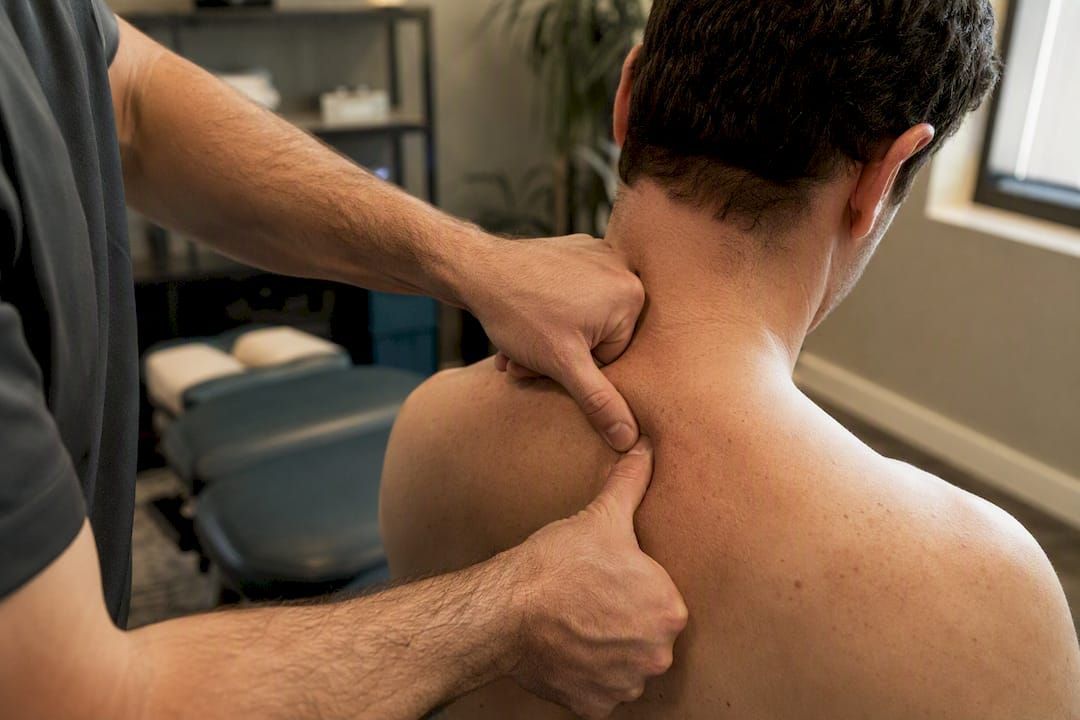
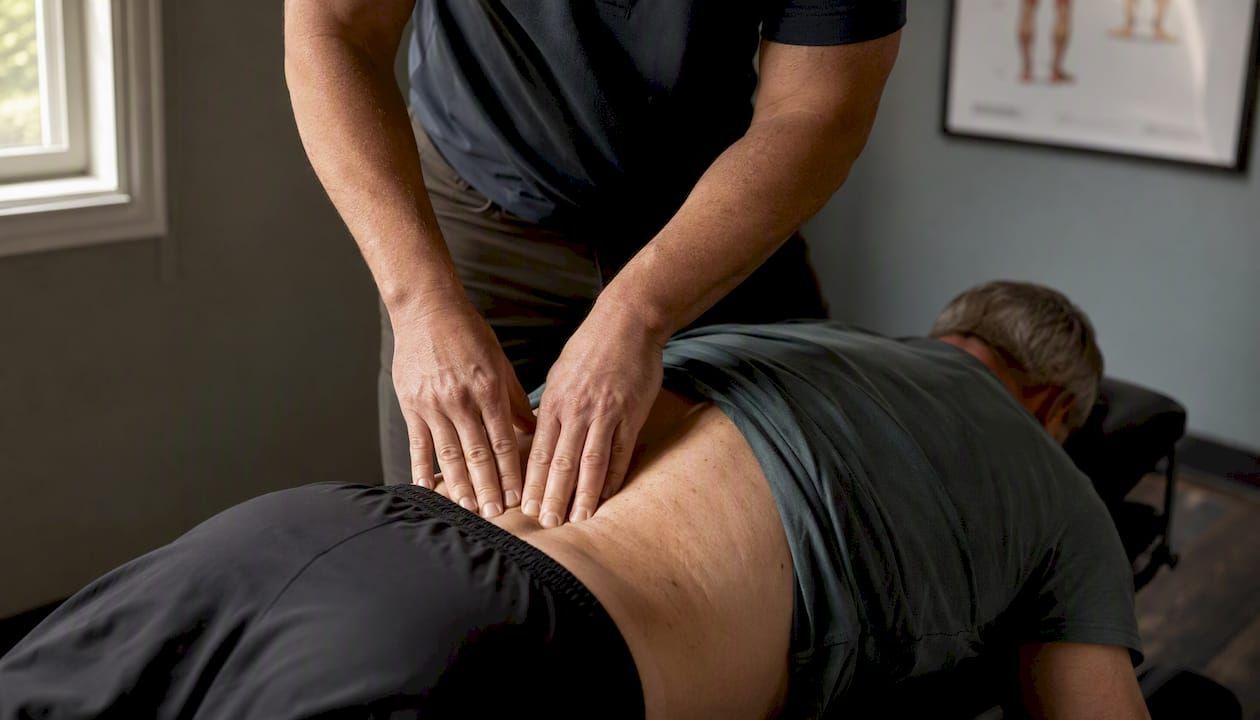
- Moderate pain, stiffness, headaches, or reduced range of motion : urgent care or a chiropractor experienced in auto injuries is often the right first stop
- Any uncertainty about severity : err toward MD/DO evaluation first
Pro Tip: Whatever provider you choose, ask them directly: "Will this visit satisfy Florida's 14-day PIP requirement?" A provider who regularly treats accident patients will know exactly what you mean.
What Counts as Qualifying Documentation
Getting to a provider inside 14 days is only half the job. The visit itself has to produce a record that clearly ties your symptoms to the crash. Insurers don't take your word for it. They read the chart.
A qualifying medical record generally needs to include:
- The accident date , stated explicitly in the note
- A clear narrative link between the crash and your reported symptoms (not just "patient reports pain")
- Objective exam findings , such as range-of-motion measurements, neurological screening, or diagnostic imaging results
- Provider signature and license credentials
- Itemized billing that matches the services documented in the exam
A vague note or a verbal mention to a receptionist won't hold up. Adjusters look for specifics, and thin documentation is one of the most common reasons practitioners see PIP claims denied even when the crash clearly happened.
Before your visit, jot down the date and time of the crash, exactly where it hurts, and when the pain started. Hand that to the front desk. It sounds small, but it gives the provider everything needed to write a note that actually protects your claim instead of one that just describes a routine checkup.
Emergency Medical Condition Status and Your Benefit Ceiling
Florida's PIP system runs on two tiers, and which one you land in depends heavily on what happens at that first visit. If a qualified provider determines you have an emergency medical condition (EMC) , defined as an injury with acute symptoms severe enough that the absence of immediate care could reasonably be expected to place your health in serious jeopardy, you gain access to the full PIP benefit. That's up to $10,000 in combined medical and disability coverage, per the Florida Bar's consumer pamphlet.
Without an EMC finding, there is a lower cap for non-emergency care benefits defined by statute. That's a $7,500 difference determined largely by who evaluates you and what they write down.
Here's the catch most people don't realize: not every provider can make that EMC determination. MDs, DOs, physician assistants, APRNs, and dentists (for qualifying facial injuries) can certify an EMC. Chiropractors can absolutely provide qualifying initial treatment under the 14-day rule, but they typically cannot make the EMC finding that unlocks the full $10,000 tier on their own.
That doesn't mean skip the chiropractor. It means pair the visits strategically:
- Chiropractic care remains one of the most effective first stops for whiplash, back pain, and soft-tissue injury from a collision
- If your symptoms suggest something more serious, such as radiating numbness, severe headaches, or loss of function, get an MD/DO evaluation quickly, even if you've already started chiropractic treatment
- Both visits can happen inside the same 14-day window and often should
Suspecting a bigger injury than initial symptoms suggest is common with whiplash and soft-tissue trauma, where inflammation peaks days after impact. That's exactly why seeking chiropractic care early after an accident matters, paired with the right medical evaluation to lock in EMC status if warranted.

What Happens If You Miss the Deadline
Missing the 14-day window is one of the most common reasons Florida insurers deny PIP medical claims entirely, not partially. The statute doesn't leave much wiggle room for "I meant to go but I was busy" or "I thought it would heal on its own." If your first qualifying visit lands on day 15 or later, the insurer has grounds to reject the claim outright.
If that's already happened to you, don't panic, but move fast:
- Get the denial in writing. Insurers must state their reasoning. A verbal denial over the phone means nothing legally.
- Check other coverage. Health insurance or MedPay coverage on your auto policy may still pay for treatment even when PIP won't.
- Gather anything contemporaneous. Text messages describing pain, photos from the crash scene, or an urgent care visit slightly outside the window can sometimes support a partial argument.
- Talk to an attorney who handles PIP disputes. Some denials get reversed on procedural grounds, particularly if the insurer itself missed a notice requirement.
Remember that insurers also operate on a clock. Once you submit a complete claim with the required documentation, Florida's PIP framework generally requires payment or a written explanation within 30 days. If that window passes with no response and no denial letter, that's worth flagging to a licensed attorney as a potential violation.
How to File a PIP Claim Without Losing Time
A clean claim moves faster and gets questioned less. Here's the sequence that keeps you inside every deadline that matters:
- See a qualifying provider within 14 days of the crash, chosen based on your symptoms
- Request the complete visit note and itemized billing statement before you leave, not weeks later when the office is slower to respond
- Complete your insurer's PIP claim forms completely. Half-filled forms are a common cause of processing delays.
- Deliver the claim package to your insurer with proof of delivery, whether that's a certified mail receipt or a confirmed portal upload
Label every document clearly with your name, claim number, and date of service. Adjusters process dozens of files a week, and a well-organized packet gets read faster than a loose stack of papers.
Pro Tip: Keep a simple log of every date you submit something and every date the insurer responds. If you ever need to escalate a slow claim, that log becomes your evidence of the timeline.
How Essential Chirocare Helps You Protect Your Claim
Insurers respond to specifics, not impressions. A note that says "patient in pain" gets questioned. A note that documents reduced range of motion in degrees, positive orthopedic tests, and a symptom chronology tied directly to the crash date gets paid. That's the standard our clinicians work toward at every post-accident evaluation.
A useful visit note captures the date and time of the crash, the mechanism of injury, the exact body regions affected, objective findings like range-of-motion deficits or neurological signs, and an initial treatment plan. That level of detail gives an insurance adjuster far less room to argue the claim is unsupported.
Chiropractic care is often the right first stop for whiplash, back pain, and soft-tissue injuries following a collision, and it satisfies the 14-day requirement on its own. But when symptoms suggest something more serious, our doctors coordinate quickly with MD and DO providers so patients can secure an EMC evaluation without losing momentum on their claim.
Early, well-documented care does two things at once: it gets you appropriate treatment before inflammation and compensation patterns set in, and it builds the paper trail that keeps PIP benefits intact. Waiting on either front tends to cost patients more, medically and financially, than acting fast.
Essential Chirocare offers same-week scheduling across its West Central Florida locations specifically because that first appointment is time-sensitive in a way most patients don't realize until it's too late. Our physical rehab team also coordinates ongoing care once that initial visit is documented, so your treatment plan and your claim paperwork stay aligned from day one.
If you were in an accident recently, don't wait to see how you feel tomorrow. Schedule a same-week evaluation with Essential Chirocare's auto injury team, where visit notes are structured specifically with PIP documentation requirements in mind. Our chiropractic care services are available across Tampa, Brandon, Sarasota, Lakeland, and Pinellas Park, so there's likely a location close to where you live or work.
Verify the Rules Yourself
Don't just take a blog post's word for any of this. The primary sources are public and worth bookmarking:
- Florida Statute 627.736, the actual statutory text
- FLHSMV's insurance requirements page for registration and coverage basics
- OIR-B1-1149, the official consumer notice on PIP benefits
- The Florida Bar's consumer pamphlet on auto insurance
The Rule Nobody Explains Well Enough
Most explainers treat the 14-day rule as a trivia fact: know the number, move on. That undersells how much damage a single missed window does. This isn't a technicality insurers exploit reluctantly. It's baked into the statute, and adjusters apply it consistently because the law gives them cover to.
What conventional advice gets wrong is treating "see any doctor" as sufficient. It's not just about the 14 days. It's about whether the visit produces a record an adjuster can't easily dispute. I've seen the pattern often enough in how these claims play out: two patients see a provider on the same day, one gets paid, one gets denied, and the difference is entirely in the specificity of the chart note.
If you take one thing from this, let it be sequencing. Get seen fast, but get seen by someone who documents like they know a claims adjuster will read it. That's the difference between a formality and a safeguard.
This article is general information, not a substitute for advice from a qualified doctor. Consult a qualified healthcare professional about your own circumstances before acting on anything here.
Sources
- Florida Statutes, Section 627.736 – Required Personal Injury Protection Benefits; Exclusions; Priority; Claims
- Florida insurance requirements - Florida Department of Highway Safety and Motor Vehicles
- NOTIFICATION OF PERSONAL INJURY PROTECTION BENEFITS (OIR-B1-1149)
- Automobile Insurance Consumer Pamphlet — Florida Bar
Recommended